REVIEW · REYKJAVIK
Reykjavik City Walking Tour
Book on Viator →Operated by Reykjavik Sightseeing · Bookable on Viator
Reykjavik clicks fast when you walk it. This small-group tour strings together the capital’s biggest landmarks and the stories that explain them, from vikings and elves to Iceland’s volcano-driven geology, all with a guide keeping the pace friendly. I particularly love the small-group size (max 12) and the way you start at the iconic Hallgrímskirkja before you’ve even gotten your bearings.
My second big plus: the tour mixes standout viewpoints with hands-on “how Iceland works” moments. The bell-tower view (when access allows) over red rooftops and Faxaflói Bay, plus the oversized Iceland topographical map at City Hall, is the kind of orientation that sticks. One drawback to plan around: bell tower access depends on conditions, and the route is still a steady walk—so go in with good boots and realistic expectations.
In This Review
- Key points I’d build my day around
- A 2.5-hour orientation route that fits real schedules
- Hallgrímskirkja: the photo stop that turns into a view lesson
- Þingholt lanes and the Reykjavík City Pond wildlife break
- City Hall’s giant Iceland map: volcanology explained without the textbook
- Parliament, cathedral, and the first homesteads in one civic loop
- Old Harbour to Harpa: modern Reykjavík with bay-level views
- What you’ll actually learn from the guide (and use afterward)
- Price and value: is $54.65 worth it?
- Practical advice: shoes, timing, and how to keep warm
- Should you book this Reykjavik City Walking Tour?
- FAQ
- Where do I meet the tour, and where does it end?
- How long is the Reykjavik City Walking Tour?
- What’s the maximum group size?
- What’s included in the price, and is lunch included?
- Does the tour include going up to the Hallgrímskirkja bell tower?
- Will the tour run in bad weather?
- What is the cancellation policy?
Key points I’d build my day around
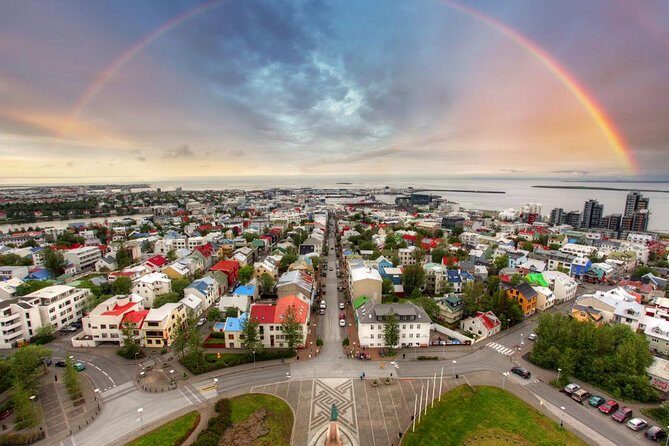
- Hallgrímskirkja bell tower views when conditions allow, plus free time at a first-anchor landmark
- Þingholt and City Pond: old neighborhood lanes and a pocket of wildlife right in town
- City Hall’s giant topographical map for a practical primer on geology and volcanology
- Parliament and first homesteads: the center of civic Reykjavík, framed with early settlement history
- Harpa + Sun Voyager at Old Harbour for bay views and iconic modern Iceland design
- Guides who make Iceland stories usable, with recommendations for museums, bars, and restaurants
A 2.5-hour orientation route that fits real schedules
This is a 2 hours 30 minutes walking tour, built for getting oriented without burning your whole day. If you’ve only got one shot at a first-day feel, I like this format: you’re not just ticking off photos. You’re also learning the logic of where things are and why they matter—church above town, civic core in the middle, and Old Harbour as the working-and-performing waterfront.
The pace is active but not frantic. You’ll make several stops with short stays, so you won’t feel stuck in one place. Still, you should plan like Iceland weather can change quickly: the tour operates in all weather conditions, so you’ll want to dress for cold wind, wet sidewalks, and sudden shifts.
Small group size matters here. With a maximum of 12, the guide can actually steer the conversation and keep everyone together at the landmarks. In practice, that’s what turns a city walk into a “I get it now” day.
You can also read our reviews of more walking tours in Reykjavik


Hallgrímskirkja: the photo stop that turns into a view lesson
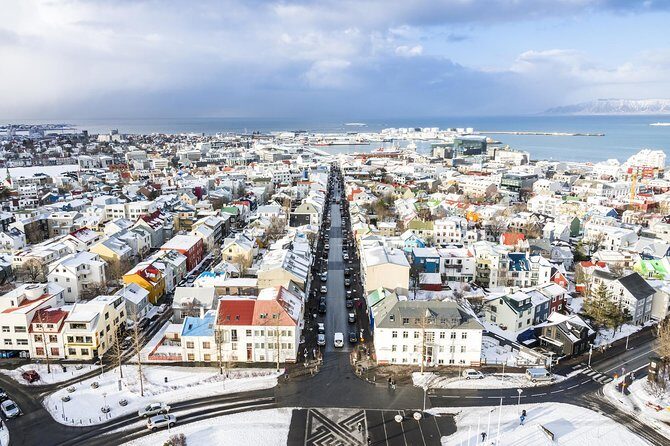
You meet at Hallgrímstorg 1 in central Reykjavík, and the tour kicks off at Hallgrímskirkja Church. This isn’t a random church stop. It’s the most recognizable building above the city, and the stepped concrete facade echoes Iceland’s dramatic shapes back home. Inside, the feel is minimalist, and the church’s grand organ is part of the character.
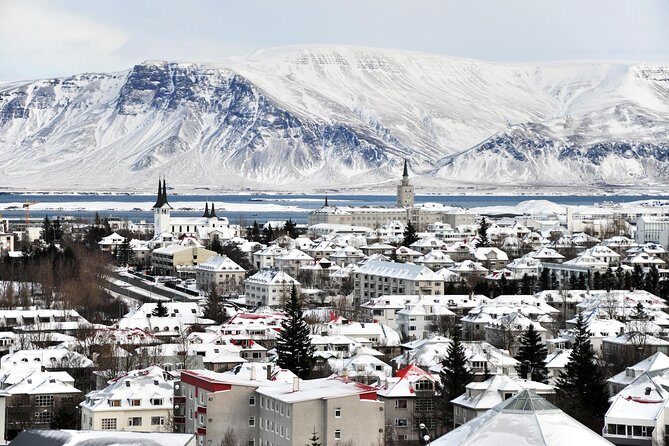
The standout moment is the possibility of going up to the bell tower. If conditions allow, you’ll climb to the top and use the clear sightlines to take in the red rooftops and Faxaflói Bay beyond. I love how this reframes Reykjavík instantly: you see the city’s scale, where the harbor sits, and how the skyline relates to the water.
Reality check: one catch shows up in guest feedback—sometimes bell-tower access isn’t available for your specific session. If that happens, you still get the landmark and storytelling, but you’ll miss that top-floor angle. If you care a lot about the view from the tower, arriving early on your own for the elevator access (when available) can help.
Either way, this stop is a strong “start right” move because it gives you the skyline reference points you’ll use later at Harpa and the Old Harbour.
Þingholt lanes and the Reykjavík City Pond wildlife break
Next you head toward Einar Jónsson’s statue garden, where the guide leans into Norse myths and legends. This is one of those “culture” stops that actually helps the rest of the tour land. When you learn the stories tied to the people and symbols, the city’s monuments stop feeling like random metal and stone.
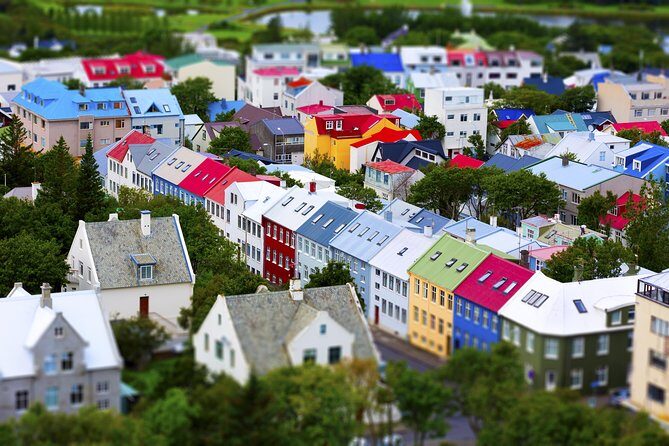
Then you walk through Þingholt (Þingholtsstræti), one of Reykjavík’s oldest neighbourhood areas. The key detail here is the street’s history: a small townhouse stood from 1765–1771, and the area is known today for colorful corrugated iron houses. I like this because it’s not just architecture spotting. It’s the timeline of a town growing up in a harsh climate, where materials and building methods matter.
Right after that, you reach Reykjavík City Pond, a pocket of nature in the middle of the city. The tour includes time to watch and feed ducks, geese, and swans that live there. Even if you don’t linger long, it breaks the “big landmark” rhythm and gives your legs a different kind of scenery while you still stay central.
Practical tip: if you’re traveling in winter or shoulder season, this area can be slippery. Keep your center of gravity low, take short steps, and expect ice.
City Hall’s giant Iceland map: volcanology explained without the textbook
A major reason I’d book this tour early in my trip is the way it connects Reykjavík to the rest of the country. At Reykjavík City Hall, you cross the pond area and head inside to see a super-sized topographical map of Iceland. The guide uses it to explain Iceland’s geology and volcanic history in plain language.
This is one of the highest-value parts for most people because it gives you a mental model. Without it, you’ll just see “volcanoes exist.” With it, you start to understand why Iceland looks the way it does—ridges, plains, and the shapes that hint at how the earth moves.
The stop is about 30 minutes, and it’s mostly guided. You’ll be able to follow the story while standing in one place looking at the big picture. That beats trying to piece it together later from books or a museum when you’re tired.
Parliament, cathedral, and the first homesteads in one civic loop
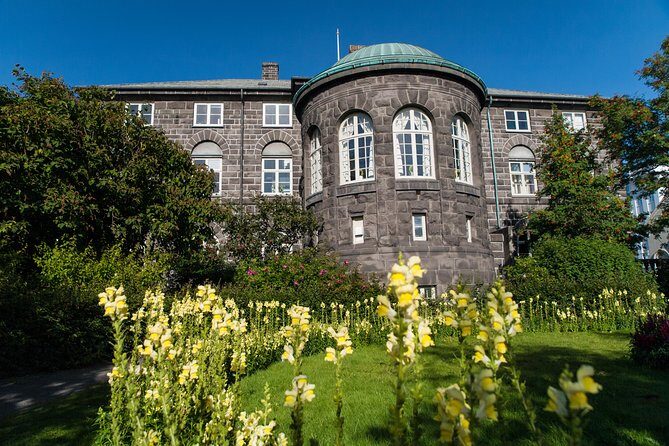
From the civic and city-planning core, the tour threads through central Reykjavík. You’ll see Alþingishúsið, the parliament building area, along with the modest-but-beautiful cathedral and the site of the city’s very first houses and Viking homesteads.
This stop works because it’s layered. Reykjavík is young compared to many European capitals, but it still has deep roots in settlement and governance. When your guide places today’s parliament and church in the timeline of early homesteads, the city becomes less of a “modern downtown” and more of a story with continuity.
You’ll also pass the Domkirkjan (Reykjavík Cathedral) area, which is the seat of the Bishop of Iceland and the mother church of the Evangelical Lutheran Church of Iceland. It’s also the parish church of the old city center. The time here is shorter—around 10 minutes—but it’s enough to anchor the religious and civic feel of the old downtown core.
If you’re the type who likes your history messy and human—who lived here, what mattered, what changed—this loop will satisfy. It’s not just facts; it’s the “why this building here” framing.
You can also read our reviews of more city tours in Reykjavik






Old Harbour to Harpa: modern Reykjavík with bay-level views
After the civic core, you walk toward the Old Harbour, and that’s where the scenery starts to loosen up. You’re not just looking at buildings now—you’re facing the water and the horizon.
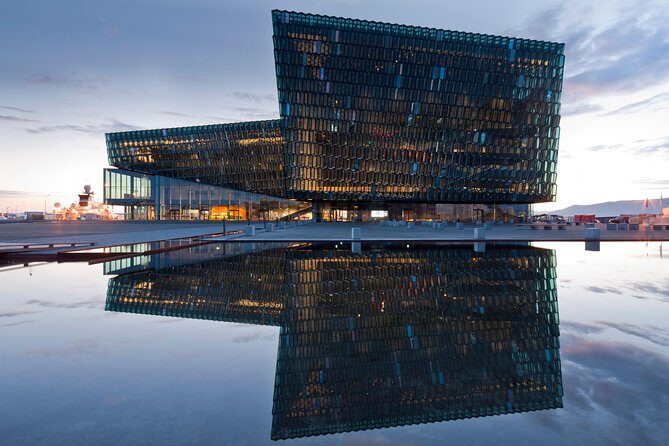
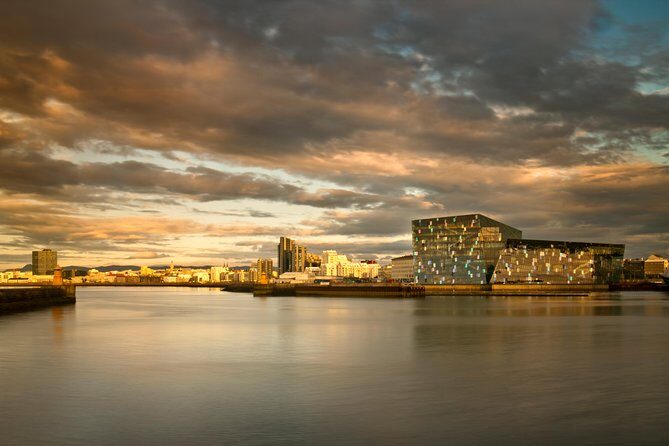
You’ll stop for views of Harpa Concert Hall and Conference Centre, a striking modern structure that reads like Iceland’s design future in glass and geometry. This is also where you slow down enough to take real photos, because the light over the bay often looks different than it does farther inland.
Right near the harbor area, you’ll also admire the Sólfar (Sun Voyagers) sculpture. It gives you a clean view direction over the water toward Mt. Esja. I like that the guide ties this into the rest of the tour’s theme: myths and nature aren’t separate topics in Iceland. They’re just different ways of talking about the same reality—weather, land, and survival.
The tour spends about 15 minutes at this portion. That’s usually enough time to get your bearings, take photos, and listen without freezing your hands off—though in windy conditions, you might want to keep your camera ready and your gloves closer.
What you’ll actually learn from the guide (and use afterward)
The strongest praise for this tour isn’t just the landmarks. It’s the delivery. Guides like Asi, Ásta, Tomas, David, and Dominica show up in guest stories for a reason: the best sessions mix clear context with humor and quick local answers.
Across the route, you’re learning:
- Icelandic city evolution, from early settlement patterns to today’s layout
- Viking-era and Norse myth references tied to places you’re walking past
- How volcanology and geology connect to daily reality in Reykjavík
- Practical pointers on museums, bars, and restaurants to try next
I also like that the tour gives you “what to do next” momentum. If you book this near the beginning of your trip, you can turn those recommendations into a simple plan for the remaining days, instead of wandering around cold and hungry with no direction.
There’s also a fun cultural angle in how the guide explains everyday Icelandic facts. One guest specifically noted learning about Icelandic naming—like how people’s last names work. Even if you don’t remember every detail, it makes the culture feel less distant.
Price and value: is $54.65 worth it?
At $54.65 per person, you’re paying for guided time and curated storytelling more than for paid entry. The tour notes that key parts are free admission for stops like the church and city hall map viewing. You’re also buying into a small-group format (max 12), which usually translates into more attention and better pacing.
So the value question becomes: do you want an orientation with context, or do you want to roam on your own? If you’re short on time, the guided loop is a win because it threads the city’s most meaningful spots into a coherent sequence. If you’re traveling with a tight itinerary, this tour can replace several “open map and guess” hours.
For longer stays, it’s still worth it because it sharpens everything afterward. When you visit a museum later, you already know what to look for and why it matters.
And yes: weather matters. The tour runs in all weather, but if conditions are truly rough and the experience is canceled due to poor weather, you’ll be offered a different date or a full refund. That flexibility helps justify booking even when the forecast looks uncertain.
Practical advice: shoes, timing, and how to keep warm
Comfort changes the whole day on this one. You’ll be walking in central Reykjavík between distinct neighborhoods and waterfront areas, and you’ll want comfortable walking shoes. In winter, the ice factor is real, even when it’s not dramatic enough to slow you down. Use good grip and plan for short pauses to re-balance.
Timing is also smart. Since you start at Hallgrímskirkja and build toward the harbour, early in the day tends to feel more fluid. One guest described joining after a long flight specifically to reduce jet lag and get active without losing the day. That makes sense: walking plus structured stops is a solid reset.
If you care about the bell tower, consider arriving early on your own. Conditions and access can affect whether the tower climb happens during your tour window.
Finally, if your group is slower, don’t assume the pace will automatically adjust. In one guest experience, the guide moved ahead rather than matching a slower walking rhythm. If that’s you, be proactive: tell the guide at the start so everyone knows what to plan for.
Should you book this Reykjavik City Walking Tour?
I’d book it if you want a guided first look at Reykjavík that connects the dots—churches, civic buildings, Old Harbour, and the stories behind them—without needing to research each stop in advance. It’s especially good value when you’re in town for only a couple of days or you want your next days to feel organized.
I wouldn’t make it my only plan if you’re mainly chasing museums or if you want a fully self-paced wander where you stop and start freely. Also, if bell tower access is your top priority, go in with a backup mindset: conditions can affect whether you get up there during the tour.
In short: if you want Reykjavík to make sense fast and you like history and geology explained in human terms, this is one of the best “start smart” choices in the city.
FAQ
Where do I meet the tour, and where does it end?
You meet at Hallgrímstorg 1, 101 Reykjavík (by Hallgrímstorg / Hallgrímskirkja area). The tour finishes in central Reykjavík at Old Harbour Souvenirs, Geirsgata 5c, 101 Reykjavík.
How long is the Reykjavik City Walking Tour?
It’s about 2 hours 30 minutes.
What’s the maximum group size?
The tour is small group, with a maximum of 12 travelers.
What’s included in the price, and is lunch included?
The tour includes a guide. Lunch is not included.
Does the tour include going up to the Hallgrímskirkja bell tower?
The tour description says you will go up to the bell tower if conditions allow. One guest’s experience indicated bell tower access wasn’t available during their session, so access can vary.
Will the tour run in bad weather?
The tour operates in all weather conditions, but it also requires good weather. If it’s canceled due to poor weather, you’ll be offered a different date or a full refund.
What is the cancellation policy?
You can cancel for a full refund up to 24 hours in advance of the experience start time. If you cancel less than 24 hours before, the amount paid is not refunded.