REVIEW · REYKJAVIK
Reykjavik: Golden Circle Full-Day Tour with Kerid Crater
Book on GetYourGuide →Operated by BusTravel Iceland · Bookable on GetYourGuide
Golden Circle in one day feels like magic. This full-day bus tour strings together Geysir, Gullfoss, Þingvellir, and the Kerið volcanic crater with an English-speaking guide and structured photo stops.
I especially like the human side: guides such as Thor or Sunny often bring Iceland stories and jokes (sometimes even music) into the ride. I also love the built-in science—Strokkur erupts about every 8 minutes, so you can line up your photos without guessing.
One drawback: the schedule is tight, and some stops are photo-only. Kerið is listed as a 20-minute stop, and for departures at 12:00 pm and later, the tour notes it will not stop at the Kerið crater lake.
What makes this Golden Circle day tour work
- Strokkur timing: an active geyser that spouts roughly every 8 minutes
- Gullfoss with spray time: a 45-minute stop to get your waterfall views
- Þingvellir walking time: a 45-minute walk in the rift valley where plates pull apart
- Kerið crater photo stop: quick look at the volcanic crater lake (often on earlier departures)
- Lunch included in the schedule: 80 minutes at the Geysir area for lunch and breaks
- Reykjavik convenience: many central pickup/drop-off options, plus an easy meeting point
In This Review
- Golden Circle Highlights, Without the Car Stress From Reykjavik
- Bus Timing and Stop Order: How the Day Actually Flows
- Getting Oriented Fast in Reykjavik: Pickup vs. Meeting Point
- Hveragerði Break: A Small Reset Before the Big Geology
- Kerið Crater: The Volcanic-Lake Look (And When It Might Be Skipped)
- Gullfoss Waterfall: The Spray, the Crevice, and the View Time
- Geysir Area and Strokkur: Eruptions Every 8 Minutes
- Þingvellir National Park: Where the Plates Are Pulling Apart
- Lunch and Breaks: You’re Covered for Time, Not for Food
- Price and Value: Why $82 Makes Sense for Most People
- Guide Personality and Driver Safety: The Real Difference on Iceland Roads
- Weather and Cancellations: What You Should Plan For
- Who This Tour Fits Best (And Who Might Want Something Else)
- Should You Book This Golden Circle With Kerið?
- FAQ
- How long is the Golden Circle full-day tour?
- What main stops does the tour include?
- Does the tour include food?
- Is Kerið included on every departure time?
- Is pickup available in Reykjavik?
- What language is the guide?
- How often does Strokkur erupt?
- Where does the tour drop you off at the end?
- What happens if weather is too rough?
Golden Circle Highlights, Without the Car Stress From Reykjavik
If you’re doing Iceland for the first time, the Golden Circle is the “yes, that’s the Iceland we promised” route. This tour keeps it simple: you’re on an air-conditioned bus for most of the day, with an English live guide, and you hit the core sites in a logical order.
What makes it feel smart is the pacing. You’re not trying to squeeze in five separate drives, figure out parking, and still catch daylight. Instead, the day is built around timed stops—enough time to see, photograph, and breathe, without turning your day into a traffic jam contest.
And the guide adds real texture. On this kind of route, you can get boring facts recited over a loudspeaker. Here, the commentary tends to land as stories plus humor. Some guides have been known for memorable Icelandic touches—songs, lullabies, and saga-flavored explanations—so the drive feels like part of the experience, not just the transfer.
Bus Timing and Stop Order: How the Day Actually Flows
The tour runs about 7 to 8.5 hours, starting in Reykjavik and ending back in Reykjavik. You get a transfer of about 40 minutes early on, then the day moves stop-to-stop with breaks.
Here’s the core flow:
- Hveragerði break (15 minutes)
- Kerið Crater photo stop (20 minutes)
- Gullfoss photo stop (45 minutes)
- Geysir area photo stop + lunch (80 minutes)
- Þingvellir National Park photo stop + walk (45 minutes)
- Return transfer to Reykjavik (about 1 hour)
This structure matters because it keeps you from relying on hope. Iceland weather can change fast. Still, the plan gives you repeated chances to capture each highlight in some version of the conditions you get.
Two practical notes for planning:
- Meeting point is Tour Bus Stop 12 at Höfðatorg (on Þórunnartún) if you’re not using an optional pickup.
- Kerið has a special caveat: the tour states it won’t stop at the Kerið crater lake for departures at 12:00 pm and later. If Kerið is a priority for you, pick an earlier start time.
A few more Reykjavik tours and experiences worth a look
Getting Oriented Fast in Reykjavik: Pickup vs. Meeting Point
You have two ways to start: optional hotel pickup (select hotels and official bus stops in central Reykjavik only) or meet the group at the designated stop.
Meeting point clarity is a real quality-of-life thing on tour days. This one is straightforward: Tour Bus Stop 12, Höfðatorg (on Þórunnartún).
If you’re coming from a cruise port, the tour also notes it’s available from there—you just need to indicate which port you’re arriving into. That’s helpful because cruise timing can be tight, and you don’t want to guess where the bus is supposed to be.
Hveragerði Break: A Small Reset Before the Big Geology
The first named stop is Hveragerði, with a 15-minute break. That’s not an attraction stop meant for long sightseeing. Think of it as your time to reset: restroom needs, a quick snack, and getting your layers right before the waterfall and geothermal stops.
This kind of micro-break is genuinely useful on Iceland tours. Once you leave Reykjavik, you’re in “outside time” mode—cold, wind, mist, and slick ground are all common. A short pause early helps you avoid doing the math later when you’re dealing with queues at the main sites.
Kerið Crater: The Volcanic-Lake Look (And When It Might Be Skipped)
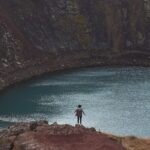
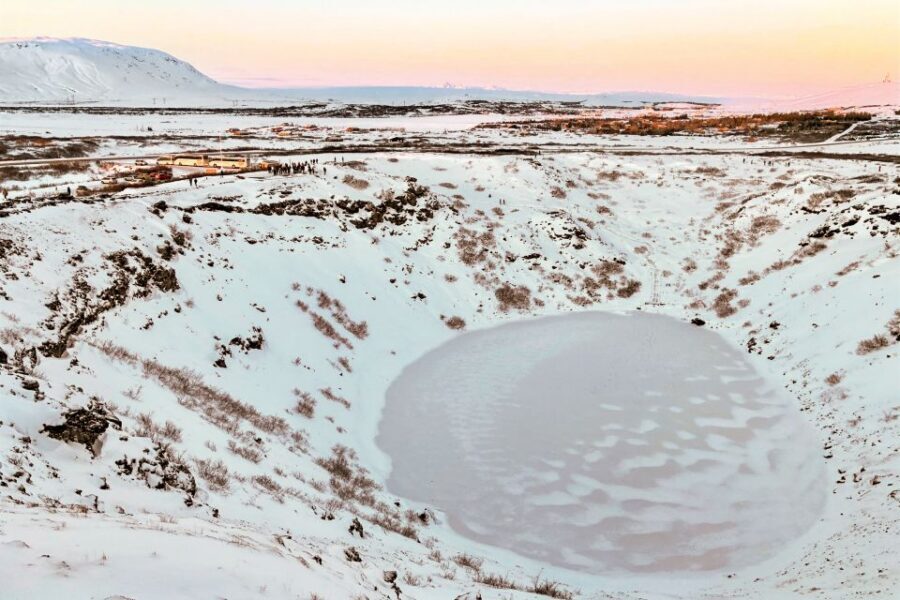
Kerið is one of those Iceland stops that gives you a different flavor than waterfalls and steam vents. You’re looking at a volcanic crater at Lake Kerið, with a photo stop set at about 20 minutes.
Here’s the draw: Kerið is a compact place where the geology feels visible fast. The crater walls frame the water, and it’s a clean, iconic shape—great for photos, and good for understanding that Iceland’s drama isn’t just about geysers and rivers.
Timing matters. The tour specifically says it will not stop at Kerið crater lake for departures at 12:00 pm and later. So if you’re booking this as your Kerið-and-Circle day, start early. It also lines up with how the day’s other stops work: earlier tours tend to feel less crowded at the big viewpoints.
What to watch for with this stop:
- Photo-stop pacing means you’ll want your camera ready and your footwear solid.
- 20 minutes goes fast in icy or windy conditions, especially if you’re stopping to take multiple angles.
Gullfoss Waterfall: The Spray, the Crevice, and the View Time
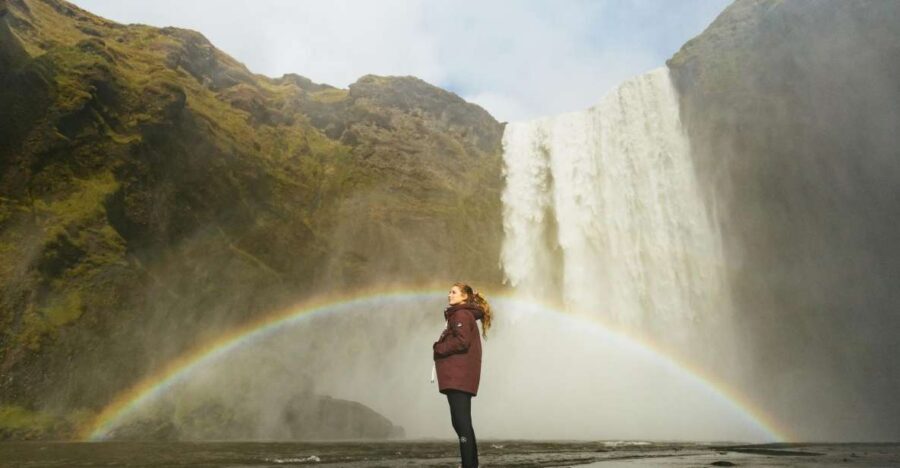
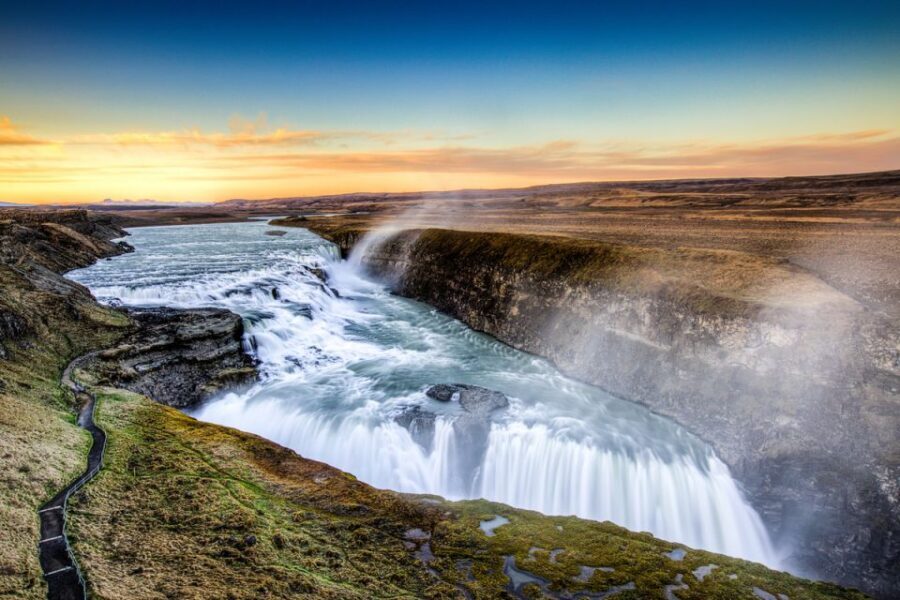
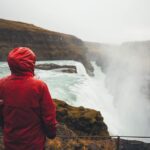
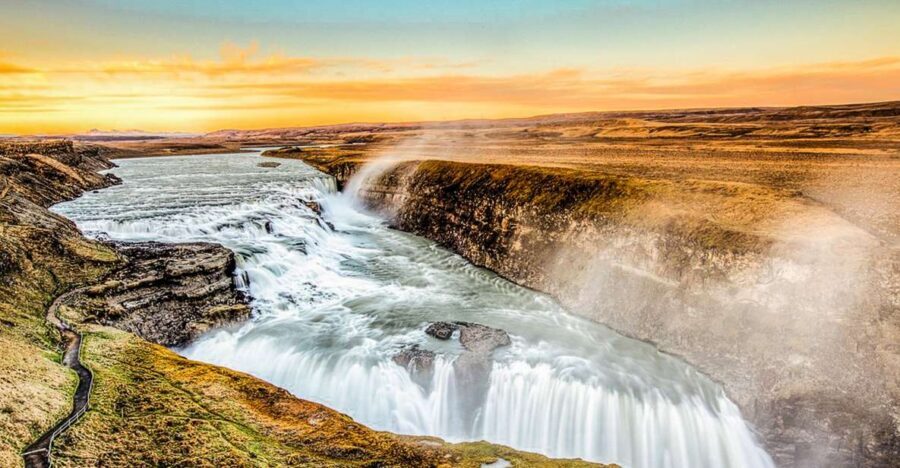
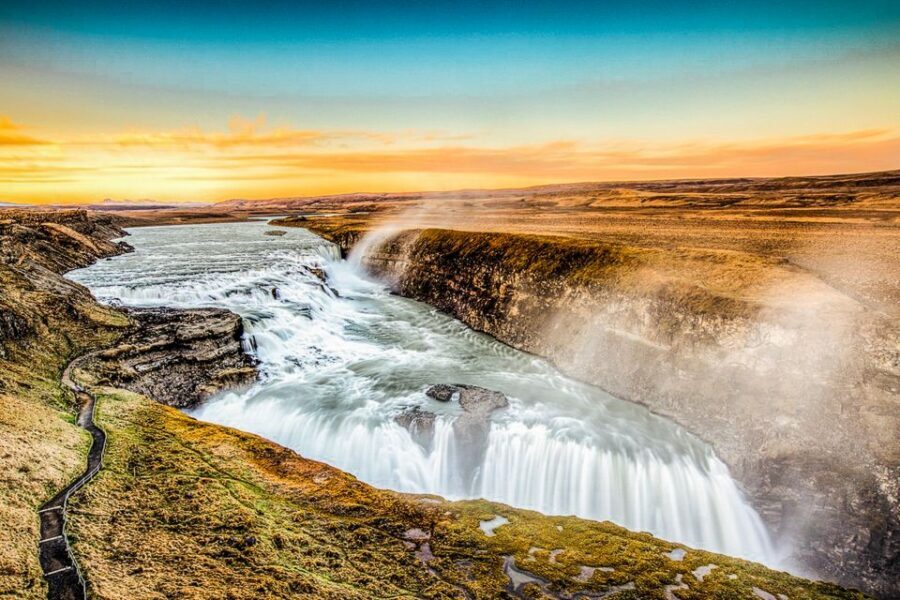
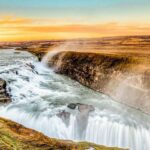
Then comes Gullfoss, one of Iceland’s most famous waterfalls. The schedule gives you 45 minutes for a photo stop, which is usually enough to walk to the viewpoints you want and still have time to just stand there and take it in.
Gullfoss is more than a pretty waterfall. The tour notes the glacial River Hvítá plunges into a 32-meter deep crevice. That matters because it explains the visual effect you’ll see: powerful falling water, spray in the air, and a sense that the ground is swallowing the river.
What I like about giving Gullfoss a full 45 minutes is that you can adjust to conditions. If the wind shifts, you can reposition. If clouds roll in, you can still get the contrast of the falls and the mist.
A small practical tip: dress for spray. Even when you’re not right in the heaviest mist, Gullfoss tends to wet faces and lenses. Bring something to protect your phone or camera and expect a little fine spray in your hair.


Geysir Area and Strokkur: Eruptions Every 8 Minutes
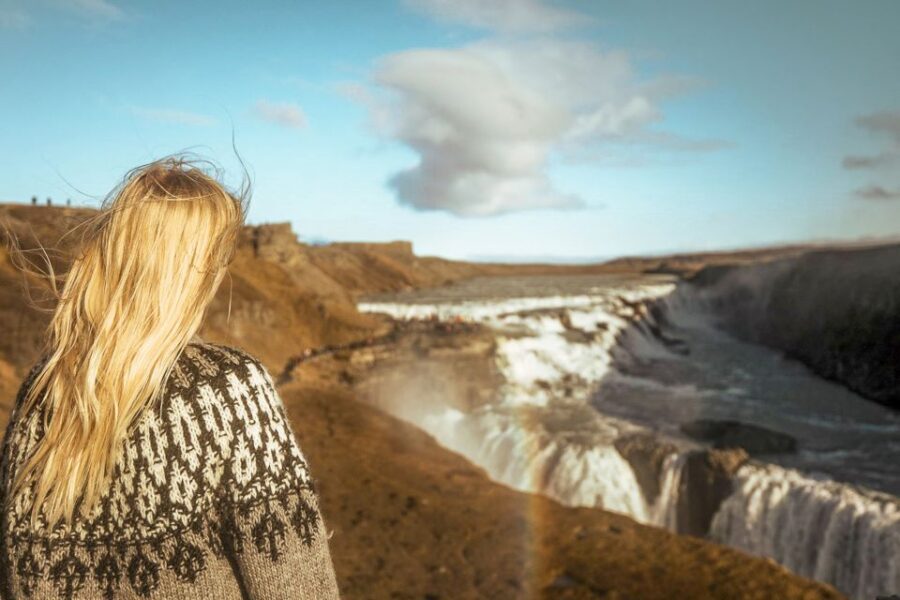
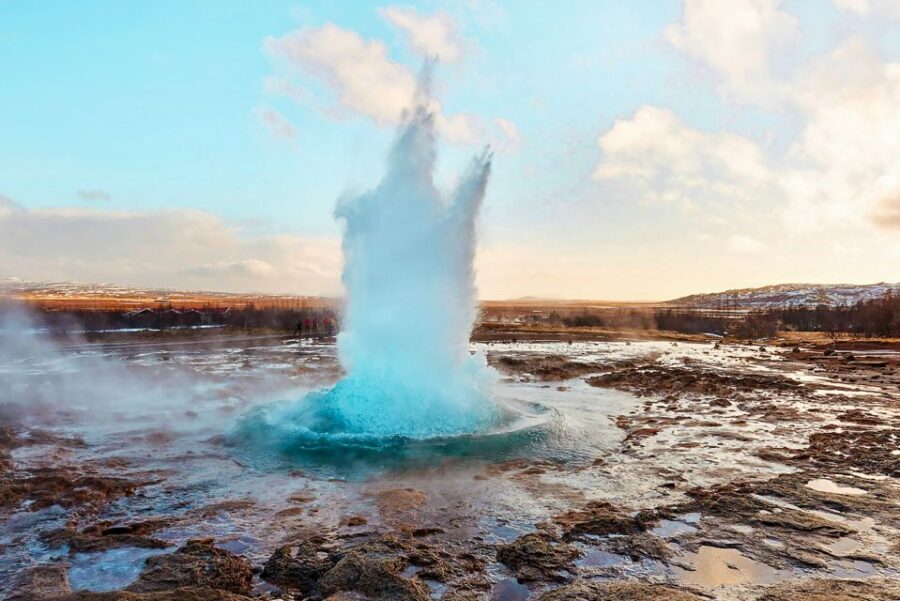
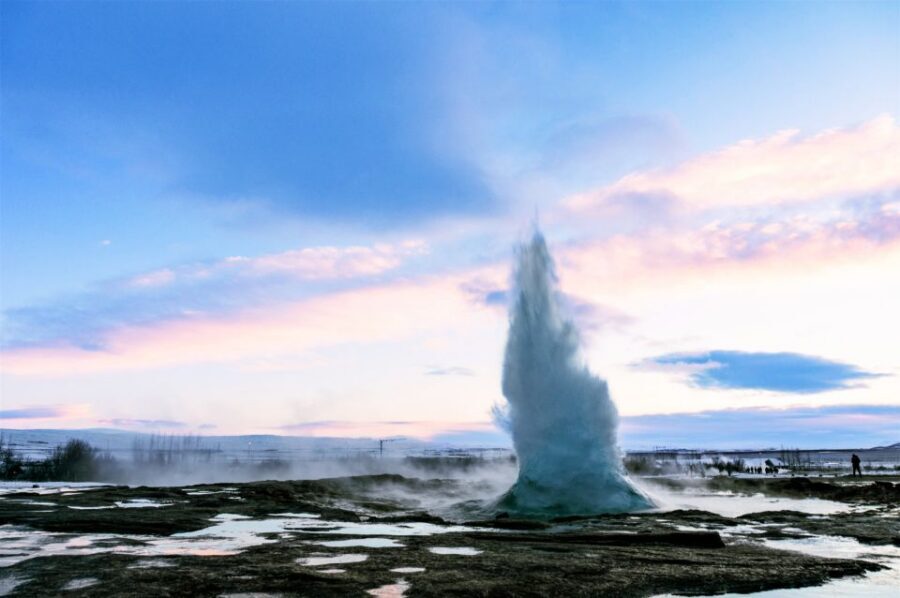
This is the geothermal portion of the day, with Geysir as the area and Strokkur as the star. The tour notes Strokkur is an active hot spring that spouts steaming water about 30 meters into the air, roughly every 8 minutes.
That eruption cadence is exactly why a guided bus tour can work well here. You don’t spend the whole stop guessing when it’ll go off. With the schedule, you can time your photos and take turns getting in the right position without feeling like you’re racing the clock the entire time.
Your time at the Geysir area is 80 minutes total, which includes both a photo stop and lunch. That’s a big advantage over day trips that give you only a quick look.
What to consider:
- Queues can form around the best viewing points when it’s busy. The extra minutes help, but it still may feel fast if you’re trying to do everything (photos, lunch, restrooms) in one stop.
- The geyser action can be mesmerizing, and it’s easy to lose track of time. That’s a good problem to have, but it’s still your responsibility to keep an eye on the meeting window for the bus.
Also, some days can include a bonus stop for something extra like Icelandic horses, depending on the day’s route flow. If you love surprises and quick wildlife moments, this is a nice possibility.
Þingvellir National Park: Where the Plates Are Pulling Apart
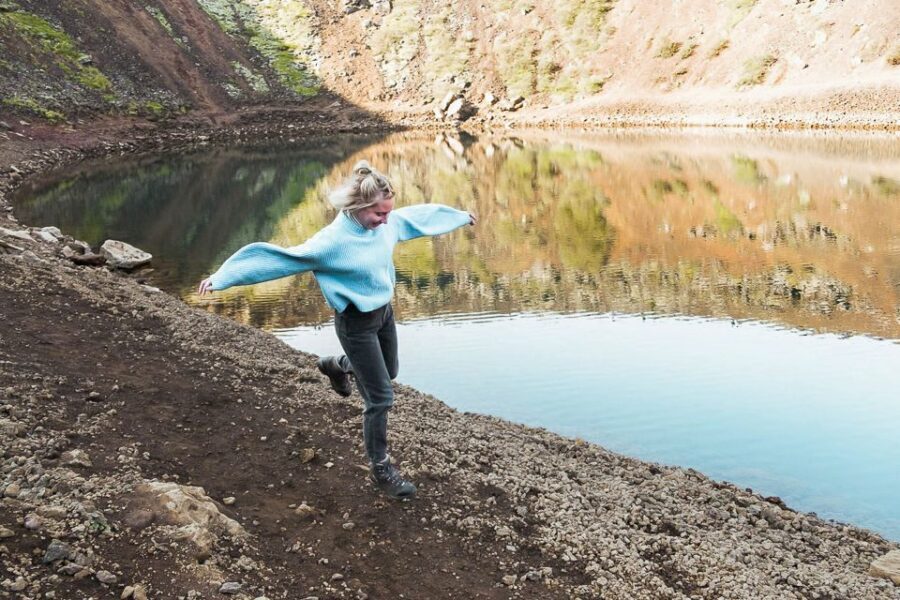
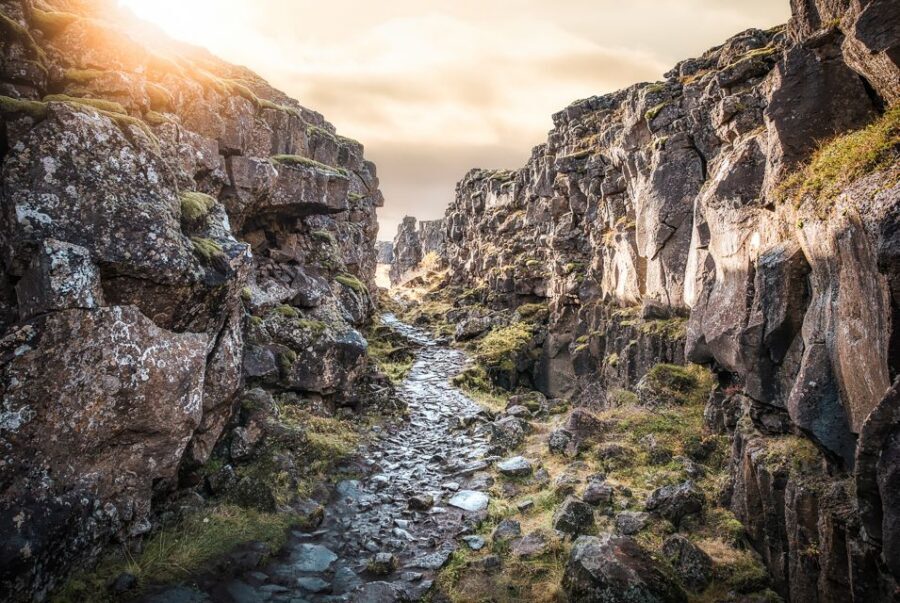
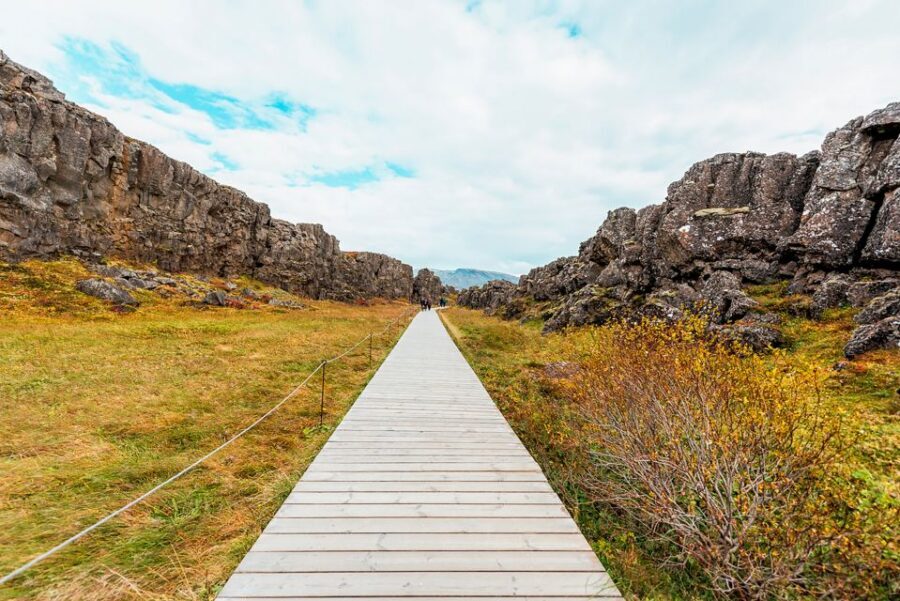
Next is Þingvellir National Park, with a 45-minute walk after a photo stop. This is where Iceland’s geology and history overlap in a way that’s hard to replicate elsewhere.
The tour highlights two key ideas:
- The North American and Eurasian tectonic plates are pulling apart, at a rate of a few centimeters per year.
- Þingvellir was named a UNESCO World Heritage Site in 2004 for cultural value, including the Rock of Law, the first Viking parliament.
So when you’re walking in the park, you’re not just sightseeing. You’re tracing a real rift valley, one that’s still changing under your feet. That’s what makes Þingvellir more than a scenic stop. Even if you’re not a geology nerd, the place gives you an easy mental connection: Iceland isn’t stable because it sits on the edge of moving plates.
What I find valuable about giving it a dedicated walk is that you can slow down mentally. Gullfoss and Strokkur are intense and fast. Þingvellir lets you absorb scale and texture.
Practical note: the walk is short but it’s outdoors. Ground can be slick, especially in winter or after misty weather. Good footwear matters more here than it does at a museum.
Lunch and Breaks: You’re Covered for Time, Not for Food
Food and drinks aren’t included. But lunch is built into the plan during the 80-minute Geysir-area window.
That means you can choose what fits your appetite and temperature tolerance. If you want something warm, you’ll have time to grab it. If you prefer snacks and photos first, you can do that too.
The bigger win is the structure. Tour days fail when you don’t have restroom and eating time, and you start improvising in the cold. This route provides planned breaks—Hveragerði for a quick reset and then a longer midday stop for lunch.
Price and Value: Why $82 Makes Sense for Most People
At $82 per person, this is priced like a classic “do the big five without driving” day. The tour includes:
- the tour itself
- an English live guide
- air-conditioned bus transportation
- pickup and drop-off if you select that option
You supply food and drinks.
When I look at value on a day like this, I focus on what you avoid: driving stress, navigating unfamiliar roads, and the risk of missing key timing points. Golden Circle sites are spread out and weather-dependent. A guided bus format turns that uncertainty into an organized plan.
You also get a full day’s worth of sights that each tell a different Iceland story:
- volcanic crater (Kerið)
- waterfall power (Gullfoss)
- geothermal energy (Geysir/Strokkur)
- rift valley physics and Viking history (Þingvellir)
Could you do parts yourself? Sure. But for many visitors, the bus and guide cost is a fair trade for smooth logistics and a day that feels efficient without being frantic.
Guide Personality and Driver Safety: The Real Difference on Iceland Roads
Most of your experience is built into the itinerary. Still, it’s the people that make the day feel smooth.
Guides on this route tend to work like storyhosts, not just reciters. Names mentioned for past days include Thor, Emily, Sunny, Dean, Gary, Jessica, and others, and the common theme is a mix of history, geography, and humor. That’s why the ride doesn’t feel like wasted time.
Drivers matter too. Iceland roads can get slick and windy, especially outside Reykjavik. You can feel the difference when a driver is calm and precise, keeping the bus stable during gusts and taking turns carefully.
One more small point: on any bus tour, sound quality varies. If you’re hard of hearing, sit closer to the guide area so you catch the story beats (and the safety reminders).
Weather and Cancellations: What You Should Plan For
Iceland weather is a real variable. The tour notes that in bad conditions such as heavy rains or thunderstorms, the provider may cancel and offer another date or a full refund.
So build your schedule with this in mind:
- If you’re choosing between tours, pick the date with the most flexibility.
- Bring rain protection and a warm layer even if Reykjavik is sunny at breakfast.
Also, note that the tour can move between winter temperatures quickly, and your comfort will depend on layering. Iceland hands you weather for free, and it doesn’t ask permission.
Who This Tour Fits Best (And Who Might Want Something Else)
This tour fits you if:
- you want the classic Golden Circle hits without renting a car
- you like a guide who connects the geology to stories
- you’re okay with timed stops and photo-focused viewing at the faster sites like Kerið and Gullfoss
- you want an organized day that still leaves room for lunch and breaks
You might prefer a different style if:
- you want to linger for long periods at each viewpoint and take your time with only one or two sites
- you’re very sensitive to crowds and queues around Strokkur viewing
- you care deeply about Kerið and are traveling on a departure at 12:00 pm or later, because Kerið may not be included on those schedules
Should You Book This Golden Circle With Kerið?
I’d book it if you want a well-paced, value-focused way to see Iceland’s headline geologic sites in one day from Reykjavik. The combination of Strokkur’s frequent eruptions, Gullfoss spray time, and the Þingvellir rift valley walk gives you a satisfying mix of spectacle and meaning.
If Kerið is a must for your personal checklist, book an earlier departure and confirm that your timing includes the Kerið stop. Otherwise, you could end up with a day that skips one of the most visually striking stops.
For most first-timers, this is a strong “get your bearings fast” day. You’ll come home with photos, context, and the sense that Iceland’s forces are still very much at work.
FAQ
How long is the Golden Circle full-day tour?
The duration is listed as 7 to 8.5 hours.
What main stops does the tour include?
You’ll visit the Geysir area, Gullfoss Waterfall, Þingvellir National Park, and a volcanic crater at Kerið. There’s also a break in Hveragerði.
Does the tour include food?
No. Food and drinks are not included, though the Geysir area stop includes time for lunch.
Is Kerið included on every departure time?
The tour notes it will not stop at the Kerið crater lake for departures at 12:00 pm and later.
Is pickup available in Reykjavik?
Pickup is optional at select hotels and official bus stops in central Reykjavik only. If you don’t get pickup, you meet at Tour Bus Stop 12 at Höfðatorg (on Þórunnartún).
What language is the guide?
The tour includes a live English guide.
How often does Strokkur erupt?
Strokkur is described as spouting steaming water about 30 meters into the air every 8 minutes.
Where does the tour drop you off at the end?
The tour lists multiple drop-off locations around Reykjavik, depending on the option and route.
What happens if weather is too rough?
If there are bad weather conditions such as heavy rains or thunderstorms, the provider may cancel the tour and offer another date or a full refund.