REVIEW · REYKJAVIK
Reykjavik: City Sightseeing Hop-On Hop-Off Bus Tour
Book on GetYourGuide →Operated by City Sightseeing Europe · Bookable on GetYourGuide
I get my bearings fast in Reykjavík. This hop-on hop-off loop is a smart way to see the city’s big sights without stress, with audio commentary in 8 languages that keeps the ride useful even when the weather turns.
I especially like the flexibility of hop-on hop-off planning, because you can get off where you want and stay as long as you need. On the ground, you can also use the QR code on stop signs to check how soon the next bus arrives, which makes waiting in wind and rain far less painful.
One thing to factor in is the schedule and the weather. During winter, the first bus starts later and the last departure comes early, and if conditions are rough, the tour can run off its rhythm; also, Skarfabakki Harbour is summer-only.
In This Review
- Key things I’d bookmark before you ride
- How the hop-on hop-off loop actually helps you in Reykjavík
- Price and time value: why $47 can feel fair or frustrating
- Winter vs summer departures: plan around the clock
- Audio guide + headphones: the part that makes the ride more than transport
- Stop-by-stop: what each major stop gives you
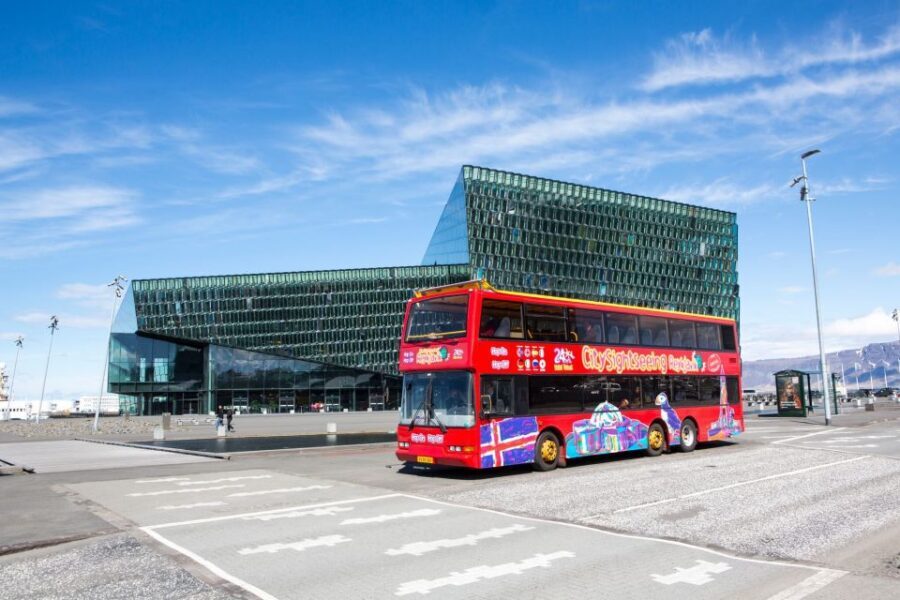
- Harpa Concert Hall and Conference Centre (starting point)
- Old Harbour + Reykjavík Maritime Museum
- Whales of Iceland (whale-focused stop)
- National Museum of Iceland
- Lækjargata + Laugavegur Shopping Street
- Reykjavík Art Museum Kjarvalsstaðir
- Hallgrimskirkja
- BSI Bus Terminal
- Perlan
- Kringlan Shopping Centre
- Hilton Reykjavik Nordica
- Laugardalur Valley
- Skarfabakki Harbour (summer only)
- Hofdi House
- Practical ride tips that save time and discomfort
- Who this tour fits best
- Should you book Reykjavík’s Hop-On Hop-Off Bus Tour?
- FAQ
- How long does the bus tour take?
- Does the tour run every day, and how often are buses?
- What languages are available for the audio guide?
- Do I need tickets printed, or can I use a phone voucher?
- Are attraction tickets included?
- Is Skarfabakki Harbour included year-round?
Key things I’d bookmark before you ride
- 8-language audio with headphones so you can understand what you’re seeing while you stay warm inside.
- A loop built for short attention spans: about an 80-minute circuit and regular departures.
- Major stops grouped logically around harbor, museums, church, viewpoints, and shopping.
- QR code timing at stops helps you minimize cold-standing time.
- Seasonal differences matter (notably Skarfabakki Harbour in summer).
How the hop-on hop-off loop actually helps you in Reykjavík
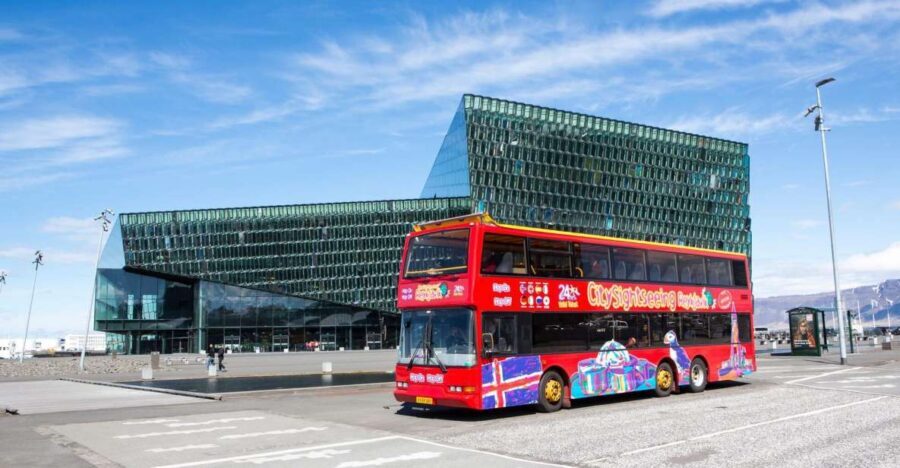
Reykjavík can feel both compact and spread out. The downtown core is walkable, but the best “wow” stops—harbor views, museums, and the bigger viewpoints—are scattered enough that you’d waste time on taxis or playing guesswork with buses.
This City Sightseeing setup solves that with a repeating route. You stay on as long as you want, then you hop off when something catches your eye: a museum you want to take slowly, a shop stop you can’t resist, or a harbor area where the wind might be brutal but the views are worth it.
The biggest advantage is that you’re not committing to a tight guided itinerary. You’re choosing your own pace. That matters in Reykjavík because daylight, weather, and your energy can shift hour by hour.
You can also read our reviews of more city tours in Reykjavik



Price and time value: why $47 can feel fair or frustrating
At around $47 per person for a day (with 24 or 48-hour ticket options), the question isn’t whether it’s “cheap.” Reykjavík is not cheap. The real value is whether you can turn one ticket into multiple practical wins:
- You save decision-making time. You don’t have to plan a route between distant stops before you even see the city.
- You get context during transit. The onboard audio commentary keeps the ride informative instead of just moving you around.
- You can repeat stops when it helps. If you hop off and miss your timing, you still have another chance on the next cycle.
Is it perfect value for everyone? Not always. Reykjavík is small enough that some people can cover a lot on foot in a day. If your plan is ultra-focused—say, just church views and one museum—then the bus may feel like an extra layer. But if you want a broad sweep to help you decide what to do the next day(s), this ticket often earns its keep.
Winter vs summer departures: plan around the clock
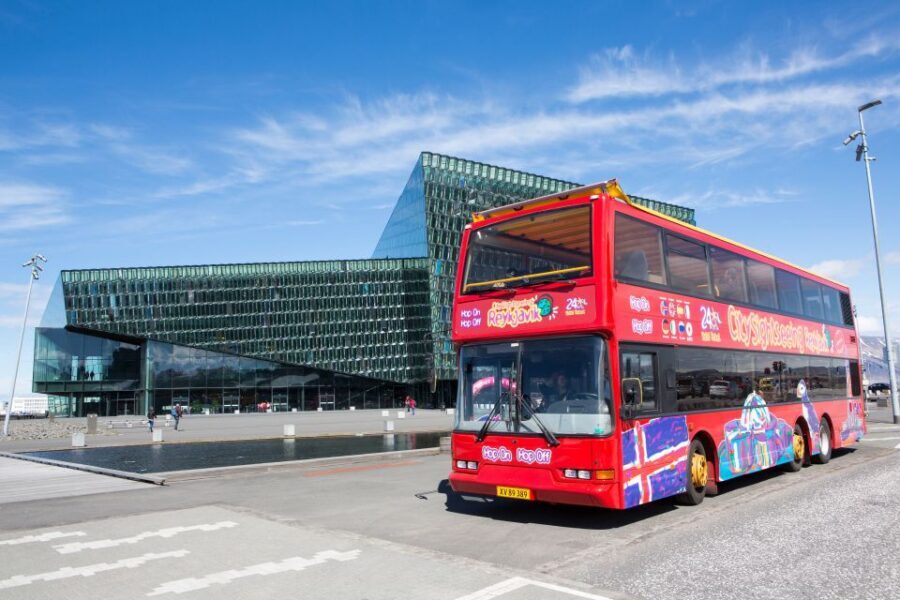
The tour runs on seasonal timing, and that’s important.
In winter (Oct 1 to Apr 30), the first departure is 9:30am and the last departure is 4:15pm, with buses about every 45 minutes. In summer (May 1 to Sep 30), it starts earlier at 8:30am and runs later to 5:30pm, with frequency around every 30 minutes.
Why you should care: if you’re sightseeing outdoors, you want daylight and workable weather. If you’re arriving late or you’re trying to juggle indoor stops against long outdoor walks, the last departure time can quietly shape your day.
Also, one stop changes with seasons. Skarfabakki Harbour is summer only, so don’t count on it when you’re visiting in colder months.
Audio guide + headphones: the part that makes the ride more than transport
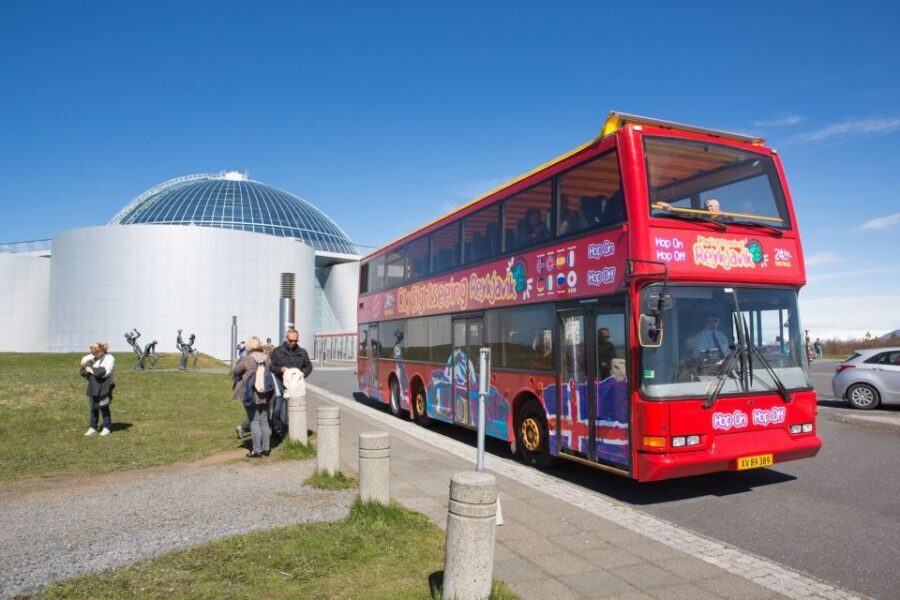
This tour includes audio commentary in English, Spanish, French, German, Italian, Japanese, Swedish, and Icelandic, delivered through headphones you use onboard.
I like this format because it lets you do two things at once:
1) look out the window at real city scenes, and
2) understand what those scenes are tied to.
It’s also handy when the outside is unpleasant. In rain, wind, or low-visibility conditions, you’ll still get value from the narration without forcing yourself to be constantly outside. And the recordings help even if you’re not stopping at every single attraction.
One extra tip: the bus does not automatically stop at every stop. If you want to get off, tell the driver in advance. That small step can save you from missing your moment.
Stop-by-stop: what each major stop gives you
Below is how I’d think about the route, stop by stop—what it’s good for, and what to watch for.






Harpa Concert Hall and Conference Centre (starting point)
Harpa is a solid “first stop” energy. It’s a recognizable landmark and a clean way to orient yourself before you go bouncing around the rest of the city. If you’re arriving early, this is a good place to start your day rather than trying to guess where everything is.
If you’re starting from Harpa and heading toward the harbor next, you’ll feel the shift from modern city architecture toward Reykjavík’s working-waterfront mood.
Old Harbour + Reykjavík Maritime Museum
Old Harbour is the classic Reykjavík vibe: water, boats, and a sense of where daily life and history meet. If you like a city’s relationship to the sea, this is the section to linger.
Right after that, the Reykjavík Maritime Museum is a natural follow-up. It’s one of those stops that helps the city click. Even if you don’t go deep into the exhibits, you’ll leave with a better sense of why the waterfront matters here.
Whales of Iceland (whale-focused stop)
This is the stop you’ll want if you’re curious about Iceland’s ocean stories and the whale-watching world. It’s also a good indoor option if weather is turning.
Since the tour is about flexible pacing, you can keep this as a quick visit or treat it as your main attraction of the day.
National Museum of Iceland
This is a big one for understanding the country. The museum is specifically highlighted for showcasing Iceland’s heritage and history, so it’s not just a random stop—it’s the “make Iceland make sense” option on the route.
If your day is tight, this stop is still worth strong consideration because it gives you context you’ll carry to every other place you go afterward.
Lækjargata + Laugavegur Shopping Street
These are your “walk-friendly” stretches where you can mix sightseeing with practical city time. Lækjargata and Laugavegur are perfect for breaks between museums, church views, and other major stops.
If the wind is fierce, you might not want long outdoor wandering—but walking a few blocks with warm shop options can turn a stressful weather moment into an easy win.
Reykjavík Art Museum Kjarvalsstaðir
This stop gives you something different from the classic harbor-and-church rhythm: art. If you’re the type who likes to see how locals think and create, it’s a good contrast to the more history-heavy museum stop earlier in the day.
It also works well as a “gray-weather anchor.” When the sky is doing its best impression of a curtain, indoor art can keep your day moving.
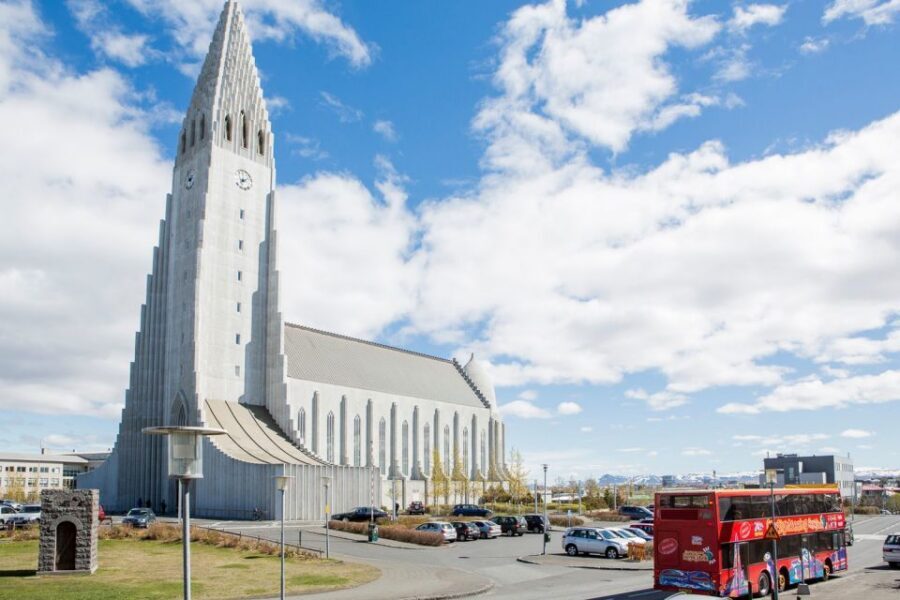
Hallgrimskirkja
You can’t do Reykjavík without considering this church. Even if you don’t go inside for long, it’s a landmark that visually defines the city.
I’d treat this stop as a photo-and-perception moment. It helps you recognize Reykjavík at a glance later, even when you’re walking away from the main route.
BSI Bus Terminal
This is less about sightseeing and more about logistics in your favor. Major terminals on a loop make it easier to re-route your day. If you get off here, you’re still positioned well to catch the next cycle and keep momentum.
It’s also useful if you’re tired and want to regroup without leaving the route network behind.
Perlan
Perlan is another major “destination” stop on the route. Even without getting into specifics about what you’ll find inside, the fact that it’s on the same loop as the church and museums tells you it’s meant for visitors who want a broader sweep of city highlights.
If you’re building your day around viewpoints, Perlan deserves serious attention because it’s placed where most sightseeing days need a peak moment.
Kringlan Shopping Centre
If you want a break that’s not just sitting in your hotel room, this stop is your best friend. It’s explicitly highlighted as a place to browse shops at Kringlan Shopping Centre.
This is also the kind of stop that helps you travel smarter in cold weather. You can warm up, refill on essentials, and still stay close to your transport safety net.
Hilton Reykjavik Nordica
Hotels aren’t always the sexiest stop on a hop-on hop-off route, but this one has value because it’s part of a wider “comfort zone.” If you’re planning to do a relaxed schedule, this stop can act as a buffer between sightseeing segments.
Laugardalur Valley
This stop is tied to the area with the thermal pools and spa mentioned in the tour context. It’s a great option if you want your day to include something that feels like Iceland’s body-care culture rather than only walking and looking.
Even if you don’t go all-in on the spa side, the valley location works as a “slow down here” moment.
Skarfabakki Harbour (summer only)
This is the stop for harbor views, but only in summer. If you visit during the warmer months, it’s a chance to soak in the water scene when daylight and weather are more cooperative.
In shoulder seasons, you may miss this stop entirely, so plan your expectations accordingly.
Hofdi House
This is your final major stop on the loop. It’s the kind of location that tends to reward a short, focused visit rather than an all-day commitment.
If you’re trying to fit everything into one day, end your route here if you want a calm landing point before you head back to your next plan.
Practical ride tips that save time and discomfort
Here are the small things that make the day smoother.
Track your next bus. The most useful trick I picked up is using the QR code on stop signs to estimate how far the next bus is. That cuts down the time you’ll spend standing around in Reykjavík’s wind.
Plan your hops with the schedule in mind. In winter, the earlier last departure means you should avoid long, unplanned detours late in the day.
Be ready to ask the driver to stop. The bus doesn’t automatically halt at every stop. If you want off, tell the driver.
Expect weather to change your priorities. The route can be disrupted during adverse weather. When it happens, treat the tour as a flexible tool, not a fixed timetable you must fight.
Cold comfort realities. Some riders have noted that the upper level may not feel that warm, and headphone jacks can be a little finicky. If your comfort matters, consider sitting somewhere you can comfortably manage headphones and stay warm.
One more human note: the experience often improves when drivers and staff take a personal interest. I’ve seen examples of drivers being patient and helpful, including getting passengers safely on when timing was tight (like a driver who stopped for passengers starting from Perlan), and a staff member named Jessica who gave a strong Northern Lights explanation on a cold day. Even with recorded audio, the human touch can make the ride feel easier.
Who this tour fits best
This hop-on hop-off bus is a great match if you:
- want a broad overview of Reykjavík in a single day,
- have limited time and want less planning,
- like using audio narration to learn while you move,
- are visiting in a season where weather can make walking less fun.
It might be less worth it if you:
- plan to focus on only one or two attractions you can reach quickly on foot,
- hate waiting at stops at any frequency,
- are uncomfortable relying on a vehicle loop rather than your own route.
Should you book Reykjavík’s Hop-On Hop-Off Bus Tour?
I’d book it if you want your first day to feel organized, even when Reykjavík is throwing wind and rain at you. The combination of 8-language audio, a loop that hits major sights, and the ability to check next arrival timing with QR codes makes it a practical choice for many itineraries.
I’d skip it if you already have a tight self-guided plan and you’re confident you won’t need help moving between distant stops. In a compact city, your own walking route can beat any bus in flexibility.
If you’re unsure, use this rule: if you’re trying to cover multiple “types” of stops—harbor, museum, church, viewpoint, and shopping—then this tour can stitch your day together without the mental overhead.
FAQ
How long does the bus tour take?
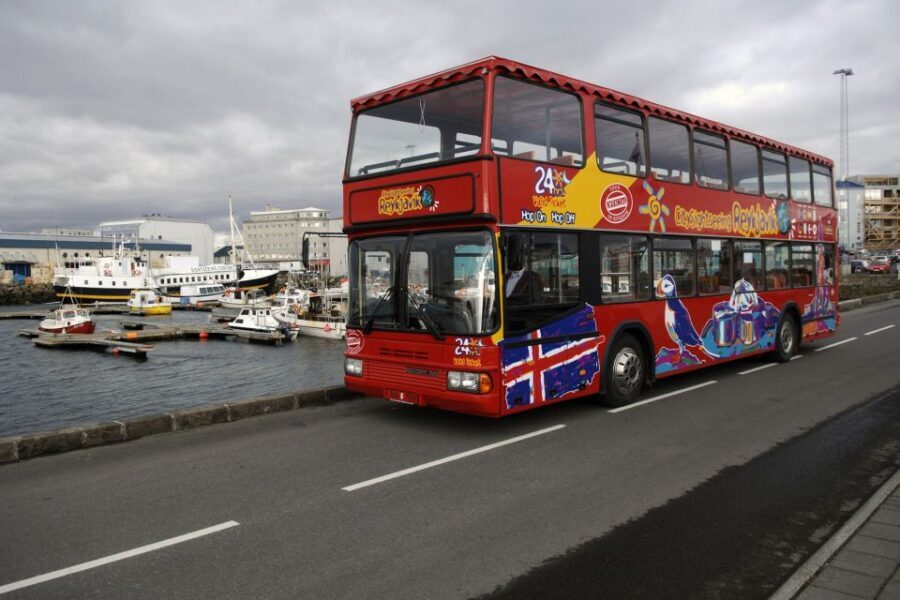
The tour duration is about 80 minutes per circuit.
Does the tour run every day, and how often are buses?
It runs on a seasonal schedule. In winter the first departure is 9:30am and the last is 4:15pm with departures about every 45 minutes. In summer the first departure is 8:30am and the last is 5:30pm with departures about every 30 minutes.
What languages are available for the audio guide?
Audio commentary is available in English, Spanish, French, German, Italian, Japanese, Swedish, and Icelandic.
Do I need tickets printed, or can I use a phone voucher?
You can use either a mobile or paper voucher to board the tour, and you can redeem it at any stop along the route.
Are attraction tickets included?
No. Entry to attractions is not included.
Is Skarfabakki Harbour included year-round?
No. Skarfabakki Harbour is listed as summer only.