REVIEW · REYKJAVIK
Reykjavik: City Walking tour in Small Group with Local Guide
Book on GetYourGuide →Operated by CityWalk · Bookable on GetYourGuide
Reykjavík in 2.5 hours feels like a fast sketch. You’ll start at Hallgrímskirkja, then move through the civic core and down toward the harbor, picking up stories Iceland locals actually tell. The tour includes Harpa Concert Hall and key sights like Alþingi Parliament.
I love the downhill layout and the fact that most sidewalks are kept clear with geothermal heat and salting, so winter footing is steadier than you’d guess. I also love the warm stop inside Harpa, where you get to see the building up close instead of just snapping it from the street.
The one real drawback is weather. Iceland can turn fast—cold, windy, or rainy—and while the route adds indoor shelter, you still need warm layers and comfortable shoes for steady walking.
In This Review
- Key highlights that make this walk worth it
- Starting at Hallgrímskirkja: your view sets the tone
- Downhill walking with geothermal sidewalks: easier than it sounds
- Hallgrímskirkja inside and out: where the morning (and photos) start
- Laugavegur and Skólavörðustígur: quirky streets with built-in Reykjavík vibe
- Alþingi and Austurvöllur: the Parliament square photo you’ll remember
- Harpa Concert Hall inside: the warm, jaw-dropping design stop
- Lake Tjörnin, oceanfront, and Arnarhóll: the softer side of Reykjavík
- Pace and group size: why the tour feels relaxed (even in wind)
- Price and value: is $51 for 2.5 hours a fair deal?
- Who should book this Reykjavík city walking tour
- Should you book this tour?
- FAQ
- How long is the Reykjavík walking tour?
- Where do we meet the local guide?
- Is the tour wheelchair accessible?
- How hard is the walking?
- What are the main stops during the tour?
- Does the tour run in bad weather?
- Is the guide available in English?
Key highlights that make this walk worth it
- Meet at the Leifur Eiríksson statue by Hallgrímskirkja for a high-point start and easy orientation
- Harpa inside the building, plus a genuinely useful warm-up stop on chilly days
- Alþingi, the Parliament photo spot, including the building’s 1881 background
- Lake Tjörnin moments with colorful waterfront houses and birdlife
- Downtown street time along Laugavegur and Skólavörðustígur for quirky Reykjavík scenes
- Easy, mostly downhill walking with about 100 m (300 ft) elevation change
Starting at Hallgrímskirkja: your view sets the tone
Your tour begins at Hallgrímskirkja, the big, recognizable church on the hill. You’ll meet your guide in front of Hallgrímskirkja by the statue of Leifur Eiríksson, which is also your built-in orientation point for the city. From there, you start downhill, so the whole walk feels less like a workout and more like a guided stroll with purpose.
This start matters because Reykjavík is small, but the streets feel layered. A quick overview from the church hill helps everything you see later make sense—where the harbor is, where the civic buildings sit, and why certain neighborhoods feel closer than they look.
You’ll also get those early photo chances right away. If the weather is good, the views from higher ground are worth it. If it’s bad, at least you’re starting from a logical place where you can regroup quickly.
You can also read our reviews of more walking tours in Reykjavik


Downhill walking with geothermal sidewalks: easier than it sounds
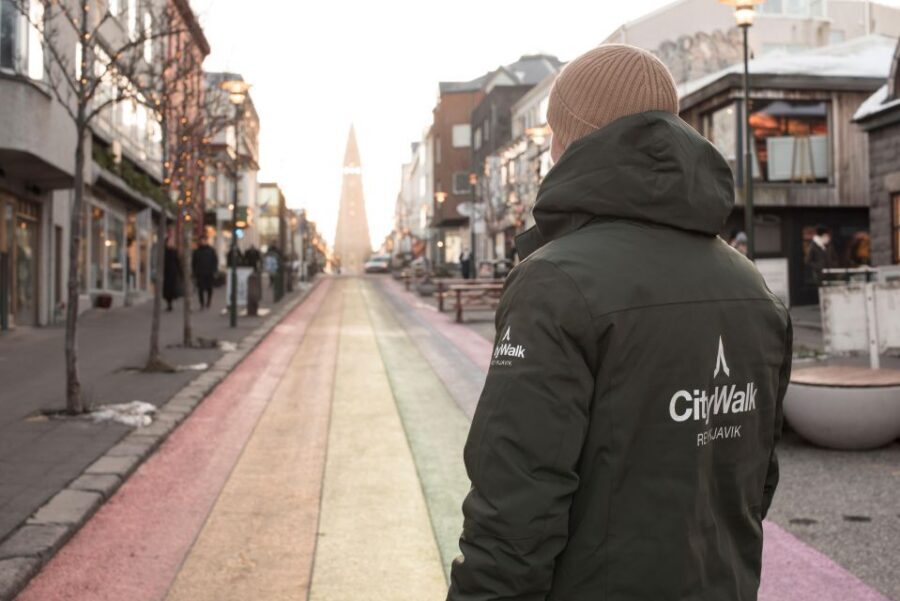
This is an easy route. The total elevation change is about 100 meters (300 feet), and it’s mostly downhill. That’s a huge deal in Reykjavík, where winter can bring ice without warning.
The walking surface is part of the planning. The route is designed around sidewalks that are geothermal heated or salted, so they’re generally kept free of ice and snow. Translation: you’re not tiptoeing across slick patches for most of the tour.
Still, don’t treat it like a casual stroll in sandals. The tour runs rain or shine, and conditions can be windy and cold. Bring warm clothing and shoes you trust on salted paths. If you’re used to warm-weather cities, your feet will thank you for taking Iceland seriously—even on a “simple” walking tour.
Hallgrímskirkja inside and out: where the morning (and photos) start
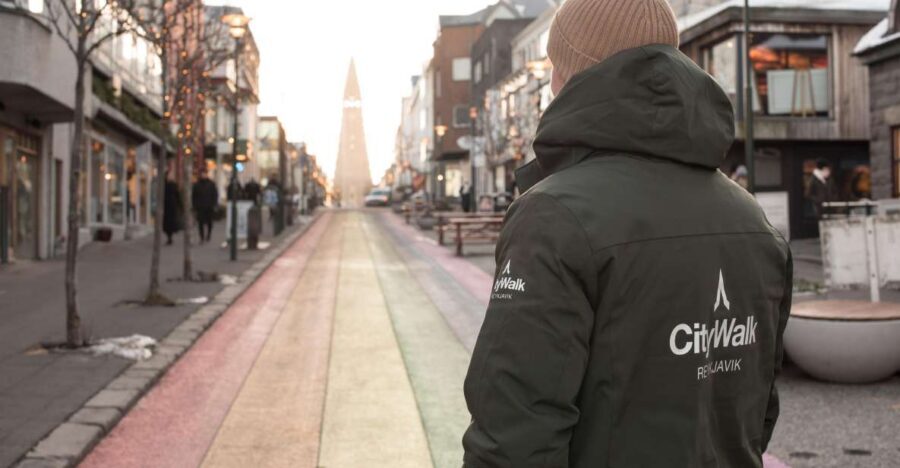
Hallgrímskirkja is more than a landmark you point at. It’s the starting anchor for the whole story of Reykjavík, and the timing gives you a mix of structured guidance and personal time.
You’ll get a guided visit and some time to photograph. There’s also a short break built into the early part of the tour, which is smart in Iceland’s weather swings. If it’s cold, you can use that window to warm up and regroup rather than powering through.
One practical tip: plan to look up and around. The church area is high and open, and even short stops can give you a better sense of how Reykjavík’s grid bends around natural and built features.
And yes, there’s shopping and wandering time around the church area too. That’s useful if you want to pick up a small souvenir or a warm item before the tour heads into the downtown core.
Laugavegur and Skólavörðustígur: quirky streets with built-in Reykjavík vibe

After the church, you shift into Reykjavík’s everyday downtown feel. Laugavegur is the kind of street you’ll walk anyway, but on a guided loop you’ll notice details you might skip on your own.
You’ll spend time with guided sightseeing along Laugavegur, plus the route also covers Skólavörðustígur. This is where the city gets charming in a very practical way: colorful buildings, photogenic corners, and the sense that the city is compact enough to explore without stress.
The advantage of guided time here is context. Street scenes in Reykjavík don’t feel random when someone explains what you’re looking at—how the city grew, what kinds of buildings matter, and why certain streets became the heart of day-to-day life.
A small consideration: if you’re shopping-heavy, this isn’t a long shopping spree. The stops are paced for walking and viewpoints, so think of shopping as “snack-sized,” not “all afternoon.”
Alþingi and Austurvöllur: the Parliament square photo you’ll remember
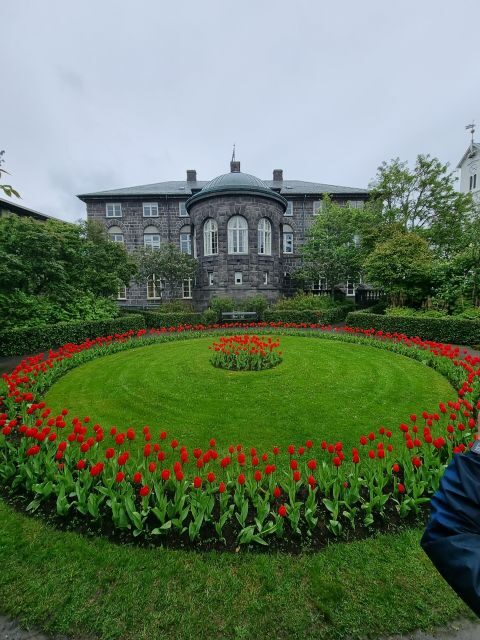
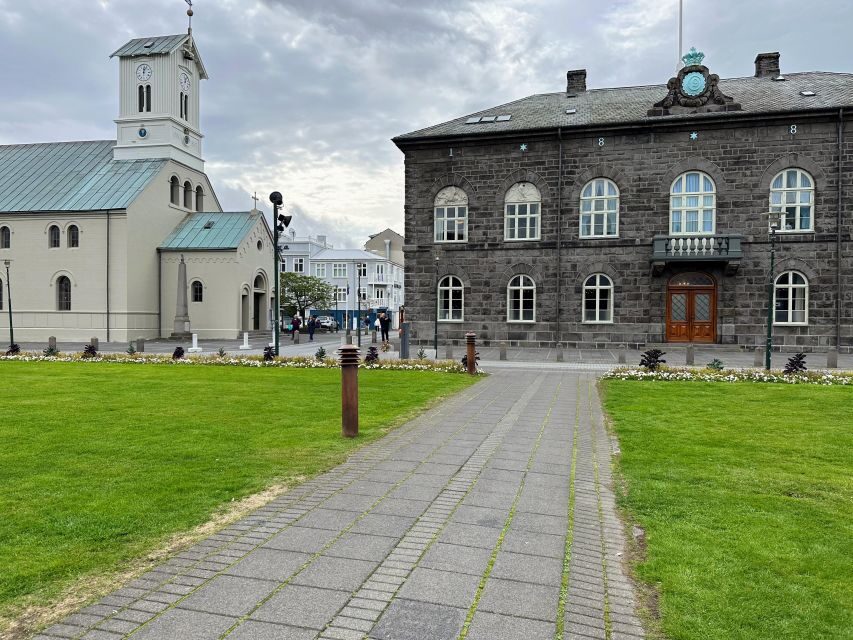
The civic core is where Reykjavík starts feeling unmistakably serious. The tour reaches Alþingi (Iceland’s Parliament), and this is one of the big set-piece moments: you can photograph the Alþingi Parliament building, including the history tied to the 1881 date.
You’ll also get a guided stop here rather than only seeing it from the street. That makes a difference if you want more than a postcard view. Parliament buildings can be intimidating if you don’t know what you’re looking at; guided context makes the architecture and the role of the place click.
From there, you move to Austurvöllur, another key square area. You’ll get more guided sightseeing, and the walking remains easy. This segment is one of the best parts of the tour for understanding how Reykjavík blends old civic identity with modern city life.
If you’re the kind of traveler who likes to understand the “why” behind the “what,” this is the section where the tour pays off most.
You can also read our reviews of more guided tours in Reykjavik




Harpa Concert Hall inside: the warm, jaw-dropping design stop
Harpa is one of Reykjavík’s most talked-about buildings, and the tour treats it like the star it is. You get to see Harpa inside, not just the outside photo.
This matters in Iceland. The weather can make outdoor time feel slower, and Harpa becomes a built-in refuge. It’s not only pretty—it’s functional. On cold or rainy days, it’s an indoor pause that resets you without breaking your rhythm.
The design is the headline. Inside, you get that wow-factor from the way the space looks and feels—light, angles, and the architectural style that makes Harpa instantly recognizable once you’ve been there. You also get time for sightseeing while you’re in the building, so it feels less like a quick glance.
Practical advice: bring your phone camera, but also look with your eyes. The best photos usually come after you take a moment to understand the geometry of the space.
Lake Tjörnin, oceanfront, and Arnarhóll: the softer side of Reykjavík
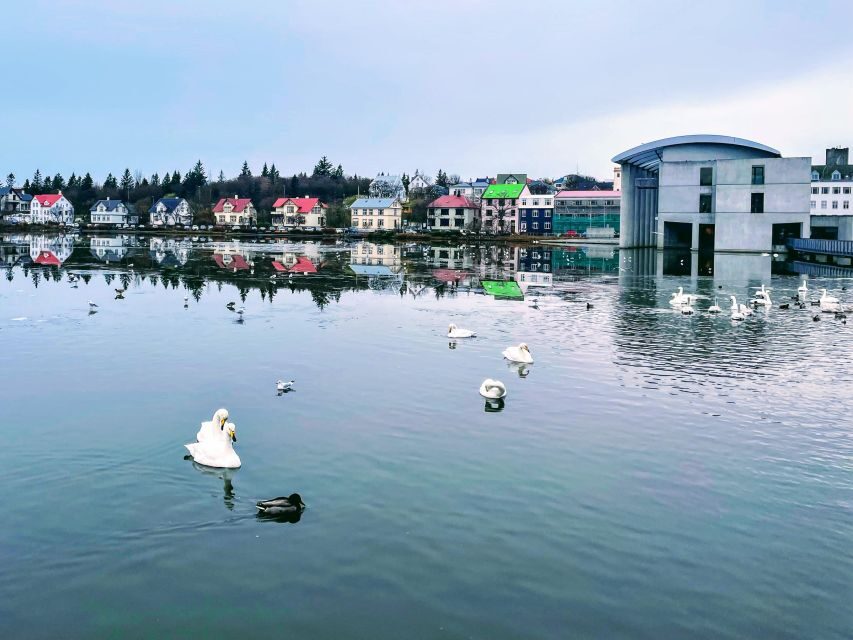
Between the major civic sites and the iconic buildings, the route includes Reykjavík’s more everyday scenery. Lake Tjörnin is one of the highlights—expect colorful houses along the water and the chance to spot wildlife and birds.
This is the kind of scene that makes a city feel lived-in. From a practical standpoint, it also helps break up the “big landmark” intensity. You get a calmer pocket of Reykjavík before the tour finishes near the main square area.
The walk also tracks along the oceanfront before moving toward the oldest part of the city where the parliament and city hall area sits. That oceanfront transition is subtle but important. It helps you understand why Reykjavík’s core grew where it did—near water, near access, near life.
Arnarhóll is another guided stop on the later stretch. This part of the tour has the feel of a final chapter: still guided, still scenic, but with a little more pacing for photos and questions before you wrap up.
Pace and group size: why the tour feels relaxed (even in wind)
The tour is built around an easy walking rhythm with small-group comfort. Group size varies, but you’ll see small numbers in the range of about 4 to 12 people depending on the day. That’s a sweet spot. You can hear your guide without fighting for sound, and the group stays tight enough for the leader to manage timing.
This also explains why the tour works well for questions. Many guides on this route are praised for keeping the experience friendly and informative, with a pace that doesn’t rush you through photos. You may meet guides like Ási or Ryan, and others such as Erik or Martin (including a few different spellings you might see). Names aside, the consistent theme is that the guide’s personality matters: humor, clear explanations, and the ability to answer what you ask.
The other real advantage is weather flexibility. In bad conditions, the guide can adjust by using indoor stops when needed. The walk is never canceled for weather, so the plan is built to keep moving while staying warm where possible.
Price and value: is $51 for 2.5 hours a fair deal?
At $51 per person for about 2.5 hours, this tour sits in the category where you’re paying for direction, context, and time-saving. You’re not just buying entry to one building. You’re getting a guided route that strings together multiple top-tier Reykjavík sights in a compact downtown loop.
Here’s where the value becomes real:
- You start at the exact right meeting point (Hallgrímskirkja by the Leifur Eiríksson statue), so you don’t waste time wandering for the “real” start.
- You get indoor access time at Harpa, which is a big deal when it’s cold and wet.
- You’re guided at Alþingi and the city squares, where context makes architecture meaningful instead of confusing.
- The route is designed for winter conditions with mostly heated/salted sidewalks and an easy downhill profile.
If you’re arriving on day one and want to understand the city layout fast, this tour is a smart purchase. If you already know Reykjavík well and just want to hop between buildings on your own schedule, you might skip it—or book a shorter, more targeted experience.
Who should book this Reykjavík city walking tour
Book this if:
- You want a first-day orientation and a story-led walk through downtown
- You care about seeing inside Harpa rather than only photographing it
- You prefer small groups and a guide who can answer questions
- You’re visiting in winter or shoulder season and want a plan that handles weather
Consider skipping it (or pairing it differently) if:
- You want long, slow sightseeing with lots of free exploration
- You dislike any walking in cold wind, even if the route is easy and mostly downhill
Should you book this tour?
Yes, if your goal is to get your bearings quickly and see Reykjavík’s biggest symbols with real context. The combination of Harpa inside, Alþingi photos and guided stops, plus a route that stays easy even when the weather turns makes this a strong value at $51.
If you’re flexible and come prepared with warm layers and good shoes, you’ll get a lot out of the 2.5 hours. It’s the kind of walk that helps your later self-guided exploring feel effortless.
FAQ
How long is the Reykjavík walking tour?
It lasts about 2.5 hours.
Where do we meet the local guide?
Meet your CityWalk Reykjavík guide in front of Hallgrímskirkja by the statue of Leifur Eiríksson.
Is the tour wheelchair accessible?
Yes. The walk is wheelchair accessible, and it’s adjustable in bad weather.
How hard is the walking?
It’s very easy and mostly downhill, with about 100 meters (300 feet) of elevation change total.
What are the main stops during the tour?
You’ll see Hallgrímskirkja, Harpa Concert Hall (inside), Alþingi Parliament (including a photo stop), Austurvöllur, plus areas around lake Tjörnin and downtown streets like Laugavegur and Skólavörðustígur.
Does the tour run in bad weather?
Yes. It takes place rain or shine and is never canceled due to weather. Indoor stops can be added if needed.
Is the guide available in English?
Yes, the live tour guide speaks English.