REVIEW · REYKJAVIK
Reykjavik Folklore Walking Tour: Meet the Elves, Trolls & Ghosts of Iceland
Book on Viator →Operated by Your Friend In Reykjavik · Bookable on Viator
Iceland folklore walks through real streets. On this Reykjavik folklore walking tour, you connect myth to places you can actually see, from cemetery grounds dating to around the year 900 to the lake of Tjörnin, where you may hear water-monster stories. I especially like two things: the old graveyard setting makes the tales feel rooted in time, and the professional guide keeps the stories clear, funny, and easy to follow while you’re moving. The only real drawback is straightforward logistics: plan on a solid 90-minute walk outdoors in Iceland’s weather.
Guides really shape this one. I’ve seen names like Ester and Bo mentioned for making the stories pop, with humor and storytelling tricks that keep it from turning into a lecture. Some guides also add little extras, like end-of-tour local tips, and in a few cases small gifts or photos sent after the walk.
You’ll meet near Ingólfstorg (easy once you’re looking for it) and end near Austurvöllur, close to the Parliament building area. The tour runs in all weather conditions, so bring proper layers; there’s no hotel pickup, and you’ll want to arrive a few minutes early with your phone ready.
In This Review
- Key things to know before you go
- Why This Folklore Walk Works So Well in Reykjavik
- Meeting at Ingólfstorg: The One Place You Shouldn’t Miss
- Stop 1: Your Friend In Reykjavik and the Mythical Creature Welcome
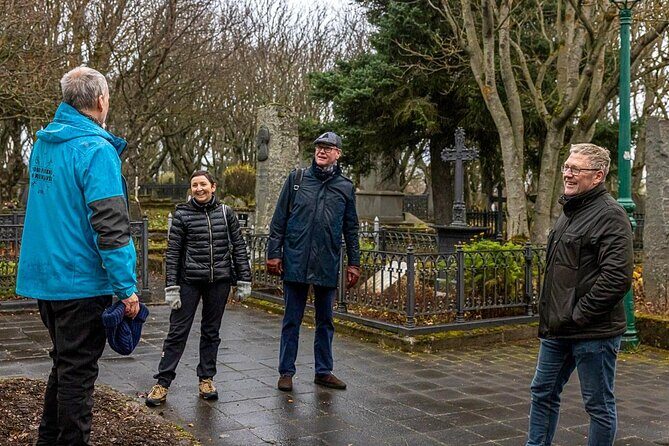
- Stop 2: The Oldest Graveyard in Iceland (Around Year 900)
- Stop 3: Cathedral of Christ the King and the Troll–Church Tension
- Stop 4: Hólavallagarður and the Deacon of Dark River
- Stop 5: Tjörnin Lake and the Possibility of a Water Monster
- Stop 6: Reykjavik City Hall and a Map Full of Troll Locations
- Stop 7: Alþingishúsið and Icelandic Guardian Spirits
- Stop 8: Austurvollur Square and the End of the Walk
- Price and Value: Is $55.63 Worth It?
- How Much Walking and Weather Reality to Plan For
- Guide Quality: What to Expect From Different Storytelling Styles
- Who This Tour Suits Best
- Should You Book This Reykjavik Folklore Walk?
- FAQ
- How long is the Reykjavik Folklore Walking Tour?
- What language is the tour offered in?
- Where do I meet the tour, and where does it end?
- What’s included in the ticket price?
- Is hotel pickup included?
- Does the tour run in all weather?
- What if the tour is canceled due to poor weather?
- What are the child and service-animal rules?
Key things to know before you go
- Oldest cemetery context, not just spooky vibes: you start with a graveyard dating to around 900.
- Iceland’s big-name ghost makes an appearance: the Deacon of Dark River is part of the route.
- Myths tied to real landmarks: cathedral, lake of Tjörnin, City Hall, and Alþingishúsið all get story time.
- A walk that ends where you can keep exploring: Austurvollur Square puts you back in the city-center mix.
- Outdoor pacing matters: it’s about 90 minutes and you’re on your feet the whole time.
Why This Folklore Walk Works So Well in Reykjavik
Reykjavik can feel compact, but it still has pockets where the past shows up fast. This tour is built around the idea that Icelandic belief isn’t only in books. It lives in street corners, graveyards, churches, and even the way locals talk about invisible neighbors.
What makes it work is the mix of myth and physical place. You’re not just hearing that elves or trolls exist. You’re stopping at specific spots where the story tradition lands. The route also takes you through some of the oldest corners of the city, so the legends don’t feel like random spooky theater.
You’ll also notice the balance between “this is what people believed” and “this is what you can see today.” That’s useful if you’re trying to get your bearings in Reykjavík on day one. You leave with a map in your head, even if you forget the details later (it happens).
You can also read our reviews of more walking tours in Reykjavik


Meeting at Ingólfstorg: The One Place You Shouldn’t Miss
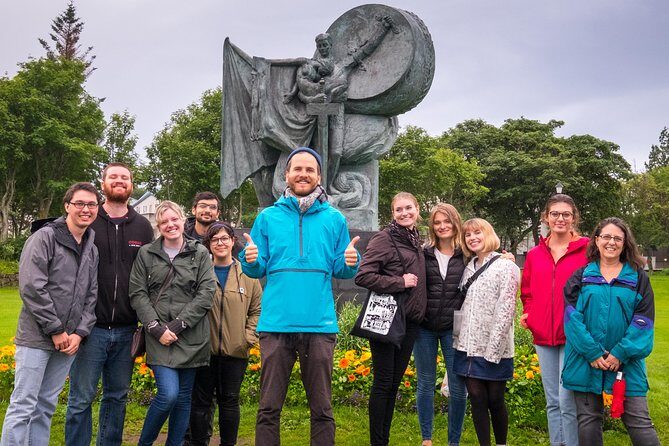
The meeting point is listed at HlöllabátarIngólfstorgi 1, 101 Reykjavík, near Ingólfstorg. The guide asks you to be there about 5 minutes before the start time.
This matters more than usual because the tour is walk-based and time stays tight. If you’re late, you’ll likely miss the first story beat, and that first beat sets the mood for everything that follows.
Practical tip: use Google Maps before you head out. Even if Reykjavík feels walkable, it’s easy to lose track when you’re first arriving and the streets start to look similar.
Stop 1: Your Friend In Reykjavik and the Mythical Creature Welcome
You’ll start with a quick meet-and-greet at Your Friend In Reykjavik (listed as the first stop). Think of this as your “story mode” switch. You get the tone, the boundaries of what you’ll hear, and often a little local context about how folklore shows up in everyday Iceland.
The real value here is psychological. Once you’re in the right headspace, every next stop becomes easier: a cemetery reads differently when you know it’s part of a long narrative, and a lake feels different when monsters are part of the local conversation.
Also, the tour includes live entertainment, which makes the first few minutes less stiff and more like you’re joining a performance, not sitting in a classroom.
Stop 2: The Oldest Graveyard in Iceland (Around Year 900)
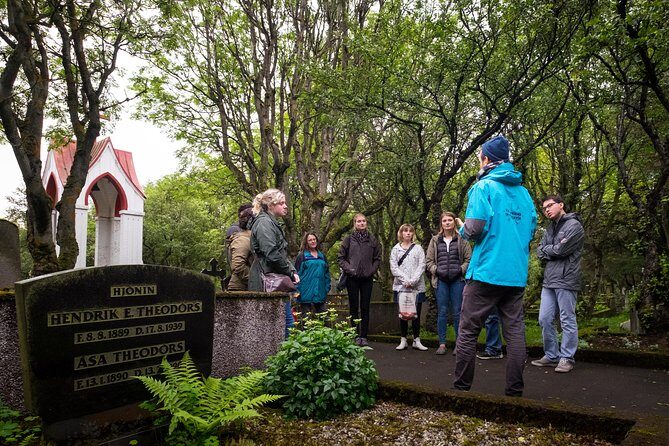
Next comes Skúli Magnússon Sheriff, your first deep-history stop: the oldest graveyard in Iceland, dating to around the year 900.
This is where the tour earns its weight. A lot of “ghost tours” float in the modern world. Here, you’re stepping into a real burial landscape that signals how long people have been shaping meaning here.
What to expect:
- A short walking-and-listening block where the guide ties folklore to the site.
- A focus on how the old cemetery fits into Reykjavík’s story, not just a jump-scare style ghost lecture.
Consideration: cemeteries are quiet places, and you’ll be standing and listening. Dress respectfully, keep your voice down, and don’t plan to rush photos through it. If you’re hoping for lots of time to quietly read stones, your time here is limited by the overall 90-minute structure.
Stop 3: Cathedral of Christ the King and the Troll–Church Tension
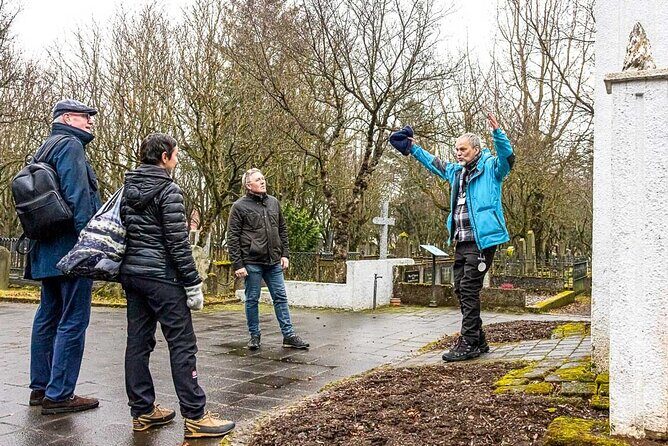
Then you reach the Cathedral of Christ the King, and the story angle shifts. Icelandic folklore has plenty of room for humor, and one of the recurring ideas here is that trolls don’t like the church.
What I like about this stop is that it shows folklore evolving alongside real institutions. The church is a landmark, but it also becomes a character in the myths. Even if you don’t take trolls literally, you still get the cultural logic: stories explain relationships between the sacred and the wild.
What to expect:
- A brief stop (listed around 5 minutes) focused on the troll–church link.
- Quick, story-driven context instead of a full architectural lecture.
Drawback to keep in mind: this part is short. If you love architecture tours, you may want to pair this with a second stop later on your own.





Stop 4: Hólavallagarður and the Deacon of Dark River
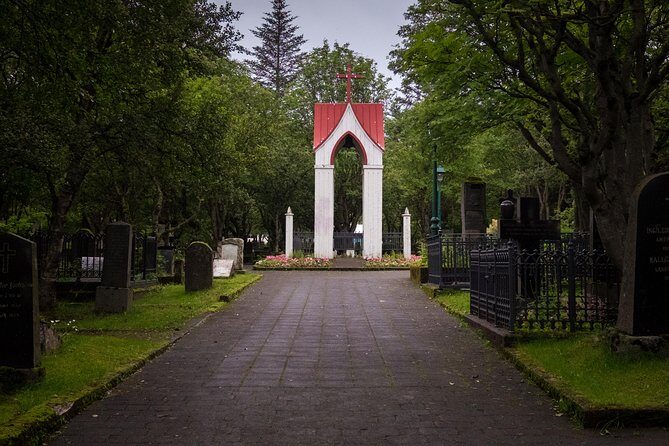
Next is Hólavallagarður, described as the second oldest cemetery in Reykjavík and tied to the most-famous ghost, the Deacon of Dark River.
This is one of the big emotional centers of the whole walk. A ghost story lands differently in a cemetery than it does in a street corner. You feel the contrast: everyday city life nearby, and then this tradition of lingering presence.
What to expect:
- More time at this cemetery than earlier stops (listed around 15 minutes).
- Stories that connect the ghost legend to the cemetery setting and the surrounding area.
If you’re a fan of spooky storytelling, this is the stop you’ll remember. If you prefer gentle folklore (more elves than gore, less fear tone), pay attention to your guide’s style. One guest noted that some tales can be a bit gore-heavy, so don’t assume the tone will be mild for everyone.
Stop 5: Tjörnin Lake and the Possibility of a Water Monster
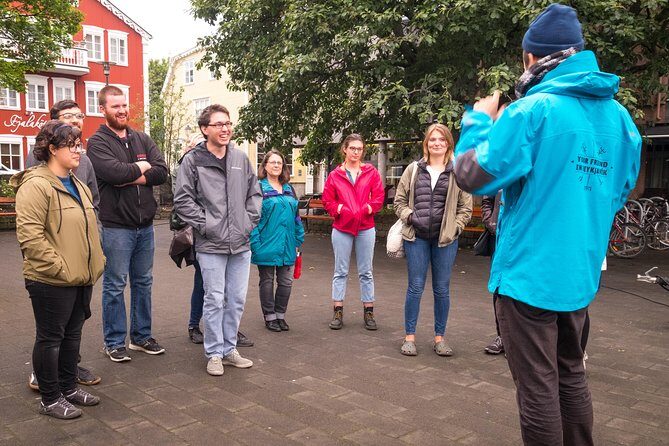
After the cemetery section, you head toward the lake of Tjörnin. This is where the route gets playful again. You may hear stories about Icelandic monsters, including monster-adjacent folklore tied to water.
Why this stop is smart: water is a natural theme in Nordic stories, and Tjörnin is a real center point in Reykjavík. It gives you a believable stage for the myths. Ducks and swans aren’t proof of anything, but they do make the setting feel alive while you listen.
What to expect:
- A short listening block near the lake (listed around 10 minutes).
- Folklore that shifts away from graves and toward creatures linked to nature.
Practical tip: if it’s cold, this is often when you feel it. Bring gloves or something that lets you stop thinking about your hands.
Stop 6: Reykjavik City Hall and a Map Full of Troll Locations
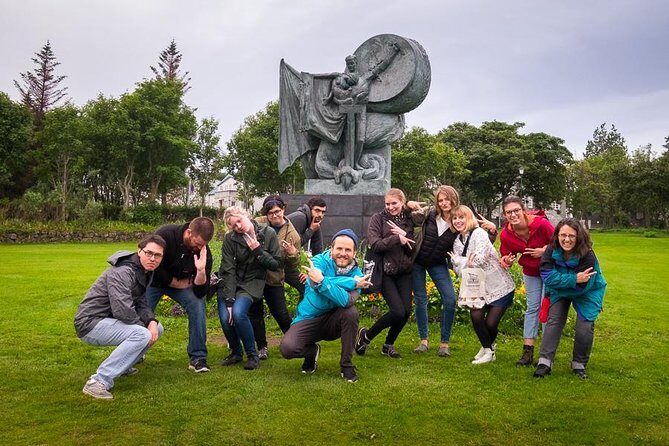
You’ll walk by Reykjavik City Hall, and sometimes you may even visit the great map of Iceland to discuss locations of trolls and other creatures.
This is a great “aha” moment for many people. It turns folklore from abstract talk into geography. You start thinking: these stories didn’t just happen in one place. They spread across landscapes, coasts, and villages.
What I like here is the way it changes your mental map of Iceland. Even if you don’t remember every creature, you’ll remember the idea that folklore has a spatial logic.
Also, it breaks up the walk in a helpful way: you’re not just staring ahead and hearing stories. You’re seeing something that organizes the stories.
Stop 7: Alþingishúsið and Icelandic Guardian Spirits
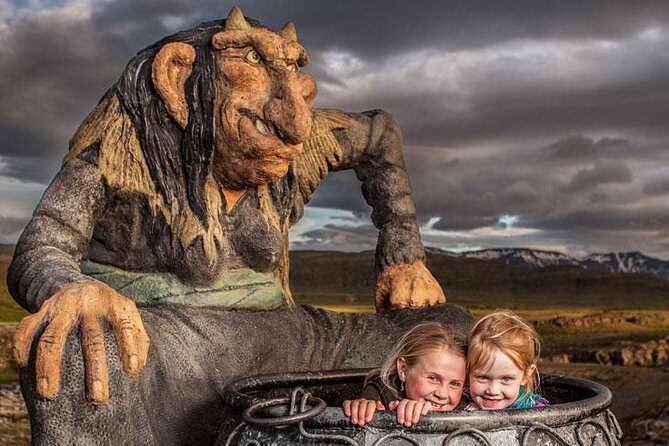
Next up is Alþingishúsið, where you’ll visit Icelandic guardian spirits.
This is one of the most interesting leaps on the route because it blends myth with governance. If you’ve ever wondered how a belief system keeps showing up when countries modernize, this stop gives you a clue: guardian ideas can live alongside institutions.
What to expect:
- A brief stop (listed around 5 minutes).
- A quick but memorable story about protection and invisible presence.
Stop 8: Austurvollur Square and the End of the Walk
You finish at Austurvollur Square, close to where you began, with the ending point listed near Jón Sigurðsson / Austurvöllur in central Reykjavík.
This ending is practical. You’re back in the city-center zone where it’s easy to grab food, warm up, and keep exploring. If you’re planning a second activity that night, you’ll likely have an easier time slotting it in after this tour.
A few guide styles add extras at the end, like local tips. In some cases, people have mentioned small gifts, magnets, and even group photos shared after the walk. Don’t assume it’s guaranteed, but it’s a nice bonus when it happens.
Price and Value: Is $55.63 Worth It?
At $55.63 per person for about 90 minutes, the price feels fair if you’re using the tour for two jobs at once:
1) Orientation, and
2) Story-based context you can’t easily get from signs.
You’re paying for a professional guide and live entertainment, plus a route that blends history-heavy stops (cemeteries) with myth-heavy stops (elves, trolls, ghosts). That combination is exactly what makes it feel like more than a simple stroll.
The value gets better if this is your first Reykjavík activity. Several people use it as a kickoff tour because it helps you place landmarks into a larger cultural framework.
The only time I’d second-guess it is if you already know a lot of Icelandic folklore and you mainly want pure history or pure architecture. In that case, you might prefer a more targeted historical walking tour. But if you want culture you can feel in the street, this one has a strong case.
How Much Walking and Weather Reality to Plan For
The tour runs in all weather conditions. Reykjavík weather can swing fast, and wind is often the real boss.
Also, it’s built as a continuous walk. Even if each stop feels brief, you’re still on your feet the whole time. Some people felt it could be too much walking depending on their energy level, so be honest about your mobility and stamina.
Dress for the outdoors first:
- Layers you can vent and re-tighten
- Warm socks and shoes with grip
- A wind layer if you have one
And check your meetup location beforehand. One practical complaint was that the meeting spot can be hard to find without maps, especially if you’re wandering while figuring things out.
Guide Quality: What to Expect From Different Storytelling Styles
Most guides are described as fun, engaging, and funny, with some leaning heavily into voices and performance. I’ve seen mentions of guides like Ester, Bo, Mathias, Stefan, and others bringing stories to life through humor, song, or a strong storyteller voice.
Still, guide style can vary:
- Some stories may lean darker or more graphic.
- Some routes may feel like a mix of personal narration plus folklore, not pure folklore-only storytelling.
- The time spent at the cemetery could feel tighter if you wanted more detail on older graves.
So my advice is simple: if you care about the exact vibe (more elves than gore, more folklore than personal history), go into it expecting storytelling first. Then you’ll be pleasantly surprised when the tone matches your taste.
Who This Tour Suits Best
This is a great fit if:
- You want your first Reykjavík day to feel like more than landmarks.
- You enjoy myths grounded in real places, especially cemeteries and local lakes.
- You like guided humor and performance-style storytelling.
- You’re traveling with kids and want spooky-but-accessible narratives. (Children must be accompanied by an adult, and the walk is group-paced.)
It may be less ideal if:
- You hate walking for long stretches.
- You’re looking only for factual history and no myth.
- You’re sensitive about how personal beliefs get handled. One person reported feeling ridiculed for Christian faith during a tour. If that kind of thing matters to you, it’s worth considering your comfort level with how a guide frames belief and folklore.
Should You Book This Reykjavik Folklore Walk?
I’d book it if you want a walk that gives you more than photos. You get ancient cemetery settings, a well-known ghost legend, monster stories by Tjörnin, and short stops at major city landmarks like City Hall and Alþingishúsið. For the price, it’s a solid mix of culture, story, and practical orientation.
I wouldn’t book it only if you already know a lot of Icelandic folklore and you want a straight history lecture, or if you know you can’t comfortably handle a 90-minute outdoor walk in wind and cold.
If you do book, do one thing: arrive early, dress for weather, and treat each stop like a short scene in a continuing story. That’s how the tour clicks.
FAQ
How long is the Reykjavik Folklore Walking Tour?
It runs for about 1 hour 30 minutes.
What language is the tour offered in?
It is offered in English.
Where do I meet the tour, and where does it end?
You meet at HlöllabátarIngólfstorgi 1, 101 Reykjavík and end at Austurvöllur Square near Jón Sigurðsson (listed at 43W6+V4C).
What’s included in the ticket price?
The tour includes a professional guide and live entertainment.
Is hotel pickup included?
No. Hotel pickup and drop-off are not included.
Does the tour run in all weather?
Yes. It operates in all weather conditions, so dress appropriately.
What if the tour is canceled due to poor weather?
If it’s canceled due to poor weather, you’ll be offered a different date or a full refund.
What are the child and service-animal rules?
Children must be accompanied by an adult. Service animals are allowed.