REVIEW · REYKJAVIK
Reykjavik: Thrihnukagigur Volcano Guided Hiking Day Trip
Book on GetYourGuide →Operated by Inside the Volcano · Bookable on GetYourGuide
A volcano with a staircase for you. I love how this trip pairs a lava-field hike with the real thrill: a 400-foot descent into Thrihnukagigur’s crater. It’s not a drive-by viewing spot, and it feels like Iceland is letting you step closer to the science than most places ever do.
The one drawback is the price. At $385 per person, you’re paying for a small-group, gear-included, controlled access experience that can’t be faked.
In This Review
- Key moments worth circling
- Thrihnukagigur’s crater descent: what makes it different
- Bláfjöll start point at Breiðabliksskáli: the part you’ll actually plan for
- The lava-field hike: moderate time, uneven footing
- Inside the crater: harness, helmet, and a calm pace
- Stop for photos and coffee: the base camp rhythm
- The big view payoff: Reykjavik plus two peninsulas
- Food at the end: soup and hot drinks actually make the day better
- Price and value: where the money goes
- Who this tour fits best (and who should think twice)
- Quick booking checklist: what to bring and how to show up
- Should you book the Thrihnukagigur guided hike and volcano descent?
Key moments worth circling
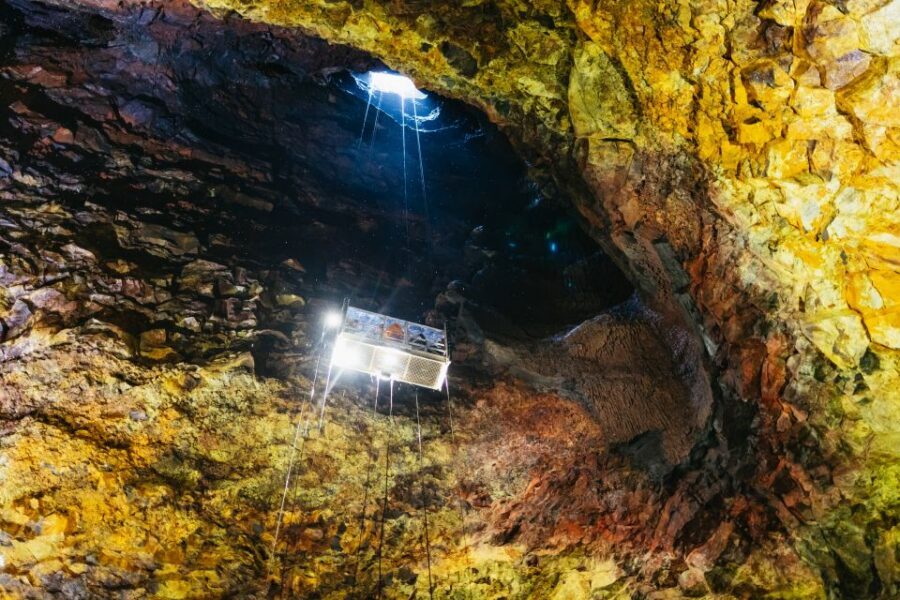
- 400 feet down into the crater, using safety gear and guided procedures
- Small groups of 4–5, which makes the experience feel personal instead of crowded
- A moderate hike across uneven lava terrain, plus big views on the way back
- Expert guides with safety briefings and constant support at the volcano
- Traditional Icelandic meat soup (and vegetarian) plus hot drinks at the end
Thrihnukagigur’s crater descent: what makes it different
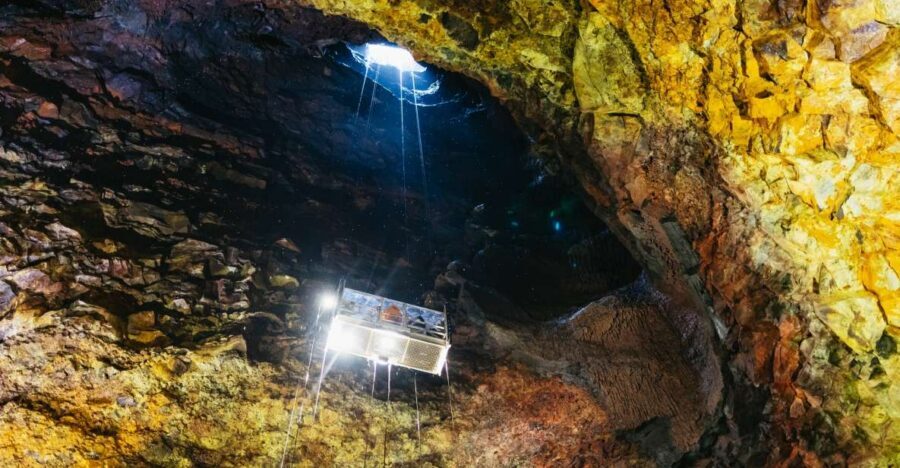
This is one of those Iceland experiences that sounds impossible until you’re standing in front of it. Thrihnukagigur Volcano is dormant, but the tour’s main event is your controlled descent into the crater—400 feet (120 meters) down—so you’re not just looking at a volcano. You’re inside it.
The moment you go down, you can feel the change in space and sound compared to the mountain above. You descend slowly (about 10 minutes), and you’re still strapped in with helmet and harness the entire time. That “slow and safe” pace matters, because it gives you time to actually see what’s inside rather than rushing through it like a photo stop.
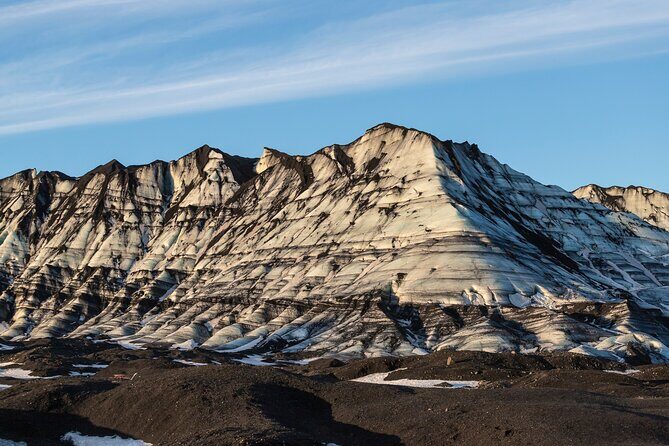
Once you reach the opening, your group stays there and explores for up to about an hour (shorter if you prefer). In the reviews I read, the best descriptions weren’t about speed or spectacle alone—they were about the colors and the way light plays inside the chamber. That fits with what you’re doing here: you’re seeing volcanic rock and the shape of the space at a close distance, not through a barrier.
A quick note on expectations: this is adrenaline, yes, but it’s also procedure. You’ll get clear safety instructions, and your guides stay with your group at all times. If you’re the type who needs rules to feel comfortable, you’ll probably appreciate how this is run.
You can also read our reviews of more guided tours in Reykjavik
Bláfjöll start point at Breiðabliksskáli: the part you’ll actually plan for
Most day tours to the mountains start with a bus ride and end with a bus ride. This one adds a specific meeting point detail that’s worth getting right.
You meet at a ski cabin in Bláfjöll called Breiðabliksskáli. From Reykjavik, it’s about a 30-minute drive on paved road to reach the area. Pickup in Reykjavik is optional for hotels/guesthouses, and when it’s offered, it starts 30 minutes prior to departure (operated by Grayline). If you choose not to get picked up, you’re responsible for getting yourself to the cabin.
If you’re driving yourself, the route guidance is straightforward: head east on Road 1 toward the south coast, drive straight for about 15 minutes, then turn right onto Road 417 (Bláfjallavegur). The key warning is to not take Route 42 via Hafnarfjörður, since it’s permanently closed. Also, when Road 417 splits, keep going straight, and don’t turn onto the gravel track.
That might sound fussy, but it matters on a day trip. One wrong turn and you can lose time on a schedule where the bus is waiting for you to arrive before the departure window closes.
Tip I’d follow: arrive early enough that you’re not jogging into your day with cold hands. The weather in Bláfjöll can be totally different from Reykjavik, and you’ll feel it once you’re dressed for the walk.
The lava-field hike: moderate time, uneven footing
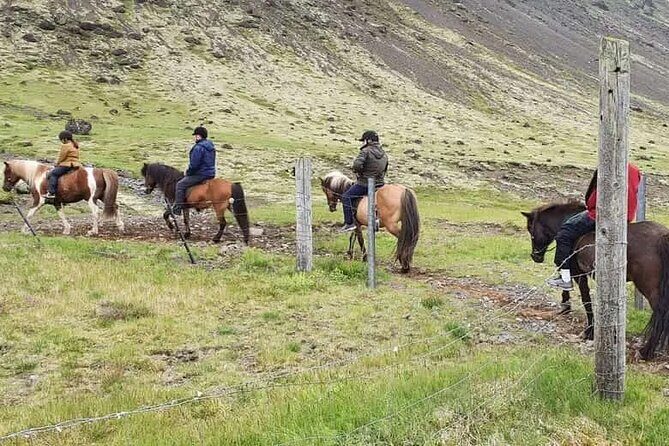
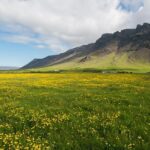
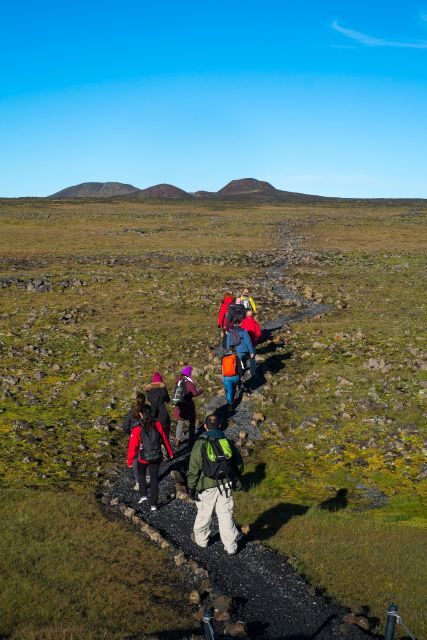
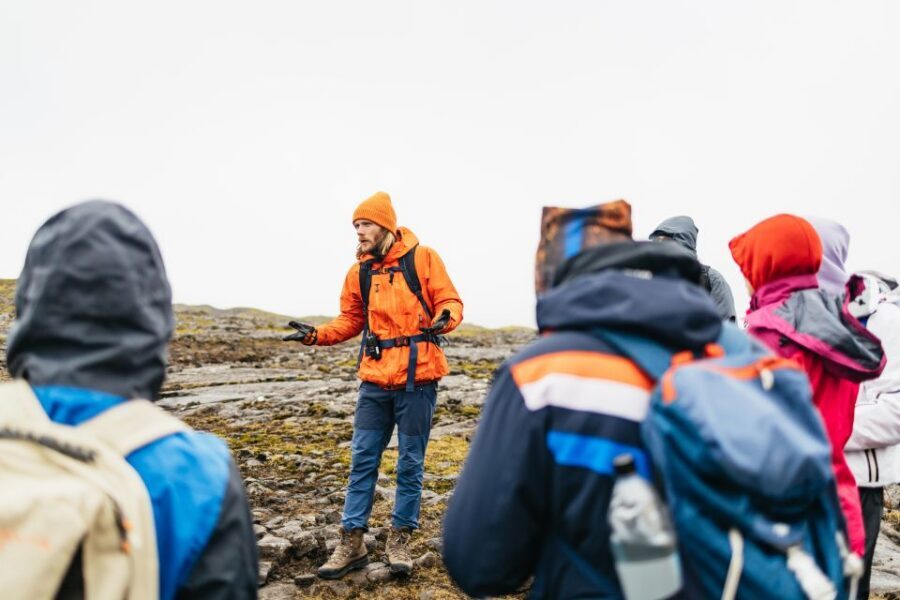
After pickup/transfer, your group goes to the mountain cabin area, then you walk toward Thrihnukagigur. The hike is about 45–50 minutes one way to the volcano area. It’s classed as moderate: straight walking with limited elevation, but the surface is hilly and uneven.
That combination is what trips people up. If you imagine “moderate” means smooth trails, you’ll be surprised by the rocky, irregular footing across the lava terrain. It’s not a stunt course, but it is real hiking.
What I like about this hike is that it sets the tone before the descent. You’re out there long enough to get warm, look around, and absorb the volcanic scenery—so when you reach the crater, you feel like you’ve earned the main event. Several people also mention the hike as rugged but worth every step, which tracks with the way the route is described.
What you should do with that info: wear good hiking shoes. Sneakers and jeans are not suitable. If your footwear is weak or slippery on uneven ground, the hike becomes a stress instead of a warm-up.
Also dress for mountain weather, not city weather. The tours run in conditions that can be windier than Reykjavik, and the later parts of the day happen near the crater area where weather can feel sharper.
Inside the crater: harness, helmet, and a calm pace
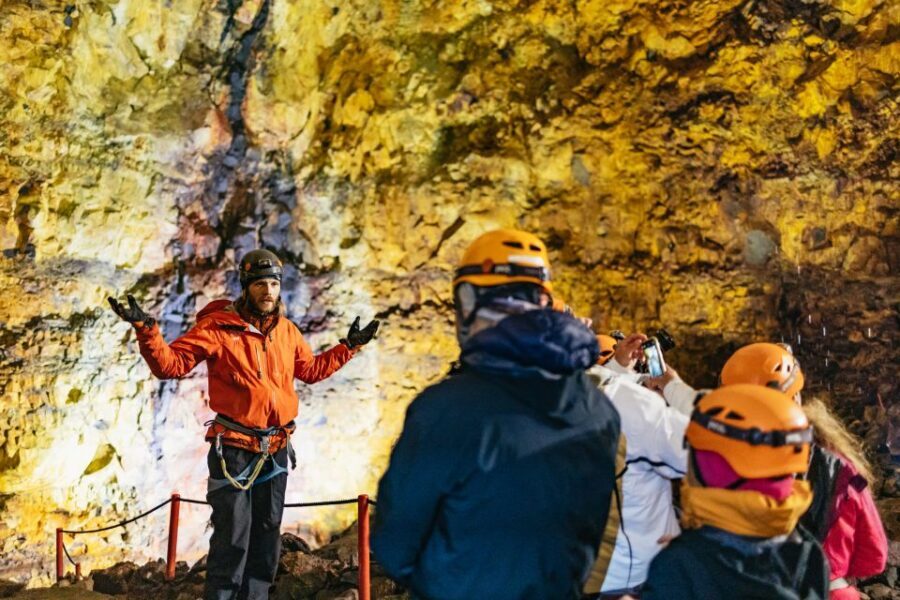
Once you arrive at the crater base area, your time splits into two big experiences: the waiting/briefing and then the descent plus exploration inside.
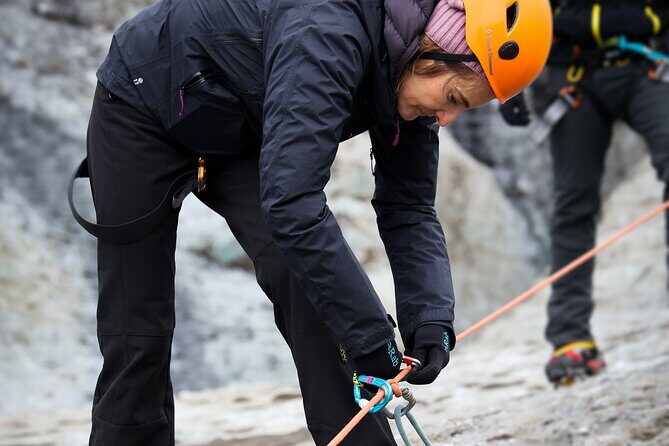
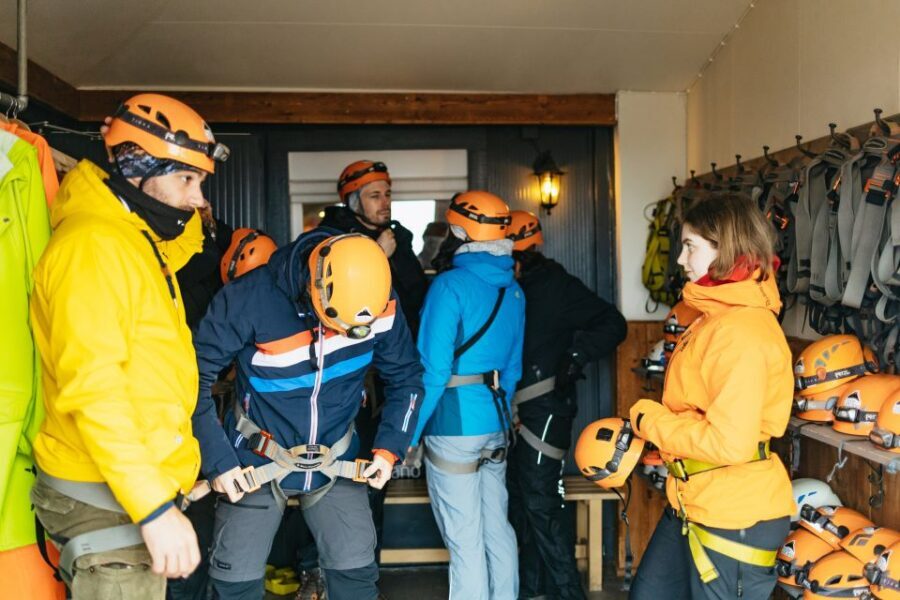
You’ll get a safety briefing at the base before you go down. You’ll also be fitted with helmets and harnesses, and the tour expects you to keep them on during the volcano portion. That’s non-negotiable, and for a reason: you’re moving through an industrial-style access system into a natural chamber.
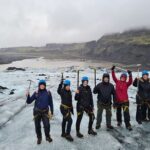
The group size is another detail I’d call out. Your group is split into smaller parties of about 4–5 people for safety and a more intimate experience. That helps with two things: quieter communication with the guide and less chaos when you’re preparing to descend or move around.
Inside, you’re there for up to about an hour. That’s long enough to notice details—shapes of rock, the way the opening frames the light, and how your perspective changes in a space that used to be part of volcanic activity. If you prefer to move faster or you don’t want to spend the full time, you can choose less time inside.
One of the most praised parts (from what I saw in the feedback) is how guides explain what you’re seeing. Names that come up include Daniel, Ben, and Marcus, and people repeatedly highlight that the guides keep things friendly while maintaining safety. I’d take that as a sign that this isn’t just a “sit and watch” tour—it’s guided interpretation where you get answers along the way.
Stop for photos and coffee: the base camp rhythm
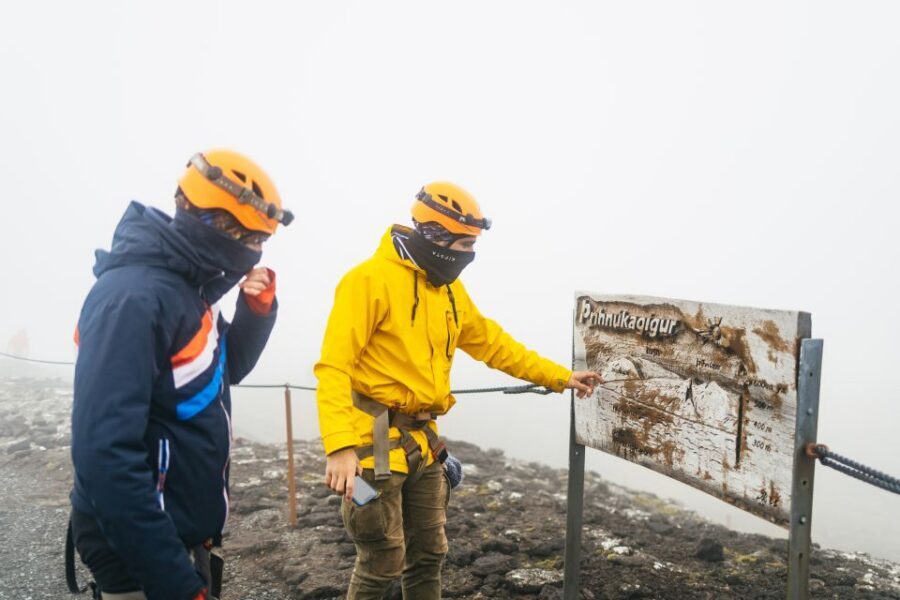
Before and after the descent, your schedule includes a longer stop at the volcano area. This is where you get a chance to settle in, take photos, and refuel a bit before the main push.
At the crater stop, the plan includes time for:
- photo stops and scenic views
- coffee and tea
- a safety briefing
- wildlife viewing
You also get a bit of breathing room so you’re not just going straight from bus to descent without a break. That matters, especially on windy days. People mention that the drinks and warm food feel like a reset after you’ve been out in the weather.
A practical note: if you like taking photos, this is your moment. Inside the volcano, you’ll see things that are hard to get on a typical viewpoint hike. But it can help to take a few establishing shots before you go down so you’re not fighting the timing once you’re inside.
You can also read our reviews of more hiking tours in Reykjavik
The big view payoff: Reykjavik plus two peninsulas
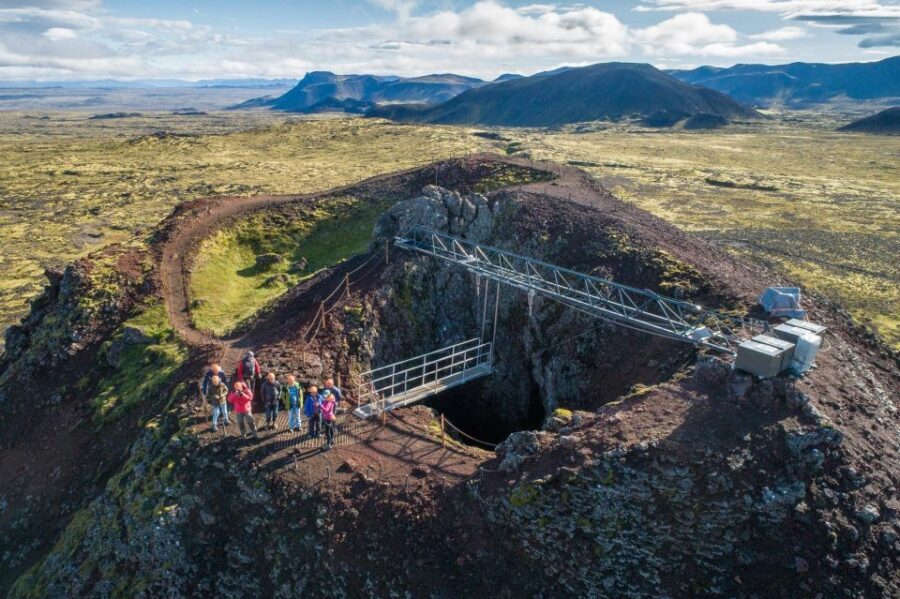
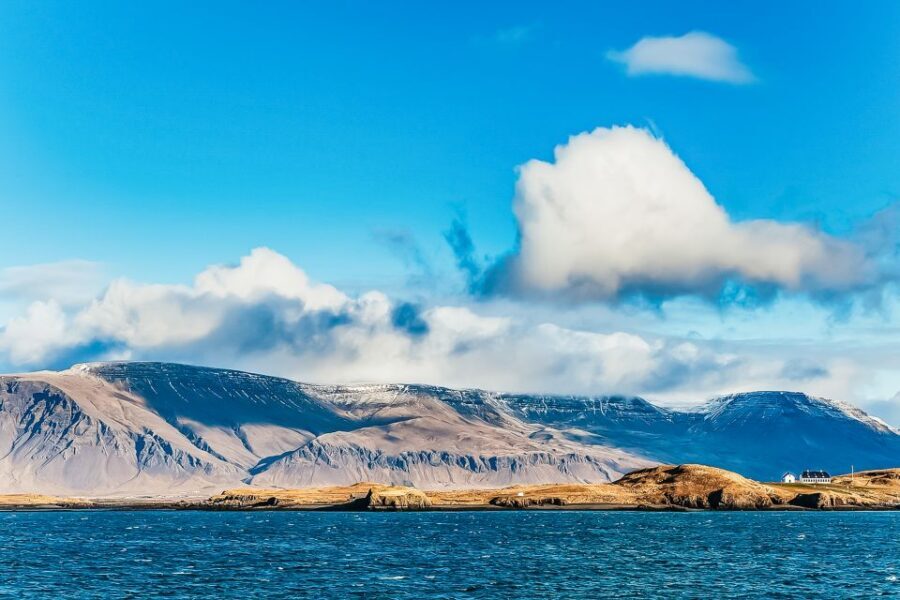
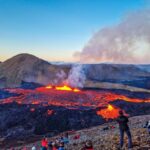
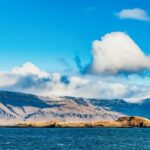
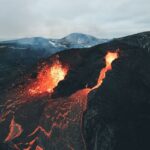
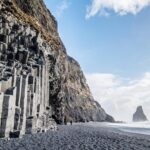
The volcano is the headline, but the scenery on the way matters too. Along your hike and at viewpoints around the crater area, the tour offers views over Reykjavik, the Reykjanes peninsula, and the Snæfellsnes peninsula.
This is one of those “put it together in your head” moments. Standing up above, you can connect what you see back to the map you’ve been staring at all trip. Down in the crater, the view changes from “world from above” to “world made by inside geology.”
So even if you care mostly about the descent, don’t rush the viewpoints. The timing gives you a chance to enjoy them, and the views also help you appreciate the scale of what you’re descending into.
Food at the end: soup and hot drinks actually make the day better
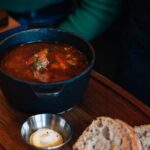
After your hike back, the tour finishes with a meal that’s simple, Icelandic, and very welcome: traditional meat soup or a vegetarian soup, plus hot coffee, hot chocolate, tea, or water.
I like this kind of ending because it solves the real problem of mountain tours: you’re cold, you’re hungry, and you’ve been moving for hours. A warm bowl is more than comfort. It’s what lets you feel satisfied instead of just “relieved it’s over.”
From the experience descriptions, people specifically call out how good the soup and hot drinks feel after time outside and wind. That matches the logic of the schedule: you hike, you descend into a cold rock chamber, you come back out, and then you get warmed from the inside.
If you’re food-motivated, this is a real point in the tour’s favor. It’s not a snack; it’s the kind of meal that helps you plan the rest of your evening without immediately hunting for dinner.
Price and value: where the money goes
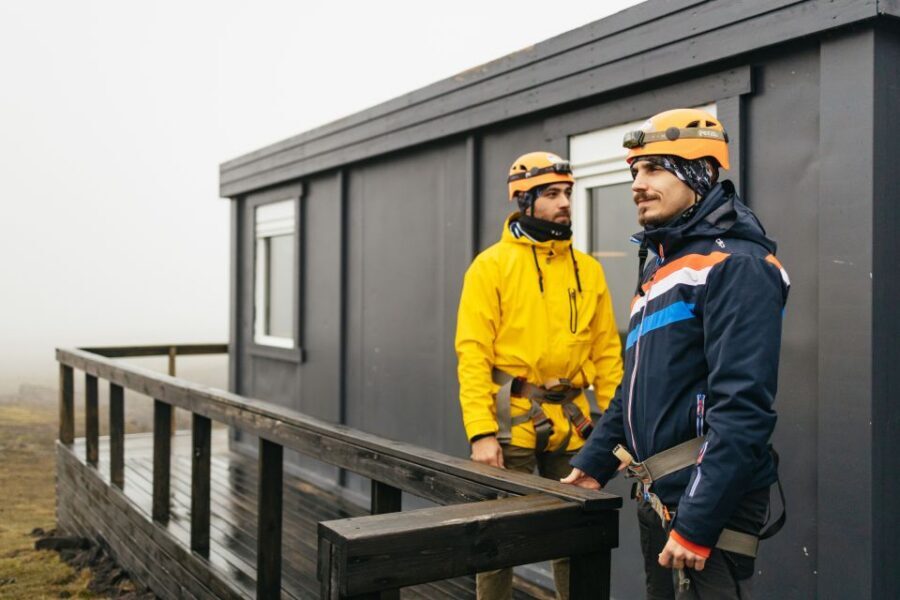
At $385 per person, the price is steep. But it’s also tied to elements that don’t exist in ordinary hikes.
Here’s where you’re paying:
- access that takes you down into a volcanic chamber via a controlled descent system
- safety gear like helmets and harnesses
- guided support throughout, including inside the volcano
- smaller group splits (about 4–5 people)
- transportation from Reykjavik (or pickup options)
- a proper warm meal at the end
The best value argument isn’t that it’s a bargain. It’s that it’s rare. I’ve never seen many places where you get this close to a magma-chamber-like space with structured safety and interpretation included.
If you’re the type who hates paying for tours and would rather “just explore,” you might feel this is too much. But if you want one day in Iceland that feels truly different from the usual waterfalls-and-viewpoints circuit, this is the kind of splurge that can actually pay off.
Who this tour fits best (and who should think twice)
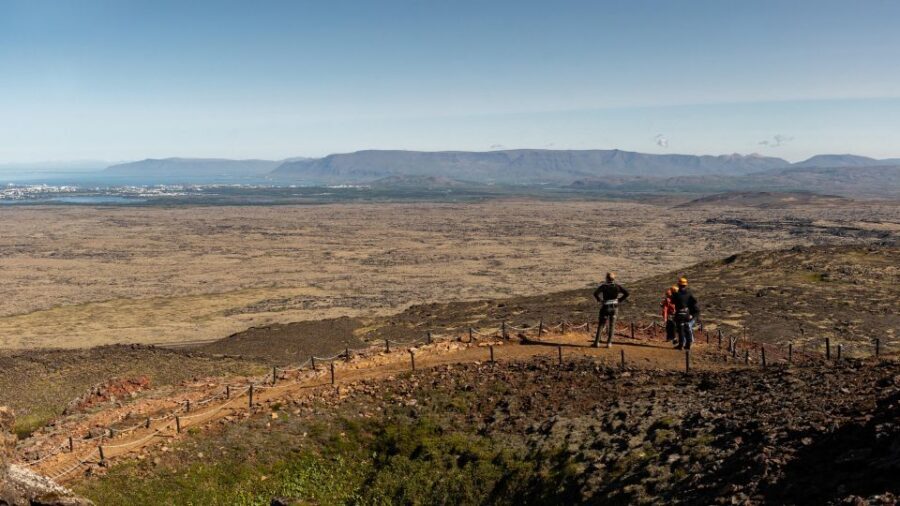
This isn’t a casual stroll. It’s a moderate hike on uneven ground (45–50 minutes each way) and a crater descent inside a volcano with safety gear and a lot of close-proximity time. So it fits best if you:
- can comfortably hike on rocky, uneven surfaces
- are okay wearing a harness and spending time underground in a controlled setting
- want big volcanic context from an expert guide and not just a photo stop
It’s also explicitly not suitable for people with mobility impairments. That matters because the tour includes a specific physical access setup and uneven terrain.
If wind and cold bother you, dress for it. The tour runs in mountain weather that can differ sharply from Reykjavik, and the volcano area can be exposed.
Finally, if you’re nervous about heights, this is something to consider carefully. Reviews mention people managing fear with the guides’ help. Still, the core experience involves being lowered into an opening, so don’t assume it will feel like a gentle viewing platform.
Quick booking checklist: what to bring and how to show up
Do not overthink it, but be ready.
Bring:
- hiking shoes (your main decision)
Wear:
- warm clothes, because the mountains can be a different world from Reykjavik
- clothing suited for cold and wind, not just city walking
Plan for:
- a day that runs about 4–6 hours total, depending on the starting time
If you’re doing Reykjavik sightseeing the same day, give yourself a buffer. Weather can affect how the hike feels, and the tour itself includes scheduled pauses and guided procedures that you shouldn’t cut short.
Should you book the Thrihnukagigur guided hike and volcano descent?
If you want the single most unusual natural access day near Reykjavik, I’d book this. The combination is hard to beat: a lava-field hike, a close crater descent, small group size, and a guided experience that ends with warm soup instead of leaving you cold and cranky.
Skip it if you know uneven hiking will be a problem for you, or if the price makes you feel resentful before you even start. This tour earns its cost through the actual descent into the volcano and the built-in safety and guidance.
If you’re on the fence, make this your decision rule: when else can you go into a volcano chamber with the gear and support to do it safely? For most people in Iceland, the answer is, basically, nowhere else.