REVIEW · REYKJAVIK
Reykjavik Helicopter Private Tour of Volcanoes
Book on Viator →Operated by Volcano Heli - Iceland Helicopter Tours · Bookable on Viator
A helicopter in Iceland turns geology into something you can actually see. This private flight focuses on Reykjanes peninsula volcano history, then adds Reykjavik landmarks and dramatic coast views. You’ll get a bird’s-eye route that would take you hours (or a full day) to piece together by road.
I like two things right away. First, the pilot-led narration makes the volcanic terrain feel understandable, not just random black rock. Second, the ride is reported as smooth and safe, and it comes with real-world problem solving when weather shifts, like a call when conditions weren’t ideal and clear next-step options.
One consideration: this is weather-dependent. If conditions aren’t good, the flight can be canceled and you’ll need to switch dates or take a full refund, so it helps to keep your schedule flexible.
In This Review
- Key Highlights You’ll Feel Immediately
- A Private Helicopter View Over Reykjanes Peninsula
- Cost and Value: $1,990 for Up to Four (Not Per Person)
- What 40 to 50 Minutes Really Covers (and Why It Matters)
- Overfly Craters and Lava Fields: Reykjanes Peninsula in Context
- Fagradalsfjall, Meradalir, and Litli Hrutur: Lava Fields from 2021–2023
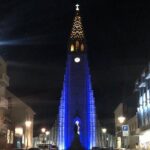
- Reykjavik from the Helicopter: Downtown Houses and Hallgrímskirkja Church
- Coastal Cliffs, Steep Shores, and Bird Cities Over the Atlantic
- Keilir: A Roughly 100,000-Year-Old Subglacial Volcano Pass
- Safety, Smoothness, and Real Communication When Weather Turns
- Booking Smart: When to Reserve and How to Plan for Iceland’s Wind
- Who Should Book This (and Who Might Hesitate)
- Quick Checklist Before You Go
- Should You Book This Reykjavik Helicopter Tour of Volcanoes?
- FAQ
- How long is the Reykjavik Helicopter Private Tour of Volcanoes?
- What does this tour cost?
- Is this a private tour?
- What language is the tour offered in?
- Where does the tour start?
- Where does the tour end?
- What can I expect to see during the flight?
- Do I need good weather for this tour?
- What happens if the tour is canceled due to poor weather?
- What is the cancellation policy?
Key Highlights You’ll Feel Immediately
- Private group up to 4: you’re not sharing the helicopter experience with strangers.
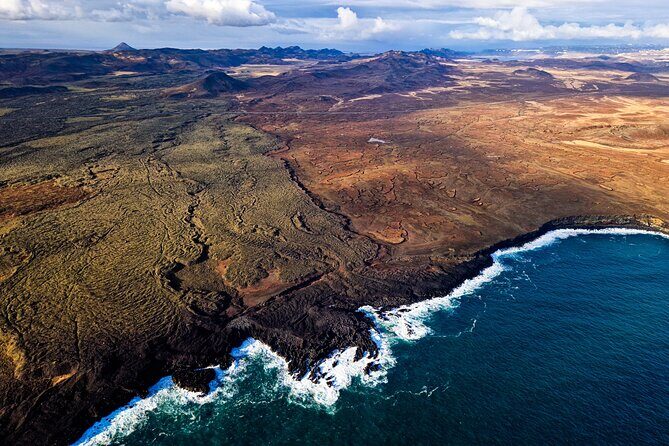
- 2021–2023 eruption sites: you fly over Reykjanes volcano areas tied to Fagradalsfjall, Meradalir, and Litli Hrutur.
- Reykjavik from above: downtown color and Hallgrímskirkja Church show up in the same flight as lava country.
- Coastal cliffs and birds: you can spot massive nesting colonies along steep sea cliffs looking toward the Atlantic to the south.
- Keilir pass: you skim past a Pleistocene subglacial volcano estimated around 100,000 years old.
- Weather flexibility with safety first: the company communicates changes and, if needed, refunds when flying isn’t possible.
A Private Helicopter View Over Reykjanes Peninsula
If your idea of Iceland is mostly volcanoes, this route makes a strong case for flying. From up in the air, Reykjanes reads like a living map: lava fields, crater shapes, and the way past eruptions shaped the coastline. You’re not trying to guess what you’re looking at from ground level. The terrain does the talking.
This is also a “short but meaningful” tour. At roughly 40 to 50 minutes, you get a concentrated sweep that links volcanic sites, Reykjavik, and the south-facing Atlantic horizon. It’s the kind of outing that can fit into a real itinerary without stealing an entire day.
Because it’s private, the tone matters. You’re with your small group and your pilot can tailor the flight experience to how your group is doing and what you’re curious about. That matters on a trip where wind, clouds, and visibility can change fast.
You can also read our reviews of more private tours in Reykjavik


Cost and Value: $1,990 for Up to Four (Not Per Person)
At $1,990 per group (up to 4), this isn’t “impulse fun” money. It’s closer to a splurge you plan for. Here’s the math that makes it feel more reasonable: if you fill the helicopter capacity, you’re effectively splitting the cost among four people, which can bring the per-person price down a lot compared with single-seat helicopter add-ons.
Now the value part. What you’re paying for is not just the view. You’re paying for:
- time saved (you’re covering multiple wow zones fast),
- a private experience (your group only),
- and expert interpretation from the pilot, including what you’re actually seeing on the volcanic terrain.
The reviews you’ll find repeatedly circle two themes: pilots who explain clearly and a ride that feels steady and safe. Names like Julian and Matt show up in the feedback, both described as friendly and effective at pointing out what matters below. You can expect that the pilot’s job is to connect the dots while you’re up there.
If you’re traveling as a couple, it can still be worth it if you’re the type who likes experiences with a clear “this is the best version” payoff. If you’re solo or two people and the helicopter won’t fill with your group, the cost may feel harder to justify. In that case, you might compare what you can do with road time and guided stops versus paying for the sky.
What 40 to 50 Minutes Really Covers (and Why It Matters)
Short helicopter tours are either satisfying or disappointing. This one trends satisfying because the flight is structured around major visual categories: volcano history first, then Reykjavik, then coastline and birds, then a deep-time geologic stop (Keilir).
Also, the timing advantage is huge. Iceland’s geology can be spread out. Driving gives you close-up details, but it takes time to string together multiple sites. Flying compresses the “big picture” into under an hour, which is perfect when:
- you’re on a tight schedule,
- you want a first taste of Iceland that isn’t just city walking,
- or you’re trying to beat weather uncertainty by doing something that can still deliver even if you don’t stay out all day.
The flight ends back at the meeting point, so you’re not dealing with long transfers after you land.
Overfly Craters and Lava Fields: Reykjanes Peninsula in Context
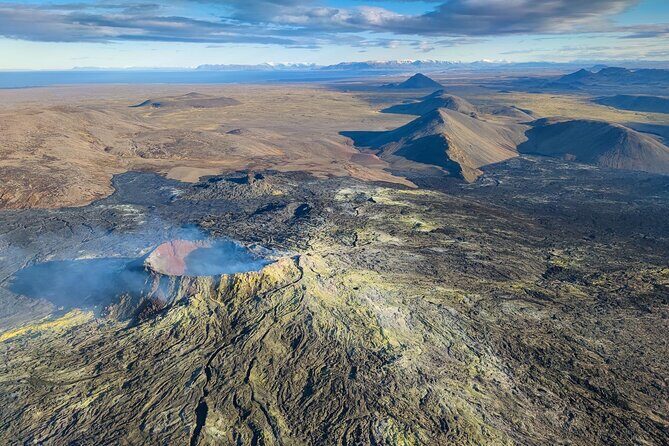
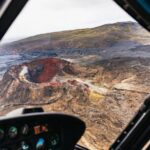
The tour begins with an overflight over craters and lava fields from previous eruptions, plus the history of the Reykjanes peninsula. This first segment matters because it sets the mental framework you need for the rest of the trip.
From the air, you start noticing patterns: older lava flows darken, topography breaks into distinct features, and crater edges can show how eruptions repeatedly reworked the same general zone. The pilot’s explanation helps you connect those shapes to what’s happening (or has happened) beneath the surface.
If you’ve ever stood on a viewing platform and felt like you were looking at a lot of “cool stuff” but not sure what was what, this part is designed to solve that. It’s not just a scenic flight; it’s a guided reading of the land.
Practical tip: if you care about photos, this is the moment to mentally set your expectations. Volcanic terrain can look detailed from the air, but glare, cloud cover, and seat position will affect how crisp images turn out. When the pilot is talking, it’s also a good time to listen first, then shoot once you know what you’re pointing at.
Fagradalsfjall, Meradalir, and Litli Hrutur: Lava Fields from 2021–2023
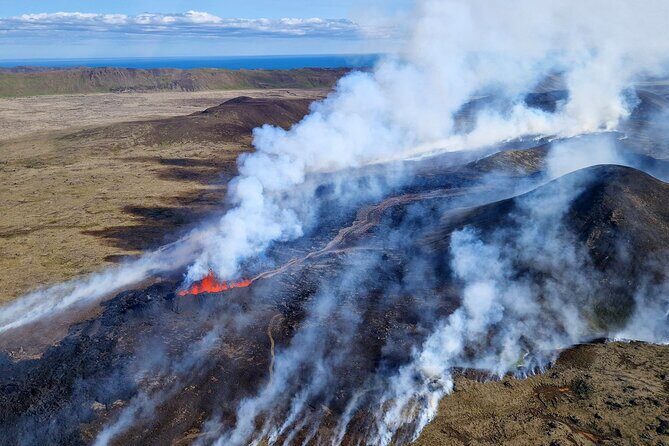
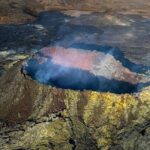
Next, you focus on Reykjanes Volcano, including areas connected to Fagradalsfjall, Meradalir, and Litli Hrutur and the eruption activity tied to 2021, 2022, and 2023. This is the “recent history” portion, which is often the most emotionally satisfying for people who came to Iceland to see the volcanic story while it’s still fresh in public memory.
From the air, the lava fields have a different personality than they do from road level. Instead of a few patches you might walk around, you can see how flows spread, how craters sit in relation to each other, and how the terrain evolves outward from eruption points. That gives you scale.
What’s especially appealing here is that you’re not just seeing one volcano feature. You’re getting a set of linked eruption zones, with the pilot helping you track them as the flight progresses.
Potential drawback: because these are very active, shifting environments, your exact visual experience can depend on real-time weather and visibility. In other words, you’re guaranteed the route concept, but not every second will be equally clear. That’s not unique to this tour—it’s just Iceland air travel reality.
A few more Reykjavik tours and experiences worth a look
Reykjavik from the Helicopter: Downtown Houses and Hallgrímskirkja Church
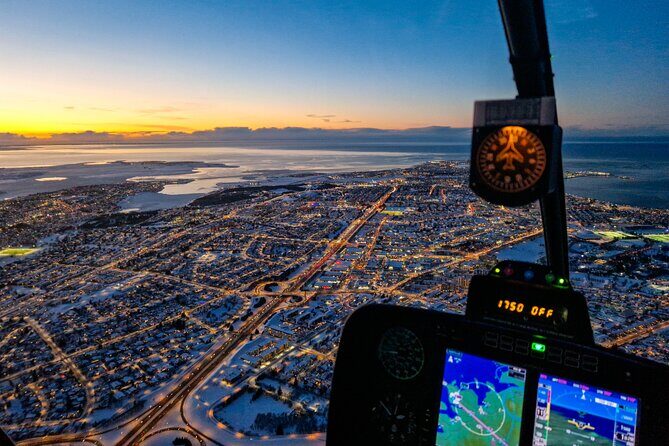
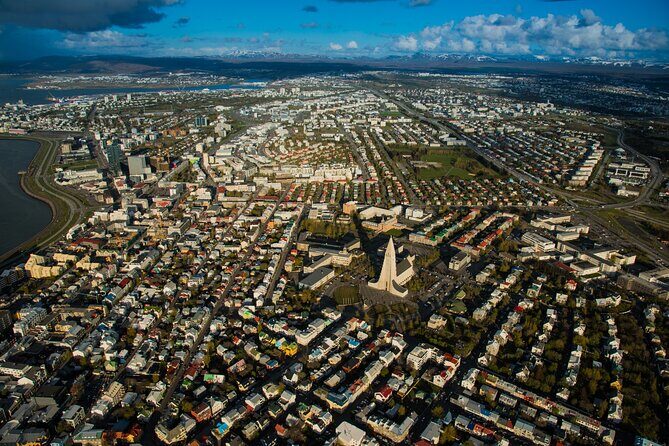
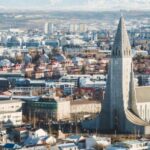
Then the flight turns toward Reykjavik, with views of downtown’s colorful houses and Hallgrímskirkja Church. This is more than a cute sightseeing bonus. It gives your brain a contrast point: city life beside raw volcanic terrain.
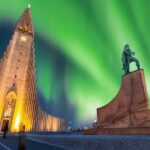
Hallgrímskirkja is one of Reykjavik’s most recognizable landmarks, so seeing it from above helps your bearings snap into place. It also makes a great photo target if the lighting works out and clouds aren’t chewing up the skyline.
This Reykjavik segment is also a nice reminder of why helicopters are so popular in Iceland. Even when you’re far from town, the country stays close. You can feel the transition from human-built streets to wild rock just by watching the scenery change under you.
Coastal Cliffs, Steep Shores, and Bird Cities Over the Atlantic
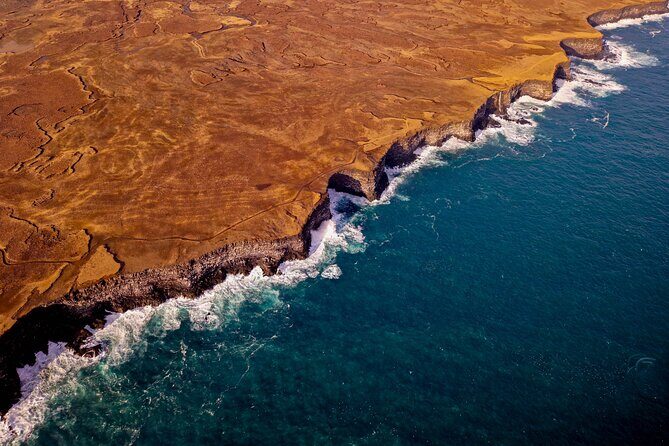
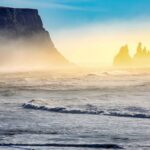
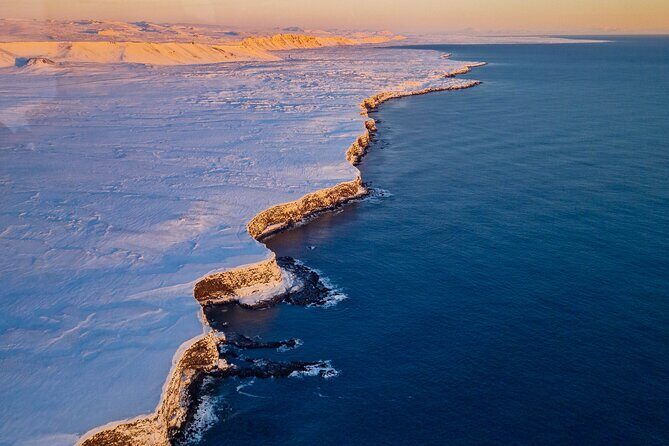
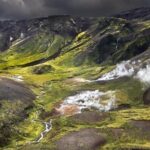
One of the most memorable parts in the experience is the coast. You get stunning rock formations and steep cliff views along the Atlantic side, with a chance to spot millions of birds nesting in the cliffs. If you’ve only ever seen seabirds from a roadside stop, it’s a whole different story when you can see nesting areas as a dense patchwork across cliff faces.
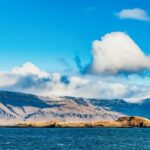
You also get long sightlines out to the endless Atlantic ocean to the south. That “stretch” view is what makes the coast segment feel cinematic even in a short flight.
What to keep in mind: bird activity is visual, but it’s also tied to conditions. If clouds or lighting reduce contrast, you may still notice the scale but not count birds the way you can in bright, clear weather. Either way, seeing steep cliffs from above is a strong payoff on its own.
Keilir: A Roughly 100,000-Year-Old Subglacial Volcano Pass
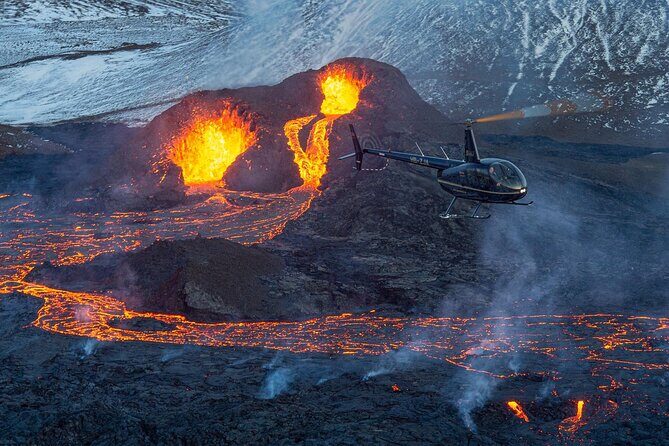
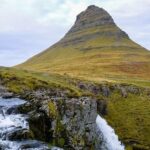
Near the end of the route, you pass by Keilir, a Pleistocene subglacial volcano estimated around 100,000 years old. This is where the tour nudges from “recent eruption excitement” into deep-time geology.
The subglacial part is the key idea: you’re looking at a volcanic feature shaped by ancient ice conditions rather than only by the more recent volcanic activity you’ve already been seeing. Even if you don’t geek out on that, you’ll still appreciate the way the pilot frames it—another chapter of how Iceland’s landforms took shape over time.
This segment is brief, but it adds meaning. It’s not just modern drama. It’s a story that stretches way beyond the last few decades.
Safety, Smoothness, and Real Communication When Weather Turns
Helicopter tours live or die on weather. The good news here is that safety and communication show up clearly in the experience record.
If the weather isn’t right, you might not fly. In one case described in the feedback, the tour couldn’t go ahead because of inclement weather, but the company handled it with safety first, prior notice, ongoing updates, and then a refund when they couldn’t fly. That’s what you want: transparency instead of confusion.
A separate point from the reviews is how pilots handle the ride itself. Passengers describe a smooth, steady trip over lava fields and volcano craters, plus real comfort and security checks. People also mention pilot friendliness, like Matt being super friendly and Julian offering an excellent flight with clear pointing out of past eruption sites and points of interest.
You should also be aware of an on-the-ground annoyance that can affect your day: if a taxi drops you off, follow the Google map link in your confirmation, because the exact meeting spot can be confusing without it.
Booking Smart: When to Reserve and How to Plan for Iceland’s Wind
This tour is offered in English, and you’ll receive a mobile ticket. Confirmation is sent at the time of booking, which is useful when you’re juggling multiple activities.
On timing, the average booking lead time is about 36 days in advance. That’s a clue: if you want a specific date (or if you’re traveling in a season where weather schedules can get tight), booking earlier helps.
Finally, build in flexibility. Since the flight requires good weather, you should avoid packing your day so tightly that a weather delay ruins everything. Even if your helicopter flight gets rescheduled, you’ll want enough slack to adapt.
Who Should Book This (and Who Might Hesitate)
This tour is a great fit if you:
- want the big volcanic story of Reykjanes without spending a full day driving,
- like guided interpretation rather than just looking,
- and you’re traveling with a small group who can split the cost (up to 4).
It’s especially appealing to nature lovers who want dramatic coast scenes and seabird nesting areas, plus city landmarks like Hallgrímskirkja in the same flight.
You might hesitate if:
- weather timing is rigid for your trip and you can’t adjust,
- you’re traveling solo and cost feels high without a full group share,
- or you’re close to the 250 lbs total weight limit per passenger (the tour lists a 250 lbs cap).
Quick Checklist Before You Go
- Expect a private flight for your group only.
- Plan for 40–50 minutes in the air.
- Know the meeting point: Volcano Heli – Iceland Helicopter Tours, 102 Reykjavik.
- Bring your mobile ticket (you’ll get it as part of booking).
- If using a taxi, use the confirmation Google map link.
- Keep a little flexibility in your schedule for weather.
Should You Book This Reykjavik Helicopter Tour of Volcanoes?
I’d book it if you want a high-impact Iceland day that doesn’t require a long drive and doesn’t leave you guessing what you’re looking at. The strongest reason to choose this over a road-based approach is the combination: volcano history + eruption-zone views (2021–2023 areas) + Reykjavik landmarks + coast cliffs with massive bird nesting + Keilir’s deep-time angle.
It’s also a good choice if you value reliability around weather. The experience record emphasizes safety first, clear communication, and refunds or date options when conditions block the flight.
Skip it (or think twice) if you hate rescheduling or you’re traveling on a tight budget without a chance to split the group cost. In Iceland, sometimes the best plan is the one that gives you options—and this tour’s setup fits that mindset.
FAQ
How long is the Reykjavik Helicopter Private Tour of Volcanoes?
The flight time is approximately 40 to 50 minutes.
What does this tour cost?
It costs $1,990.00 per group, up to four people.
Is this a private tour?
Yes. It is a private tour/activity, and only your group participates.
What language is the tour offered in?
The tour is offered in English.
Where does the tour start?
The start location is Volcano Heli – Iceland Helicopter Tours, 102 Reykjavík, Iceland.
Where does the tour end?
The activity ends back at the meeting point.
What can I expect to see during the flight?
You will fly over craters and lava fields from previous eruptions, view Reykjanes volcano eruption areas from 2021–2023, see downtown Reykjavík and Hallgrímskirkja Church, pass coastal cliffs with bird nesting areas and views over the Atlantic to the south, and pass Keilir, a subglacial volcano estimated to be around 100,000 years old.
Do I need good weather for this tour?
Yes. The experience requires good weather.
What happens if the tour is canceled due to poor weather?
If it is canceled due to poor weather, you’ll be offered a different date or a full refund.
What is the cancellation policy?
You can cancel up to 24 hours in advance for a full refund. If you cancel less than 24 hours before the start time, the amount paid is not refunded.