REVIEW · REYKJAVIK
Dive the Divide: Silfra Fissure Scuba Tour | Meet at Thingvellir
Book on Viator →Operated by Arctic Adventures · Bookable on Viator
Silfra Fissure is the rare Iceland activity where the water looks almost too clean to be real, and you get a guided route through Silfa Hall, Cathedral, and Lagoon. I like that the tour runs as a small group (up to 3 divers), so you get focused instruction, and I also like the included drysuit dive gear plus warm drinks and cookies after—practical comfort, not just sightseeing.
One big consideration: this is a challenging drysuit dive with heavy equipment carry (about 400 meters) and strict requirements—so you need to show drysuit certification and have done drysuit diving within the last two years.
In This Review
- Key things to know before you go
- Meeting at Thingvellir: where your cold-water day starts
- Silfra Fissure route: from Silfa Hall to Cathedral to Lagoon
- The cold-water challenge: what the 400-meter carry really means
- Drysuit rules: who can join and what you must prove
- Equipment and comfort: what’s provided and what you should plan
- Summer vs winter timing: how many dives you’ll actually do
- Price and value at $296.41: why this one costs what it costs
- Who this fits best—and who should skip it
- Should you book the Silfra Fissure tour from Thingvellir?
- FAQ
- Where is the meeting point for this Silfra tour?
- Is pickup from Reykjavik included?
- What diving certification do I need?
- How long is the tour, and how long are the dives?
- What are the depth limits?
- Can I wear glasses under the mask?
- What should I bring for comfort?
- Is there parking at Thingvellir?
- What happens if weather is bad or I need to cancel?
Key things to know before you go
- Meet at Thingvellir, not in central Reykjavik: you’ll drive yourself to the Silfra meeting point at Vallarvegur (parking has a separate fee)
- You must be a drysuit diver with recent experience: the guide checks certification and logbooks
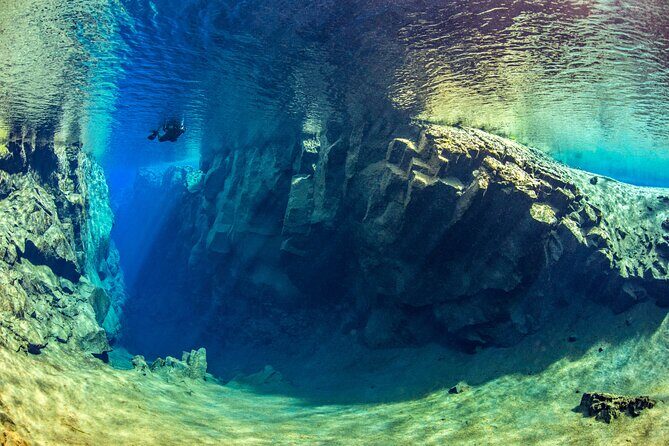
- Cold-water visibility can be extreme: visibility can reach beyond 100 meters, so buoyancy and calm control matter
- The route has named stops: Silfra Deep Crack, then Silfa Hall, onward to Cathedral, and finally Lagoon
- Winter can shorten the plan: if it’s very cold (below -0°C), you may do just one dive
- No glasses under the mask: bring contacts, or prescription goggles
Meeting at Thingvellir: where your cold-water day starts
Your day begins at the Silfra meeting point in Thingvellir National Park (Vallarvegur, 806, Iceland). There’s no pickup from Reykjavik, so plan on driving yourself and budgeting a parking fee of 500 ISK charged by the park. If you’re the type who likes arriving early to settle your nerves, this helps. Things move fast once you’re all in gear.
From the start, you’ll get a thorough briefing covering park rules, diving procedures, and signals. That matters here because Silfra isn’t a typical warm, open-water shoreline dive. You’ll be working in cold conditions in a confined route, and clear hand signals and predictable routines keep everyone calm.
Then comes gear time. You’ll get outfitted for your drysuit dive (with the tour supplying the specialized equipment), and you’ll walk through your dive route and expectations before water. If you’ve only done one kind of cold diving before, treat this briefing as your chance to align your habits: how you check weights, how you manage your breathing, and how your team handles changes in conditions.
You can also read our reviews of more scuba diving tours in Reykjavik
Silfra Fissure route: from Silfa Hall to Cathedral to Lagoon
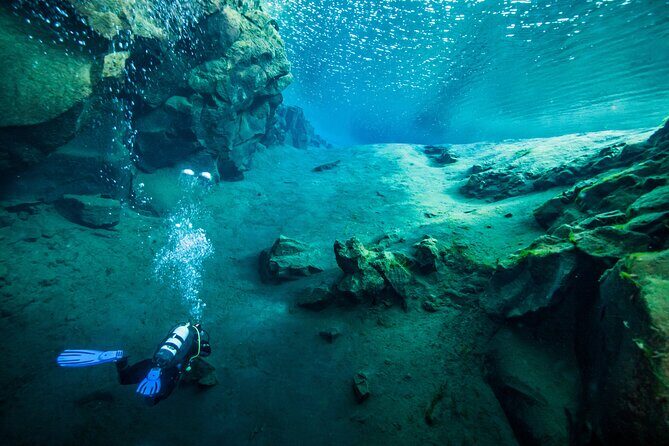
Once you’re ready, you head toward the Silfra entrance and descend a ladder to a submerged metal platform. You’ll stand in waist-deep water first to acclimatize, then do the required weight and safety checks. This isn’t wasted time. It’s how you confirm comfort and control before you commit to the route.
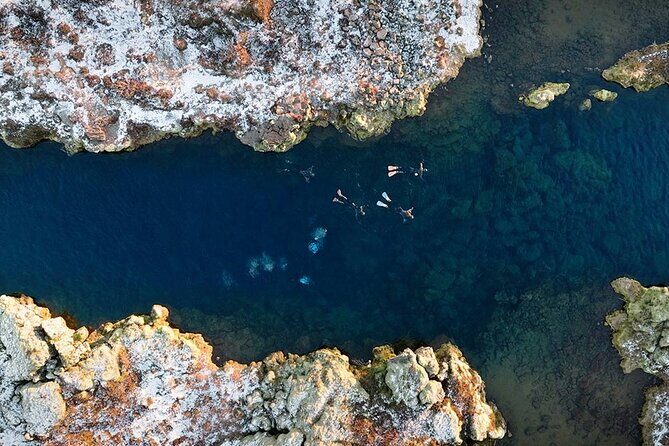
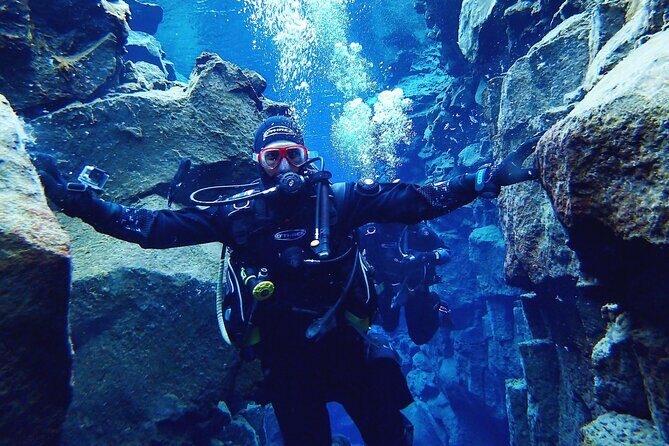
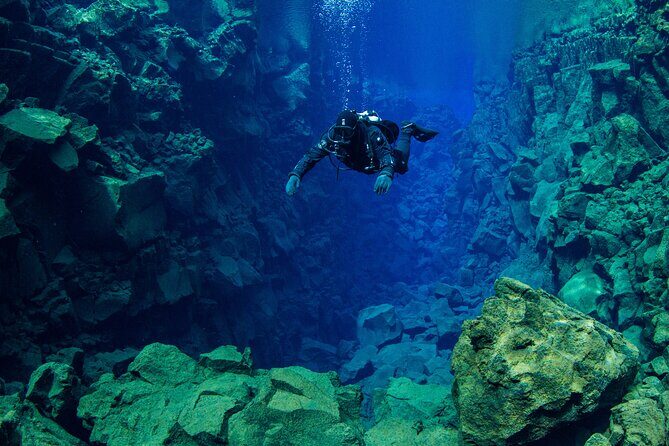
Silfra is famous for clarity—visibility can extend beyond 100 meters—and you’ll feel that instantly as you move away from the surface and into the fissure. Your guide will lead you through the Silfra Deep Crack, where the gap between the continental plates is close, then gradually widens. In practice, that means you’ll be doing steady, controlled swimming rather than chasing motion. Good buoyancy and calm finning pay off fast.
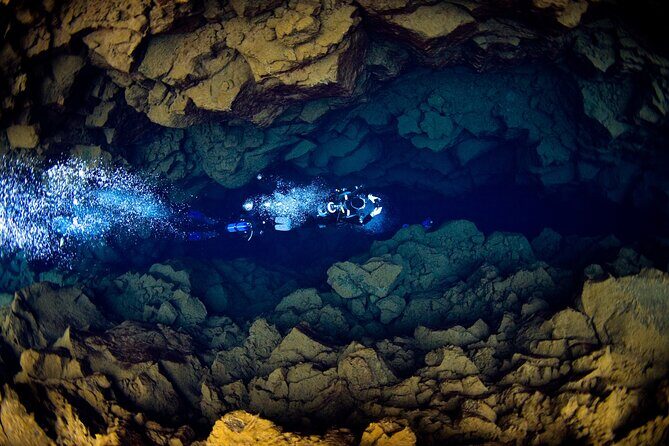
As the space opens up, you’ll enter Silfa Hall and continue into Silfra Cathedral. Cathedral is the deepest point on this experience, around 22 meters (72 feet). You’ll see cavern-like features with lava walls dropping away—an eerie sense of scale because the water is so clear that the environment feels close, even when it’s far down.
Finally, you’ll reach Silfra Lagoon, a brilliant-blue area where the visibility can feel endless. The feeling here is less about speed and more about stillness: let your body settle, keep your breathing steady, and enjoy how the underwater “light” behaves when you’re surrounded by clear water and dark rock walls.
When it’s time to end, you surface and remove your fins and heavy equipment, then walk back to the parking lot. After that, you change back into everyday clothes and warm up with hot chocolate and cookies.
The cold-water challenge: what the 400-meter carry really means
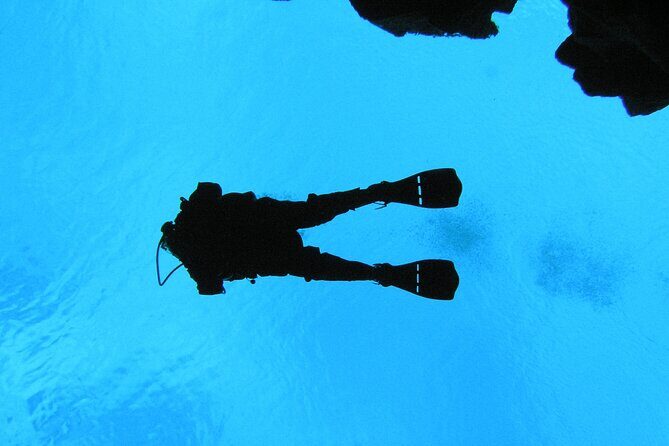
Silfra has a reputation for cold, and this tour also has a reputation for serious logistics. You’ll be limited to depths of about 18 meters (59 feet) for the dive, and the experience includes carrying heavy equipment for roughly 400 meters. That’s not just a “bring comfortable shoes” note. You should be ready for real effort before you even get the fun part.
You’re also wearing a drysuit, which is physically bulky even when everything fits well. The combination—cold water, thick thermal layers, heavy gear, and a long carry—adds up. The tour is very clear about needing strong physical fitness, so be honest with yourself during training. If you’re already tired before the water, you’ll feel it the rest of the day.
The good news is that you don’t face this alone. The briefing, guided route, and small group format help you stay organized. And in the best-guide scenario, the whole process feels calm and manageable. One standout from a recent guide experience: Franceska was described as warming gloves, helping with drysuit setup, and staying calm and supportive in snow-adjacent cold conditions. That kind of hands-on, comfort-first attitude can make a hard day feel controlled instead of chaotic.
Drysuit rules: who can join and what you must prove
This tour is limited to PADI-certified divers with drysuit dive certification or experience. More importantly, the guide needs to verify it. You’ll need to show your drysuit certification card or a logbook showing at least 10 previous drysuit dives, signed by a dive professional. And you must have done drysuit diving within the last 2 years so your skills are current and you enjoy the dive instead of wrestling your gear.
This is one of the best safety signals you can ask for in a cold-water experience. When the provider is strict about training, the group stays more even, buoyancy skills tend to be higher, and everyone spends more time looking at Silfra and less time fixing problems.
There are also very specific practical comfort requirements:
- Wear warm undergarments such as fleece or wool, and bring warm socks
- Bring a change of clothing, because no drysuit can be guaranteed to be 100% dry unless it’s custom-made
- Plan for mask limitations: since you’ll use a diving/snorkel-style mask, you cannot wear glasses underneath the mask
- You’ll need contact lenses, or bring your own prescription goggles
If you wear glasses in everyday life, this is the kind of detail that can quietly ruin a trip if you don’t plan ahead. I’d rather you order contacts early or pack prescription goggles now than try to solve it at the last minute in a cold parking lot.
Equipment and comfort: what’s provided and what you should plan
One of the smartest value plays here is that the tour supplies essentially everything you need for a drysuit scuba day: drysuit, thermal undersuit, mask, fins, tanks, weights, and regulator. That means you’re not trying to source bulky cold-water gear on a tight timeline.
You’ll still want to think about comfort items that aren’t listed as included. Since you’re required to wear warm undergarments and warm socks, treat this like layering for a winter hike—only you’re underwater. If your underlayers are too thin, you’ll feel it fast, even if the dive itself is short enough to be “doable.”
After you surface, you’ll finish with hot chocolate and cookies. It’s a small thing, but it’s timed perfectly: it’s right when you’re done shivering and ready to change. Having something warm and simple included helps you recover quickly so you can drive safely and enjoy the rest of your Iceland day.
You should also expect you’ll remove fins and heavy gear before walking back. That’s one more reason to bring a change of clothing. Cold-water wetsuit logic doesn’t apply; drysuits reduce the problem, but they don’t erase it.



Summer vs winter timing: how many dives you’ll actually do
The overall experience is about 4 hours. But what you do under the water changes with the season.
In summer, you have the option of making two 30-minute dives. In winter, if water temperatures are below freezing, you typically do one dive of around 45 minutes. And there’s an extra winter safety rule: if the temperature falls below -0°C, the instructor may change the plan to just one dive for safety.
This is exactly what you want to see in a cold environment. You’re not locked into a rigid schedule that ignores conditions. Instead, the provider uses conditions to protect safety and make sure the dive remains manageable.
Weather matters too. This experience requires good weather. If it can’t operate due to poor weather, you’ll be offered a different date or a full refund. That flexibility helps when Iceland is doing Iceland things.
Price and value at $296.41: why this one costs what it costs
At about $296.41 per person, this is not an impulse buy. But it’s also not just “a guided dive.” You’re paying for:
- A specialized cold-water drysuit setup and all key diving gear
- A guided route through multiple named parts of the fissure
- A small group format (maximum 3 travelers), which usually means more attention during checks and in-water guidance
- Hot drinks and snacks after, which actually matters after cold
You’re also paying for guide time plus verified expertise requirements. The strict drysuit entry rules (card or logbook checks, plus recent experience within two years) create a safer, more consistent experience, and that safety comes with real effort on the provider’s side.
Yes, you’ll add the park parking fee on your own (500 ISK). And you’ll handle transport yourself because there’s no Reykjavik pickup. Still, if you value getting the gear and guidance handled cleanly, this price often feels fair for what’s happening out on the water.
It’s also worth noting that this type of tour tends to book ahead—on average about 41 days in advance. If you’re traveling during peak months, grab your slot early so you’re not stuck when weather or dive conditions shift.
Who this fits best—and who should skip it
This tour fits best if you’re already a capable cold-water diver and meet the drysuit requirements. If you can carry gear for about 400 meters without breaking your rhythm, you’ll be in good shape for the physical side. If you’ve done drysuit diving recently, you’ll likely enjoy the day instead of spending the dive fighting your suit.
It’s also ideal if you like tight-group diving. With a maximum of 3 divers, you’ll get more direct instruction and a smoother process during the weight checks, route planning, and in-water guidance.
Who might skip it? Anyone who:
- Can’t show drysuit certification or recent drysuit dives (the guide checks documentation)
- Has never dived with a drysuit within the past two years
- Can’t work around the mask-glasses restriction (no glasses under the mask)
- Isn’t comfortable with the physical side: heavy equipment carry and a cold-water environment
If you’re unsure, treat the requirements as a helpful filter. Silfra is gorgeous, but this experience rewards preparation.
Should you book the Silfra Fissure tour from Thingvellir?
I think you should book this tour if you want a high-guidance, small-group drysuit experience with real underwater variety—Deep Crack, Silfa Hall, Cathedral, and Lagoon—plus organized briefings and warm recovery afterward.
I’d pause and double-check before booking if you’re missing drysuit experience within the last two years, have difficulty meeting the equipment and physical demands, or you rely on glasses you can’t safely use under a mask. Silfra is not where you want to improvise.
If you tick the boxes, the combination of extreme clarity, guided structure, and a guide who keeps comfort and safety front and center (like Franceska in a recent experience) is exactly what makes this one feel worth every minute.
FAQ
Where is the meeting point for this Silfra tour?
You meet at the Silfra meeting point in Thingvellir National Park (Vallarvegur, 806, Iceland). The activity ends back at the same meeting point.
Is pickup from Reykjavik included?
No. Pick up service from Reykjavik is not included.
What diving certification do I need?
You must be PADI-certified with drysuit dive certification or experience. Your guide needs to see your drysuit certification card or a logbook showing at least 10 previous drysuit dives (signed by a dive professional). You also need to have dived in a dry suit within the last 2 years.
How long is the tour, and how long are the dives?
The experience lasts about 4 hours. In summer you may do two 30-minute dives, while in winter you typically do one dive of about 45 minutes (depending on water temperature and safety decisions).
What are the depth limits?
Depth is limited to about 18 meters (59 feet) during the dive. Silfra Cathedral is described as the deepest point at about 22 meters (72 feet).
Can I wear glasses under the mask?
No. You cannot wear glasses underneath the seal of the mask. You’ll need contact lenses, or you can bring prescription goggles.
What should I bring for comfort?
Wear warm undergarments such as fleece or wool and warm socks are required. Bring a change of clothing, since the drysuit cannot be guaranteed to be 100% dry.
Is there parking at Thingvellir?
Yes, but you pay separately. The National Park charges a small parking fee (private car – 500 ISK).
What happens if weather is bad or I need to cancel?
The experience requires good weather. If it’s canceled due to poor weather, you’ll be offered a different date or a full refund. You can cancel for free up to 24 hours in advance for a full refund.