REVIEW · REYKJAVIK
Silfra: Diving Between Tectonic Plates
Book on GetYourGuide →Operated by ICELANDIA · Bookable on GetYourGuide
Water clarity that looks unreal.
That’s what hooked me with Silfra: 100m+ visibility and the rare chance to swim between the American and European plates. One thing to think about first: this is cold-water scuba with strict certification rules, so it’s not a casual first-timer experience.
You’ll do the whole day inside Thingvellir National Park, a UNESCO site on the Golden Circle route, which adds a “standing on history” feeling before you ever get in the water. I also love that you stay warm in a dry suit—water sits around 2°C year-round—and you still get to enjoy real underwater color, not just survival mode.
In This Review
- Silfra Key Points You’ll Care About
- Why Silfra in Þingvellir Feels Like Another World
- Between the American and European Plates: The Tectonic-Plate Moment
- Entering the Fissure: What Each Underwater Section Is Like
- Dry Suit Reality Check: Staying Warm in 2°C Water
- How the 3–5 Hour Schedule Actually Feels
- Guides, Equipment, and What Makes the Experience Feel Safe
- Price of $289: Is This Worth It?
- Who Should Book Silfra (and Who Should Skip It)
- Practical Tips for Your Best Photos and Comfort
- Should You Book Silfra?
- FAQ
- Where does the Silfra tour start?
- How long is the tour?
- What’s the water temperature and what suit do I wear?
- Do I need scuba certification?
- Do I need dry suit experience too?
- Is transportation from Reykjavik included?
- What do I do after the underwater part?
- Who isn’t suitable for this tour?
- Can I cancel if plans change?
Silfra Key Points You’ll Care About
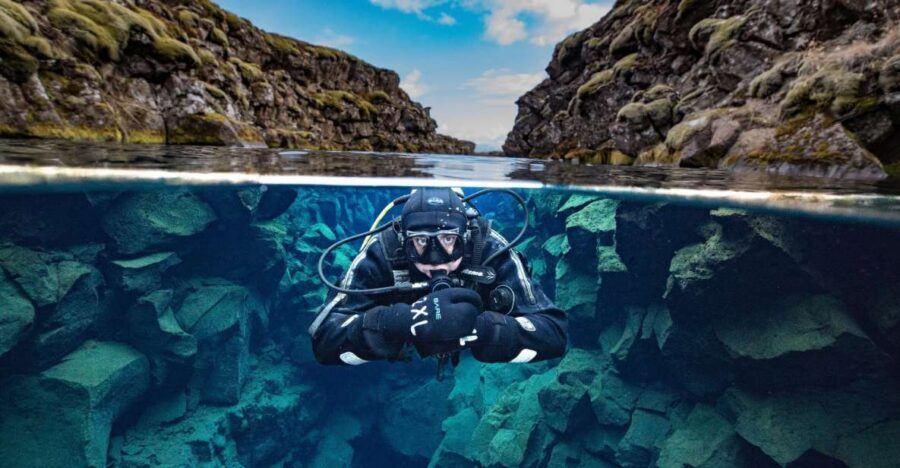
- 100m+ visibility means you can actually see distance and detail, not haze
- Between continents: the fissure runs between the American and European plates
- Dry suit included with a warm undersuit, built for cold-water conditions
- Four underwater sections give you a natural route: narrow crack to wide hall to cathedral
- Hot chocolate and cookies after the session help you bounce back fast
Why Silfra in Þingvellir Feels Like Another World
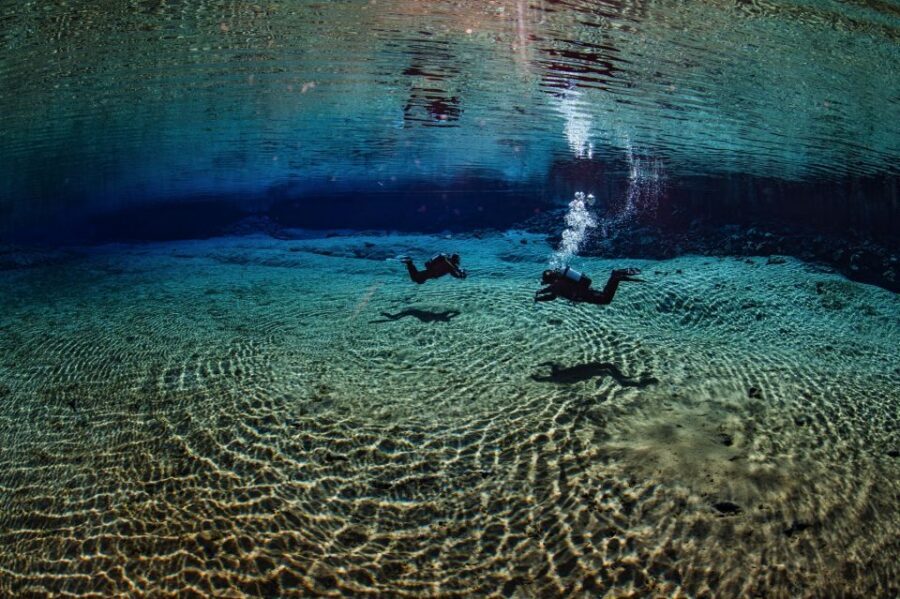
Silfra is famous for a simple reason: the water is so clear that it behaves almost like a window. When you look out, you don’t feel like you’re surrounded by murky ocean. You feel like you’re suspended in clean glass, with sharp rock edges and an underwater “blue-green” spectrum that gets even more obvious as you move into wider sections of the fissure.
And because this happens inside Thingvellir National Park, you’re not only doing a special underwater outing. You’re also stepping into a place shaped by tectonics above the surface. That matters, because it turns the swim into more than a fun activity—it becomes a front-row seat to how the planet is literally splitting and reforming.
You can also read our reviews of more scuba diving tours in Reykjavik


Between the American and European Plates: The Tectonic-Plate Moment
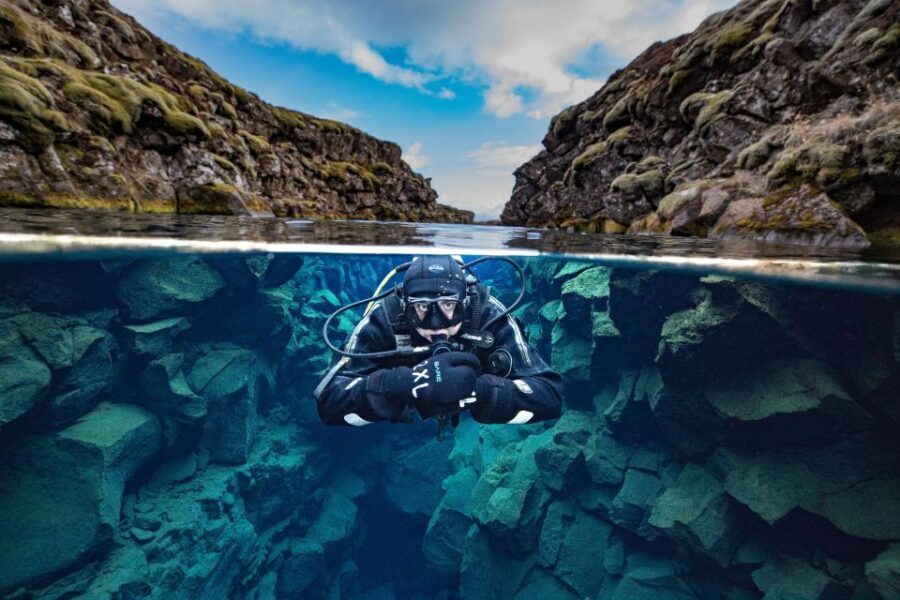
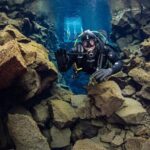
The headline experience is straightforward: Silfra is where the North Atlantic tectonic plates spread, letting you get into water that sits along the boundary between the American and European continents. The fissure runs as a crack in the earth, and the geology becomes visible in a way you just don’t get elsewhere.
There’s one section that really helps you feel what that means: Big Crack, the narrowest part where the plates are so close you can touch the rock. It’s not just a cool photo spot. It changes how you understand scale, because you’re close enough to notice texture and depth changes in the rock while you stay calm in a controlled guided setting.
As the fissure widens, the underwater world also opens up. In Silfra Hall, visibility makes the colors feel more layered, and you may even spot Lake Þingvallavatn far away—over 150 meters—if you look from the right angle. That kind of distance visibility is exactly why Silfra is worth the time and planning.
Entering the Fissure: What Each Underwater Section Is Like
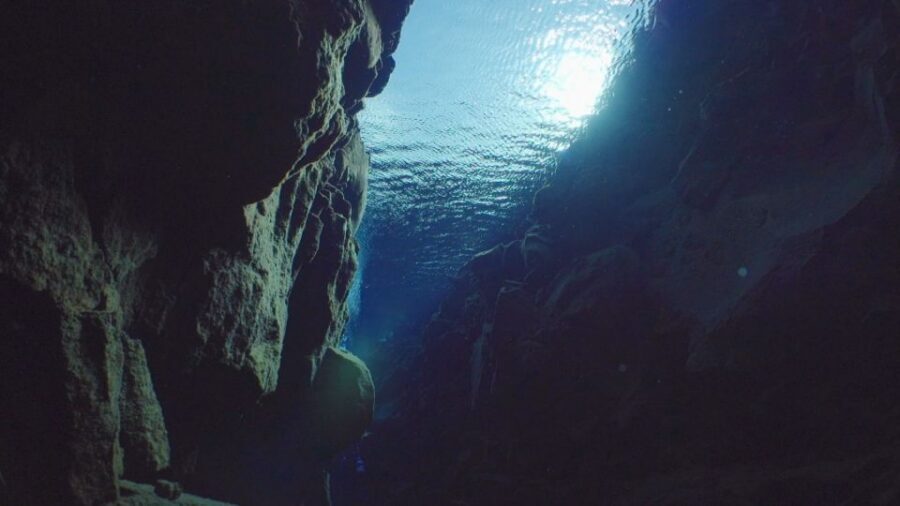
Your session follows a path through four named areas inside the Silfra fissure. That structure is useful because it gives you variety without feeling like you’re being rushed.
Big Crack (narrow and tactile). This is the section built for the “I can reach the plates” moment. Because the fissure is tight here, you’ll likely spend more attention on buoyancy and positioning. The plus is that you don’t feel disconnected—you feel close to the geology.
Silfra Hall (wide clarity and color). Once you’re in the hall, the underwater look changes. Bigger space plus extreme visibility often makes the water tone shift in your mind. It’s also where depth perception can feel tricky in a good way, since the clarity makes distant rock and shapes look crisp rather than softened.
Silfra Cathedral (depth near the opening). Near the opening of the lake area, you enter Silfra Cathedral. Depth reaches up to about 23 meters there, so this section tends to bring a little more focus on breathing rhythm and stability. If you’ve ever felt nervous at depth, this is still manageable because you’re guided and the experience is designed as a controlled route through the fissure.
Silfra Lagoon (your exit path in clear water). The ending section flows you into that last stretch of open visibility. It’s a chance to slow down and let your eyes rest on the rock shapes and water clarity as you approach the platform exit.
Dry Suit Reality Check: Staying Warm in 2°C Water
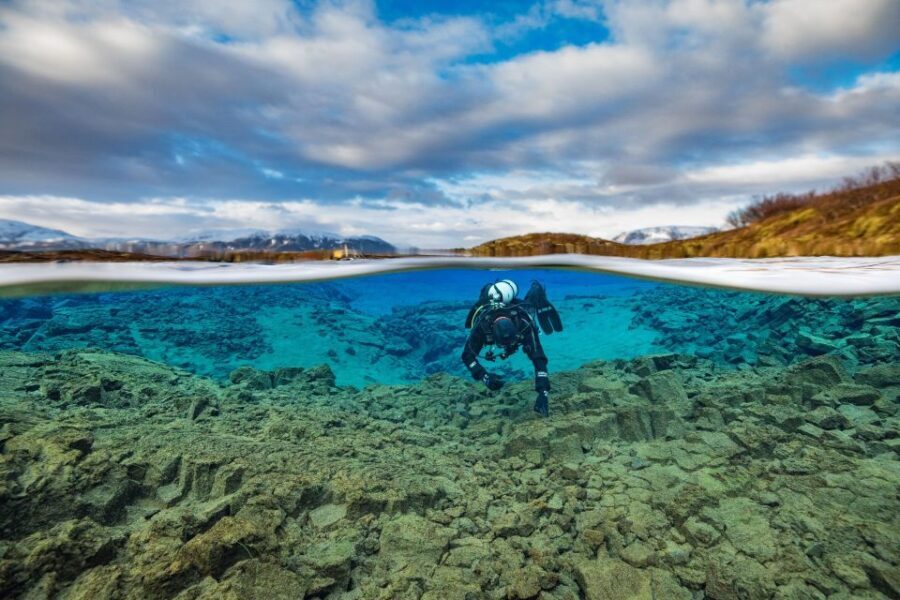
Cold-water comfort is the whole game in Silfra. The water is around 2°C year-round, no matter what the weather looks like above. The good news is that the operator includes a dry suit plus a warm undersuit, and you get a heated van setup to change clothes.
Here’s how I’d think about it as a practical traveler: the dry suit doesn’t mean you can dress like you’re going to the grocery store. It means you’ll have a fighting chance to enjoy the experience instead of counting minutes until you feel frozen. Your job is to prepare the layers you’ll wear under the suit so you’re snug, not bulky, and so you can move comfortably while you’re handling gear adjustments with your guide.
Also, accept that you’ll feel cold during prep if you show up under-dressed. The best outcome comes from arriving ready—warm layers, sensible socks, and a plan for staying comfortable before you’re sealed in.
How the 3–5 Hour Schedule Actually Feels
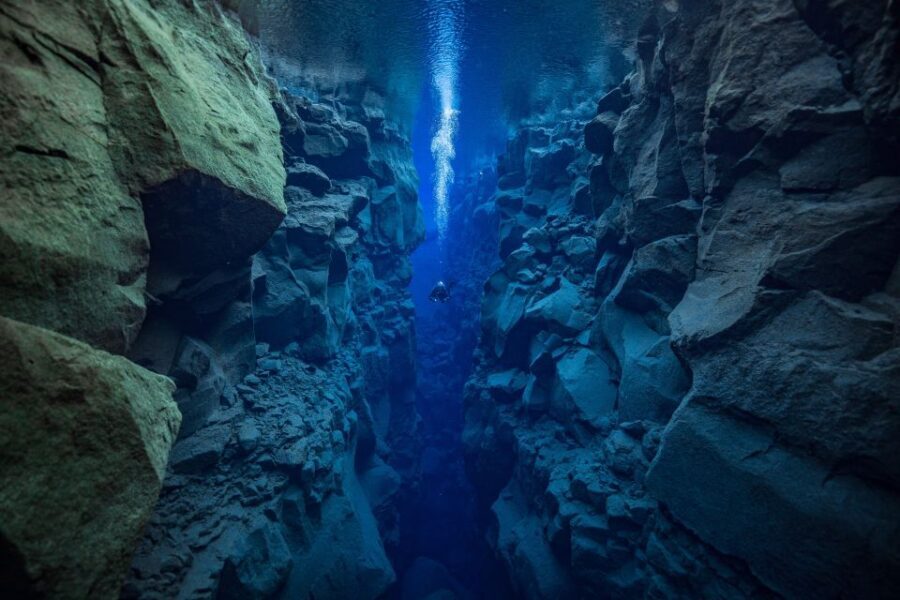
Expect a half-day experience that’s mostly about prep and then a focused underwater segment.
If you choose Reykjavik pickup, there’s a travel portion (about 45 minutes by bus/coach). After you arrive, you’ll get organized with your group. Briefing and gearing up takes about an hour, and this is where your guide’s role matters. You’ll confirm how your suit fits, go over the plan for the fissure route, and get the practical cues you need so you don’t waste mental energy once you’re in the water.
Then comes the underwater portion. At the entry platform, you’ll enter and spend roughly 45 minutes exploring the fissure’s sections. That timing is important: Silfra is so clear that you’ll want to look around, but you still need to pace yourself because cold and exertion add up faster than you expect in 2°C water.
After the session, you’ll exit at the platform and walk back to the meeting point, around 250 meters. Then you warm up with hot chocolate and cookies. You also usually get time to talk with your guide and look at the pictures taken during the tour—small detail, but it helps you relax and turn the day into something you’ll remember.






Guides, Equipment, and What Makes the Experience Feel Safe
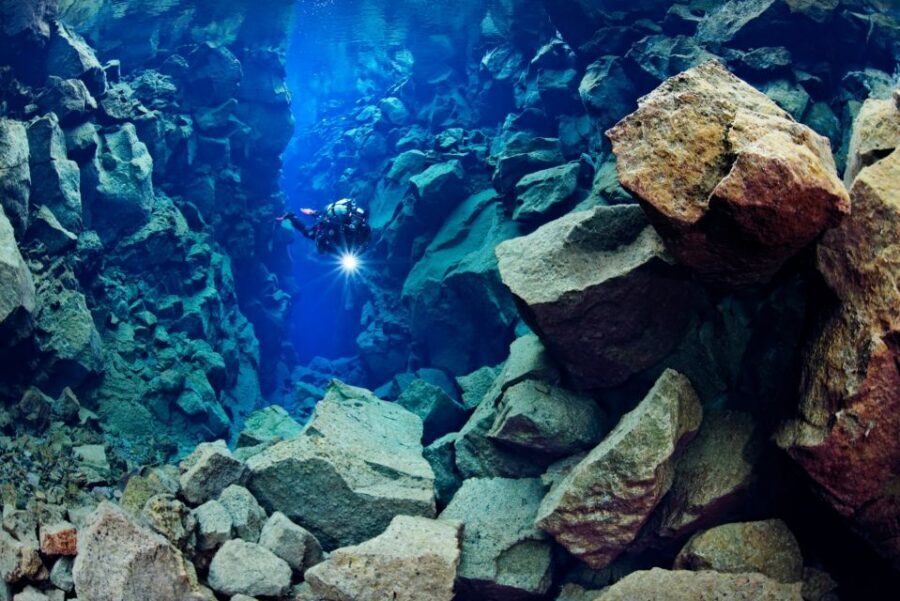
This is led by a live guide and PADI instructor. You’re also in a very small group setup, with one guide per group, and the experience is designed to keep things controlled—especially since you must be appropriately certified.
Equipment and suit support are included: scuba equipment, plus the dry suit and warm undersuit. That matters because the learning curve on cold-water gear is not the place to figure things out for the first time. With a good instructor and well-maintained gear, you can focus on buoyancy, breathing, and sightlines through the fissure rather than troubleshooting.
From past experiences, guides such as Filip and Giancarlo have been praised for friendliness and strong instruction. While you can’t guarantee a specific person, it’s a good sign that the guiding style here tends to feel approachable and calm, not mechanical.
A quick tip before you enter the water: ask your guide how they expect you to position yourself for the best sightlines (like the angle where you may see Lake Þingvallavatn). In a place this clear, small changes in angle can make a big difference in what you can actually see.
Price of $289: Is This Worth It?
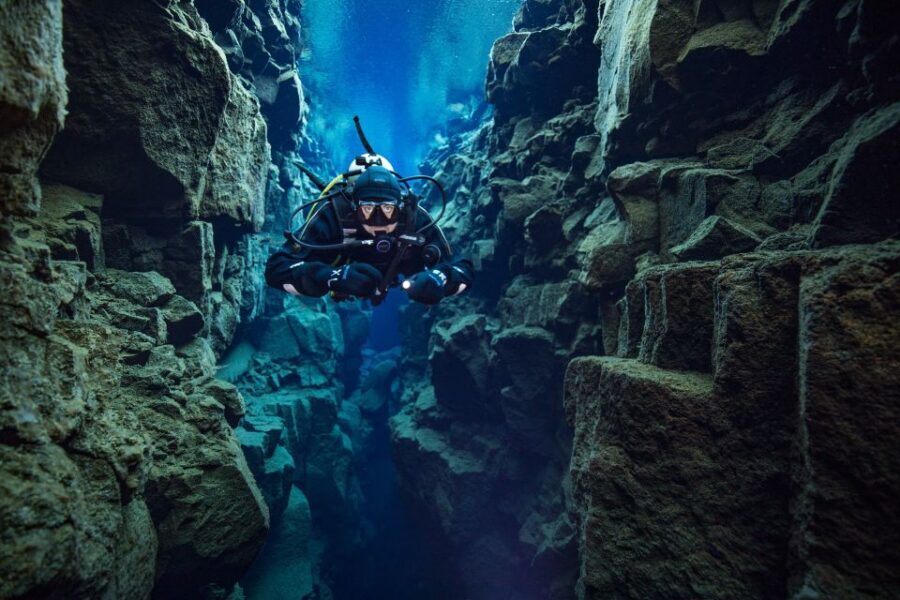
At $289 per person, Silfra isn’t a budget activity. But it’s also not just paying for “being somewhere pretty.” You’re paying for a rare geological experience plus the cold-water systems that make it possible.
Here’s what’s included that adds real value:
- A live guide/PADI instructor and a guided route through the fissure
- Entry fee for Silfra
- Scuba equipment
- Dry suit and warm undersuit
- Heated van to change clothes
- Hot chocolate and cookies
On a DIY level, you’d need to solve for certified leadership, dry suit logistics, and access to this specific fissure setting. That’s why the price feels less like a generic excursion fee and more like a package built around safety and gear.
One more value note: the quality of visibility is the product here. When you’re paying to see 100m+ clarity and sharp plate-boundary geology, you’re buying an experience that’s hard to replicate elsewhere.
Who Should Book Silfra (and Who Should Skip It)
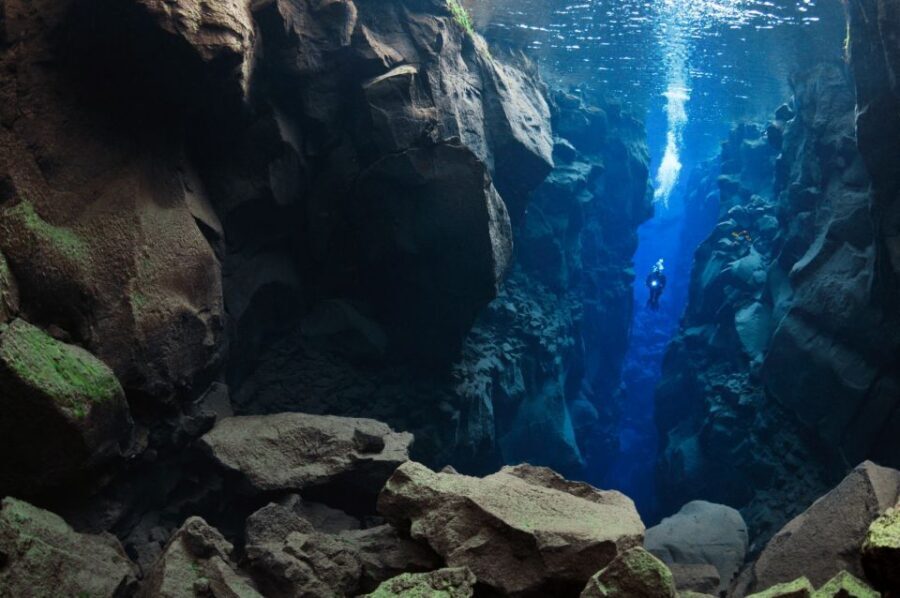
This tour is designed for people who already have the right scuba foundation. You must have PADI Open Water certification (or comparable from another dive organization). And you must also have dry suit certification plus proof of dry suit experience within a time window: either a logged dry suit dive within the last two years, or at least ten logged dry suit dives within two years, verified in writing by an instructor.
If you don’t meet those requirements, you should treat this as a “not yet” item and plan to train first.
It’s also not suitable for:
- Pregnant women
- People over 264 lbs / 120 kg
- People under 3 ft 9 in / 120 cm
- People over 6 ft 6 in / 200 cm
- People under 17 years
- People under 99 lbs / 45 kg
If you fit the requirements and you’re comfortable with cold-water gear, you’ll likely love it. If you’re mainly chasing a relaxed sightseeing trip, this won’t match that mood—silica-clear underwater views are the reward, but it still involves cold and controlled scuba rules.
Practical Tips for Your Best Photos and Comfort
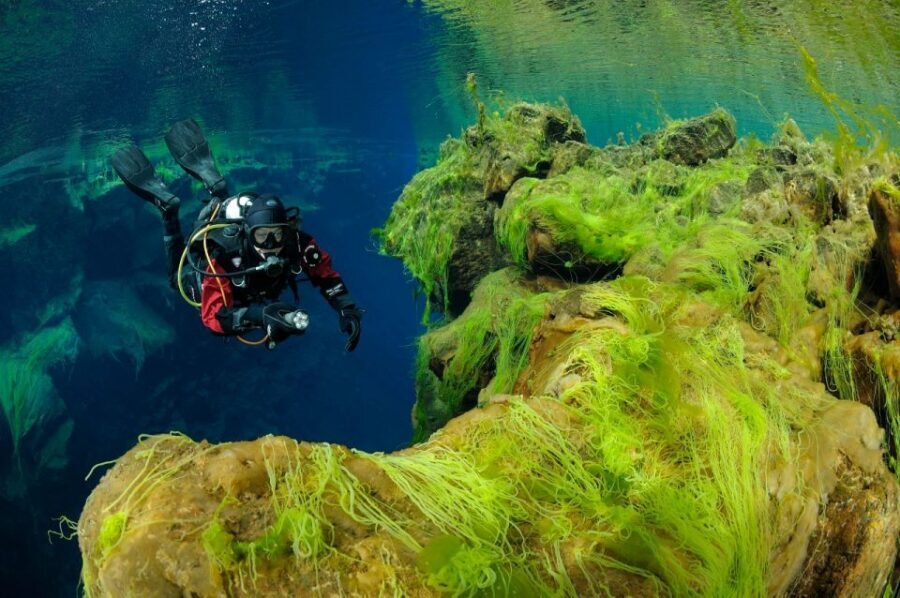
Silfra is a photographer’s dream because visibility is so high, but that doesn’t mean every photo will be easy. Here are practical things you can do to improve results and comfort without guessing.
- Wear warm clothing you can manage easily under the suit. Dry suit success starts on land.
- During the briefing, ask what hand signals or positioning cues your guide will use. Cold water makes clarity and focus more important.
- Expect that rocks can shape the view. Even with 100m+ visibility, the fissure walls and sections create natural framing.
- Plan for warm-up time. You’ll have hot chocolate and cookies after, but you’ll still want to move carefully on the walk back to the meeting point.
And if you care about photos, it helps to remember that your guide may take pictures during the tour. That’s a real advantage in cold water because your hands can stay focused on buoyancy rather than camera fiddling.
Should You Book Silfra?
I think Silfra is worth it if you check two boxes: you’re properly certified (especially for dry suits), and you want the rarest kind of underwater clarity—one where the geology is part of the main attraction. The combination of tectonic-plate boundary access, 100m+ visibility, and dry suit support makes it feel like a serious experience, not a “stamp and go” outing.
If you’re missing dry suit certification or you’re unsure you can handle 2°C water for the planned time, don’t force it. Better to train and come back prepared—Silfra is the kind of place where preparation pays off immediately once you’re in.
FAQ
Where does the Silfra tour start?
The experience meets at Silfra inside Thingvellir National Park. You should arrive about 15 minutes before the activity starts. Hotel pickup is optional if you choose that add-on.
How long is the tour?
The total experience runs about 3 to 5 hours.
What’s the water temperature and what suit do I wear?
The water is about 2°C year-round. You’ll use a dry suit and warm undersuit as part of the included gear.
Do I need scuba certification?
Yes. You must have PADI Open Water certification or a comparable certification from another dive organization.
Do I need dry suit experience too?
Yes. You must have dry suit certification and show logged dry suit experience within the required timeframe, with written proof provided via an instructor confirmation form.
Is transportation from Reykjavik included?
Hotel pickup and drop-off are included if you select the pickup option. Otherwise, you’ll meet at Silfra in Thingvellir National Park.
What do I do after the underwater part?
After you exit the platform, you’ll walk back about 250 meters to the meeting point. Then you can warm up with hot chocolate and cookies and spend time chatting with your guide.
Who isn’t suitable for this tour?
It’s not suitable for pregnant women, and there are height, weight, and age limits (minimum age is 17). Alcohol and drugs are also not allowed.
Can I cancel if plans change?
Yes. You can cancel up to 24 hours in advance for a full refund.