REVIEW · REYKJAVIK
Silfra: Snorkeling Between Tectonic Plates Pick Up from Reykjavik
Book on Viator →Operated by DIVE.IS - The Sport Diving School of Iceland · Bookable on Viator
Gliding between two continents feels unreal. In this half-day Silfra trip from Reykjavík, you snorkel in the rift where the Eurasian and North American plates slowly pull apart, with a PADI instructor guiding you through the water in glacier-clear conditions. I love how all the gear is included (including a dry suit over your clothes) and how the guides keep it calm and confidence-building for a group of up to six.
Do be aware of the one big catch: you spend a lot of time getting geared up, and dry suits can feel tight around the neck and wrists. If you’re the type who hates layers and fiddly clothing, plan for that, then remember the payoff is being warm and dry while you float in 100-meter-plus visibility.
In This Review
- Key takeaways before you get suited up
- Snorkeling between plates: what Silfra really feels like
- The Thingvellir drive: geology and Viking parliament vibes
- Getting in the dry suit: warm, dry, and sometimes tight
- From Silfra Hall to Cathedral and Lagoon: the snorkeling route
- Guides, safety, and why PADI-style instruction is a big deal
- Timing and transport from Reykjavík: how to avoid day-of stress
- Hot chocolate and cookies: the nice finish you’ll actually remember
- Price and value: is $225 fair for Silfra?
- Who this tour suits best (and who should think twice)
- Should you book Silfra snorkeling with Reykjavík pickup?
- FAQ
- How long is the Silfra snorkeling tour?
- What’s included in the price?
- Do I need to bring my own snorkeling gear?
- Is pickup available from all parts of Reykjavík?
- What are the age and medical requirements?
- How long do I snorkel in the water?
- What should I wear under the dry suit?
Key takeaways before you get suited up
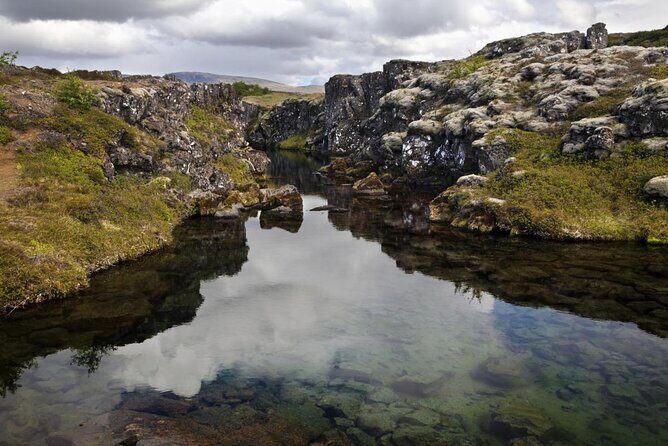
- You snorkel inside a tectonic rift at Silfra, a rare spot where two continental plates meet.
- Drysuits are part of the deal and they’re worn over your own thermals and socks to manage the cold.
- Visibility is the star: expect intensely clear water, with visibility listed over 100 meters.
- Small group pacing: max six participants means you get real help during the setup and in-water briefing.
- Guides matter: many groups highlight guides like Diogo and Gabe for safety checks and keeping everyone comfortable.
- Expect time, not just water: briefing, gearing up, and transitions can add up before and after you’re in the fissure.
Snorkeling between plates: what Silfra really feels like
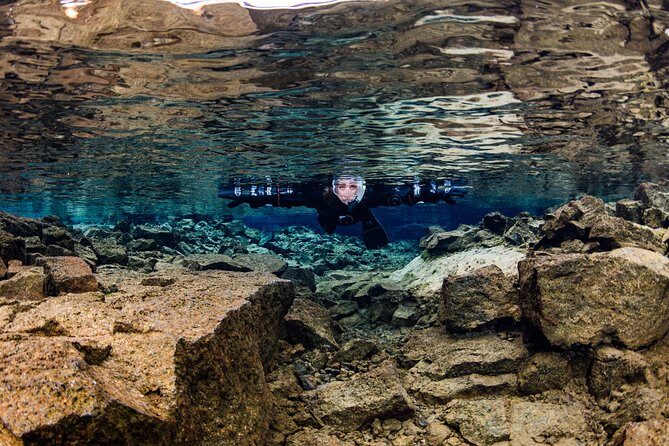
This is not a casual beach snorkel. Silfra is a crack system filled with cold, clear water inside Thingvellir National Park. The scientific hook is obvious—this is the only place where you can snorkel between continental plates—but what makes it memorable is how physical the experience is.
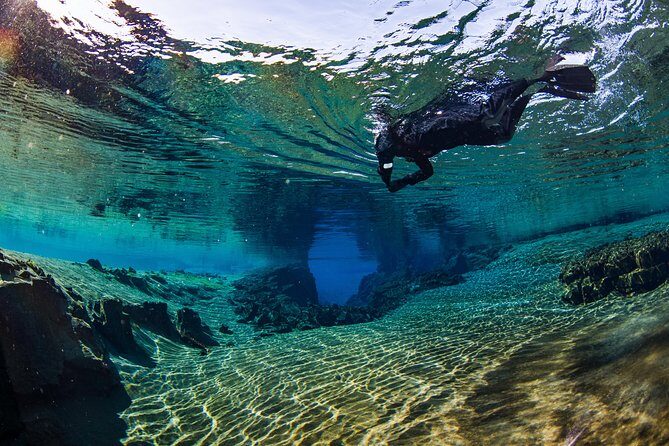
You float through water that’s famously clear. That clarity matters because your eyes do more than track a snorkel strap. You can actually read the geology: rocks, algae, and plant life show up with color depth you just don’t get in murky water. Even if you’re not into science, you’ll still feel that slow-surreal motion as you follow the fissure’s changing shapes.
The other “feel” factor is the water temperature. You’ll be in a dry suit, so you don’t get drenched. Your comfort depends mostly on what you wear underneath and how well your suit fits at the neck and wrists. Once you’re in, most people find the cold manageable—at least for the time you’re there—because you’re buoyant and guided through the route rather than doing laps.
You can also read our reviews of more snorkeling tours in Reykjavik
The Thingvellir drive: geology and Viking parliament vibes
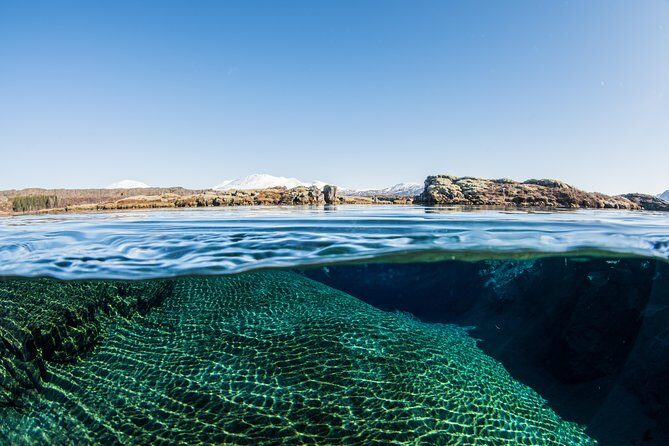
Half the day happens before you even get near the water. You’re picked up in central Reykjavík (selected hotels and bus stops) and then driven about an hour into Thingvellir National Park, where the scenery is volcanic and the guide explains what you’re about to see.
This part is worth it because it gives your brain context. Thingvellir is a UNESCO-listed site, known for a rift valley where the Eurasian and North American plates separate. The guide ties that to Silfra itself—where fissures filled with exceptionally clear water create the snorkeling routes you’ll follow later.
Also, you’re in the same overall region associated with Iceland’s earliest parliaments. You’re not touring a museum here for hours, but it’s a nice bonus that your snorkeling location sits inside a place with deep cultural history, not just scenery.
If you’re tight on time in Reykjavík, this tour format is efficient: it stacks education, gear setup, and in-water time into one smooth flow.
Getting in the dry suit: warm, dry, and sometimes tight
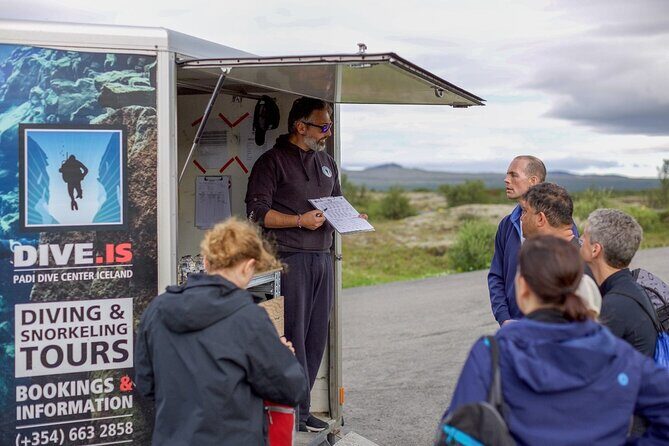
Here’s the practical truth: your comfort will be mostly decided during the setup period.
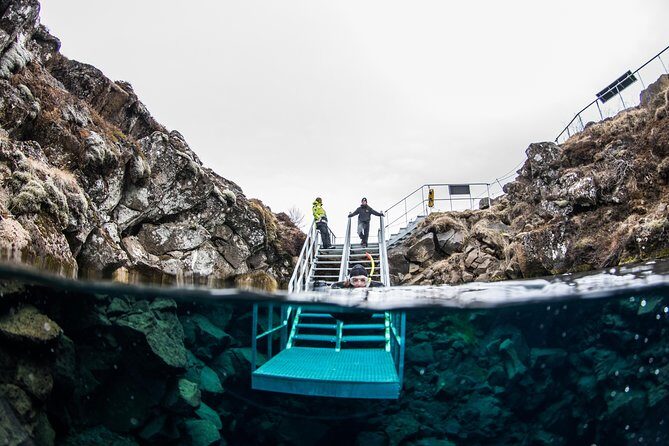
You’ll meet at the Silfra snorkeling and diving meeting point, then your group (max six) gets their dry suit, warm undersuit, and snorkeling equipment. The tour includes a heated changing van, and the guide helps you get everything on correctly.
This is where the small-group advantage shows. It’s not just handing you gear. The guide teaches you how to use it, and they help you fit it so the suit does what it’s supposed to do: keep the water out.
What I’d focus on before you go:
- Wear long thermal underwear as a base layer under the dry suit.
- Use thick wool socks, and if you run cold easily, bring extra socks so you can adjust warmth.
- Plan for dry suit constriction. Multiple people note that the suit feels tight around the neck and wrists, but it’s also what keeps you dry.
You’ll walk only a few minutes from the changing area to Silfra once you’re ready. That short walk is good news: it means the painful part (getting ready) stays concentrated and you’re not trekking in heavy gear.
From Silfra Hall to Cathedral and Lagoon: the snorkeling route
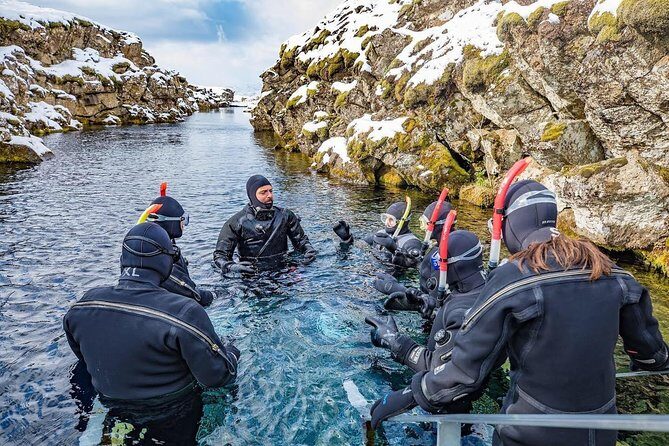
Once you’re in the water, the goal is simple: float, look, and follow your guide.
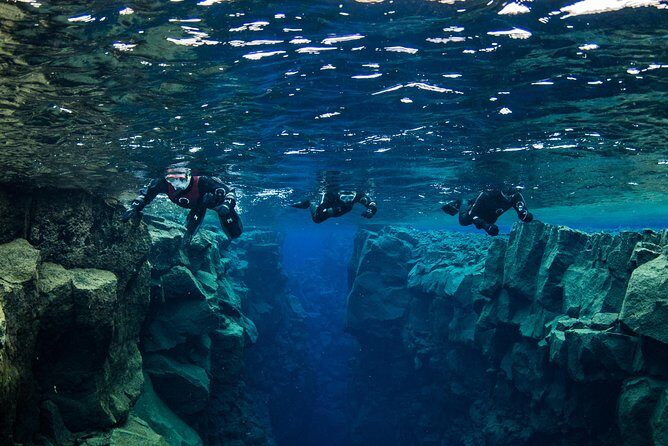
Expect around 30 to 45 minutes in the fissure area. The route flows through named sections: Silfra Hall, the Silfra Big Crack narrowest point, Silfra Cathedral, and then Silfra Lagoon. The “why” behind this named route is that Silfra widens and changes shape as you move along the system, so your view shifts constantly.
You’ll start with an introduction to snorkeling in the fissure. Then you enter via steps. That step-in detail is useful because it reduces the moment of panic many first-timers feel when going from land to cold water.
In the water, you’re guided at a leisurely pace. You’ll likely do less swimming than you expect, because the suit and buoyancy support floating. You still need to be comfortable in water and able to swim, but the experience is designed so you aren’t powering through.
What you’re really there to see:
- The intensely blue, glacier-filtered water and its extreme clarity.
- Rock formations and plant life below the surface.
- The way you can look down into the fissure as it opens up.
- The feeling of being in a space that’s literally shaped by tectonic movement.
Guides, safety, and why PADI-style instruction is a big deal
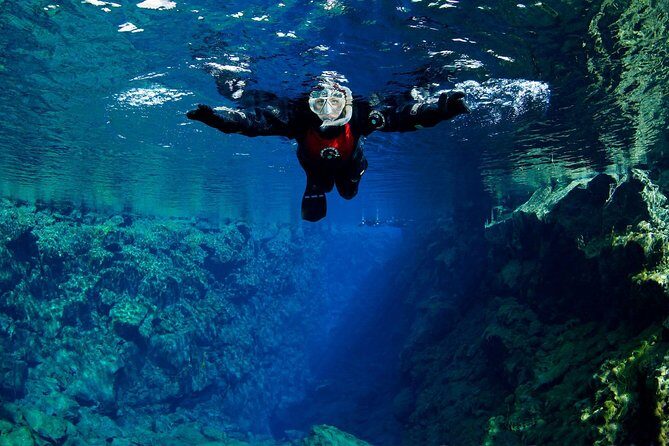
This tour includes a live guide who is a PADI instructor. That matters because Silfra is cold and gear-dependent. Your success depends on fit, breathing comfort, and knowing what to do when conditions feel unfamiliar.
You’ll get a briefing before you enter. The guide helps with equipment usage and manages the flow of the group so people don’t panic or rush. Many highlights point to guides like Diogo, Gabe, Marian, Elsa, Wilfred, and Liliana for being patient, fun, and safety-first.
From a value standpoint, this is one of the reasons the price doesn’t feel random. You’re paying for more than a ticket into water. You’re paying for human setup and decision-making—especially if it’s your first time snorkeling.
Also, because the group is small (max six), the guide can check on individuals instead of treating everyone like a numbered passenger.






Timing and transport from Reykjavík: how to avoid day-of stress
This tour is built around a half-day block (about 5 hours 30 minutes). Pickup starts roughly 30 minutes before departure, and you need to be ready and visible at your selected pickup location.
A key practical note: pickups are only within central Reykjavík at selected hotels and bus stops. If you’re staying outside central Reykjavík, you’ll need to message ahead to learn where to meet, since pickups don’t run outside Reykjavík.
If you’re planning your day around cruise departures or tight connections, this schedule generally works well because you’re returned to the Reykjavik start point afterward.
One more timing reality: gearing up takes time. People also mention there can be a wait in line before entering the water. That’s not a dealbreaker, but it’s part of the experience. If you’re the type who gets cranky when things take longer than expected, arrive mentally prepared for a slow build, not instant water time.
Hot chocolate and cookies: the nice finish you’ll actually remember
After snorkeling, you change out of the dry suit and warm up. The tour includes hot chocolate and cookies, and it’s more than a snack stop. It’s a chance to decompress after cold water and compare what you saw with your guide.
This is also when you can ask questions while the experience is fresh—about the geology, the plates, or what you might have missed underwater. Several people note that the guides are great at making time for casual conversation at the end.
And yes, souvenir photos are available to purchase, but they’re not included. If you care about photos, ask at the time so you know what’s offered and how it works.
Price and value: is $225 fair for Silfra?
At $225 per person for a roughly 5.5-hour half-day, the question is: what’s included that you’d otherwise pay for?
Here’s what’s covered:
- Round-trip transport with hotel pickup and drop-off in central Reykjavík
- Entrance fee to Silfra (listed as ISK 1,500)
- Guided snorkeling trip
- All snorkeling equipment
- Drysuit plus warm undersuit
- Heated changing van
- Hot chocolate and cookies
You’re also getting a PADI instructor guide, which can be the difference between feeling steady versus feeling overwhelmed in cold water.
What costs extra:
- Souvenir photos (optional)
So the value calculation looks solid if you don’t want to source gear yourself or you want guided comfort in a high-instruction setting. The price also makes sense because the experience is rare: snorkeling between continental plates is not something you can replicate on your own. The tour is structured to make it accessible for normal swimmers, not scuba divers with advanced cold-water training.
Who this tour suits best (and who should think twice)
This works best if:
- You can swim and feel comfortable in water.
- You’re okay with cold conditions managed by a dry suit.
- You like structured guidance and don’t want to figure out gear alone.
- You want the geology story layered on top of a visual, hands-on experience.
It may be a poor fit if:
- You’re pregnant (not suitable).
- You hate tight clothing or you’re very sensitive to constriction—dry suits can feel restrictive.
- You’re outside the age/fit requirements. You need to be at least 12 years old, and the operator also lists minimum height and weight requirements.
There are also medical forms required for participation, and for participants age 60 and older, the doctor approval form must be signed.
If you’re on the fence, use those requirements as your first filter. If you meet them, the rest becomes a comfort-planning issue: base layers, socks, and staying mentally patient while you get geared up.
Should you book Silfra snorkeling with Reykjavík pickup?
If your Iceland trip has room for one truly distinctive water experience, this is a strong booking choice. The tour’s biggest strengths are practical: gear is included, the suit keeps you dry and warm enough for the time in the water, and the guides (often praised by name, like Diogo and Gabe) keep people safe and comfortable. The visibility and plate-between-continents concept are the headline, but the real win is how the tour manages the cold and the gear so you can focus on the view.
Book it if you want a guided, small-group “only here” experience that mixes science talk with a float-through-the-fissure moment. Skip or reconsider if dry suit constriction would stress you out too much, if you don’t meet the health/age/fit requirements, or if central Reykjavik pickup timing doesn’t work for your schedule.
FAQ
How long is the Silfra snorkeling tour?
The tour runs about 5 hours 30 minutes (approx.), including pickup, travel to Thingvellir National Park, gearing up, snorkeling time, and return transport.
What’s included in the price?
The price includes the guided snorkeling trip, hot chocolate and cookies, all necessary snorkeling equipment (including dry suit and warm undersuit), a heated changing van, Silfra entrance fee (ISK 1,500), and hotel pickup and drop-off.
Do I need to bring my own snorkeling gear?
No. All necessary snorkeling equipment is provided, along with the dry suit and warm undersuit. You just need to bring suitable clothing as a base layer.
Is pickup available from all parts of Reykjavík?
Pickup is available only within central Reykjavík at selected hotels and bus stops. If you’re staying outside central Reykjavík, you’ll need to message the operator to find the best meeting point.
What are the age and medical requirements?
Participants must be at least 12 years old and need to fill out a medical form before participating. Pregnant women are not suitable. Participants age 60 and older must have their doctor sign the approval form.
How long do I snorkel in the water?
You’ll snorkel for about 30 to 45 minutes, following the fissure route through areas including Silfra Hall, Silfra Cathedral, and Silfra Lagoon.
What should I wear under the dry suit?
Wear long thermal underwear and thick socks as your base layer under the dry suit. Dry suits go over your own clothes, so proper layering is the key to staying comfortable.