REVIEW · REYKJAVIK
Sea Fishing Experience from Reykjavik
Book on Viator →Operated by Special Tours Iceland · Bookable on Viator
Sea fishing near Reykjavik turns cold water into a fun scoreboard. This 5:00 pm trip from Geirsgata 11 heads into Faxaflói Bay for real angling, not a staged photo shoot. You’ll get help from the crew, chase species like cod and haddock, and end with your catch cooked up your way.
What I like most is how all fishing equipment and bait are included, so you don’t show up worrying about tackle. Second, I really appreciate the finish: your catch can be grilled on board or prepared so you can take it back for later.
One thing to consider: it can feel shoulder-to-shoulder once everyone lines up at the rails, and like all sea trips here, weather and waves can affect how comfortable the fishing feels.
In This Review
- Key Highlights You’ll Actually Notice on the Boat
- Faxaflói Bay Fishing: What Makes This Reykjavik Trip Work
- Meeting at Geirsgata 11 and Getting Set Up Fast
- From Coaching to Catching: How the Crew Runs the Fishing
- What You Might Catch: Cod, Haddock, Pollock, Halibut, and Rockfish
- Akurey and Lundey in Summer: Puffins and Seabirds on the Route
- The Best Part: Grilling On Board or Taking Your Fish Home
- Weather, Rough Seas, and How to Plan Smart
- Price and Value: What $147.54 Gets You
- Who This Tour Fits Best (and Who Might Want Something Else)
- Quick Booking Advice Before You Commit
- Should You Book This Reykjavik Sea Fishing Trip?
- FAQ
- What time does the Reykjavik sea fishing tour start?
- Where do I meet the captain and crew?
- How much fishing gear do I need to bring?
- What should I wear for the trip?
- What species can I catch?
- Is this tour good for first-timers?
- Will I eat the fish I catch?
- Is food or drinks included in the price?
- What if the weather is bad?
- Can I book hotel pickup?
Key Highlights You’ll Actually Notice on the Boat
- All gear and bait provided: rods, tackle, and bait come with the tour.
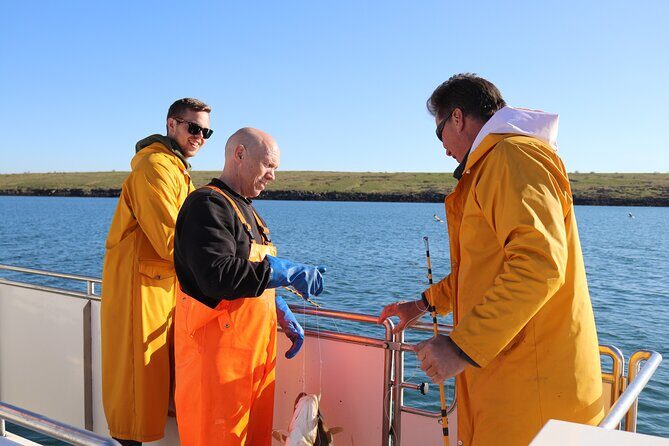
- Warm protective coveralls help you stay comfortable in the Reykjavik chill.
- Crew coaching for first-timers: they guide you through line setup and fishing technique.
- Your catch cooked on board or prepared to take back to your accommodation.
- Summer bird spotting along the route: Akurey and Lundey may appear in May–August.
- Wildlife sightings possible: some trips report dolphins or whales on the way back.
Faxaflói Bay Fishing: What Makes This Reykjavik Trip Work
Reykjavik sea fishing has a simple advantage: you’re fishing in coastal waters where cold-water species are a real target. Faxaflói Bay is the kind of place where you can go from city streets to actively fishing fast. The timing matters too. A late-afternoon start (5:00 pm) gives you daylight when you’re lucky, and it often lands in a calmer window compared with early mornings.
This is also a practical tour format. You’re not driving around hunting for “the right spot.” The crew takes the boat out, then puts lines in the water and works with you while conditions change. That difference matters when the sea gets choppy, or when fish need a specific drift or depth.
And here’s the part I think you’ll feel in your gut: sea fishing is hands-on. The action isn’t just casting. It’s fighting the tug, dealing with tangles, and learning what works in saltwater where currents do their own thing.
A few more Reykjavik tours and experiences worth a look
Meeting at Geirsgata 11 and Getting Set Up Fast
You start at Geirsgata 11, and the trip runs about 3 hours total, returning back to the same meeting point. The schedule is clean and easy to plug into your Reykjavik day—especially if you’ve got time for one big “Iceland moment” without burning your whole afternoon.
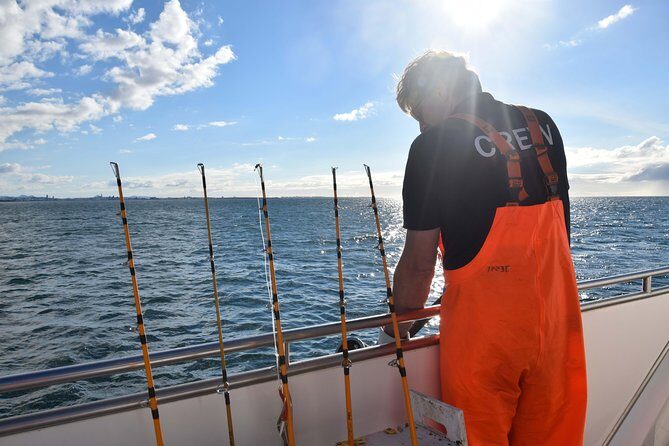
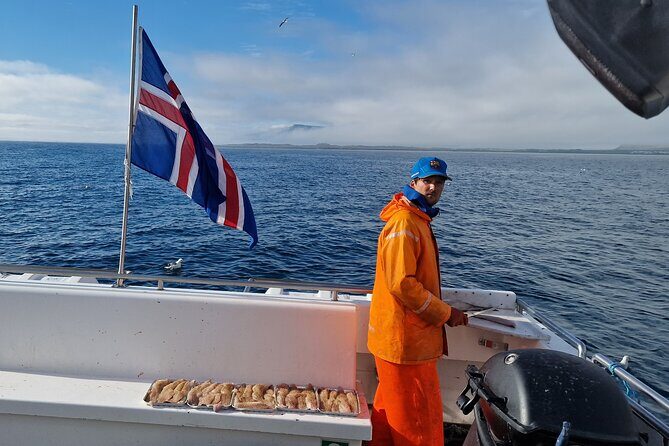
When you meet the captain and crew, you’ll get warm coveralls before you head out. That’s a big deal. Cold wind over saltwater can zap energy fast, even if you’re tough. With the protective clothing provided, you can focus on fishing instead of guessing what to wear.
Once aboard, the boat heads out into the water around Faxaflói Bay. You’ll feel the movement quickly—this is open sea fishing, so expect the boat to roll a bit. Still, multiple trip stories mention that even with rougher seas, the day stayed fun because the crew kept the pace moving and helped people keep their lines out of trouble.
From Coaching to Catching: How the Crew Runs the Fishing
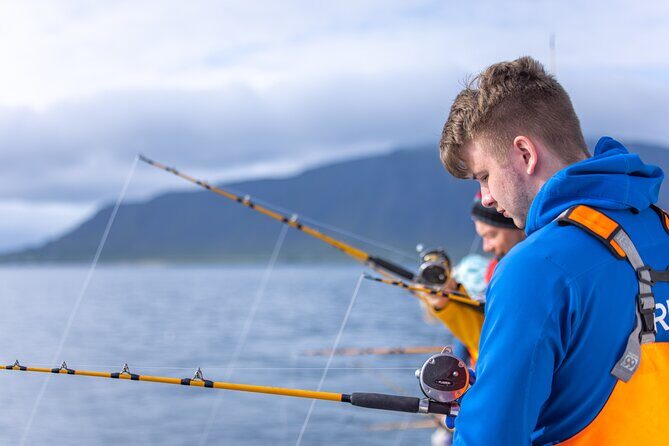
This tour is built for both newcomers and experienced anglers. First-timers are not an afterthought. The crew helps with the basics—how to fish effectively, how to handle the line, and how to avoid the common mistakes that lead to a lot of blank time.
A detail I really like: gear is provided, which removes a lot of friction. You’re not standing there trying to figure out rods, bait, hooks, and weights while everyone else already has a rhythm. Here, the workflow is straightforward: you get set up, then you drop your line.
You also get real support when fishing gets messy. Line tangles happen on almost every sea trip like this—especially when currents and multiple rods are in play. Many accounts highlight the crew working to untangle lines, help with hooks, and keep the group fishing rather than waiting around.
It’s also worth knowing that crew members can vary by sailing, but you may run into teams described with names like Captain Stefan, Vera, Kiljan, Oscar, and deckhands/mates such as Samuel and Otsgir (spelling may vary). Different boats, same idea: people who actually want you fishing, not just watching.
What You Might Catch: Cod, Haddock, Pollock, Halibut, and Rockfish
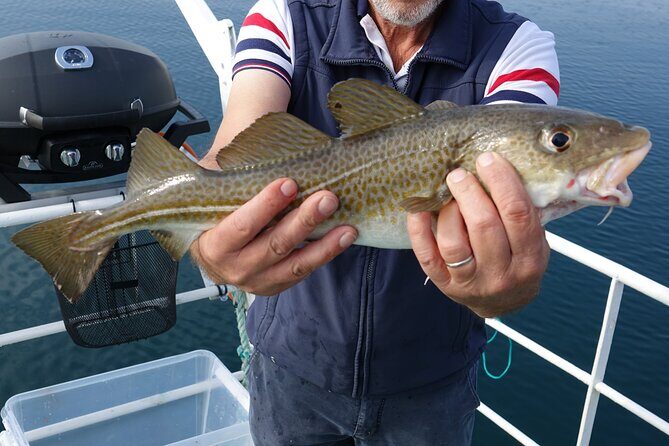
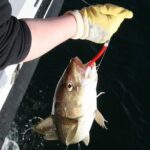
The target species list is clear: cod, haddock, pollock, halibut, and rockfish. In practice, cod and haddock dominate a lot of successful days. That lines up with what you’ll feel on the boat when bites start coming—people go from calm casting to quick teamwork.
A good expectation to set: sea fishing is still fishing. Some days are fast, some are slower. Even on strong outings, you’ll find a range from people landing big fish to people catching a smaller number. That doesn’t mean the tour failed—it means the sea did what the sea does.
One more practical note: a rocky bottom can create snags. In at least one experience, anglers reported snagging and losing gear when drifting over a rocky area, and that affected how soon they got bites. The lesson for you is simple: if you feel like the rig is getting stuck too often, speak up early and ask what depth or weight adjustment they recommend for the conditions.
Akurey and Lundey in Summer: Puffins and Seabirds on the Route
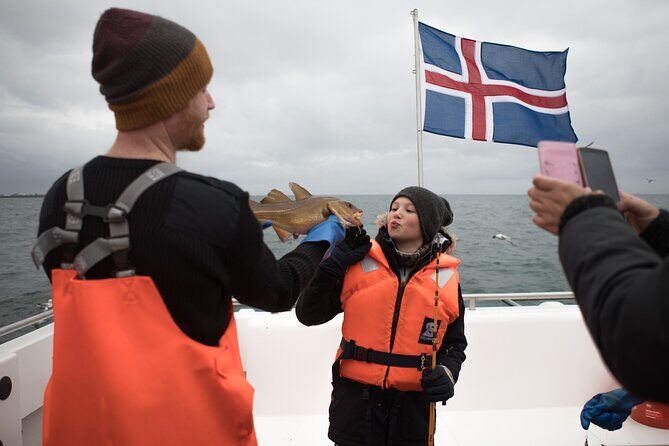
If you’re coming between May and August, there’s a nice extra layer to the trip. The boat may pass Akurey and Lundey, islands known for seabirds and puffins in summer.
This is more than a sightseeing perk. Seeing puffins on a working fishing tour changes the tone of the outing. You’re still fishing, but you also get breaks in the action where you can look up, spot birds, and enjoy the coast feel rather than only focusing on your line.
Keep your eyes open around the islands. Birds can appear suddenly, and if you’re busy fighting a fish, you might miss your chance. It’s okay to pause for a quick look as long as you don’t let your line go unattended.



The Best Part: Grilling On Board or Taking Your Fish Home
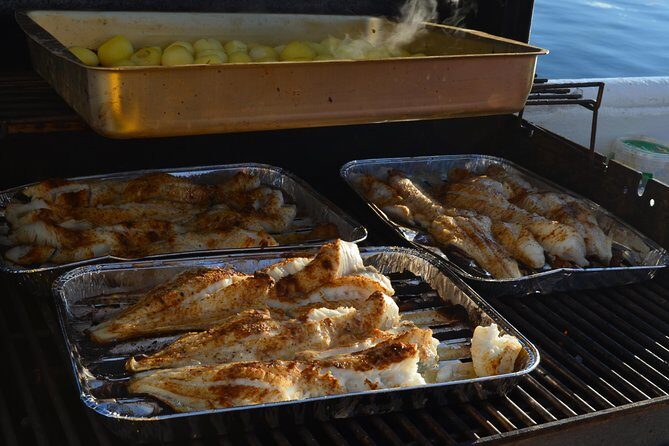
This is where the tour turns from fishing trip into a full Iceland meal. After fishing, you’ll either:
- have the crew prepare your catch for you to take back to your accommodation for later, or
- grill the catch on board so you eat while the sea air still sticks to your jacket.
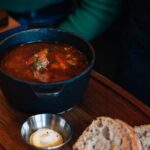
The on-board cooking is repeatedly described as delicious and well-run, and a common theme is that you don’t just eat one bite. There’s enough structure that people finish the trip satisfied, even if they didn’t land a monster.
Some accounts mention potatoes served alongside the fish. Others describe filleting and cooking for the group. If you’re traveling with kids or family, this matters. It’s easier to keep a good mood when you’re not stuck with raw fish and unclear plans once the tour ends.
If you’re thinking about food, here’s the trade-off: the tour price is about fishing + cooking, not about a full restaurant spread. Food and drinks aren’t automatically included unless specified, so plan on eating what’s cooked from your catch as the main meal element.
Weather, Rough Seas, and How to Plan Smart
This trip is weather-dependent. That’s not a sales trick—it’s simply how sea fishing works. When conditions are poor, the tour may be canceled and rescheduled, or you may be offered a different date or a full refund.
On rougher days, you’ll feel it. Some experiences mention rough seas, rainy wind, and cold. The protective clothing helps a lot, but you should still be realistic about motion sickness if you’re sensitive.
The upside? Even on choppier conditions, people report having a great time when the crew keeps things moving and helps everyone keep fishing. You don’t just sit and wait; you keep trying.
My practical advice: if you’re booking in shoulder season, expect more variability and be flexible. If you’re the type who needs perfect comfort, you might want to pair this with another activity you can do indoors nearby in Reykjavik.
Price and Value: What $147.54 Gets You
At $147.54 per person for about 3 hours, this isn’t cheap in the way a supermarket snack is cheap. But it can be good value because the tour bundles several things you’d otherwise pay for or struggle to arrange yourself.
You’re paying for:
- trained guidance on fishing in Iceland’s conditions
- protective coveralls
- all necessary equipment and bait
- and the cooking experience: grill on board and/or preparation to take home
If you tried to do this on your own, the hidden costs would stack up fast: renting tackle, figuring out where to fish, boat logistics, bait access, and then the hardest part—handling the catch so you can eat it without a whole extra plan.
Also, the group size is capped at 65 travelers. That can mean a busier boat depending on occupancy, and one account mentions shoulder-to-shoulder fishing. Still, compared with private charters, this pricing structure makes it possible for families and first-timers to do real sea fishing.
Who This Tour Fits Best (and Who Might Want Something Else)
This is a great match if you want one of these:
- your first time fishing in saltwater
- a family outing where the kids can actually catch something
- an activity that ends with your catch cooked instead of hauling fish home
- a Reykjavik experience that feels Iceland-specific without needing advanced gear
People describe it as especially fun for kids and teens because the crew helps make sure everyone has a chance to reel in at least one fish. That’s also a plus for mixed groups: some people fish hard, others are more about the scenery and the meal.
If you’re picky about having lots of personal space at the rail, be aware that some boats can feel crowded. And if you’re hoping for a guaranteed heavy catch, no sea trip can promise that. The goal here is a high-action experience with strong coaching, not a fishing fantasy where every line bends every time.
Quick Booking Advice Before You Commit
This trip is popular enough that it’s often booked around 68 days in advance. If your dates are fixed, I’d book sooner rather than later, especially for summer departures when Akurey and Lundey bird spotting becomes part of the route.
Also double-check what you expect to eat. If you want drinks with your meal, you may need to plan for that separately since food and drinks aren’t listed as included. The catch cooking is the star, but it’s not the same as a full meal service.
Finally, choose the right mindset. Sea fishing is about the process as much as the results. If you go in thinking it’s okay if you have a slow drift, you’ll enjoy the day more.
Should You Book This Reykjavik Sea Fishing Trip?
Yes, if you want an Iceland activity that combines real fishing, guided help for all skill levels, warm gear, and the best kind of souvenir: food made from what you caught.
Book this especially if you’re traveling as a couple, family, or group and you want a straightforward 3-hour plan with a clear endpoint at Geirsgata 11. It’s also a smart pick for first-timers because the crew works hard to keep people fishing and helped moments like line tangles don’t derail the day.
If you need maximum quiet space, expect a calmer boat feel, or you’re very motion-sensitive, then look for a different style of tour. But for most people, this is one of the simplest ways to experience Reykjavik sea fishing in a hands-on, eat-what-you-catch way.
FAQ
What time does the Reykjavik sea fishing tour start?
The tour starts at 5:00 pm and runs for about 3 hours, ending back at the meeting point.
Where do I meet the captain and crew?
You meet at Geirsgata 11, 101 Reykjavík, Iceland.
How much fishing gear do I need to bring?
You don’t need to bring your own equipment. The tour provides the fishing rods and bait, plus protective clothing.
What should I wear for the trip?
They provide protective coveralls to keep you warm. Plan on dressing for cold, wet sea conditions.
What species can I catch?
Possible species include cod, haddock, pollock, halibut, and rockfish.
Is this tour good for first-timers?
Yes. The crew guides you through the basics, so you don’t need prior sea fishing experience.
Will I eat the fish I catch?
Yes. The catch can be grilled on board, or prepared so you can take it back to your accommodation later.
Is food or drinks included in the price?
Food and drinks are not included unless specified, but the tour includes cooking your catch.
What if the weather is bad?
This experience requires good weather. If it’s canceled due to poor weather, you’ll be offered another date or a full refund.
Can I book hotel pickup?
Hotel pick-up is available for an additional fee. You’ll need to book it directly with the supplier.