REVIEW · REYKJAVIK
Reykjavik: Aurora Reykjavik The Northern Lights Center Entry
Book on GetYourGuide →Operated by Aurora Reykjavik · Bookable on GetYourGuide
A museum that teaches you the sky. Aurora Reykjavík is Iceland’s first museum devoted entirely to the northern lights, so you’re not just hoping for darkness and luck. You get interactive learning, a cozy film room, and even a 360° Aurora VR experience to help you understand what you’re looking for.
I especially like two things: the way the exhibition connects northern lights folklore and science (so it feels human, not just technical), and the hands-on time in the northern lights photo simulator, where you can practice before you chase the real thing.
One caution: in winter, the entrance area can be slippery from ice, and the VR/photo experience works best when you pay attention to how the headsets are used—so don’t assume it will run itself without guidance.
In This Review
- Key highlights you should know before you go
- Northern lights, explained in a real museum setting
- Where it is in Reykjavík (and how to fit it into your day)
- Inside the exhibition: folklore you can feel, science you can use
- The cinema room: 30 minutes of aurora without the cold
- 360° Aurora VR: when you can’t see the sky, still train your eye
- Photo simulator practice: the best “no-stress” aurora skills workout
- QR audio guides, guidebooks, and why they matter in real life
- Tips you can use outdoors (even if you’re not chasing a “perfect” show)
- Coffee, local art, and what to do after you leave
- Price and value: is $33 worth it?
- Who should book this (and who might skip it)
- Should you book Aurora Reykjavík?
- FAQ
- How long is Aurora Reykjavík, The Northern Lights Center?
- Where is the meeting point?
- What is included in the ticket?
- What should I bring?
- Is it worth going if I might not see the northern lights outside?
- Are the VR and film included, or do I pay extra?
- Do I need earphones for the QR audioguides?
- What languages are available?
- Is there a place to buy souvenirs or visit a shop?
- Is it wheelchair accessible?
Key highlights you should know before you go
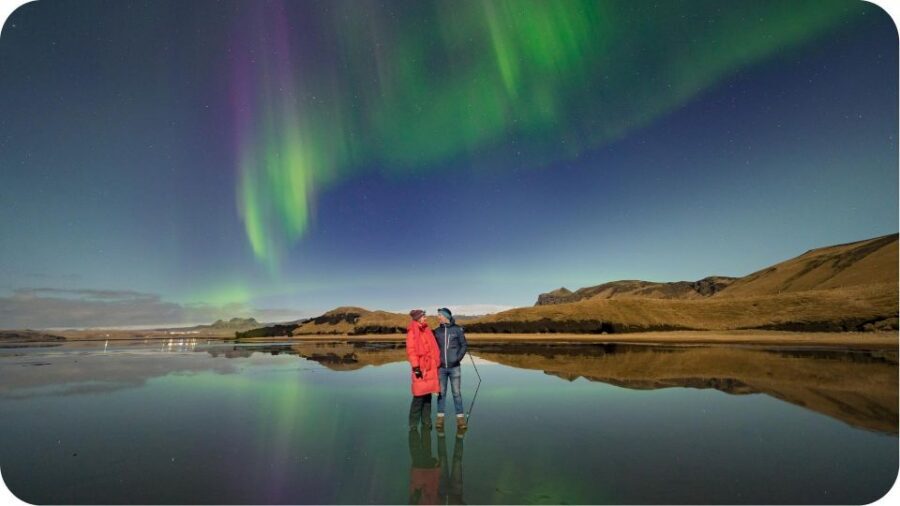
- Folklore to science: you’ll learn the shapes and colors and what you’re actually seeing overhead
- 30-minute 4K timelapse film in a cinema-style room (great when weather is stubborn)
- World-first 360° Aurora VR to practice your “what am I looking at?” mindset indoors
- Northern lights photo simulator so you can try aurora photography techniques in a controlled setting
- QR audio guides + multi-language guidebooks to slow down and learn at your own pace
Northern lights, explained in a real museum setting
Reykjavík has a lot of aurora stuff. Some of it is pure entertainment. Some of it is pure outdoors. Aurora Reykjavík sits in the sweet spot: you come inside, you learn, and you leave better prepared for the night sky.
The most useful part for me is that it doesn’t treat the northern lights like a magic trick. You start with stories from the Arctic—folklore and mythology—then you work your way toward the science: the Sun, the atmosphere, and why auroras show up as they do. That progression matters. When you later step outside, you’re not staring at an unfamiliar glow. You’ve got a mental checklist for what to notice.
This is also an all-year option. If you’re visiting when the sky is clear but the aurora is elusive, you still get something concrete. If the aurora does show up outdoors, you’re not starting from zero.
You can also read our reviews of more tours and experiences in Reykjavik.


Where it is in Reykjavík (and how to fit it into your day)
Aurora Reykjavík is in the Grandi Harbour District, at Fiskislóð 53, 101 Reykjavík—right by the city center. That location is practical. You’re not stuck in the countryside for this part; it’s a good “bridge” activity between sightseeing and an evening aurora hunt.
If you’re planning your schedule, think of it like this:
- Daytime or early evening: museum first, then head out later if conditions look good.
- Bad weather day: museum becomes your main aurora activity and you don’t lose the day.
- Late arrival: museum can still work well because you can get the core learning without committing to hours outdoors.
There’s public transportation available (line 14) and free parking, which helps if you’re doing a more flexible self-drive day. And the ticket experience includes a skip-the-ticket-line setup, which saves time when you just want to get moving.
Inside the exhibition: folklore you can feel, science you can use
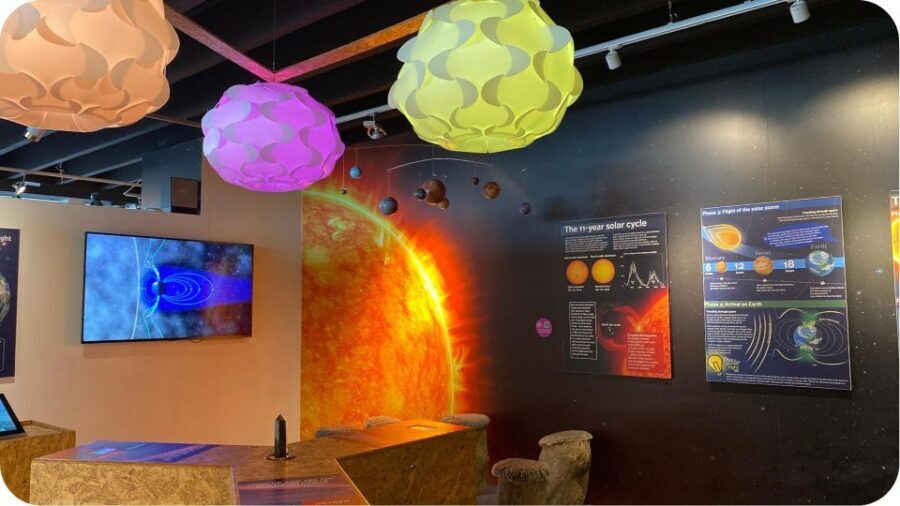
The museum experience starts with culture. You’ll travel across Arctic regions and explore how people explained the northern lights long before we had satellites and solar wind data. It’s not just “stories for fun.” It gives context for why the aurora has always mattered to life in the far north—timing, mystery, and meaning.
Then the museum shifts gears into how the aurora works. You learn the route from the Sun to our atmosphere, and you get help naming what you see. That’s a big deal, because aurora colors and shapes can look confusing at first:
- Colors in the sky correspond to different atmospheric interactions
- Shapes can change fast, and the “look” varies from moment to moment
The exhibition also talks about how auroras appear to the naked eye, which is one of those details that separates a real viewing experience from photo-only expectations. Your eyes and your camera see things slightly differently, and understanding that early helps you avoid chasing the wrong idea of what you should see.
Even better: the museum is built so you can learn in a calm way. It’s suitable for all ages, which often means you won’t feel like you’re in a stiff lecture. I like that tone because it makes the science easier to absorb.
The cinema room: 30 minutes of aurora without the cold
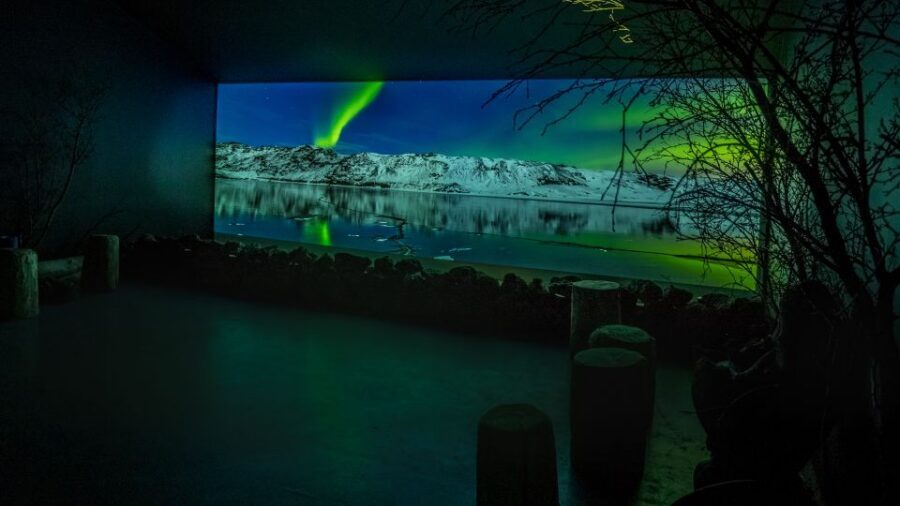
Next comes the part that many people treat like a warm-up, but it’s actually a high-value stop: a 30-minute 4K timelapse movie in a cozy cinema room.
If you’ve ever watched a night sky hunt fall apart—wind, cloud cover, waiting that stretches too long—this film is a smart reset button. You get the sense of motion and variety that makes auroras worth chasing, without the unpredictability of outdoor conditions. The museum notes that not two auroras are the same, and the film format is made to show that variation.
Practically, this is also where you reset your eyes. After the exhibition, your brain is “learning mode.” The cinema room helps switch you into “watching mode,” so when you later step outside, you’re looking actively instead of trying to remember facts you learned earlier.
360° Aurora VR: when you can’t see the sky, still train your eye
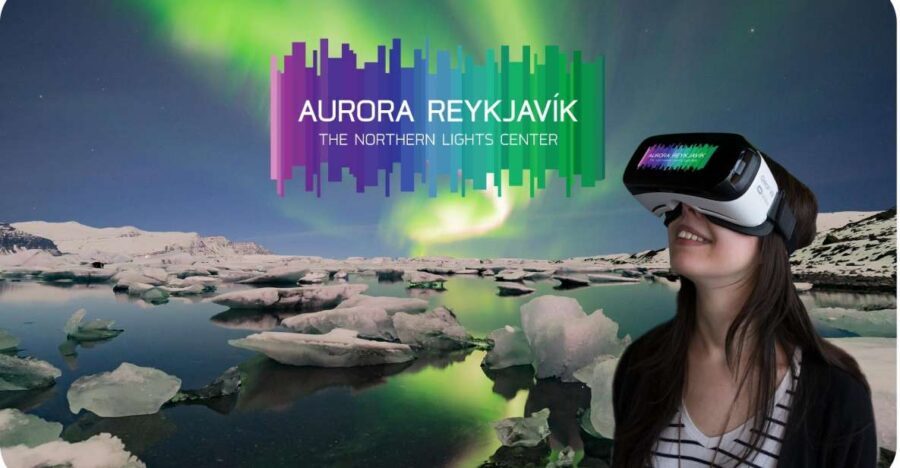
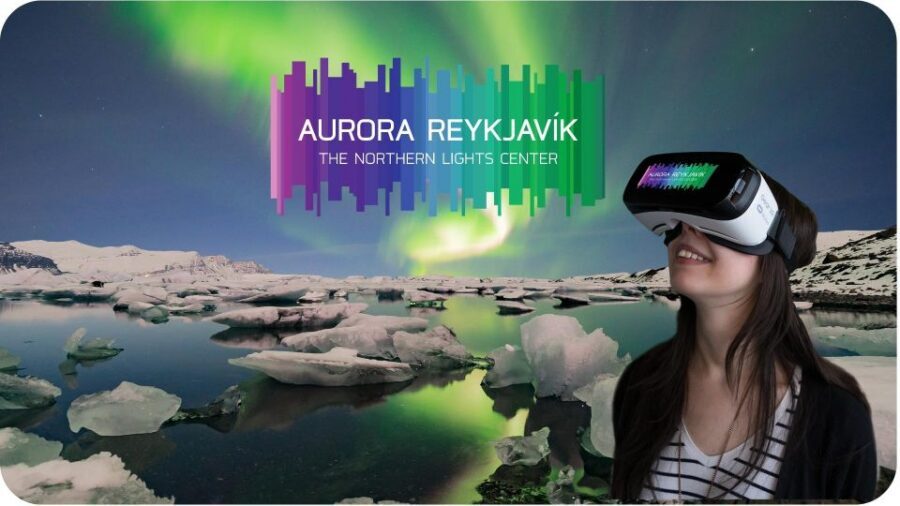
Then you put on the VR goggles for the world’s first 360° VR northern lights movie. Indoors. No cold. No waiting for the sky to cooperate.
Here’s what makes this worth your ticket rather than feeling like a novelty:
- It’s 360°, so you get a better sense of direction and movement than a flat screen
- It acts like a practice session for recognition
- It helps you understand what changes as auroras shift
One review point I really agree with: the VR only works well if you actually notice what you’re supposed to do and how the headsets are used. Some visitors said they nearly missed the VR element because they assumed another show on a big screen was what the site was describing. So when you’re there, keep your eyes on the VR setup and don’t let the experience become passive.
If you’re the type who likes to understand the “why,” you’ll probably enjoy VR even more, because it reinforces the science and visual cues you just picked up.



Photo simulator practice: the best “no-stress” aurora skills workout
After the lights-without-the-cold, you get to practice photography with the northern lights photo simulator. This is one of the most practical parts of the visit because it gives you time to experiment without blowing battery life in the dark.
The museum also includes help on how to take aurora photos, and the photo simulator is the place where that learning becomes something you can try. You’re not walking out with perfect photos guaranteed. But you are walking out with a better sense of what settings and approaches are about.
If you plan to photograph the aurora outdoors, this is the portion that can pay off quickly. You’ll be less likely to panic when the sky shifts and your first attempt is disappointing. Even basic practice—thinking about framing, motion, and exposure ideas—makes outdoor photography feel more doable.
QR audio guides, guidebooks, and why they matter in real life
You don’t have to listen to everything at once. That’s the benefit of having QR-based audioguides plus guidebooks in multiple languages.
- Guidebooks are available in translation in 13 languages (with language availability listed for things like Chinese, Czech, Dutch, French, German, Italian, Japanese, Polish, Portuguese, Russian, and Spanish).
- QR audioguides are available in seven languages, including English, Cantonese, French, German, Italian, Mandarin, and Spanish.
One practical note: the audioguide experience may require audio equipment. The info says you should bring headphones, and it also mentions that earphones for the QR audioguide can be purchased as an add-on. Either way, don’t show up assuming your phone speaker will be enough.
This matters because aurora learning is easy to rush. If you slow down with audio and small sections of text, you actually retain what you learned—colors, shapes, and observation tips—so it sticks for your later night out.
Tips you can use outdoors (even if you’re not chasing a “perfect” show)
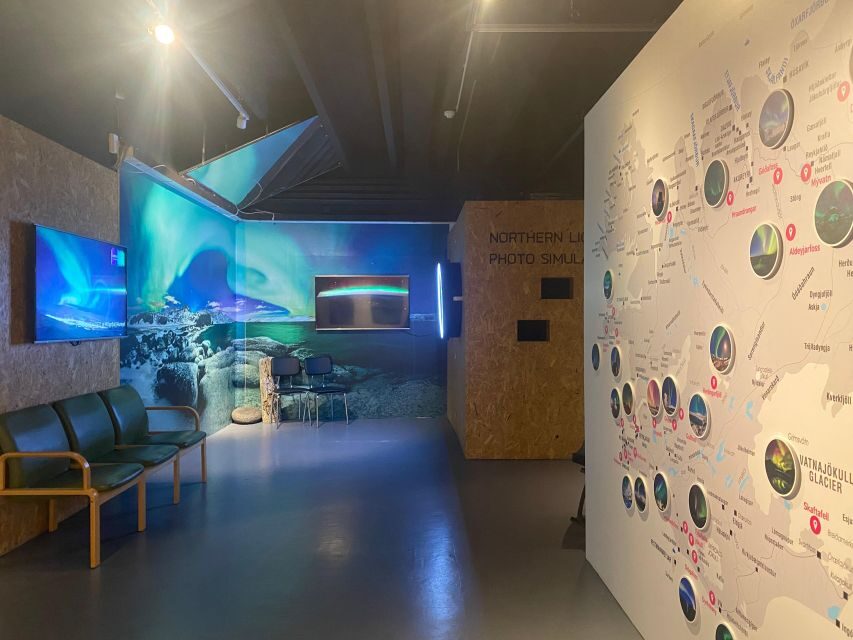
The museum includes experts’ tips to maximize your chances of seeing the northern lights, and it’s also designed as a place where you can ask questions. That Q-and-A element is underrated. When you’re outside, you can’t always Google fast enough or interpret what you see in real time. If you can get your questions answered ahead of the hunt, you’ll feel more confident walking out.
Also, the exhibition explains how colors and shapes can appear to the naked eye. That’s useful for setting expectations. Many people expect a single “green ribbon in the sky” moment. In reality, the aurora can look different depending on conditions and timing. When you understand that upfront, you’re less likely to dismiss what you’re seeing as nothing.
Coffee, local art, and what to do after you leave
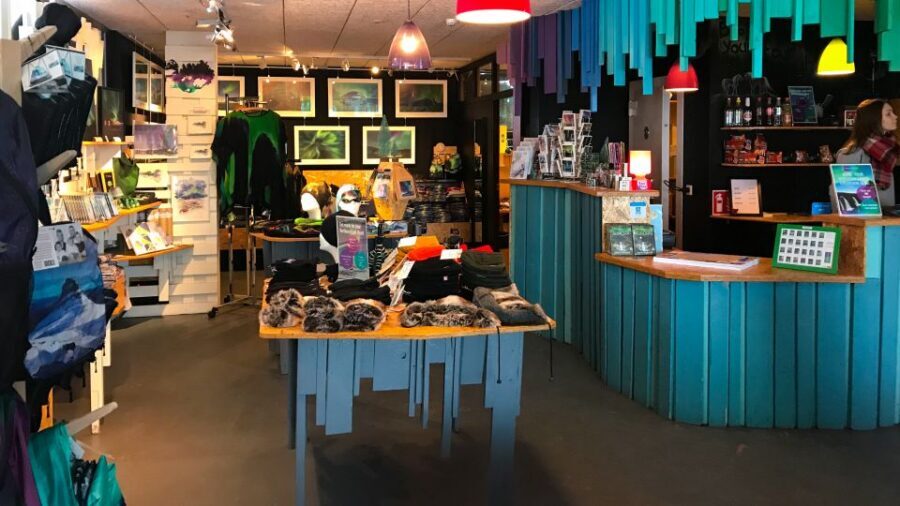
At the end of your visit, there’s a café area and a chance to grab coffee. Hot drinks aren’t listed as included in the ticket price, but having a warm pause after indoor learning is a nice way to transition into the evening.
There’s also a boutique with a unique selection of local art and souvenirs. If you want something that connects to the experience (not just a generic Iceland magnet), this is where you’ll find it. Some visitors also described a gift-shop-style end to the visit, which makes sense because you’re finishing on learning + inspiration.
If you’re heading out for aurora hunting afterward, I’d use the exit time strategically:
- Check the sky again
- Keep your expectations grounded
- Bring the confidence you built inside
Price and value: is $33 worth it?
At around $33 per person, Aurora Reykjavík isn’t a bargain entertainment-only stop. It’s a paid museum experience, and the value comes from the mix of included elements, not from a single attraction.
What you’re getting for your money (based on what’s included):
- Entrance to the northern lights museum
- 360° virtual reality video
- 30-minute cinema film (4K timelapse)
- Northern lights photo simulator
- Guidebooks (multi-language)
- QR-based audioguides (multi-language)
Then there are a few optional extras:
- Earphones/add-ons for audioguide use
- A souvenir guidebook in multiple languages
- A hot drink in the café
To me, the value logic is simple: if your outdoor aurora hunt is uncertain, paying for an indoor learning + simulation experience is a way to protect your time. You’re not just buying a ticket; you’re buying preparation and a backup plan.
If you’re the kind of traveler who hates museums, you might find it slower than you want. But if you enjoy science, photography, or hands-on learning, it’s easy to justify—especially in months when the weather can be unpredictable.
Who should book this (and who might skip it)
I think Aurora Reykjavík is a great match for:
- First-timers who want to understand what auroras look like before the hunt
- Photographers who want aurora tips and a practice setup
- Families and mixed-age groups (it’s suited for all ages)
- Anyone traveling in shoulder seasons or in months when outdoor conditions can disappoint
You might consider skipping it if:
- You only want an outdoor aurora chase and nothing else
- You expect it to be purely observation (this is indoor learning and simulated viewing)
- You plan to “do the cheapest possible” version of aurora content and don’t care about education or practice
Should you book Aurora Reykjavík?
Yes, I’d book it if you want a smart northern lights plan rather than pure luck. It’s one of the better ways to spend a chunk of time in Reykjavík because it pays you back twice: you learn what to look for, and you get a high-quality simulated viewing experience even when the sky doesn’t cooperate.
If you’re on the fence, my rule is this: if you care about understanding the phenomenon or photographing it, Aurora Reykjavík makes your future night hunts more confident. And if you’re simply trying to avoid wasting a night outdoors, this museum gives you real value in exchange for a short, comfortable visit.
FAQ
How long is Aurora Reykjavík, The Northern Lights Center?
The experience is listed as lasting 1 day.
Where is the meeting point?
Aurora Reykjavík, Fiskislóð 53, 101 Reykjavík, Iceland.
What is included in the ticket?
Entrance includes the 360° virtual reality video, a 30-minute northern lights film in the cinema room, the northern lights photo simulator, guidebooks in 13 languages, and QR-based audioguides in 7 languages.
What should I bring?
You should bring headphones.
Is it worth going if I might not see the northern lights outside?
Yes. The experience is designed to be a northern lights option all year, and it’s an alternative when outdoor viewing isn’t possible.
Are the VR and film included, or do I pay extra?
They are included with admission.
Do I need earphones for the QR audioguides?
The info says you should bring headphones, and it also notes that earphones for the QR audioguide can be purchased as an add-on.
What languages are available?
The host/guidance is listed in English, guidebooks are available in translation (with multiple languages listed), and QR audioguides are available in English, Cantonese, French, German, Italian, Mandarin, and Spanish.
Is there a place to buy souvenirs or visit a shop?
Yes. There’s a boutique with local art and souvenirs at the end of the visit.
Is it wheelchair accessible?
Yes, the experience is wheelchair accessible.