REVIEW · HUSAVIK
Húsavík: Whale Watching Tour with Guide
Book on GetYourGuide →Operated by North Sailing · Bookable on GetYourGuide
Whales feel close in Húsavík’s Skjálfandi Bay. This 3-hour cruise takes you out on an Icelandic oak boat for real wildlife spotting—plus live commentary that explains what you’re actually seeing. It’s a front-row seat to why Húsavík is often called Iceland’s whale-watching capital.
I love the mix of warm overalls and simple comfort touches like hot chocolate and a cinnamon bun, so you’re not just staring into the wind for hours. I also like the guide-led search: you’re not left guessing, and there’s usually a steady rhythm of scanning, finding, and learning.
One consideration: this is a weather- and sea-state-dependent outing. If the water’s rough, you’ll feel it, and you might need to plan for motion or even shorter time on the water.
In This Review
- Key things I’d pin on your planning map
- Húsavík’s whale-watching edge: Skjálfandi Bay is the star
- Your 3-hour cruise on an Icelandic oak ship
- What you’ll see: whales, dolphins, seabirds, and the occasional surprise
- Live guide commentary: how it improves your spotting game
- Warm overalls and the hot chocolate moment that feels earned
- Weather reality: when seas get rough, and what the crew does
- What happens during the tour (a realistic rhythm)
- Price and value: is $115 fair for 3 hours?
- Who should book this, and who should plan differently
- Getting there: meeting point and what you should pack
- Final call: should you book this whale watching tour?
- FAQ
- How long is the Húsavík whale watching tour?
- Where do I meet for the tour?
- How much does it cost?
- What’s included in the tour?
- What should I bring since shoes aren’t included?
- Is pick-up included?
- Is the tour dependent on weather?
- What happens if no whales are seen?
- Is the guide English-speaking and is it wheelchair accessible?
Key things I’d pin on your planning map
- Traditional oak boat on Skjálfandi Bay for a smoother, more authentic feel
- Live English commentary that helps you understand whale and dolphin behavior as you spot it
- Warm overalls included, plus a real snack/refreshment moment on the way back
- Whales aren’t guaranteed, but you get a free return tour if none are seen
- They may adjust location if sightings are unusually low, including areas like Árskógssandur
- Room to watch with setup that aims to keep you positioned for sightings
Húsavík’s whale-watching edge: Skjálfandi Bay is the star
Húsavík sits in northeastern Iceland, and the local draw is simple: Skjálfandi Bay is a reliable feeding and transit zone for marine wildlife. You’re going out from a town built around this idea, so the whole operation is tuned to finding animals—not just running a boat for its own sake.
The best part is the natural setting. You’re sailing out into open water with Iceland’s north-coast vibe—cold air, big skies, and that feeling that the sea is doing its own thing. Then the crew starts translating that chaos into sightings: where animals are showing, how they move, and what their behavior likely means.
If you like wildlife experiences that feel grounded in real ecology (not a theme-park script), this is the kind of outing that delivers. It’s also a great way to balance the rest of the Iceland trip: you get activity at sea, but it’s not physically demanding once you’re dressed for the conditions.
You can also read our reviews of more guided tours in Husavik
Your 3-hour cruise on an Icelandic oak ship
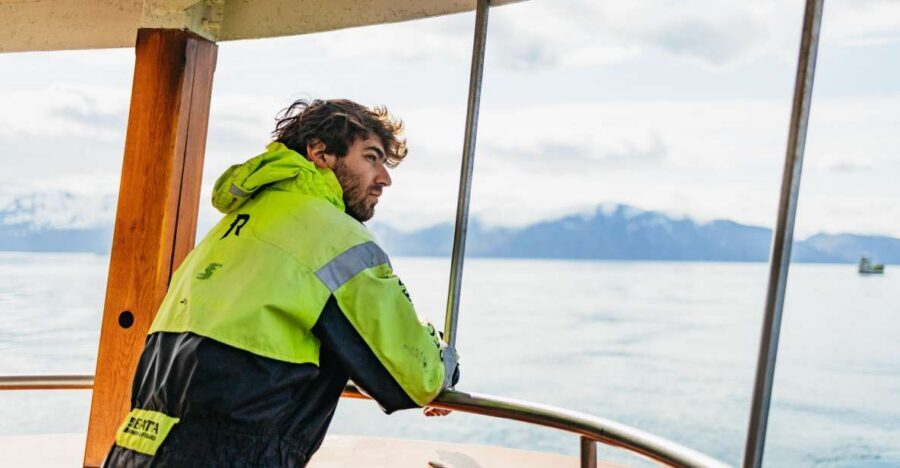
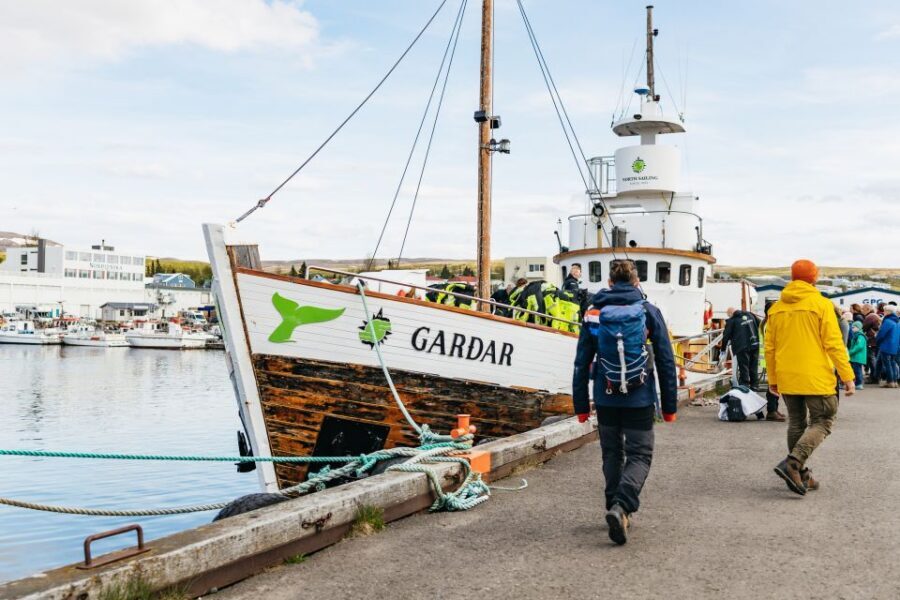
This tour runs about 3 hours total, and it’s designed as a full outing—not a quick-and-small loop. You’ll meet at the North Sailing Húsavík Whale Watching office, then board the boat and head out for active searching.
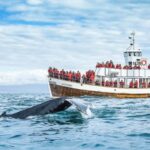
The boat itself matters. You’re on a traditional oak boat, and the vibe is practical and stable rather than flashy. Multiple accounts describe plenty of space to watch, including situations where the group feels small relative to the boat size. That affects your whole experience: when you’re crowded, spotting takes longer. When you’re not, you can lock onto blow patterns and fluke appearances as soon as the guide calls them out.
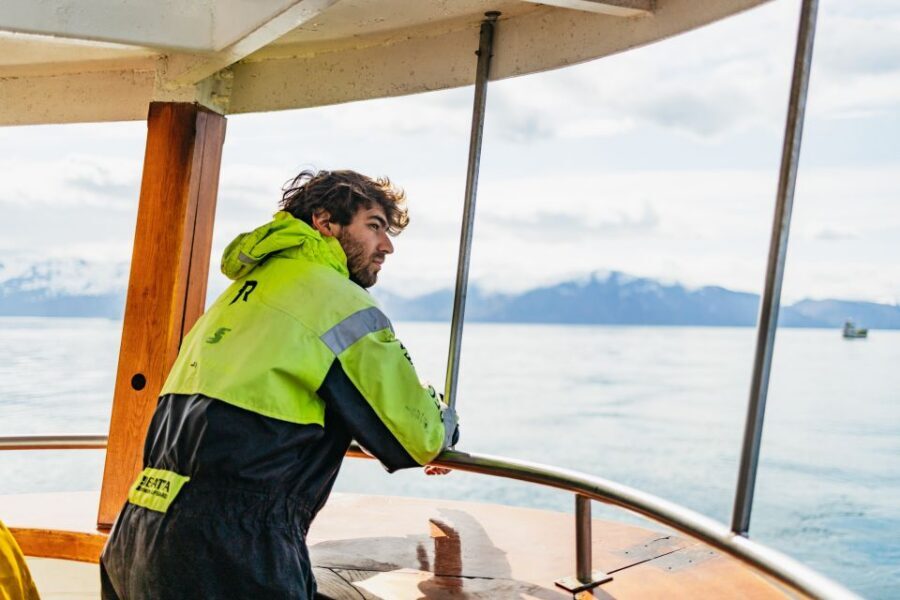
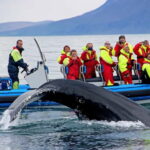
Also, you’re not left “cold and wet” while you wait. The tour provides warm overalls, which is one of those details that quietly changes everything. Even if you’re dressed in layers, getting the right outer insulation means you can actually stand there and watch without constantly retreating inside.
What you’ll see: whales, dolphins, seabirds, and the occasional surprise
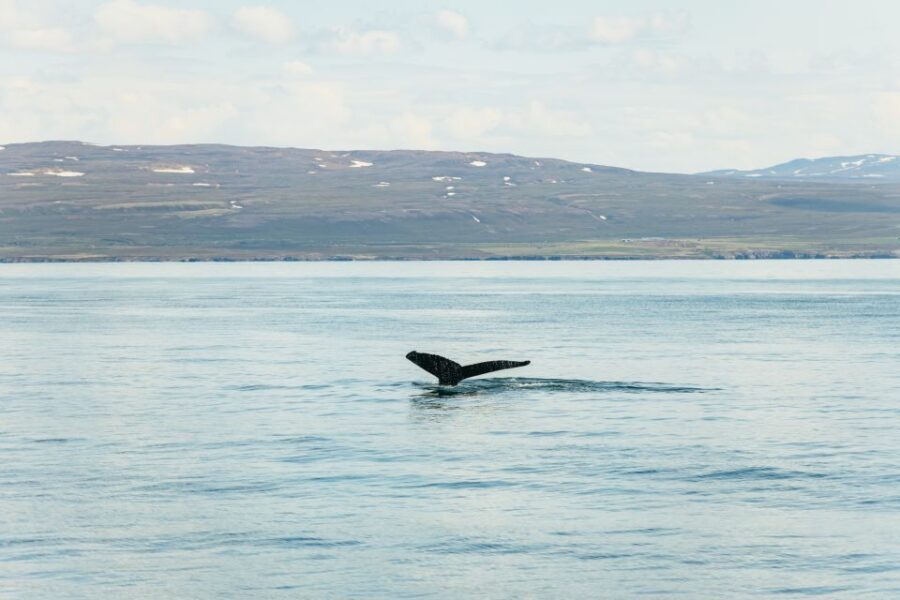
The tour’s core promise is marine wildlife spotting in Skjálfandi Bay: whales, dolphins, and sea birds. In practice, the sightings you get can vary by day and by season, so think of this as a high-probability wildlife search, not a guaranteed checklist.
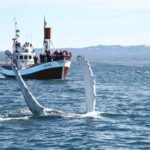
Humpbacks show up often. Many people mention humpback whales, sometimes with repeat sightings in different spots during the same trip. You may also see other whale types such as minke whales, and dolphin species including white-beaked dolphins and bottle-nosed dolphins. One big bonus is that guides don’t just point once—they often keep tracking the same animals long enough for you to notice patterns.
A few “only in Iceland” extras can happen too:
- Sea birds from the air and coastline area while you cruise
- Sometimes larger marine life like a basking shark
- In rarer moments, sightings reported include orcas and even blue whale attempts
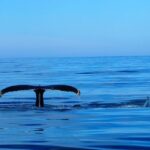
One practical tip: whales don’t hang around at the surface. You’ll likely see them in bursts—then they dive, then you look again. That’s why the guide’s job is so important: they help you stay oriented so you don’t miss the brief surface moments.
Live guide commentary: how it improves your spotting game
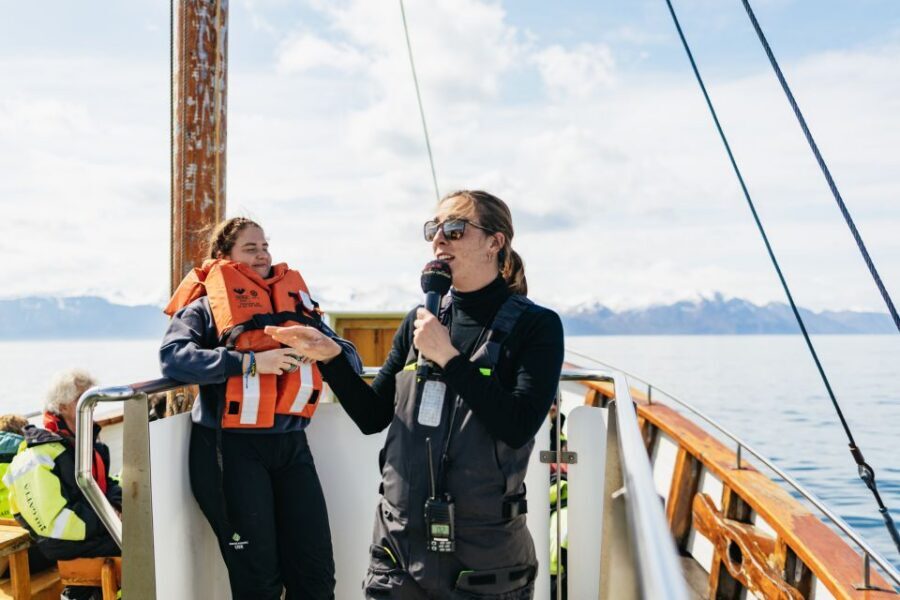
The best whale tours teach you how to watch. Here, the guide offers live commentary in English, and that changes the experience from sightseeing into learning.
In the field, guides are often the difference between a good day and a great one. Some guides mentioned by name in accounts include Christian, Laura, Sophie, Alice, Kaja, and Kristian. The consistent thread: they explain what you’re seeing—behavior, species cues, and why certain movements matter—while also managing safety and boat positioning.
You’ll also hear health-and-safety notes early. That may sound basic, but it matters at sea. When conditions shift, you want to know where to stand, how to move around, and how the crew plans to keep everyone comfortable while still aiming for sightings.
If you’re the type of person who likes “where are we looking and why,” you’ll probably love the structure. The tour doesn’t treat the wildlife like magic; it treats it like living animals with normal patterns.
Warm overalls and the hot chocolate moment that feels earned
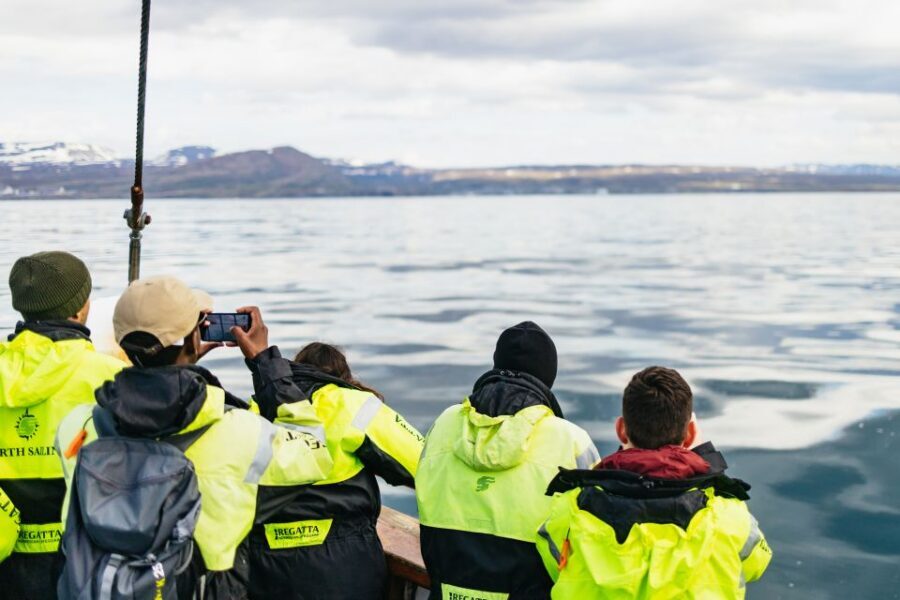
You get practical comfort built into the tour. Warm overalls are included, and they help you stay outside long enough for real spotting. Many people also mention that the weather can change fast, especially as you move away from the harbor, so the overalls act like your insurance policy against the cold.
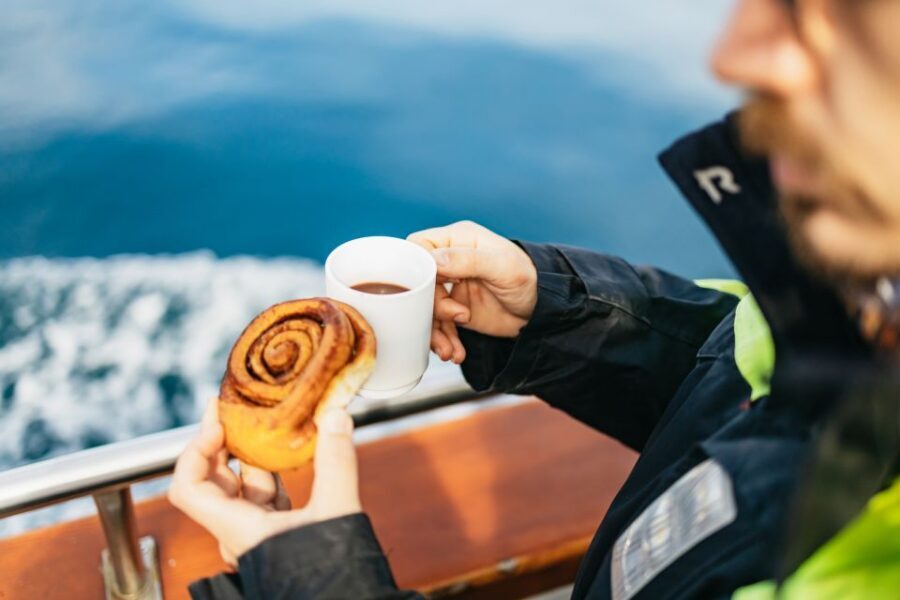
Then, on the return trip, you get light refreshments: hot chocolate and a cinnamon bun. It sounds simple, but it’s smart. After a stretch of watching and scanning, your brain is still “on.” Warm, sweet food helps you reset. It’s also a morale boost when you’ve had to wait for the right blow or tail flick.
For families, this snack timing often works well because it gives everyone a clear moment to decompress without ending the tour experience.
You can also read our reviews of more whale watching tours in Husavik
Weather reality: when seas get rough, and what the crew does
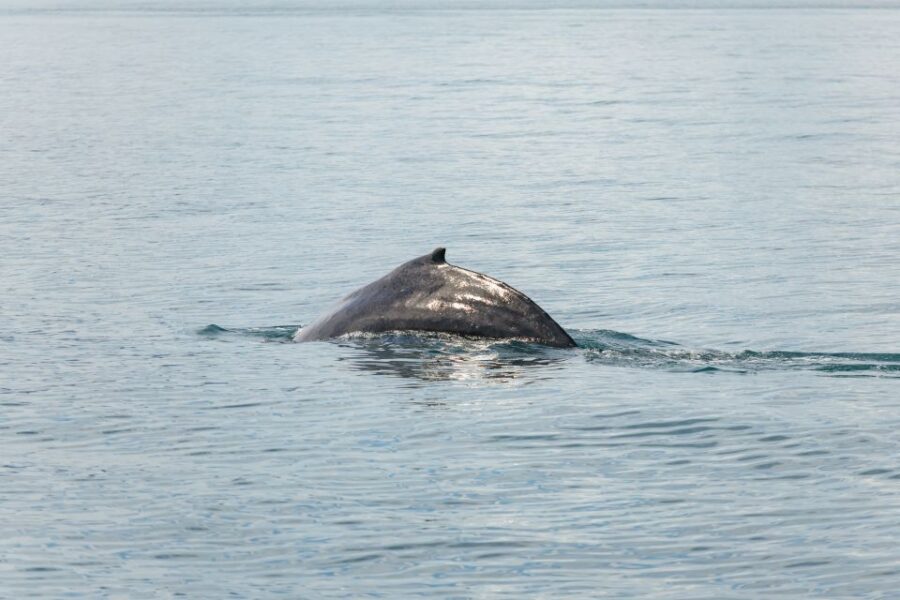
Iceland doesn’t always give you calm seas, and this tour is honest about that. The sailing depends on favorable weather conditions. If conditions don’t cooperate, you’ll be offered an option of another date or a full refund.
Even when the outing runs, you can still feel wind and waves. Some accounts mention choppy water and even nausea/headaches if you aren’t used to boat motion. If you’re even slightly prone to seasickness, plan ahead. One helpful suggestion that comes up: bring motion-sickness pills before you go. It’s easier to prevent discomfort than to fight it once the boat is rocking.
There’s also a smart operational detail: if whale sightings in the original area are unusually low, the operator may offer a shift to another spot with a higher chance of marine life, such as Árskógssandur. That doesn’t guarantee better luck, but it does show they’re actively trying to protect the quality of the experience instead of treating every trip the same.
Finally, the tour includes a no-stress whale promise: if no whales are seen, you’ll be offered another whale-watching tour free of charge. That’s important value, because whale watching is inherently “wildlife luck” based.
What happens during the tour (a realistic rhythm)
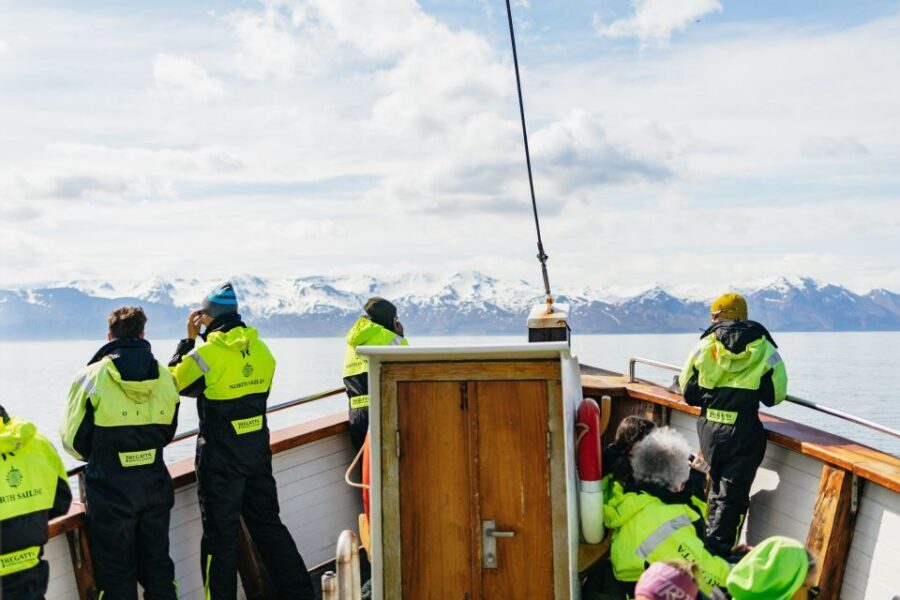
You won’t have a complex itinerary with many stops. Instead, you’ll get a steady flow designed around spotting.
1) Meet and board
You’ll check in at the North Sailing Húsavík Whale Watching office. Then it’s getting ready: sorting layers, putting on overalls, and getting settled on the boat.
2) Head out and start searching
Once underway, the guide’s commentary begins in earnest. The crew watches for signs—blows, movement changes, and other cues. You may cruise along the north coast area as you look for animals.
3) Sightings and tracking
When whales or dolphins appear, the guide helps you understand what you’re seeing and where to look next. People often report repeat sightings during the same trip, especially when animals stay in the bay for a while.
4) Return and warm-up
On the way back, you get hot chocolate and a cinnamon bun. Even if the water was rough, this is the moment your body usually appreciates most.
One more practical note: some accounts mention the trip can run a bit longer when sightings are active, like the crew giving extra time because animals are showing. That’s not something you should expect every time, but it reflects the priority: find and watch, not rush and shrug.
Price and value: is $115 fair for 3 hours?
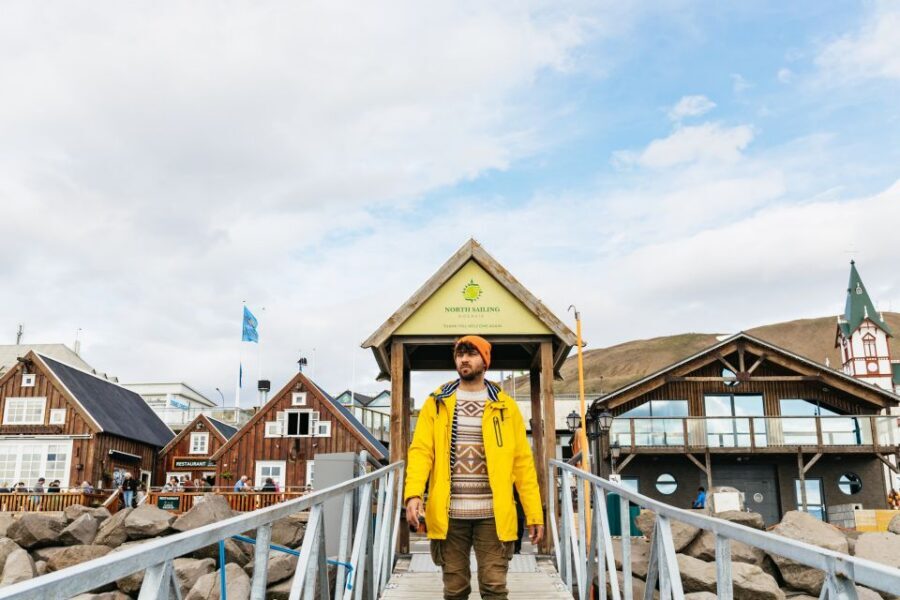
At $115 per person for a roughly 3-hour cruise, the price isn’t “cheap,” but it also isn’t random. It covers the boat outing, professional guide commentary, warm overalls, and light refreshments. You’re paying for expertise and for an effort that’s directly tied to wildlife results.
Here’s how I’d think about value:
- Overalls + hot drink + pastry are tangible benefits. You don’t have to buy gear locally just to stand outside for a few hours.
- Professional live commentary is part of the product. Whale watching without guidance can feel like staring at water and hoping. With guidance, you get meaning.
- No-whale policy (a free return tour if whales aren’t seen) reduces the biggest risk in this kind of activity.
If you’re comparing this to other Iceland attractions, it’s a good bet for a one-time highlight—especially if you’re already driving the Ring Road or spending time in the north. The cost is concentrated in one outing, and the payoff can be a memorable mix of sightings, stories, and a strong sense of place.
Who should book this, and who should plan differently
This tour fits best if you:
- Want a wildlife activity that’s active and guided
- Like learning about animal behavior, not just taking photos
- Are ready to dress for cold wind and sea spray
- Travel with kids (many people mention it worked well for young children, with the comfort factor helping)
You might plan differently if you:
- Know you get very motion-sick on boats and don’t want to deal with wind and waves
- Are going at a time when you’re extremely limited on weather flexibility (because the tour depends on favorable conditions)
For most people, the main “difficulty” is just clothing and expectations. Bring the right footwear, take motion into account, and accept that whales have their own schedule.
Getting there: meeting point and what you should pack
You meet at the North Sailing Húsavík Whale Watching office. There’s no pickup service included, so plan to arrive on your own.
The tour includes warm overalls, but you still need to cover basics:
- Wear suitable shoes (shoes are not included)
- Bring a hat and gloves (cold on the bay is real)
- Dress in layers. Even with overalls, wind can cut.
If you’re prone to nausea, pack your favorite seasickness solution. It’s not about being tough—it’s about enjoying the sighting once it happens.
Final call: should you book this whale watching tour?
If you want one nature-focused activity in northern Iceland that’s designed for real marine-life spotting, I’d book it. The combination of live guide commentary, warm overalls, and a clear system for handling the biggest risk—no whale sightings—makes this a smart-value outing.
Book it with two expectations held in balance:
1) You’re going to work a little for the best views (cold, wind, and short surface moments).
2) The crew is set up to make the outing count, including adjusting strategy and offering a free return when whales don’t show.
If you’re flexible and you dress for the weather, this is the kind of tour that can turn a normal day in Húsavík into a story you’ll keep retelling.
FAQ
How long is the Húsavík whale watching tour?
The tour duration is 3 hours.
Where do I meet for the tour?
Meet at the North Sailing Húsavík Whale Watching office.
How much does it cost?
The price is $115 per person.
What’s included in the tour?
Included are the whale watching cruise, live commentary from a professional guide, light refreshments, and warm overalls.
What should I bring since shoes aren’t included?
Bring suitable shoes and dress for cold conditions. It’s also a good idea to bring a hat and gloves.
Is pick-up included?
No pick-up service is included.
Is the tour dependent on weather?
Yes. The tour is subject to favorable weather conditions. If it’s canceled due to bad weather, you’ll be offered another date or a full refund.
What happens if no whales are seen?
If no whales are seen on the tour, you’ll be offered another whale watching tour free of charge.
Is the guide English-speaking and is it wheelchair accessible?
The guide is available in English, and the tour is wheelchair accessible. You should contact the operator prior to arrival for accessibility needs.