REVIEW · HUSAVIK
Húsavík: Family-Run and Guided Whale Watching Tour
Book on GetYourGuide →Operated by Friends of Moby Dick · Bookable on GetYourGuide
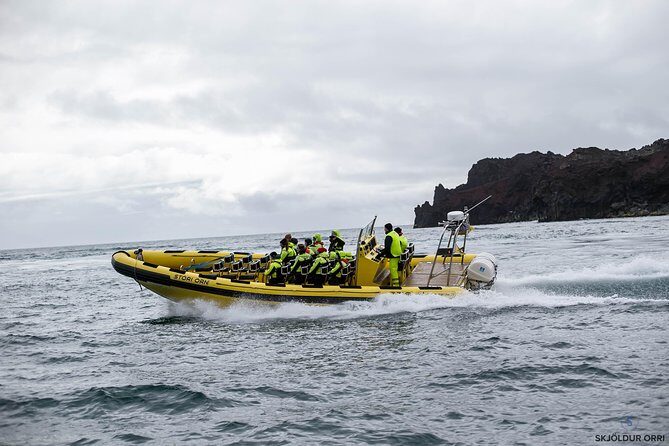
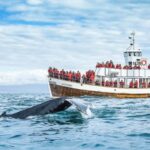
Whales off Húsavík feel close, fast. This family-run tour by Friends of Moby Dick sails a traditional oak boat from town and pairs real-time whale spotting with clear wildlife explanations from science-minded guides. It’s the kind of outing that makes you look at the water differently, even after you get back to land.
I love that the crew focuses on helping you find animals, not just hoping you will. I’ve also got a soft spot for the practical touch: safety suits and lifejackets are provided, so the cold wind doesn’t automatically ruin your photos or your mood. One consideration: sightings are never guaranteed, and this isn’t a great fit if you’re prone to seasickness or have mobility limits.
In This Review
- Key highlights worth aiming for
- Húsavík and Skjálfandi Bay: why this region pays off
- The meeting point, the boat, and what you get for $84
- The 3-hour flow: westbound cruising and animal-spotting rhythms
- What you might see: whales, dolphins, puffins, and the rest of the show
- Guides in the real world: how the commentary helps you spot faster
- Cold spray, suits, and the comfort level that affects your photos
- Responsible whale watching: the safe distance approach
- Value check: why this price feels fair for a 3-hour wildlife mission
- Who this tour suits best (and who should skip it)
- Should you book Friends of Moby Dick in Húsavík?
- FAQ
- How long is the whale watching tour?
- What’s the price per person?
- Where do I meet the tour?
- What’s included in the ticket?
- What’s not included?
- What should I bring?
- Is whale watching guaranteed?
- Is this tour suitable for wheelchair users?
- Is it good for people who get seasick?
- Are there age limits for children?
- Is the tour in English?
- How does the Whale Museum discount work?
Key highlights worth aiming for
- Family-run Friends of Moby Dick vibe: smaller-feeling operation, captain and guide working together
- Skjálfandi Bay cruising toward Kinnarfjöll: you spend time in the best local waters
- Whale-and-bird spotting with a marine biologist style: guidance on where to look
- Provided cold-weather gear: safety suits help you stay outside the whole hunt
- Responsible watching: the captain keeps safe distance while you watch up close when possible
- 20% Whale Museum discount: show your boarding pass for savings
Húsavík and Skjálfandi Bay: why this region pays off
Húsavík gets talked about for a reason. It sits in the northeastern pocket of Iceland where boats can reach productive waters for whales and dolphins fairly quickly. On your trip, you’ll head west toward the Kinnarfjöll mountain range, passing through Skjálfandi Bay, which is where your guide will concentrate the search.
What I like about this setup is that it isn’t a random “out and hope” cruise. The route is built around known whale-watching grounds, so the experience has momentum: you’re continuously scanning, adjusting, and re-checking areas as the day develops. You’ll also get plenty of non-whale life along the way—seals and seabirds show up often, and between May and mid August Atlantic puffins are a daily possibility (especially when birds are active over the water).
You can also read our reviews of more guided tours in Husavik

The meeting point, the boat, and what you get for $84
This tour starts at the ticket office marked by Friends of Moby Dick flags near the Fish and Chips area. There’s free parking at that same stop, which matters in Iceland because you don’t want to waste daylight circling for a spot.
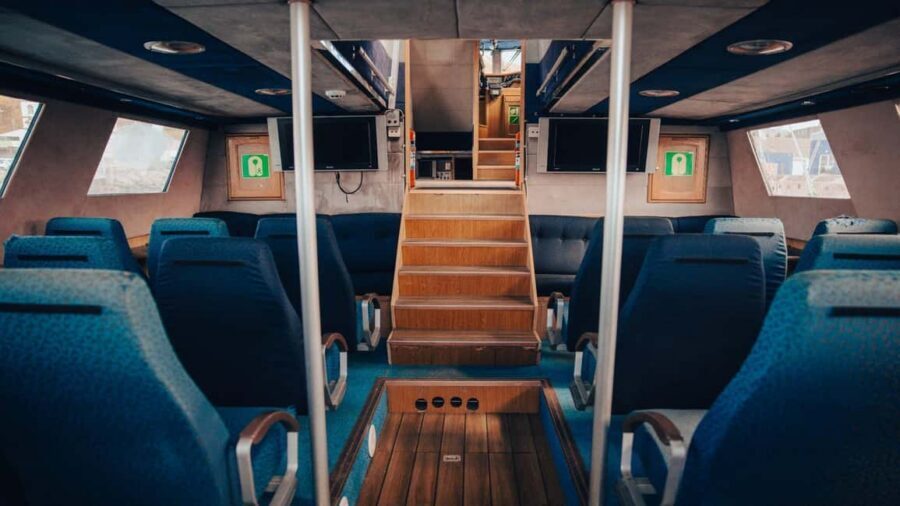
Check in at least 15 minutes before departure. That extra time helps you get geared up calmly—especially if you’re pairing the provided safety suit with your own warm layers. The price is $84 per person for about 3 hours, and the value is stronger than it looks because several key items are included:
- Whale watching tour with captain and guide
- Safety suit (and lifejackets for children)
- 20% discount for the Whale Museum with your boarding pass
What’s not included is also important: you’ll need to plan for food and drinks on your own, and you should bring closed-toe shoes. There’s also no pickup service, so you’ll want to be ready to reach the meeting point under your own steam.
The 3-hour flow: westbound cruising and animal-spotting rhythms
Your day runs on a simple loop: get on the boat, sail into the active waters, watch carefully, then return back to the start. Even without a long formal “itinerary” with named stops, the trip still has phases that make sense.
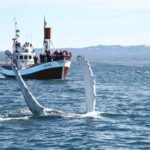
First, you leave Húsavík and head west toward Kinnarfjöll. As you pass through Skjálfandi Bay, your guide starts talking you into the right mindset: what whales do in open water, what signs to watch for, and how to spot them at a distance. You’ll also hear about local species you might encounter—especially humpback and minke whales, plus the rarer visitors like blue, fin, and killer whales.
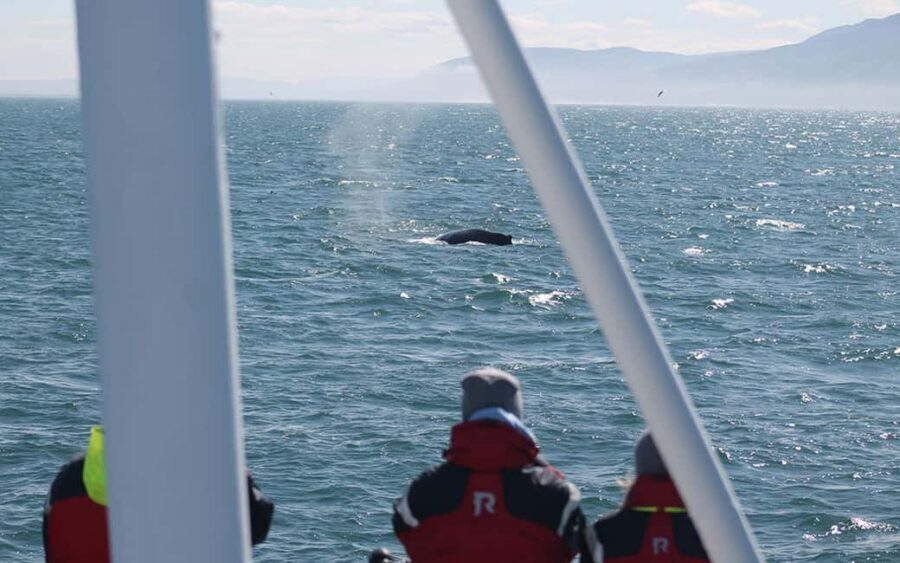
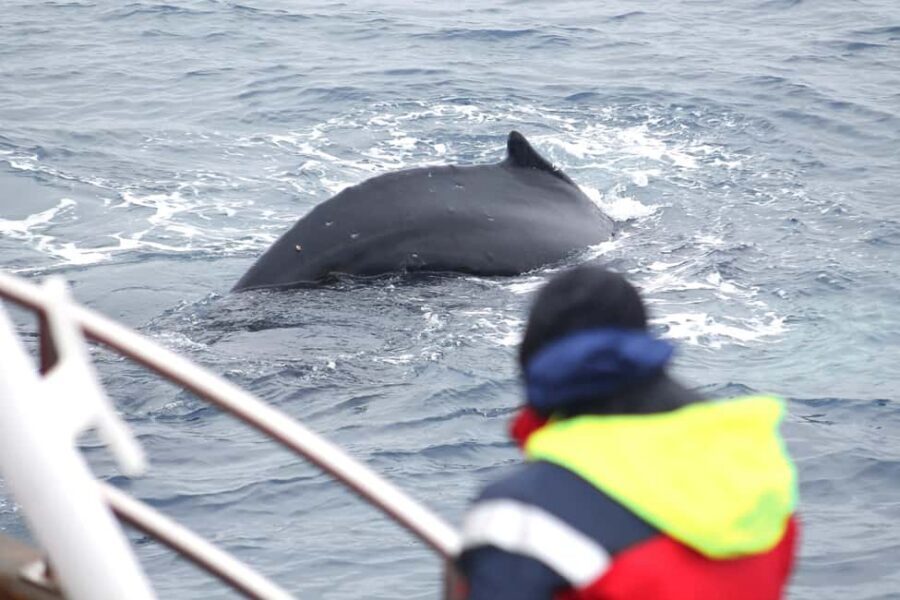
Then comes the watching rhythm. When sightings happen, the captain positions the boat, and the guide directs your attention—often more than once during a single outing. Some departures can turn into a longer “follow and watch” session when whales are actively surfacing or moving through the area. You’re not just staring out at a blank ocean for three hours.
What you might see: whales, dolphins, puffins, and the rest of the show
Let’s be real: whale watching is wild-life watching, so you can’t count on a specific animal on a specific schedule. But the waters around Húsavík are genuinely diverse.
Here’s what you should keep on your radar:
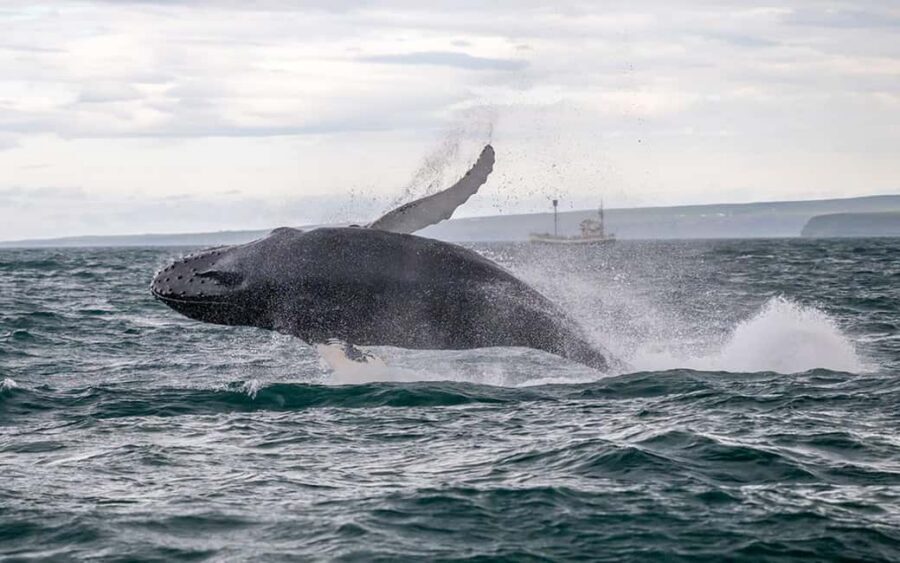
- Humpback whales: the most commonly seen big-name whale on this route
- Minke whales: a frequent bonus for many days
- Blue, Fin, and Killer whales: rarer visitors, but possible
- White-beaked dolphins: you might spot them too
- Seals and seabirds: often part of the day’s background action
- Atlantic puffins: daily possibility from May to mid August
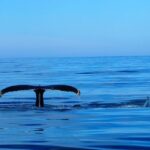
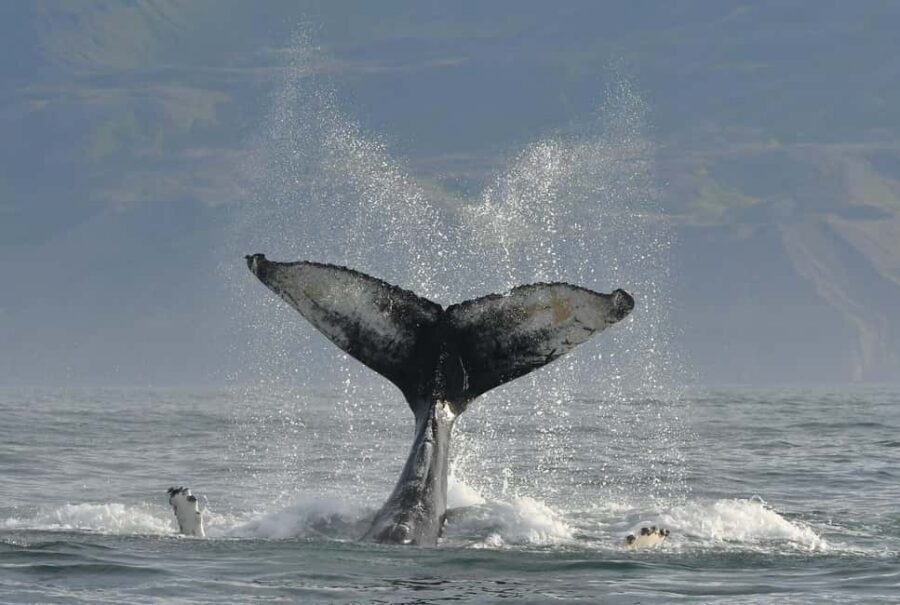
One useful way to set expectations: even when whales aren’t right up close, the guide’s job is to help you track movement and changes—so you still get a real viewing experience instead of random guesses. On some trips, you may see whales surface more than once, and sometimes behavior like diving or sudden breaches can happen. When it does, the guide’s direction helps you catch it rather than miss it while you’re repositioning for a photo.
Guides in the real world: how the commentary helps you spot faster

The best whale tours don’t just narrate. They train your eyes. This one leans hard into that, with an English-speaking guide and the captain actively working the water while you watch.
From the names shared across operations, you may meet guides such as Mada/Madalena/Magda, Niko, Ann, or Dana—all described as passionate about marine life, with the guide role combining spotting technique and science talk. In plain terms, you’ll learn what to look for and where to focus. That matters because whales can be easy to miss at first: a blow far away, a tail flick, a shape that’s only obvious once you know what you’re searching for.
You’ll also get bird info tied to what’s happening out on the sea. Puffins in flight can be hard to photograph, but they’re fun to track, and the guide’s cues can make the difference between noticing nothing and suddenly watching birds all day.
You can also read our reviews of more whale watching tours in Husavik
Cold spray, suits, and the comfort level that affects your photos
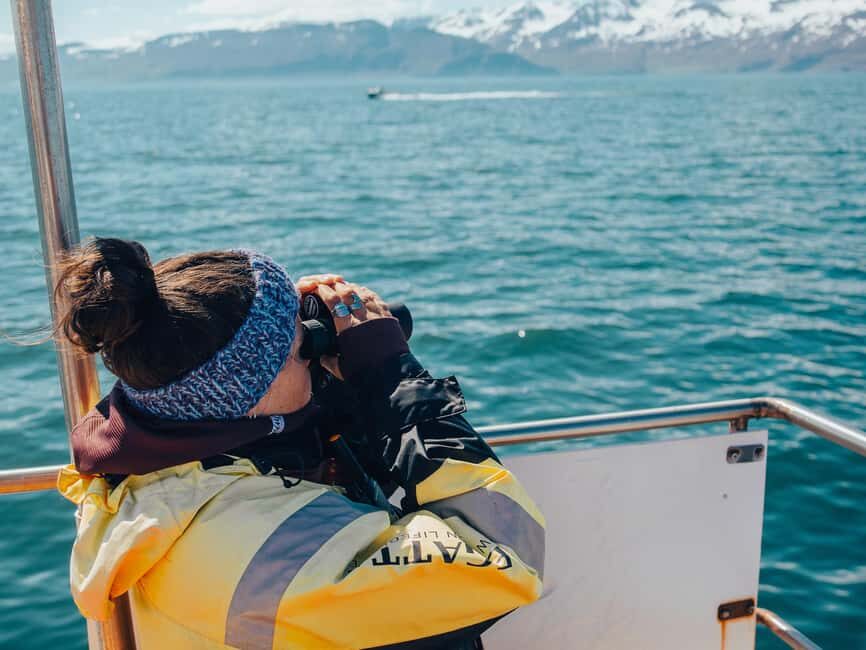
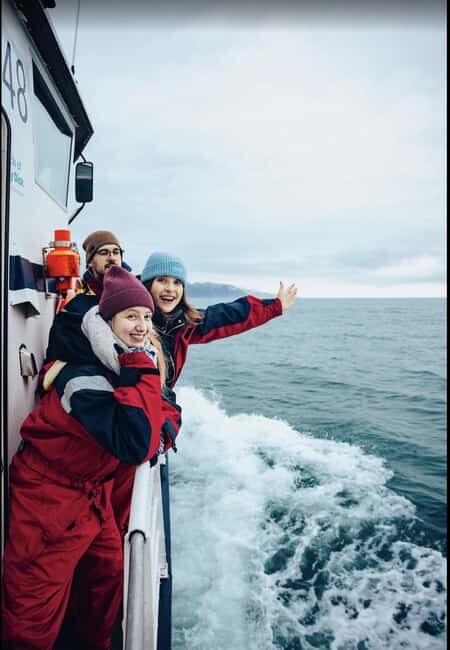
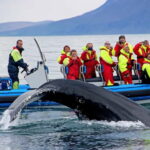
Boat time in Iceland is a weather test. The good news: you’re not walking in blind. The tour provides a safety suit and lifejackets for children, so you can spend more of the trip outside and less time huddled in layers you forgot to pack.
Still, you should bring the basics:
- Warm clothing
- Water
- Closed-toe shoes
A small but practical tip: if you have them, pack a buff and sunglasses. Chilly wind often hits your face from the boat’s angles, and you’ll be glad you protected your eyes. The provided suits handle the main cold-weather problem (wind and spray), but your personal comfort still matters for how long you’re willing to stand and watch.
Also note what the tour doesn’t handle: food and drinks aren’t included, so plan your day around not getting hungry at the worst possible moment.
Responsible whale watching: the safe distance approach
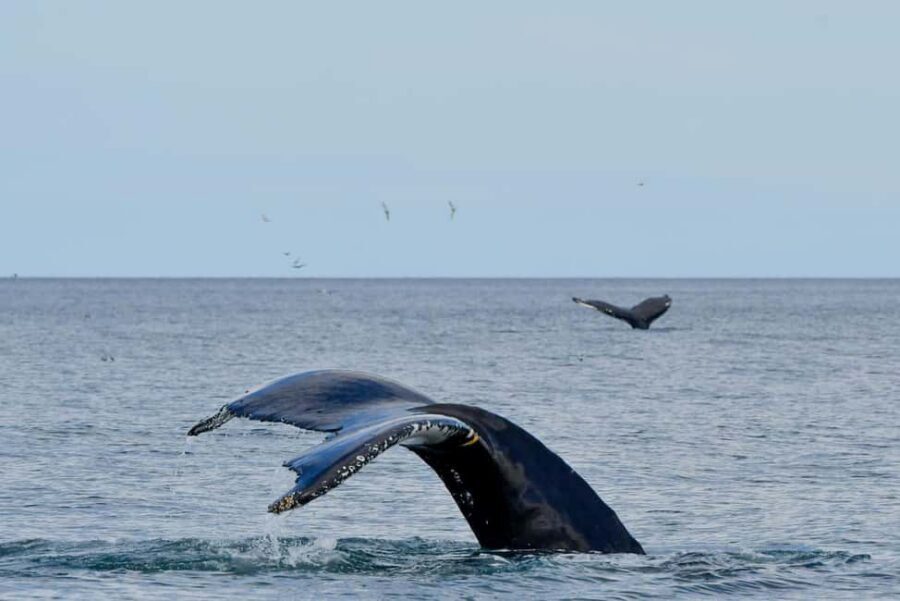
This tour is built around the Code of Conduct for Responsible Whale Watching. You’ll see that in how the captain positions the boat and how the guide frames the experience: you watch whales without turning the ocean into a target practice zone.
The impact for you is simple:
- You’ll feel safer on the water
- Your viewing moments are taken seriously, not rushed
- When whales come near, it happens with respect for distance and animal behavior
In other words, it’s not a cowboy-style chase. The goal is to keep things controlled while giving you the best chance to observe natural activity—surfacing, diving, and movement through the bay.
Value check: why this price feels fair for a 3-hour wildlife mission
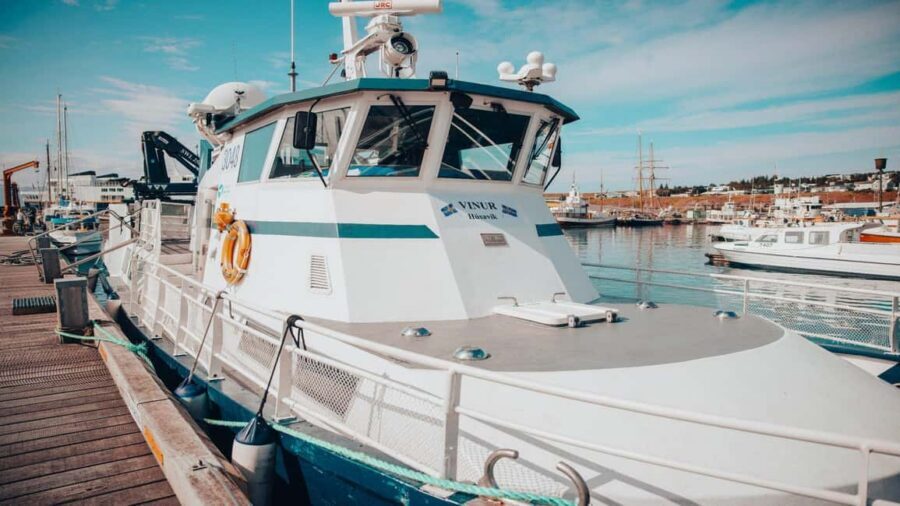
At $84 per person, you’re paying for more than a boat ride. You’re paying for:
- A captain actively navigating the search area
- A guide providing real-time scanning help
- Warm safety suits (and child lifejackets)
- A Whale Museum discount that can add extra value after your cruise
For many people, the biggest hidden cost in whale tours is gear. Here, you don’t have to guess whether you packed the right waterproof layer or whether you’ll freeze the moment you step outside. You also don’t have to bring your own flotation items for children.
Could you find cheaper options? Maybe. But if you’re aiming for a focused, wildlife-first experience with gear handled for you, this is a value-forward choice for a short 3-hour window—especially in a place where whale watching is usually the highlight.
Who this tour suits best (and who should skip it)
This is a strong match if you:
- Want a family-run feel rather than a factory-style outing
- Love learning while you watch (the guide’s science-and-spotting style is a big part of the fun)
- Plan to visit the Whale Museum afterward and want the 20% discount
- Appreciate responsible distance rules and a calm, safe approach
You should think twice if you:
- Have mobility impairments or need wheelchair access (not suitable)
- Are prone to seasickness (not suitable)
- Are traveling with a baby under 1 year (not suitable)
- Have unaccompanied minors (not allowed)
- Plan to bring alcohol on board (alcohol in the vehicle isn’t allowed)
Should you book Friends of Moby Dick in Húsavík?
If your goal is a whale-watching trip with real attention to spotting and responsible behavior, I’d book it. The provided safety suit plus a strong guide role makes the three hours feel productive, not padded. You’ll get plenty of marine life possibilities even beyond whales, and the Whale Museum discount is a nice bonus if you’ll do the museum anyway.
Just be honest about your priorities: it’s not a guarantee of whales. It’s a best-effort, smart search in Skjálfandi Bay, and that’s the deal with wild animals. If you can handle cold wind and you’re not seasickness-prone, this is one of the most straightforward ways to make Húsavík feel like a true marine adventure.
FAQ
How long is the whale watching tour?
The tour lasts about 3 hours.
What’s the price per person?
The price is $84 per person.
Where do I meet the tour?
Meet at the ticket office by the Friends of Moby Dick flags near Fish and Chips. The tour ends back at the same meeting point.
What’s included in the ticket?
Included are the whale watching tour, captain, guide, safety suit, and lifejackets for children. You also get a 20% discount for the Whale Museum with your boarding pass.
What’s not included?
Food and drinks, shoes, and pickup service are not included.
What should I bring?
Bring warm clothing, water, and closed-toe shoes.
Is whale watching guaranteed?
No. Whale sightings are not guaranteed since the animals are wild.
Is this tour suitable for wheelchair users?
No. It’s not suitable for wheelchair users and not suitable for people with mobility impairments.
Is it good for people who get seasick?
It’s not suitable for people prone to seasickness.
Are there age limits for children?
The activity is not suitable for babies under 1 year, and unaccompanied minors are not allowed.
Is the tour in English?
Yes, the live tour guide is English.
How does the Whale Museum discount work?
You show your boarding pass at the Whale Museum entrance to get the 20% discount.