REVIEW · HUSAVIK
Húsavík: Original Big Whale Safari & Puffins by Speedboat
Book on GetYourGuide →Operated by Gentle Giants Whale Watching · Bookable on GetYourGuide
RIB speedboats make whales feel close. This Húsavík tour turns Skjálfandi Bay into a moving wildlife classroom, using a modern RIB speedboat and live guidance to help you cover more water in less time. You also stop at Puffin Island during nesting season, so you’re not waiting around only for whales.
I especially love the practical comfort: you’re issued warm safety overalls (obligatory) and a life jacket before you go, which matters fast in northern Iceland weather. I also like the small group setup on a larger RIB, built for up to 12 passengers, so you get a more personal feel while the guide works the water.
One possible drawback: this is not a calm, float-on-the-sea kind of ride. Expect speed and a bumpier feel than slower boats, and if you’re prone to motion sickness you’ll want to plan for it. Also, it’s not suitable for children under 8, pregnant women, people with back/heart problems, or wheelchair users.
In This Review
- Key highlights that make this safari worth your time
- Húsavík Whale Capital plus a speedboat plan that actually makes sense
- Check-in at Gentle Giants and getting kitted for real cold
- Puffin Island stop: thousands of clowns of the ocean in nesting time
- Skjálfandi Bay by RIB: how the speed helps you find big whales
- The two-hour rhythm: what happens when, and what to watch for
- Price and value: what $159 buys you in Húsavík
- Weather reality in the North Atlantic: the smart way to think about success
- Who should book this tour, and who should skip it
- Practical tips I’d use before you go
- Should you book Gentle Giants Original Big Whale Safari & Puffins?
Key highlights that make this safari worth your time
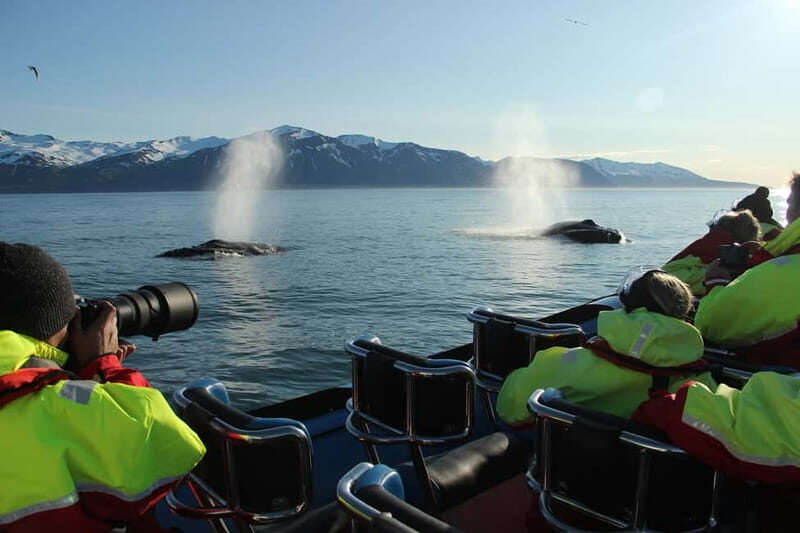
- Skjálfandi Bay coverage on a RIB: faster travel helps increase your odds of finding whales
- Puffin Island during nesting season: see thousands of puffins when conditions line up
- Live onboard commentary: guides point out wildlife behavior as you pass it
- Warm overalls and life jackets: less fuss, more time looking out at sea
- Smaller max group size: up to 12 passengers for a less crowded experience
Húsavík Whale Capital plus a speedboat plan that actually makes sense
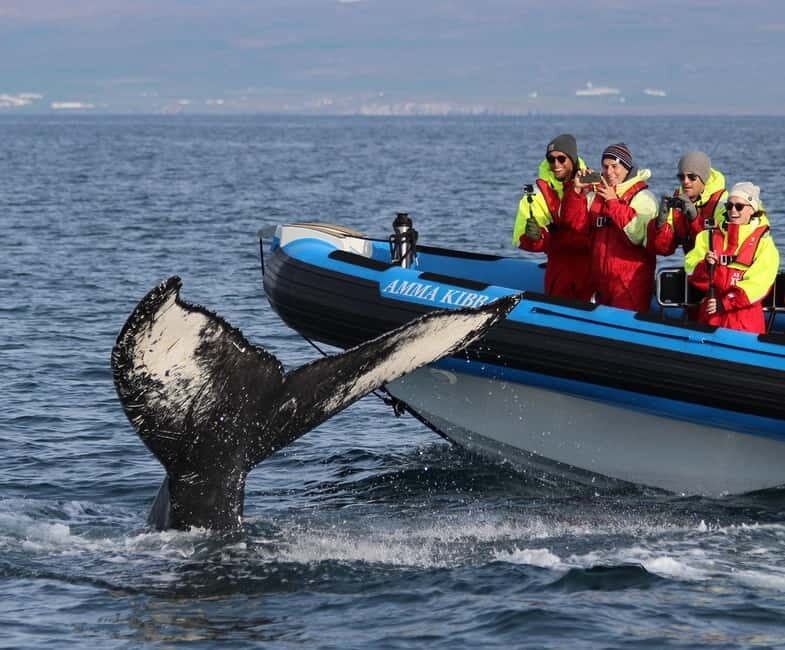
Húsavík is Iceland’s go-to base for whale watching, and this tour is designed around one simple truth: wildlife moves, and your time is limited. By running out on a RIB speedboat and covering a wider stretch of Skjálfandi Bay, you’re not just crossing your fingers from a fixed route.
What makes the experience click is the mix of guaranteed nature (puffins in season) and the hunt (whales and dolphins). On the water, that usually means you get to see birds and marine life up close, then the pace steps up when the guide starts working the best-looking areas.
And yes, speed matters here. The fast maneuvering helps you reach spots where whales surface, instead of arriving after the moment has passed.
You can also read our reviews of more tours and experiences in Husavik.
Check-in at Gentle Giants and getting kitted for real cold
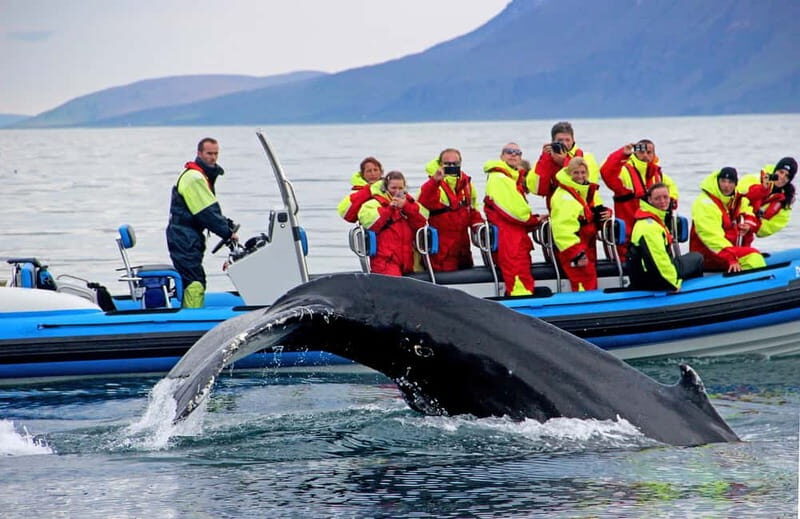
Your trip begins at the Gentle Giants Ticket Center, where you’ll meet your guide and look for the big blue flags. There’s no hotel pickup, so plan to get yourself there with comfortable walking shoes and a bit of extra time if weather is wild.
Once you’re together, you’ll get a safety briefing and then be fitted with the overalls and life jacket. These aren’t optional “tourist jackets.” They’re part of how they keep everyone warm and secure in salt-air wind and spray.
The vibe I’d expect from a well-run operation is clear roles: the guide focuses on wildlife spotting and narration, while the skipper pilots the boat safely through changing conditions. You’ll also notice how the team makes it easy to focus on the view rather than gear management.
Puffin Island stop: thousands of clowns of the ocean in nesting time
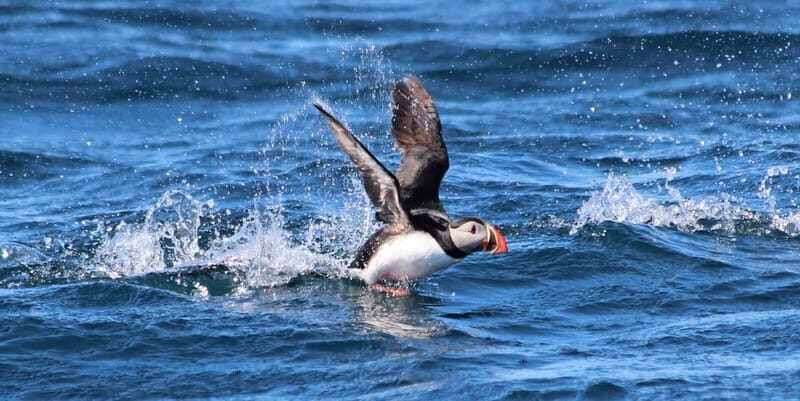
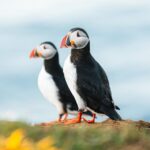
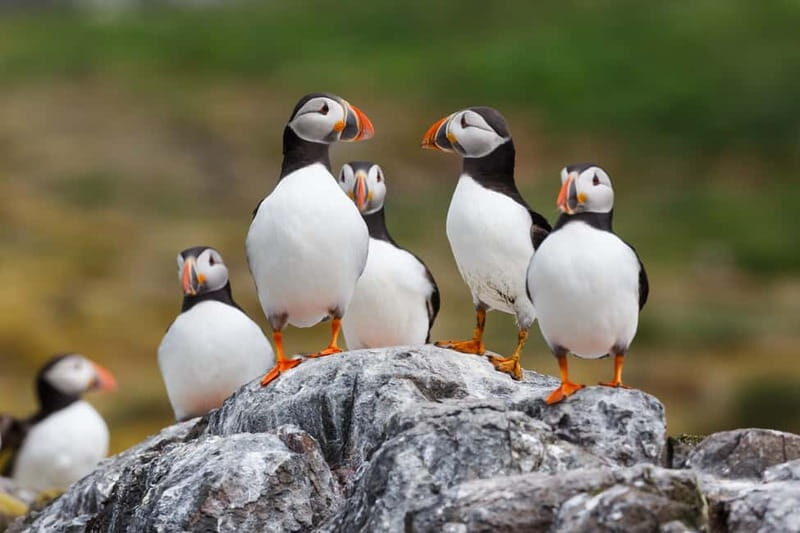
The first big wildlife hit is Puffin Island during the nesting period, roughly April 15 to August 15. If your timing lands in that window, you’re set up for one of the most visually intense bird experiences in Iceland: thousands of puffins packed onto the island.
Expect guided viewing on the island area plus a boat cruise and sightseeing around the route to and from the stop. Puffins are small, quick, and easy to miss if you’re not sure where to look, so having a guide matters. They can also help you understand puffin behavior, which makes even a brief viewing feel like you’re actually learning something, not just taking pictures.
One practical note: puffins are seasonal. Outside that nesting window, the tour shifts its focus more toward whales, because that’s when the puffin spectacle isn’t at its peak. The good part is that you’re not locked into puffins only; the plan still targets larger marine life.
Skjálfandi Bay by RIB: how the speed helps you find big whales
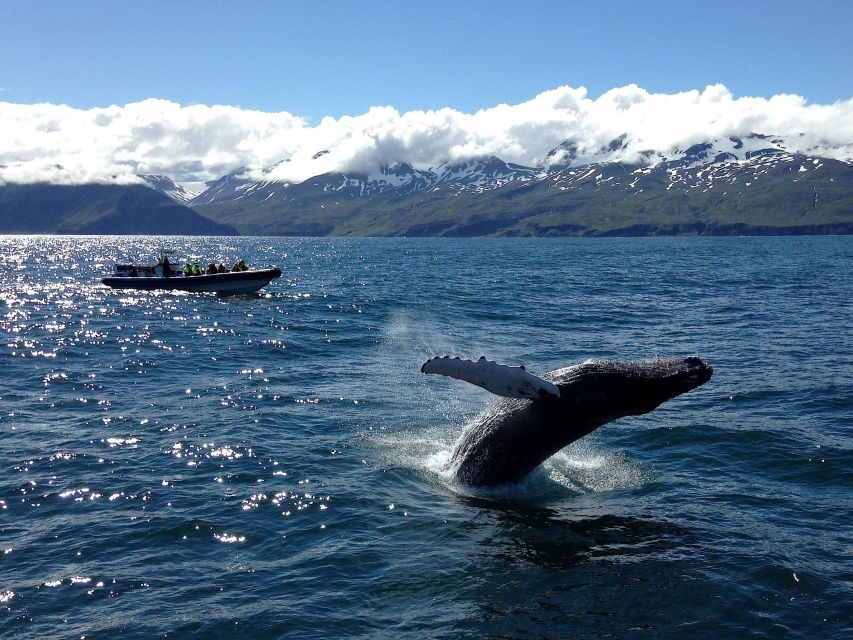
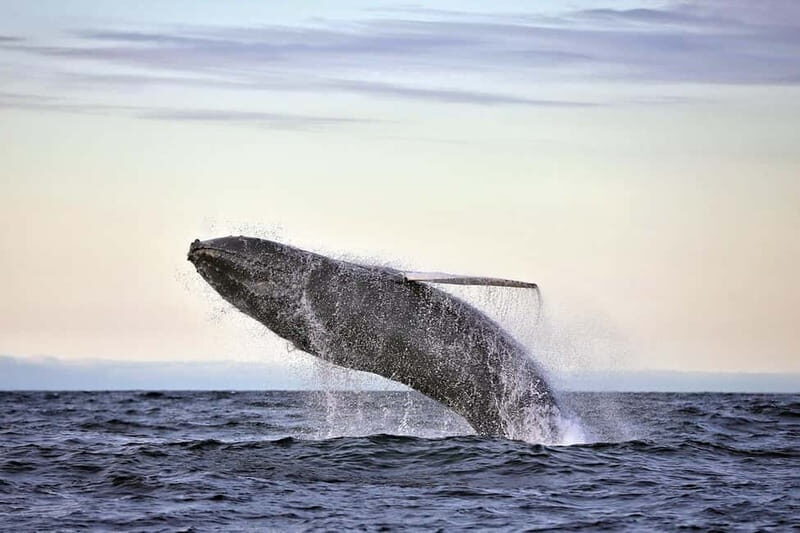
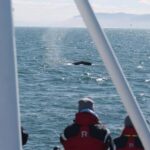
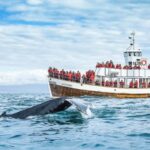
After Puffin Island, the tour shifts into true whale-watching mode on Skjálfandi Bay. This part is built around the RIB’s ability to move quickly and reach productive areas. The guide’s job is to read the water and keep searching, while the skipper positions the boat so everyone gets a fair chance to see what surfaces.
This is where you’ll hear species names come to life: humpback whales are often seen in action, while blue whales are the “big ones” you hope for. Dolphins also show up on this itinerary, and when they do, it can turn the whole ride into a constant pattern of sightings rather than a single payoff.
A key detail for your expectations: you’re watching whales in their natural environment, not in an enclosed area. That means the encounter can be brief, long, or surprising, depending on where the animals choose to surface.
In the best cases, the boat keeps finding new angles and new individuals. In one experience style like this, guides have been noted for actively positioning the boat so different sides get views, which helps when whales surface near one edge of the group.
The two-hour rhythm: what happens when, and what to watch for
This tour runs about 2 hours, and you’ll feel the structure during the ride. The flow is simple: start at Gentle Giants, get briefed, visit Puffin Island, then cruise through Skjálfandi Bay for the whale-and-dolphin search, and return to the meeting point.
Here’s how each part tends to feel in the real world:
Safety briefing and gear time
Short and focused. You’ll be told how to stay balanced, when to listen for instructions, and how the boat will move. It’s also where the tour sets expectations about weather and sea state.
Puffin Island stop
A visual break from the open-water search. Puffins are active and loud (in bird terms), and the guide’s role is to help you spot them quickly rather than hunting for tiny dots in binocular-sized distances.
Skjálfandi Bay cruising and scanning
This is the “work the water” section. The guide gives live commentary, and you’ll likely hear about whale behavior—what it means when they surface a certain way or when you spot patterns around the area. Expect the ride to feel more like an adventure than a quiet boat trip.
Return cruise
You’ll start comparing notes with the people around you, mostly because the scenery and sightings stack up so quickly once you get momentum. The best moments can happen late, not just at the start.
You can also read our reviews of more whale watching tours in Husavik
Price and value: what $159 buys you in Húsavík
At $159 per person for a 2-hour RIB safari, you’re paying for three things: speed, smaller-group comfort, and specialized guidance.
First, speed. With whales, the best encounters are often the ones you reach at the right time. The RIB’s ability to cover a larger area of Skjálfandi Bay can be the difference between seeing one surfacing versus multiple. You’re buying odds.
Second, comfort and control. A RIB that’s more spacious than many others, with up to 12 passengers, is a big deal when you’re wearing bulky layers and trying to stay balanced. If the boat is crowded, spotting gets harder fast. Here, the setup aims to keep sightlines reasonable.
Third, the guide. The live narration isn’t just trivia. It helps you understand what you’re seeing, and it can change how you look at the water. In feedback like this, names such as Matteo (marine biologist), Serena, Rui, Alberto, Marc, Miro, Jo, and Zara show up again and again as standout guides, which tells me the company leans on skilled staff, not generic scripts.
One more value angle: you’re not just doing a whale safari. You’re also doing a Puffin Island stop during nesting season, which can make the tour feel like two wildlife experiences in one package.
Is it expensive? It is. But for Húsavík, you’re paying for a modern RIB experience that prioritizes wildlife odds and real guidance, not just movement for movement’s sake.
Weather reality in the North Atlantic: the smart way to think about success
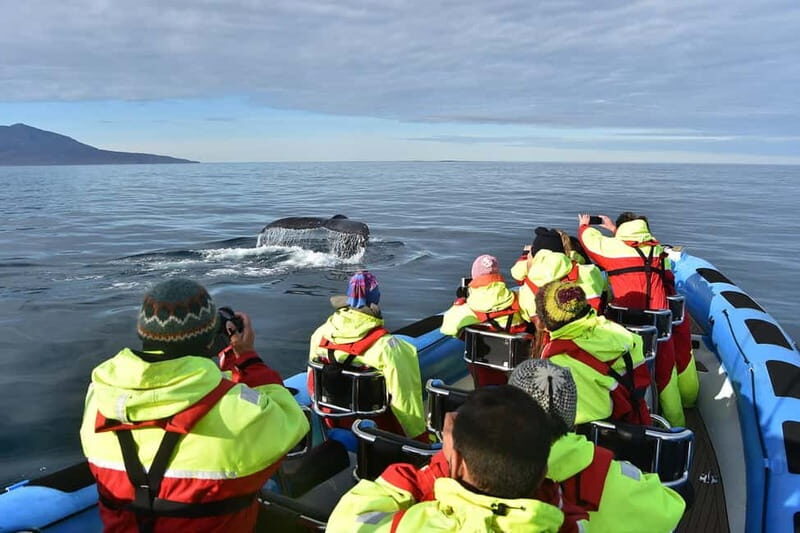
Weather can change quickly in northeastern Iceland. This tour is subject to favorable conditions, and if it cancels because of bad weather, you’ll be offered an alternative date or a full refund.
If you do go out but don’t see whales (and dolphins included), you’ll receive a voucher for a traditional whale watching tour on oak boats at no charge. That’s not a refund, so it’s wise to treat this as a “we’ll try again” promise rather than an automatic money back guarantee.
This is a common pattern in whale watching anywhere: wildlife doesn’t sign contracts. The value here is that the operation is set up to keep searching, and they’ve built in a backup plan when whales don’t show.
Who should book this tour, and who should skip it
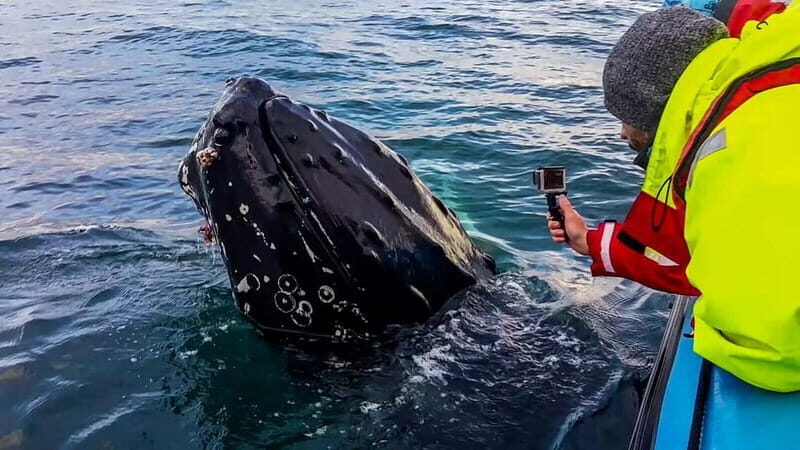
This tour is a great fit if you want action and you don’t mind moving fast to chase sightings. It’s especially good for couples, friends, and anyone who wants to see both puffins and big whales in one outing when puffin season lines up.
It’s also a strong choice if you value expert interpretation. With guides bringing species behavior into the conversation, you’ll likely leave with a clearer sense of how whales use the area, not just a checklist of sightings.
Skip it if you fall into the listed constraints:
- Not suitable for children under 8
- Not suitable for pregnant women
- Not suitable for people with back problems or heart problems
- Not suitable for wheelchair users
- Not suitable for people under 4 ft 3 in (130 cm)
And if you’re at risk for sea sickness, take that seriously. Even when people say they felt fine, the ride is described as bumpy at times, so it’s smart to bring your usual anti-nausea plan.
Practical tips I’d use before you go
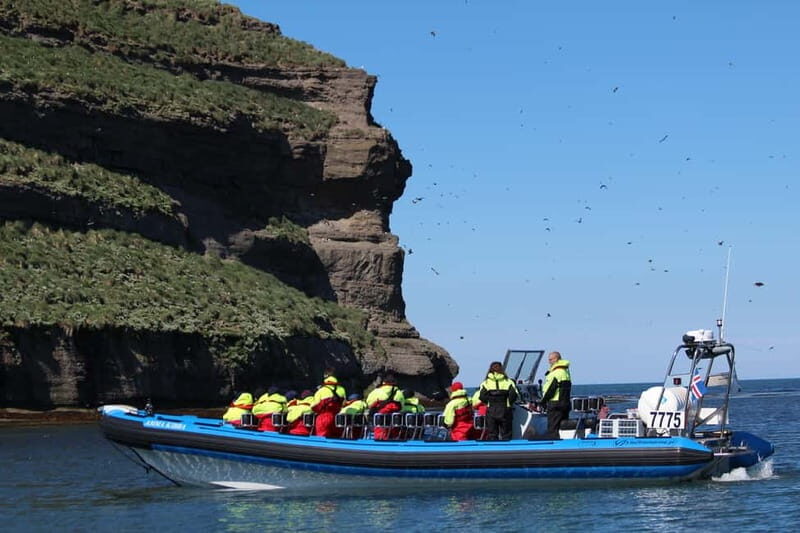
You’ll get warm overalls, but you still need layers and dry clothing logic. Here’s what helps most, based on real cold-weather advice from past riders:
- Bring warm clothing under the overalls, not just a single thin layer.
- If it’s truly cold, plan for extra warmth such as hat and scarf.
- Comfortable shoes matter because you’ll move around before and after boarding.
- If you’re sea-sickness prone, consider taking sea sickness pills ahead of time. One clear takeaway from feedback like this is that the ride can feel like a roller coaster for sensitive stomachs.
Also pay attention to the “small bag” reality. Luggage or large bags aren’t allowed, so travel light. Your phone and camera are usually the main gear you’ll care about, and the team may even help you check pockets before you board.
Finally, bring the right attitude: you’re in the hunt. When the guide starts scanning and the boat adjusts quickly, that’s the moment to lock in and watch the water, not to scroll your camera roll.
Should you book Gentle Giants Original Big Whale Safari & Puffins?
You should book this tour if you want your best shot at big whales from Húsavík and you’re traveling during puffin season (roughly mid-April through mid-August). The combination of Puffin Island plus Skjálfandi Bay scanning, run from a modern RIB with live guidance and up to 12 passengers, is a good match for people who like efficient, nature-focused adventures.
You might pause if you hate rougher rides, have motion sensitivity, or fall into the stated health or mobility restrictions. In that case, you’ll probably enjoy a slower boat alternative more.
If you’re okay with the speed and you’re dressed for Icelandic cold, this is the kind of whale-watching day that makes the rest of your itinerary feel secondary.