REVIEW · REYKJAVIK
Whales Of Iceland Admission Ticket
Book on Viator →Operated by Whales of Iceland · Bookable on Viator
Life-size whales, no wet boots required. Whales of Iceland is a rainy-day win in Reykjavík, built around life-size whale models plus underwater soundscapes and multimedia learning that doesn’t feel like school. You also get access to the Fin Whale Theatre for documentary screenings included with your ticket.
I really like that the visit is flexible: you can follow the audio guide in 17 languages at your own pace, with headphones recommended. I also appreciate the daily live English guided tours at 11:00 and 15:00, run for a small group size (max 15), which keeps questions from getting lost.
One thing to consider: this is primarily a museum of models and exhibits, not actual whale-watching at sea, so if you’re expecting a big, dramatic space or real animals, you may feel the admission price ($34.84) is a bit steep.
In This Review
- Key things I’d bank on before you go
- Whales of Iceland Tickets: built for an easy Reykjavík stop
- Inside the museum: life-size whales, underwater sound, and a dark-cool vibe
- Using the audio guide well: headphones and 17 languages
- Interactive exhibits: anatomy and behavior, not just pictures
- Fin Whale Theatre documentaries: the showtimes are your pacing tool
- The live English guided tours (11:00 and 15:00): small group, real Q&A
- How long you’ll spend (and why the weather should be no problem)
- Price and value: is $34.84 fair for a model museum?
- Who should book, and who might not love it?
- Should you book Whales of Iceland tickets?
- FAQ
- How long should I plan for Whales of Iceland?
- Is an audio guide included, and how many languages are available?
- Are documentary screenings included with the admission ticket?
- What time are the live guided tours in English?
- Where is the meeting point, and what are the opening hours?
- Is parking available, and are food and drinks included?
- What’s the cancellation policy for a full refund?
Key things I’d bank on before you go
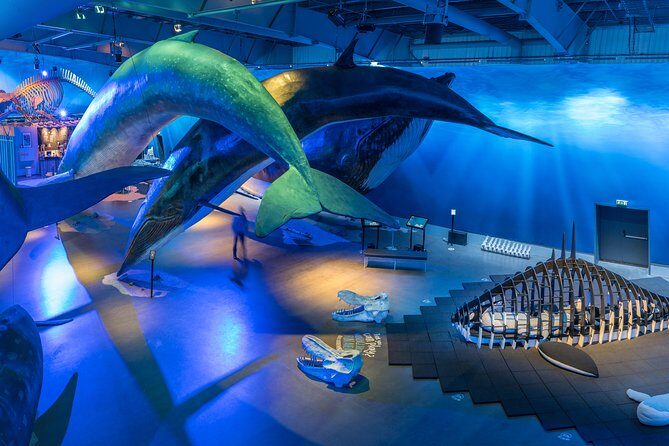
- Life-size whale models (over 25) representing species found in Icelandic waters
- Fin Whale Theatre films included, with whale conservation themes
- Audio guide in 17 languages, easy to use on your phone with headphones
- Small-group English tours offered daily at 11:00 and 15:00
- Family-friendly extras like a kids’ play area and a trivia quiz at the entrance wall
- Easy pairing with nearby attractions in the same marina area
Whales of Iceland Tickets: built for an easy Reykjavík stop
You’re buying an admission ticket that’s designed for smooth entry, including a mobile ticket. That matters in Iceland, where timing and weather both matter. Most people plan ahead too, with this commonly booked about 22 days in advance, so locking in your slot early is smart—especially if you’re visiting during busier weeks.
Plan on 1 to 2 hours for a satisfying visit. That’s long enough to take your time with the exhibits and catch at least one documentary screening, but short enough that it won’t hijack your whole day in Reykjavík.
The meeting point is Fiskislóð 23, 101 Reykjavík, and the activity ends back at the same spot. It’s also listed as near public transportation, with free parking and Wi‑Fi included. If you’re driving, that’s a real bonus; if you’re not, the location still works as a walkable add-on to other nearby sights.
A few more Reykjavik tours and experiences worth a look



Inside the museum: life-size whales, underwater sound, and a dark-cool vibe
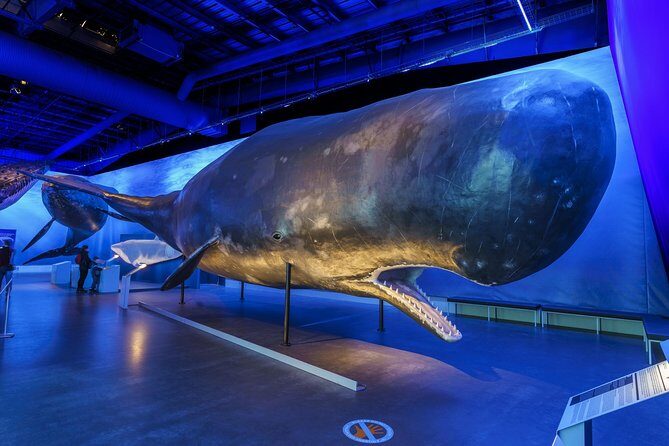
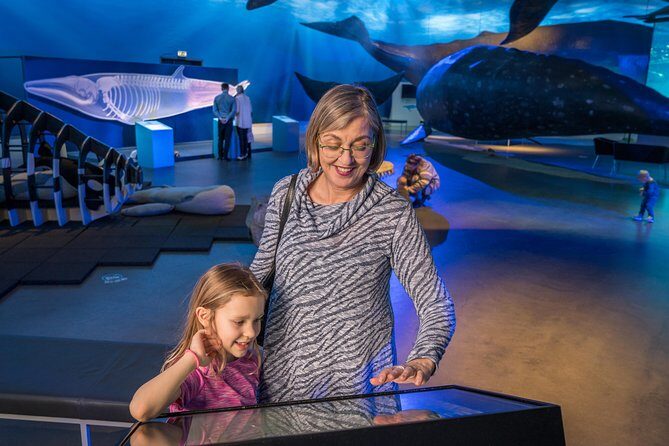
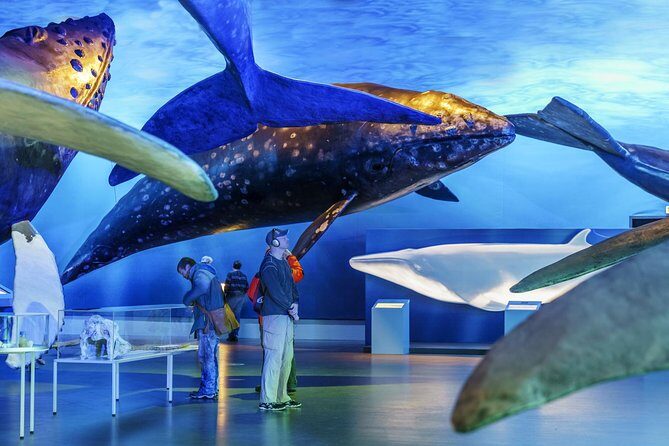
Whales of Iceland is set up around a bold idea: you get to stand face-to-face with whale scale, using life-size models that cover 23 species (with more than 25 models across the collection). The goal isn’t subtle—this is meant to make whale size real, fast.
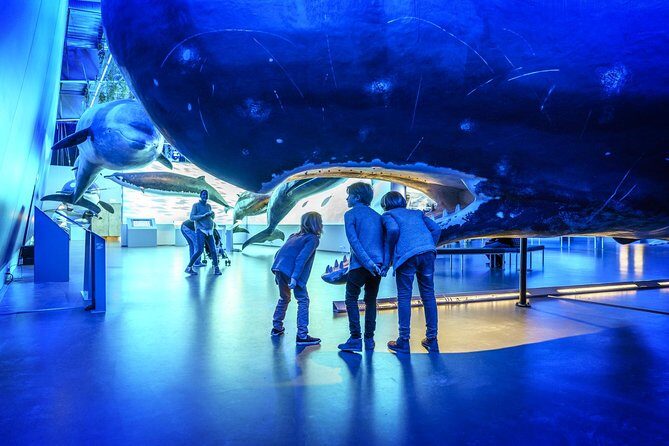
One reason I’d recommend it is the way the museum uses atmosphere. You’re not just reading labels; you’re surrounded by underwater sounds and an exhibit layout that makes you feel like you’re moving through the ocean world, even though you’re indoors. Several whales are presented in ways that feel dramatic—some visitors call out how huge they seem, including models hanging overhead.
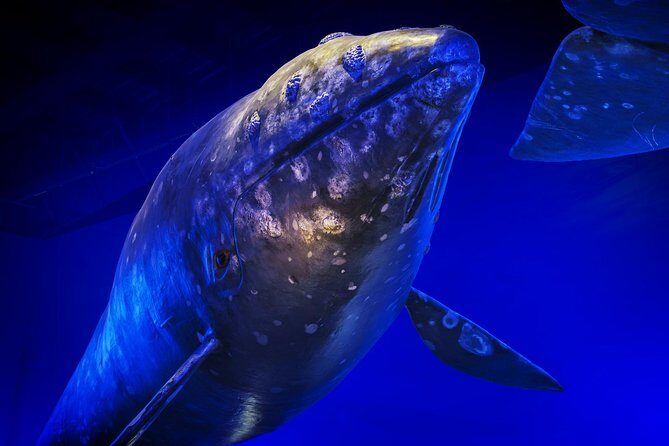
You’ll see major species tied to Icelandic waters and history, including the blue whale, sperm whale, and the critically endangered North Atlantic right whale. That mix is useful because it doesn’t only focus on the famous “big names.” It gives you a fuller idea of what’s actually part of the Iceland story.
A practical note: the museum can feel cool and dim, and some sections may feel a bit like a “warehouse” style of exhibit space. That’s not a deal-breaker, but it’s worth knowing if you’re sensitive to low light or you need bright signage to read comfortably.
Using the audio guide well: headphones and 17 languages
Your ticket includes an audio guide in 17 languages, and the easiest way to get real value from it is simple: bring headphones. The audio guide is designed to walk you through what’s on the walls, so you’re not stuck guessing which whale model to focus on next.
This is also where the museum’s self-paced design shines. The audio guide can turn a quick look into something closer to a guided experience, even if you don’t catch the live tour times. If you like museums where you control the pace—stop, listen, look up again—this fits your style.
One small tip that comes up in the experience: there’s a trivia quiz at the entrance wall. It’s a fun “attention check” and it’s tied to a small takeaway moment (like a certificate). Even if you’re not a trivia person, it’s a good way to focus without forcing it.
Interactive exhibits: anatomy and behavior, not just pictures

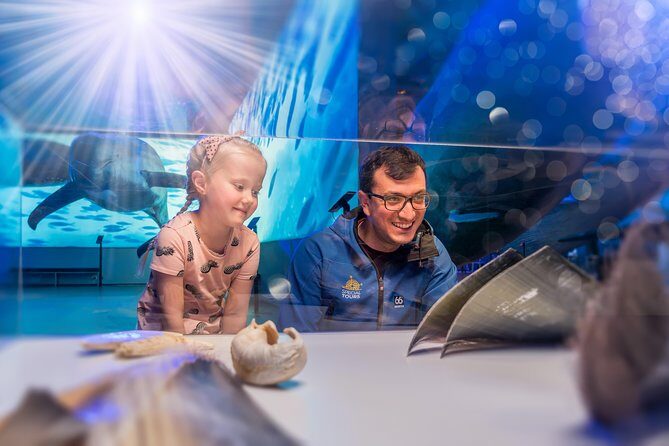
The museum doesn’t rely only on size and signage. It includes interactive parts aimed at how whales work—anatomy and behavior—so you’re not just collecting species names. This is the section that tends to keep kids engaged, because it gives them something to do beyond reading.
If you’re a whale fan, you’ll likely enjoy how the exhibits explain what different whales are adapted for. If you’re going with kids, this same feature is what helps the visit feel educational without turning it into pure lectures.
There is also a recurring theme through the multimedia content: whale survival and how humans affect whale health. One example shown in the museum material includes the idea that ships and military testing noise can harm whales, which is the kind of information that lands because it’s tied to real-world behavior, not just theory.
Signage quality can be uneven. A couple of visitors note that some labels might feel awkwardly placed. My advice: don’t treat it like a museum scavenger hunt. Pick a few whales that interest you, use the audio guide to connect the dots, and you’ll still get a lot out of it.
Fin Whale Theatre documentaries: the showtimes are your pacing tool
A big part of the ticket value is that the documentary screenings are included in the Fin Whale Theatre. These films run through the day, so you can build your visit around them.
At the time of this offering, the featured films include:
- Whale Wisdom, narrated by Sir David Attenborough
- Sonic Sea, narrated by Rachel McAdams
Even if you’re visiting just for the exhibits, the theatre adds a different kind of learning. Instead of facts in bits, you get conservation themes and research context, which helps explain why some species are struggling. That’s also where the museum can shift your mood—from awe about size to concern about survival.
A practical move: if you care about seeing the documentaries, time your visit so you can catch one. If you miss them, the exhibits alone still work, but the theatre is a key reason this ticket often feels worth it.
You can also read our reviews of more whale watching tours in Reykjavik






The live English guided tours (11:00 and 15:00): small group, real Q&A
Daily live guided tours in English run at 11:00 and 15:00, and the group limit is max 15 travelers. That small size is a quiet advantage. It makes it easier for a guide to answer questions, and it prevents the tour from feeling like a fast march through exhibits.
I also like that the tours give you structure without locking you into a rigid “follow the leader” pace. If you arrive near the tour start, joining is an easy upgrade. If you arrive outside tour times, the audio guide still carries most of the learning weight.
One guide name specifically mentioned in an experience is Claire. If she’s leading your session, you’ll likely get a tour that’s both informative and focused on the animals and conservation angle. Even if not, the presence of named-led tours is a good sign the museum puts care into the spoken component.
How long you’ll spend (and why the weather should be no problem)
Most people treat Whales of Iceland like a mid-day reset: it’s a solid indoor break when Reykjavík weather is doing its unpredictable thing. Several visitors describe it as a great way to spend 30 to 60 minutes to get out of the weather, with others staying closer to the full 1 to 2 hours when they also catch videos and take their time with exhibits.
If you want the “best odds” plan, do this:
- Spend your first chunk focused on the models that grab you most.
- Use the audio guide to connect species to what you’re seeing.
- Plan to catch a theatre screening if you can.
The museum is in an area with other attractions, which makes it easy to stitch into a half-day. People commonly pair it with nearby stops like the Lava Show, Flyover Iceland, and the Aurora show in the same general complex area. One note from an experience: it’s about a 20-minute walk from the center, though you can also drive and park for free.
Price and value: is $34.84 fair for a model museum?
Let’s talk money plainly. The ticket price is $34.84 per person, and that number can feel high if you compare it to quick little city attractions. The reason some people feel good about it is that you’re not paying only for “a room of models.”
You’re paying for several included items:
- An audio guide in 17 languages
- Documentary screenings in the Fin Whale Theatre
- Daily live guided tours in English at set times
- Free parking and Wi‑Fi
- A museum experience designed to take about 1 to 2 hours
So the value depends on what you’re getting out of it. If you’re a whale lover who wants context, audio, and conservation messaging, this ticket often feels justified. If you’re expecting a massive museum with lots of space, some visitors report it can feel smaller than expected—and that can change the value equation.
Also, the experience is mostly models. Even when models look lifelike, this is not the same thing as real wildlife at sea. If your goal is true whale watching, you’ll still want to book that separately. If your goal is understanding whale species and scale in Icelandic waters, Whales of Iceland can be a strong use of time.
My rule of thumb: if you’ll wear headphones, catch one documentary, and stay for at least an hour, the ticket tends to land as good value. If you’re only planning to peek for 20 minutes and bounce, it’s easier to feel disappointed.
Who should book, and who might not love it?
This is a great fit for:
- Families looking for an indoor activity that works for kids and adults
- People who like marine biology facts, species comparisons, and “how whales live” explanations
- Anyone visiting on a weather-heavy day in Reykjavík
- Whale fans who want the conservation angle shown in the theatre films
It may be less ideal if:
- You came only for real whale sightings at sea
- You expect the space to feel huge or like a giant multi-wing museum
- You’re very price-sensitive and don’t plan to spend close to the full hour-plus range
The best experience comes when you treat it like a museum stop you can actually slow down for, not a quick checkmark.
Should you book Whales of Iceland tickets?
Yes, if you want a clear, well-packaged intro to whale species connected to Iceland and you’re willing to spend about 1 to 2 hours. I’d especially book it if you’ll use the 17-language audio guide and aim for at least one theatre screening in the Fin Whale Theatre.
Skip it or lower your expectations if you’re hunting only for outdoor wildlife experiences, or if you’re the type who needs bright, easy signage everywhere. For everyone else, it’s a strong Reykjavík add-on: educational, family-friendly, and built around the kind of scale you can’t get from photos.
If you’re already planning other attractions nearby (Lava Show, Flyover Iceland, Aurora show), it’s an easy combo. And with free parking, it’s also low-stress to slot into your day.
FAQ
How long should I plan for Whales of Iceland?
Plan on about 1 to 2 hours. Many people use it as a shorter indoor break, but you’ll get more out of it if you also catch documentary screenings.
Is an audio guide included, and how many languages are available?
Yes. The ticket includes an audio guide in 17 languages, and bringing headphones is recommended.
Are documentary screenings included with the admission ticket?
Yes. Documentary screenings in the Fin Whale Theatre are included in the ticket price.
What time are the live guided tours in English?
Daily live guided tours in English are offered at 11:00 and 15:00.
Where is the meeting point, and what are the opening hours?
The meeting point is Fiskislóð 23, 101 Reykjavík. The site is open daily from 10:00 AM to 5:00 PM.
Is parking available, and are food and drinks included?
Free parking and Wi‑Fi are included. Food and drinks are not included, but you can buy snacks and drinks at the Whale Café.
What’s the cancellation policy for a full refund?
You can cancel up to 24 hours in advance for a full refund. If you cancel less than 24 hours before the start time, the amount paid is not refunded.