REVIEW · REYKJAVIK
Reykjavik: Sightseeing Walking Tour with a Viking
Book on GetYourGuide →Operated by Your Friend In Reykjavik · Bookable on GetYourGuide
Reykjavik gets easier fast. This 2-hour walking tour with a Viking-themed guide turns big landmarks into real places, and I especially love the chance to see Harpa Concert Hall up close while also learning what makes Reykjavik feel like Reykjavik, not just a checklist. You’ll also pass by the Reykjavík Pond/Lake Tjörnin area where the birdlife can steal the show. The main downside? You’re outside for a solid stretch, and Reykjavik weather can go from fine to windy in a hurry.
I like that the guide doesn’t just talk at you. The best versions of this tour feel like walking with an old friend who knows the city’s stories, and guides I’ve heard great things about, like Bjarni and Einar, keep the energy up while checking in when conditions get rough. There’s also a small Icelandic language moment, plus practical suggestions for where to eat and drink.
If you’re hoping for a sit-down, indoor-heavy experience, this isn’t that. But if you want to get your bearings quickly—while collecting useful local tips—you’re in the right place.
In This Review
- Key highlights you’ll actually feel during the walk
- Getting oriented at Ingólfur Square, the real start line
- Austurvöllur and Alþingi: the stop for Iceland’s political pulse
- Lake Tjörnin and Reykjavík Pond: where birds quiet down the center
- A 9 Ægisgarður detour and the elf-home moment
- Harpa Concert Hall: architecture you’ll recognize later
- Laugavegur: the main street, plus food and drink tips that save time
- Hallgrímskirkja Church: the Reykjavik landmark and how to say it
- Price and value: what $51 buys you in Reykjavik
- Weather reality: how to dress so the walk stays fun
- Who this tour suits best
- Should you book the Reykjavik Viking walking tour?
- FAQ
- Where does the tour meet?
- How long is the walking tour?
- Is the tour offered in English?
- What is included, and what isn’t?
- Is the tour wheelchair accessible?
- What if plans change due to weather or timing?
Key highlights you’ll actually feel during the walk
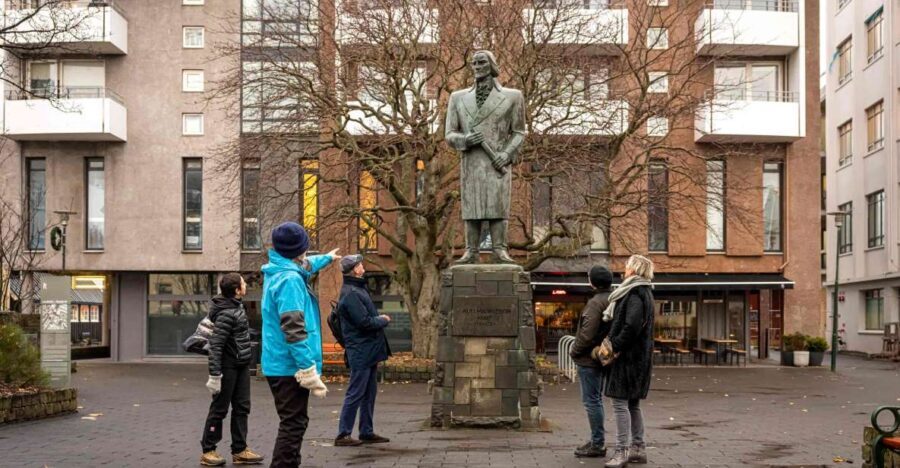
- Harpa Concert Hall, explained simply so you know what you’re looking at right away
- Old-center Reykjavik orientation through landmarks like Alþingi and Hallgrímskirkja
- Lake Tjörnin’s birdlife moment that adds calm to the city-center route
- Local surprises like an elf-home stop you’d miss if you walked straight past
- Laugavegur street time with real-world food and drink pointers
- A short Icelandic lesson so you can pronounce names and say a few useful words
Getting oriented at Ingólfur Square, the real start line
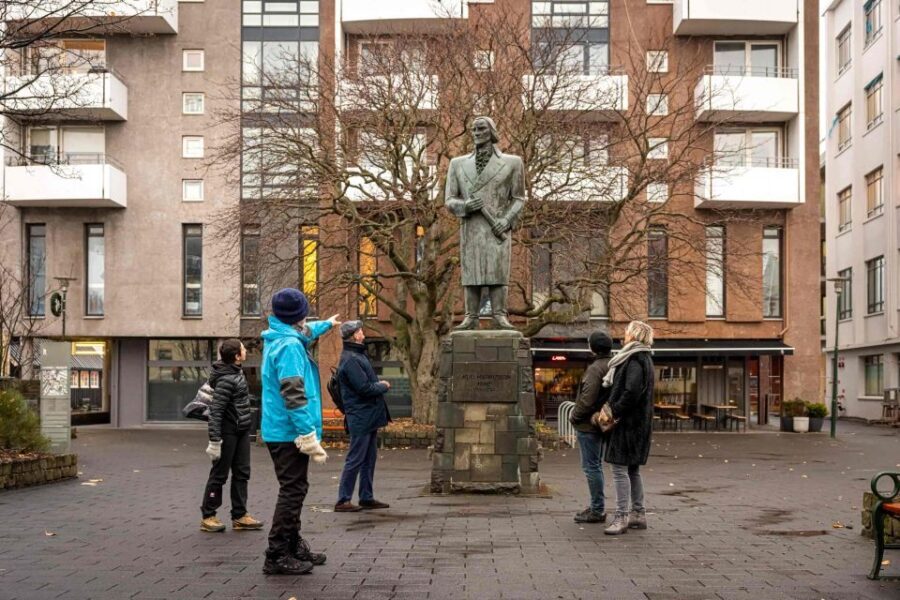
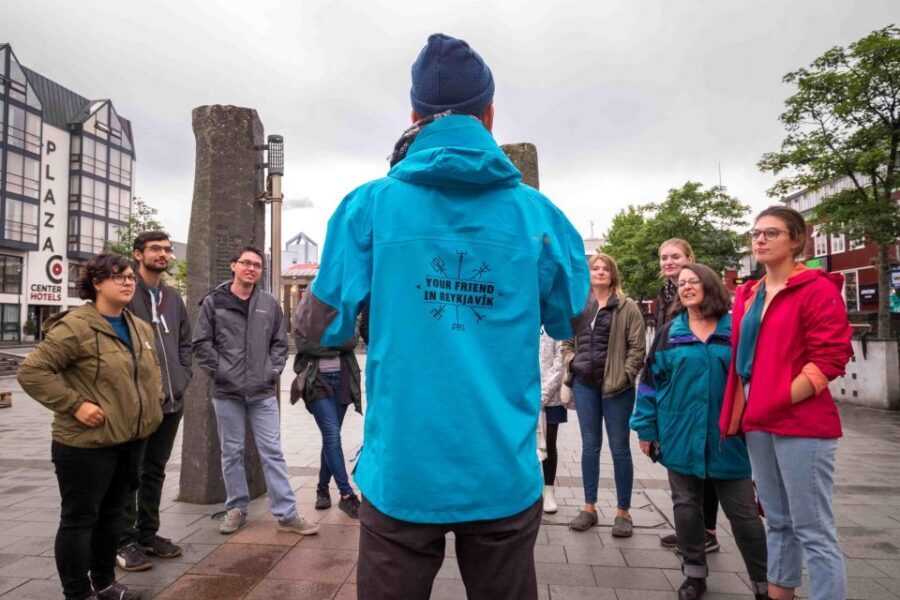
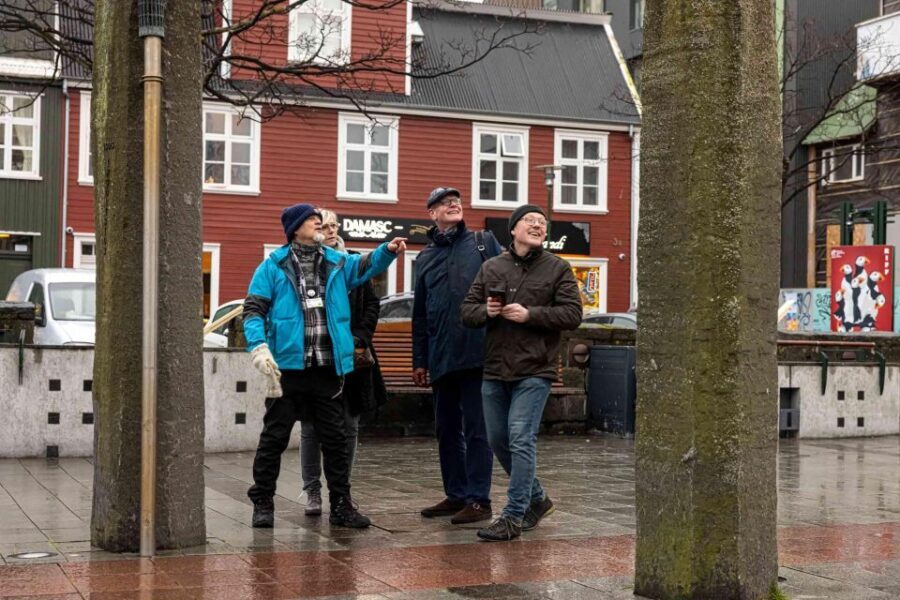
You’ll meet at Ingólfur Square (Ingólfstorg Square) in the center of Reykjavik, by the two tall stone seat pillars. It’s a good meeting point because it’s easy to find from most directions, and it anchors the tour right in the city core near Austurstræti (Austurstræti 1).
This part matters more than it sounds. On a first trip to Reykjavik, you can waste time zig-zagging around because you haven’t built a mental map yet. Starting here sets the route in your head. Even if you forget every detail, you’ll remember where things are relative to each other.
The tour then heads toward Austurvöllur, so you’ll quickly move from “standing around looking at buildings” to “actually understanding how the city is laid out.”
You can also read our reviews of more walking tours in Reykjavik


Austurvöllur and Alþingi: the stop for Iceland’s political pulse
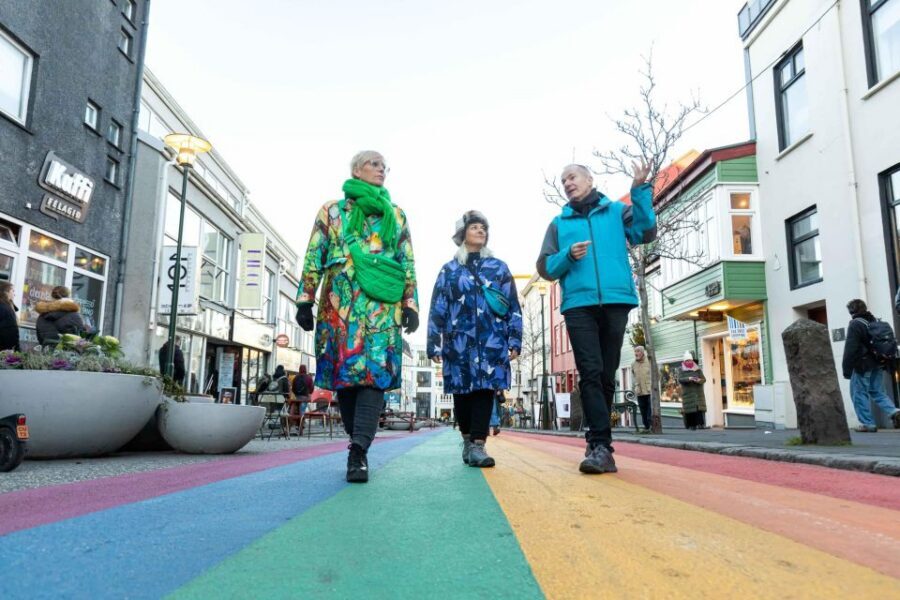
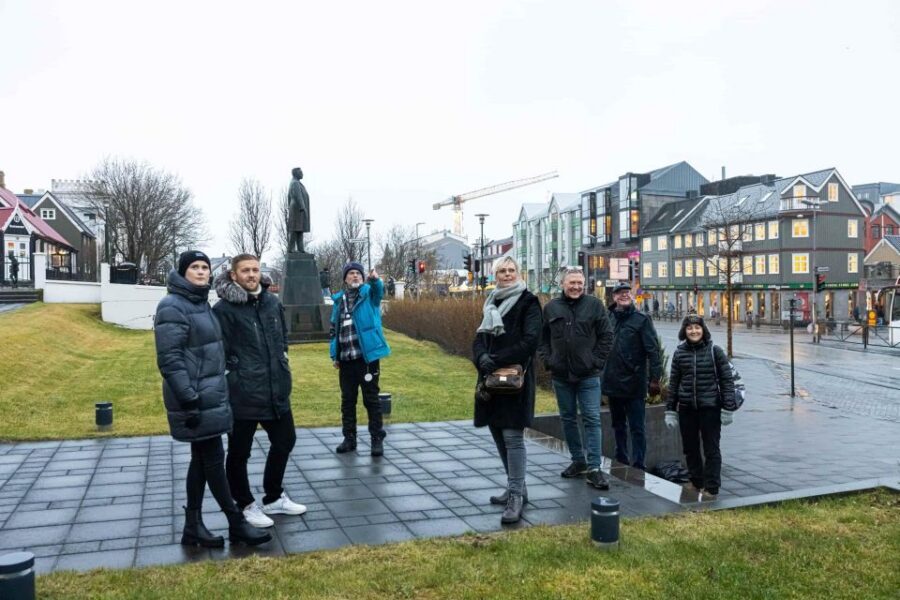
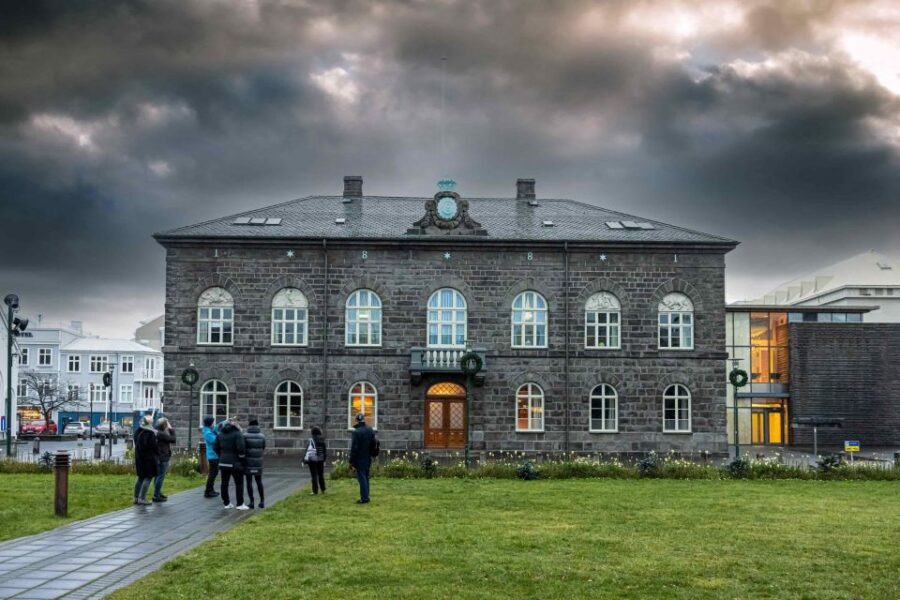
Austurvöllur is one of those spaces where history and daily life overlap. During the walk, you’ll get guided context as you pass through this area, and then you’ll reach Alþingi (the Parliament building).
There’s a photo stop built in here, which is handy because this is one of those locations you’ll want to remember. It’s also a place that helps you understand Iceland beyond geysers and waterfalls. Reykjavik is where the country organizes itself, and Alþingi is one of the clearest symbols of that.
One of my favorite parts of this segment is the way the guide turns what could be dry into something you can picture. Even if you don’t care much about politics, you’ll come away knowing why this area is central to modern Iceland.
Lake Tjörnin and Reykjavík Pond: where birds quiet down the center
Next comes Lake Tjörnin, sometimes referred to as the Reykjavík Pond. You’ll spend about 20 minutes here with a guided walk and stories, which gives you time to slow down and actually look around.
This is a smart stop for first-timers. It breaks up the city-center “look at another big building” rhythm with something calmer: water, paths, and often plenty of birds. The birdlife isn’t a background detail. It helps the tour feel alive, especially on gray days when you need a reason to keep moving.
Practical tip: if it’s windy, this is one of the stops where you’ll feel it. Dress in layers and keep an eye on your footing near the edges. You’ll still get the best views if you take a few moments instead of power-walking through.
A 9 Ægisgarður detour and the elf-home moment
Then the walk shifts to smaller, more local-feeling streets, including Ægisgarður 9. This is where the “Viking guide” theme can become more than a gimmick. The point isn’t to cosplay history. It’s to teach you how to notice details you would normally miss.
You’ll also get a local-style surprise on this tour, including a stop connected to an elf home—an example of how folklore and everyday Reykjavík life can live side by side. If you’ve never heard Icelandic stories tied to real addresses and real streets, this is the moment you’ll start paying attention to signs, shapes, and tiny clues.
I like this part because it makes the city feel personal. Instead of only learning about famous landmarks, you learn how locals read the place they walk through every day.
Harpa Concert Hall: architecture you’ll recognize later
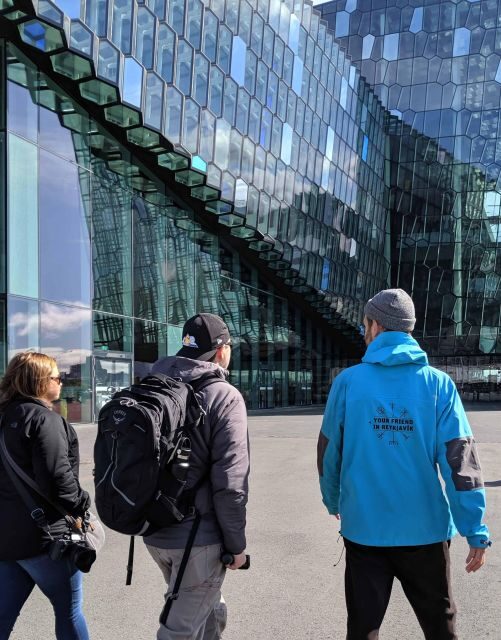
No Reykjavik first-day walk is complete without Harpa Concert Hall. You’ll spend time here with a guided look, about 15 minutes.
Harpa is one of those buildings that can look “just modern” until someone tells you what to look for. During the tour, you’ll get context that makes the geometry and glass feel intentional instead of random. Once you learn the basic idea, it’s easier to spot why locals treat Harpa as more than a concert venue.
Timing also helps. Harpa is a strong stop to warm up your attention span. You’ve already covered history and street life, and now you’re seeing a landmark that’s instantly photogenic—but also worth understanding.
If you finish here (depending on timing and weather), you may be able to grab something warm like hot chocolate or mulled wine at the concert hall area. The drinks aren’t included, but the setting can be a nice reset when it’s cold.





Laugavegur: the main street, plus food and drink tips that save time
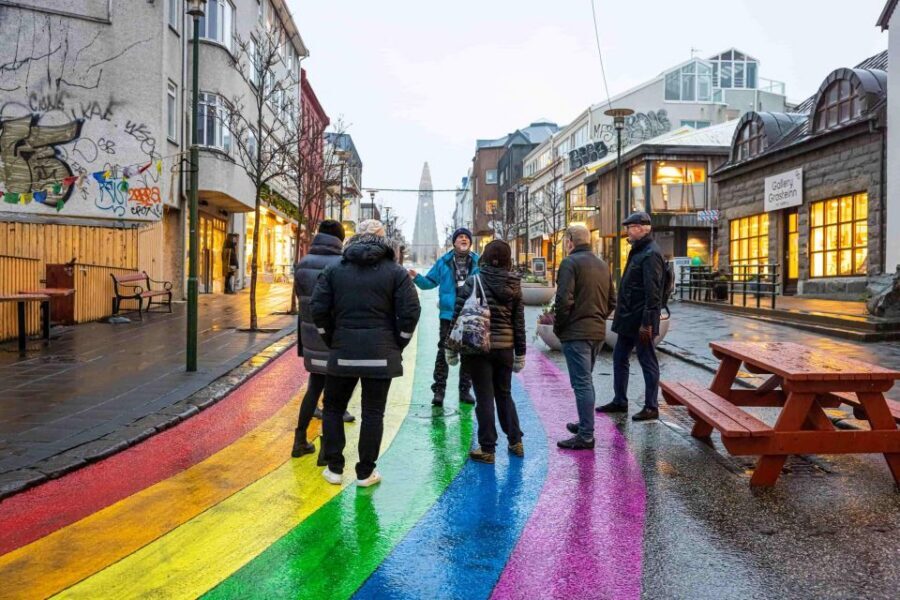
After Harpa, you’ll head to Laugavegur, the city’s main shopping street, with about 20 minutes of walking and sightseeing.
Laugavegur is busy and it can blur together if you don’t know where to look. The guide’s role here is to point out what’s worth your attention and what’s mostly noise. Since the tour includes stops for local recommendations, this is where you’ll likely start building your own plan for the rest of your stay.
You’ll also get practical advice about where to eat and drink, including hints about happy hour-style deals. That part is genuinely useful in Reykjavik because prices can add up quickly, and knowing when and where locals go changes the whole math of your trip.
One more thing: this segment keeps you moving through the real city fabric. Even if you don’t shop, walking Laugavegur with someone who knows the rhythm helps you understand where you can duck into cafés, bars, and stores without losing time.
Hallgrímskirkja Church: the Reykjavik landmark and how to say it
Then you reach Hallgrímskirkja Church, one of Reykjavik’s most recognizable silhouettes. You’ll get guided time here too, around 20 minutes.
This is the stop for both the big visual moment and the small language payoff. The guide will help you with pronunciation, including how to say Hallgrímskirkja—one of those Icelandic words that looks intimidating until someone breaks it down.
Even if you’ve seen photos before, walking up to Hallgrímskirkja is different. It’s a “you’re really here” landmark. It also gives you a focal point for your future self-guided wandering, because you’ll constantly see it from other streets once it’s in your head.
A heads-up: sometimes the church interior can be closed for preparations. If you find yourself outside only, don’t let it ruin the moment. The guided emphasis still helps you appreciate what you’re seeing, and the exterior is still the anchor.
Price and value: what $51 buys you in Reykjavik

At $51 per person for a 2-hour walking tour, the value depends on how you travel.
If you’re the type who likes to hit the highlights plus one or two stories, this price can feel fair fast. You get an expert guide, a route through major city-center sites (Harpa, Alþingi, Hallgrímskirkja, Lake Tjörnin), and a handful of local pointers on food and drink. That combination helps you avoid two common first-trip mistakes: wasting time guessing, and paying for “convenient” meals that turn out to be pricey.
I also like that it’s timed well for a first day. You’re not committing to half a day, and you’re not stuck in information overload. Two hours is enough to build a map, learn a few cultural anchors, and then go enjoy the rest of your trip on your own.
For practical budgeting, remember food and drinks are not included. Still, the guide’s restaurant and bar suggestions can help you spend your money smarter after the tour.
Weather reality: how to dress so the walk stays fun
Reykjavik walks are short on shade and long on exposure. You’ll want weather-appropriate clothing and layers. Even when the forecast looks fine, wind can be the wild card.
Here’s how I’d prep based on what tends to happen in Icelandic weather:
- Wear layers you can adjust, not one thick coat that makes you sweat when you stop.
- Bring gloves if you run cold. You’ll be out long enough for your hands to matter.
- Keep your camera ready, but don’t fight the wind while stopping every 30 seconds. Let the guide pace the photo moments.
Also, keep a little flexibility in your expectations. This tour is built for walking and outdoor stops, so if the weather turns, good guides handle it with pacing and attention—not by canceling your experience.
Who this tour suits best
This is a strong match if:
- It’s your first time in Reykjavik and you want an easy orientation route.
- You like history and mythology, but you want it tied to real places you can point at.
- You want practical eating and drinking ideas for the days after.
It may not be ideal if you:
- Prefer museums over streets and are hoping for lots of indoor time.
- Hate walking in wind and want a shorter, more sheltered experience.
Should you book the Reykjavik Viking walking tour?
If your main goal is to understand Reykjavik quickly—where things are, what landmarks mean, and where to eat or drink without second-guessing—it’s a yes for me.
Book it early in your stay. The tour is designed to help you get your bearings and plan the rest of your Iceland days. And while the Viking theme adds fun, the real payoff is that you leave with a mental map, a few pronunciation wins, and a set of local recommendations you’ll actually use.
If you do book, come prepared for the weather, bring comfortable shoes, and ask questions. The best moments seem to happen when you lean in and interact.
FAQ
Where does the tour meet?
You meet at Ingólfur Square (Ingólfstorg Square) in central Reykjavik, by the two tall stone seat pillars.
How long is the walking tour?
The tour lasts about 2 hours.
Is the tour offered in English?
Yes. The live guide offers English, plus other languages including German, French, and Spanish.
What is included, and what isn’t?
The tour includes an expert guide. Food and drinks are not included, though the route includes suggestions for places to eat and drink.
Is the tour wheelchair accessible?
Yes, the tour is listed as wheelchair accessible.
What if plans change due to weather or timing?
You can cancel up to 24 hours in advance for a full refund, and there’s also an option to reserve now and pay later to keep plans flexible. The tour offers private group options and you can choose the start time for a private tour.