REVIEW · HVERAGERDI
Raufarhólshellir: Lava Falls Adventure Tour
Book on GetYourGuide →Operated by The Lava Tunnel · Bookable on GetYourGuide
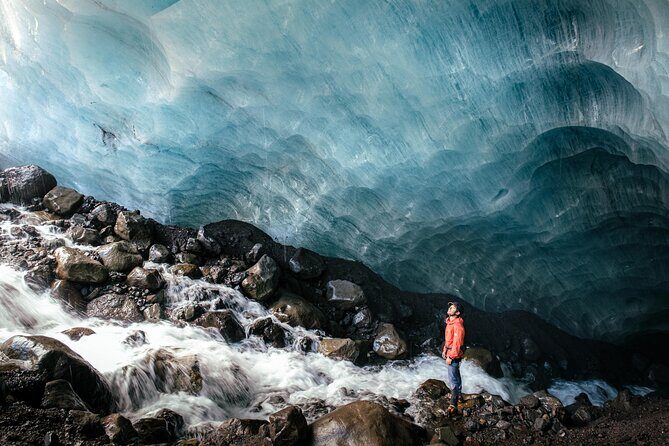
Dark rooms, big geology, real adventure. That’s what you get on the Raufarhólshellir Lava Falls Adventure Tour in southern Iceland, as you head into one of Iceland’s largest lava tubes. You walk inside a system that formed when lava flowed long ago, and you end at a rare spot where the lava falls spill from the cave’s end.
I love two things most. First, you’re not just looking at rocks above ground; you’re walking through a 5,000-year-old lava tube and seeing how lava left its signature in the walls. Second, the experience is guided and properly equipped: helmet, headlamp, and an expert caving guide who keeps the pace and answers questions in a way that clicks underground, whether your guide is Anna, Agatha, Sóley, or Alizée.
One thing to think about: this is more extreme than a normal hike. You’ll cross big boulders and uneven ground in the dark, and you need solid, ankle-support hiking boots to do it safely.
In This Review
- Key things you’ll notice on this lava tube tour
- Raufarhólshellir in Southern Iceland: why this lava tube tour feels different
- Before You Step In: gear, footwear, and the ankle-support rule
- Entering the lava tube: what the first stretch really asks of you
- The 3–4 hour underground trek: distance, timing, and the dark boulder workout
- Lava formations and the guide’s science moments (basalt, glass, graphite)
- The end payoff: reaching the lava falls at the source of flow
- Small group caving in English: why max 8 matters
- Terrain level: balance, fitness, and who should think twice
- Price and value at $227 per person
- Practical tips to make the experience smoother
- Should you book the Raufarhólshellir Lava Falls Adventure Tour?
- FAQ
- How long is the Lava Falls Adventure Tour?
- What’s included in the tour price?
- What should I bring for the tour?
- Do I need prior caving experience?
- What are the age and safety limits?
- Is there a cancellation option or pay-later plan?
Key things you’ll notice on this lava tube tour
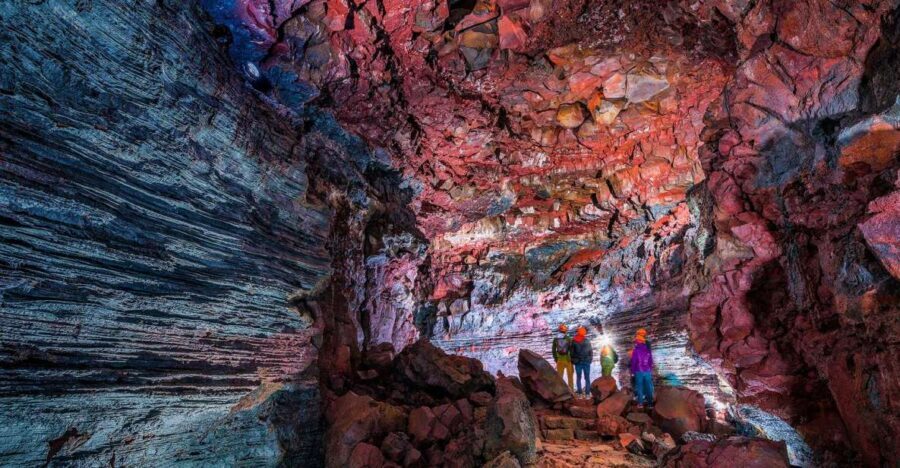
- Helmet and headlamp included, so you’re not trying to “wing it” in the dark
- About 1.3 km inside the lava tube, with real walking time underground (often 3–4 hours)
- Crampons in winter, which tells you the surface can get slick
- Lava formations plus a lava-falls finale at the cave’s end, in a few rare locations worldwide
- Small groups (max 8) with an English-speaking caving guide
- Boulder-hopping terrain, so your boots and balance matter more than your fitness brag
Raufarhólshellir in Southern Iceland: why this lava tube tour feels different
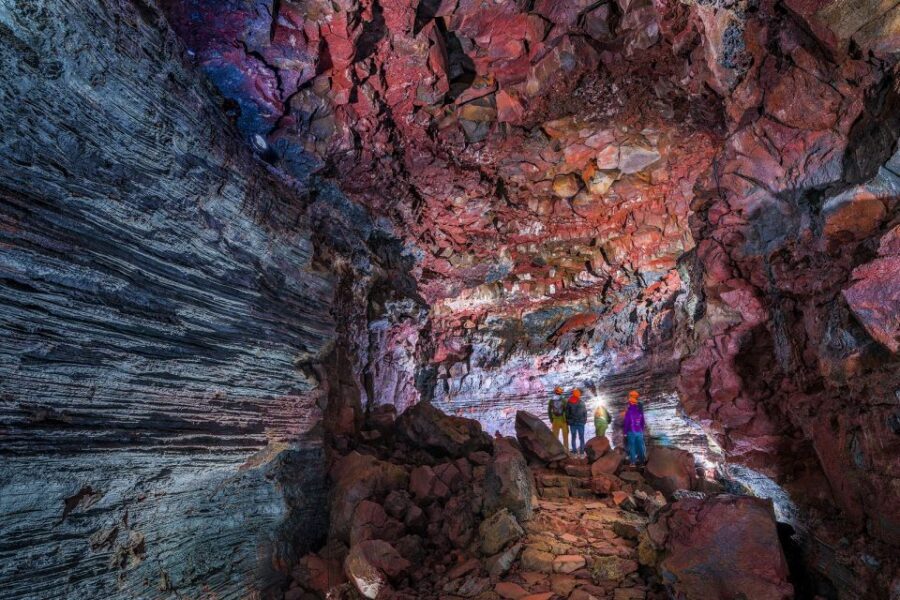
If you’ve seen volcanic scenery in Iceland before, you might expect dramatic views outside. This tour gives you a different kind of drama: quiet, dark geology that you can only experience from inside the lava tube itself. Raufarhólshellir is one of Iceland’s largest lava tubes, and that scale changes how the walls feel—taller, broader, and more “present” than most outdoor viewpoints.
What makes it special is the combination of the walk and the payoff. You’re trekking through a tunnel that’s thousands of years old, and the route leads to an endpoint tied to the lava’s original flow. Then, at the end, you get the rare formation: lava falls. That’s the moment you came for, and it happens after you’ve already earned it with a dark-hike that keeps your focus sharp.
It’s also an experience that leans practical, not theatrical. You’re given the safety gear you need, you follow a guide through difficult terrain, and you explore with your headlamp cutting through blackness. No big performance, just a guided underground walk that turns geology into something you can physically move through.
You can also read our reviews of more tours and experiences in Hveragerdi.

Before You Step In: gear, footwear, and the ankle-support rule
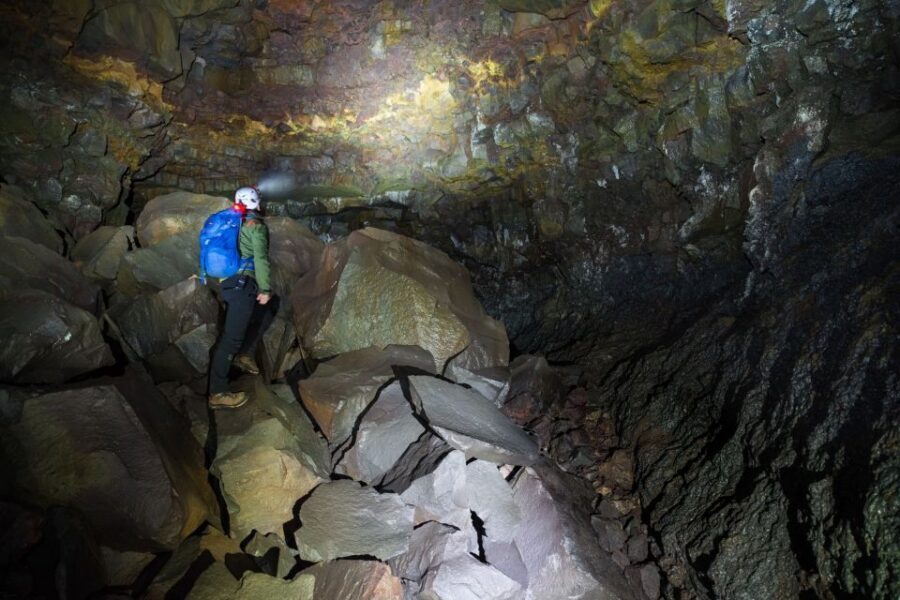
This is where you should take zero chances. The tour isn’t suitable for flip-flops, fashion shoes, or whatever you happen to be wearing that day. The activity requires hiking shoes with ankle support, and high-heeled shoes aren’t allowed.
Here’s the reason: you’re moving over large boulders and uneven ground. In a lava tube, footing can be irregular and slippery, especially in colder months. Guides provide helmet and a headlamp, but they can’t “provide traction” for you. If your boots don’t hold your ankle and keep you stable, you’ll feel it quickly.
In winter, you’ll get crampons, which is a helpful detail. It means they anticipate icy or slick conditions, not just cold air. So even if you’re a confident walker, treat this like traction matters first and speed comes second.
Also bring a jacket and wear comfortable shoes. And keep food and smoking/vaping out of the cave. There are bathrooms in the service building before and after, so you’re not stuck handling anything awkward mid-tour.
Entering the lava tube: what the first stretch really asks of you
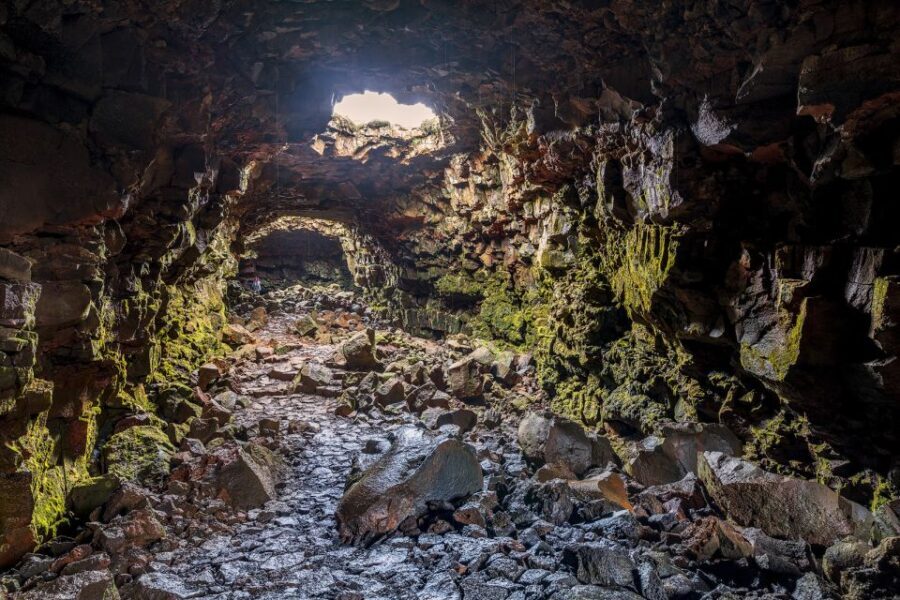
Once you check in at the service building at the Lava Tunnel (arrive about 15 minutes early), the tour quickly becomes a “ready, steady, step” situation. You’ll get your helmet and headlamp, and you’ll follow your guide into the tube.
From the start, the adventure feels like caving done the right way: you’re not just walking straight down a corridor. You’re moving through a space where the ground changes under you, and your visibility comes from your light. You’ll be navigating in a way that forces you to slow down and pay attention. That’s not just for safety—it’s also how you notice the details in the rock.
The guide sets the tone with pacing and stops. People talk about guides making time for questions, and that matters here because the underground isn’t a place where you can casually glance and move on. The best moments happen when your guide points out features in the basalt and explains what they mean—then gives you a minute to really see.
No prior caving experience is required, but don’t confuse that with “easy.” The tour is labeled as extreme in terms of terrain. A good sense of balance and overall fitness level are part of the deal.
The 3–4 hour underground trek: distance, timing, and the dark boulder workout
The tour runs about 3 hours, with average underground time between 3 and 4 hours depending on how fast your group moves. Inside, you’ll cover more than just a short look around—there’s an overall distance of over 1.3 kilometers inside the lava tube.
What you should expect in motion:
- walking and scrambling over uneven ground
- stepping across large rocks and boulders
- moving up and down hills inside the cave
- staying alert because the lighting and footing demand it
This is why ankle-support boots matter so much. The goal isn’t speed. The goal is steady steps with correct balance. If you’re the person who charges uphill everywhere, you might find yourself slowing down fast once you’re in the tube.
Also, the cave is quite large, but the tour still isn’t recommended if you’re claustrophobic. Even without tight crawling, you’re underground in a confined environment where you lose outdoor reference points. If you already know that tight spaces stress you out, treat that as a deciding factor.
Finally, there’s a quiet rhythm to the tour: headlamp on, move carefully, stop when the guide needs you to look. In many underground experiences, you lose track of time. Here, that’s part of why people remember it: the tour keeps you engaged while your body does the work.
Lava formations and the guide’s science moments (basalt, glass, graphite)
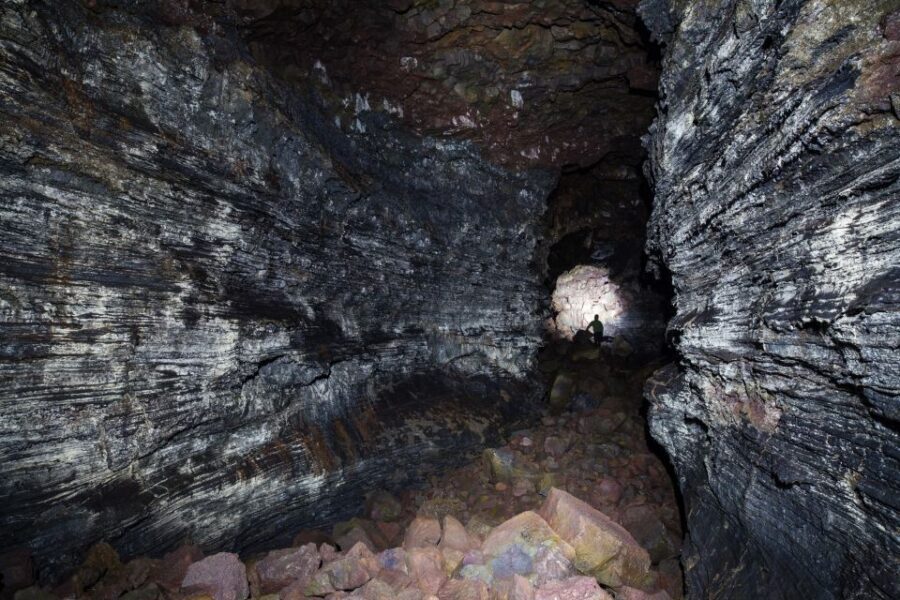
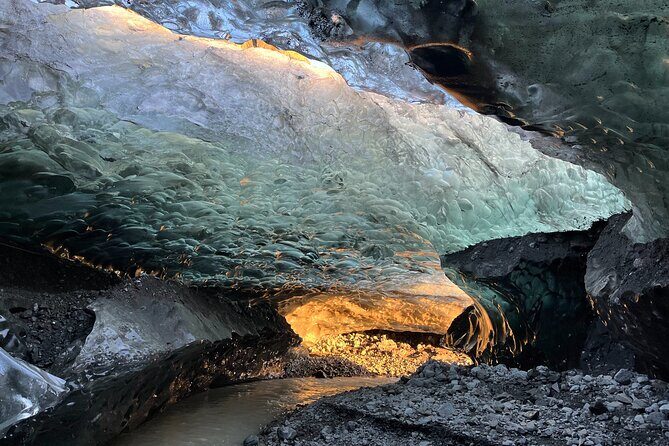
The coolest part of a lava tube isn’t only the fact that it exists. It’s what you learn while you’re inside it. During this tour, you’ll see lava formations across the cave walls, and your guide explains how lava flowed and what that flow left behind.
You’re likely to hear about basalt and how different types of material formed. Some guides go beyond the basics, pointing out details people don’t always expect to notice underground. For example, there’s mention of glass and graphite-like stone features, plus small “wow” bits that make the science feel personal rather than textbook.
And yes, kids can have fun here too, as long as they can manage the walking. One guide-led outing included visiting all three ends of the lava tube and an extra dead end where the low section requires crawling to reach the top. For a younger participant, that can turn into a challenge-game. For an adult, it can feel like a workout disguised as exploration.
So the “science moment” isn’t separate from the adventure. It’s built into your route—stops happen because there’s something worth seeing right there where you’re standing.


The end payoff: reaching the lava falls at the source of flow
At the end of the cave, the experience shifts from “look around and learn” to “wait for the reveal.” The lava falls are the rare formation that shows up at the cave’s endpoint, tied to the source of the underground flow.
This is why you should mentally plan for patience. You don’t just walk to a view. You work through dark terrain first, and the lava falls are the reward for making it through the tube’s length. It’s also why this particular tour is different from quick show-cave style trips: you get enough time underground that you stop rushing and start actually seeing.
In longer options, you may visit multiple ends of the lava tube and even an extra dead end. In that case, the “falls finale” can feel bigger because you’ve already explored other sections and learned how the tunnel’s story changes from point to point.
One practical tip: bring your attention, not just your eyes. When you reach the lava falls area, keep your footing while you look. The best photos happen when you’re stable, not when you’re balancing mid-step with your headlamp tilted.
Small group caving in English: why max 8 matters
This tour runs in small groups of up to 8 people, led by an expert caving guide and conducted in English. That size is a sweet spot underground. Big groups create bottlenecks on boulder fields and make it harder for the guide to stop and answer questions without rushing everyone else.
Because the group stays small, the guide can manage pacing and safety more comfortably. Guides can also guide your attention: where to step next, when to pause, and which rock details are worth your time.
You’ll see why people mention specific guides by name. The ones worth seeking out are the guides who balance motion with explanation—quick, professional, and able to respond to questions even when you’re standing on tricky footing. Having that kind of leadership is part of what makes this experience feel “real adventure” rather than “guided shuffle.”
Terrain level: balance, fitness, and who should think twice
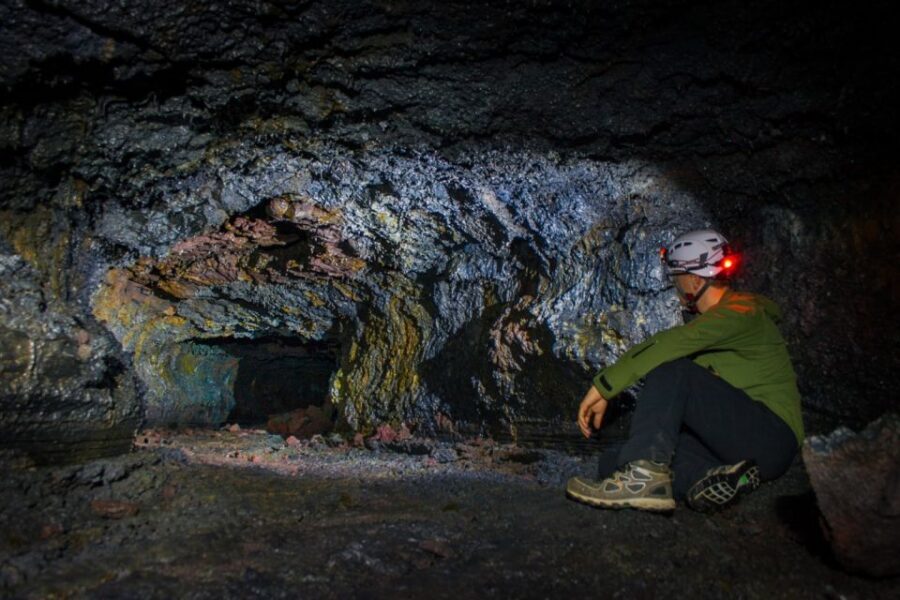
Let’s be blunt in a helpful way: this is not a gentle stroll. The tour requires traversing difficult terrain, including big rocks and up-and-down sections. It also requires a good sense of balance and overall fitness.
It’s also not ideal for everyone based on safety and comfort needs:
- not recommended for people who may suffer from claustrophobia
- not suitable for pregnant women
- not suitable for people with mobility impairments
- not suitable for people with heart problems
If you know you’re sensitive to enclosed spaces, or if your mobility is limited on uneven ground, this is the moment to choose another Iceland adventure. Underground caving can be unforgettable, but only if your body and mind feel steady inside the dark.
If you’re generally fit, have comfortable ankle support boots, and can keep your focus while moving carefully, you’ll likely find it a thrilling day—not just an activity, but a story you’ll talk about later.
Price and value at $227 per person
At $227 per person for about three hours, the price isn’t bargain-bin. But it can be fair value if you match it to what you’re actually buying: an expert-guided underground caving experience in one of Iceland’s major lava tube systems, with helmet and headlamp included, plus winter crampons when needed.
You’re also paying for risk management. This tour isn’t simply “walk in and walk out.” It involves boulders, uneven steps, dark navigation, and a guide who knows how to keep a small group safe. That’s the value piece people feel most strongly when the tour is done well—your energy goes into experiencing the cave, not worrying about gear or routes.
And the payoff is tangible. The lava falls at the cave’s end are rare. You’re not just paying for access. You’re paying for the sequence: the walk through the lava tube, the formations along the way, and the final view that makes the whole thing click.
If you’re deciding between a shorter and longer version, consider this: more time underground typically means more exploration and more chance to reach the different endpoints. In longer outings, people talk about getting to all three lava falls and an extra low dead end that involves crawling—so the “more time” versions can deliver a deeper sense of achievement.
Practical tips to make the experience smoother
A few small choices can make a big difference in a cave like this.
- Wear real hiking shoes with ankle support. Do not compromise.
- Bring a warm jacket even if you think you’ll be fine. Underground temperatures can feel cooler once you stop moving.
- Keep your expectations realistic about pace. In a dark boulder environment, slow is safe.
- Plan to arrive on time—check in at the service building, and get there about 15 minutes early.
- If you’re traveling with a teen or young explorer, understand that some sections can require scrambling or crawling in low areas on longer routes.
Also, don’t plan a snack stop during the cave time. Eating and smoking/vaping aren’t allowed inside. The bathroom is available before and after at the service building, so handle that early and you’ll stay focused.
Should you book the Raufarhólshellir Lava Falls Adventure Tour?
Book it if you want a hands-on underground Iceland experience and you can handle walking over boulders in darkness. If you’re reasonably fit, steady on uneven ground, and you own proper ankle-support hiking boots, this is one of the more memorable ways to experience Iceland’s volcanic story because you see lava’s handiwork from the inside.
Skip it if you’re claustrophobic, have mobility limitations, are pregnant, or have heart problems. Also skip it if you don’t feel confident with uneven footing. This tour isn’t built for forcing it.
If you’re on the fence, think of it like this: you’re not buying an “attraction.” You’re buying a guided caving workout with a rare payoff. For the right person, it’s exactly the kind of off-the-beaten-path adventure that makes Iceland feel personal.
FAQ
How long is the Lava Falls Adventure Tour?
The tour lasts about 3 hours. The time spent underground is usually between 3 and 4 hours, depending on how fast your group moves.
What’s included in the tour price?
You get a guided tour in English, a helmet and headlamp, and crampons if you’re going in winter.
What should I bring for the tour?
Wear comfortable shoes and bring a jacket. You must wear hiking shoes with ankle support, and high-heeled shoes are not allowed.
Do I need prior caving experience?
No prior caving experience is required. That said, it’s still an extreme activity with difficult terrain, boulders, and up-and-down hills, so a good sense of balance and overall fitness are important.
What are the age and safety limits?
The minimum age is 12. The tour is not suitable for pregnant women, people with mobility impairments, people with claustrophobia, and people with heart problems.
Is there a cancellation option or pay-later plan?
Yes. You can cancel up to 24 hours in advance for a full refund. You can also reserve now and pay later, keeping your plans flexible.