REVIEW · HVERAGERDI
Raufarhólshellir Lava Tunnel: Underground Expedition
Book on GetYourGuide →Operated by The Lava Tunnel · Bookable on GetYourGuide
A lava tube tour feels like stepping off Earth. The Raufarhólshellir underground expedition takes you into one of Iceland’s best-known lava tubes, formed more than 5,000 years ago. You’ll walk through rough, volcanic terrain guided along a footbridge route while your guide explains what you’re seeing and why it formed that way.
I especially love the moment when they turn off the lights and you get a real sense of pitch-dark silence. I also love how the guides connect the rocks to stories, from geology to fun behind-the-scenes tales that even nod at Hollywood-style adventures.
One thing to consider: the path can be uneven and slick, so you’ll want sure footing. If you’re sensitive to tight spaces with groups nearby, know that some tours feel a bit crowded inside the tunnel.
In This Review
- Key highlights at Raufarhólshellir Lava Tunnel
- Raufarhólshellir Lava Tunnel in one hour: what you actually do
- Getting ready: helmets, headlamps, and winter crampons
- Entering the tunnel: rough ground, footbridges, and volcanic textures
- The guided portion: geology + stories that make it stick
- The pitch-black moment: what to expect when they turn off the lights
- Walk back at your own pace: time for photos and close-up looking
- Price and value: is $73 worth your time?
- What to wear: sure footing beats fancy outfits
- Who should book this lava tunnel expedition?
- Should you book the Raufarhólshellir Lava Tunnel?
- FAQ
- FAQ
- How long is the Raufarhólshellir lava tunnel tour?
- Is the tour guided, and is it offered in English?
- What equipment is included?
- Do I need crampons in winter?
- Is the cave totally dark at any point?
- Where do I meet for the tour?
- What’s the cancellation option?
Key highlights at Raufarhólshellir Lava Tunnel
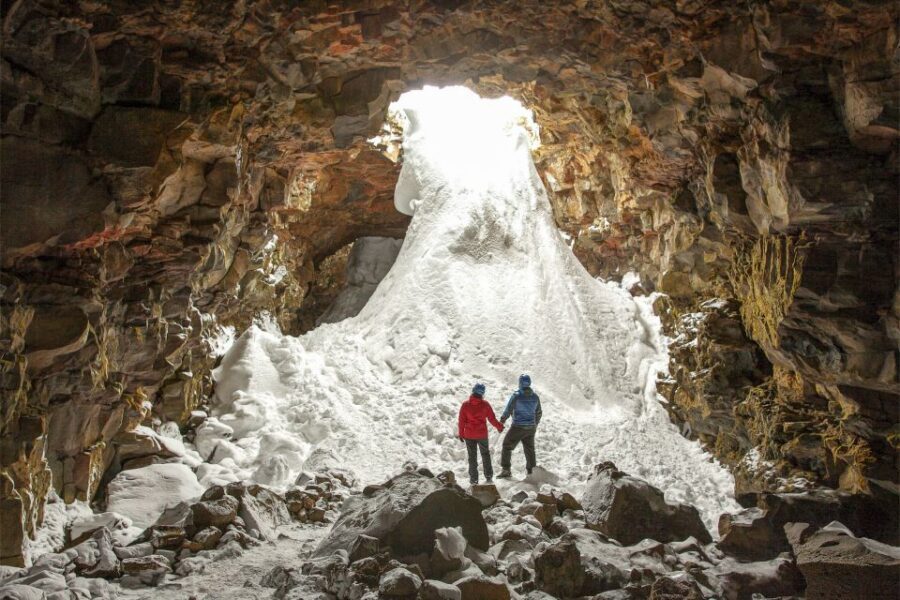
- Total darkness, for real: lights go off so you experience near-complete blackness.
- A guided route through the footbridges: you follow a maintained line while learning the geology.
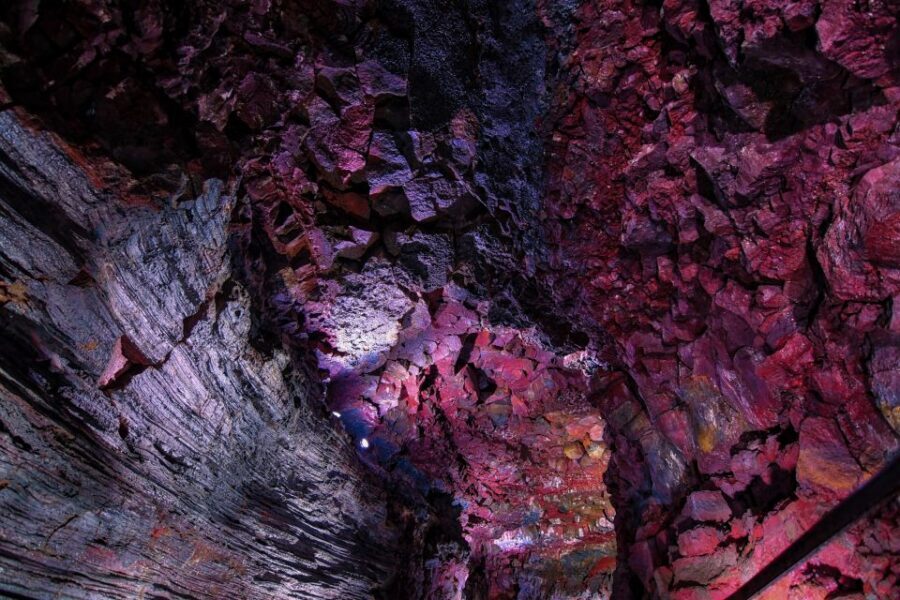
- Colors you don’t expect underground: lava textures shift from spot to spot as light catches different minerals.
- Fun, story-driven explanations: guides often mix science with entertaining cave history.
- Winter-ready equipment: helmets and headlamps are included, with crampons provided in winter.
- Limited time, on purpose: the tour is about 1 hour, with some time for photos at the end.
Raufarhólshellir Lava Tunnel in one hour: what you actually do
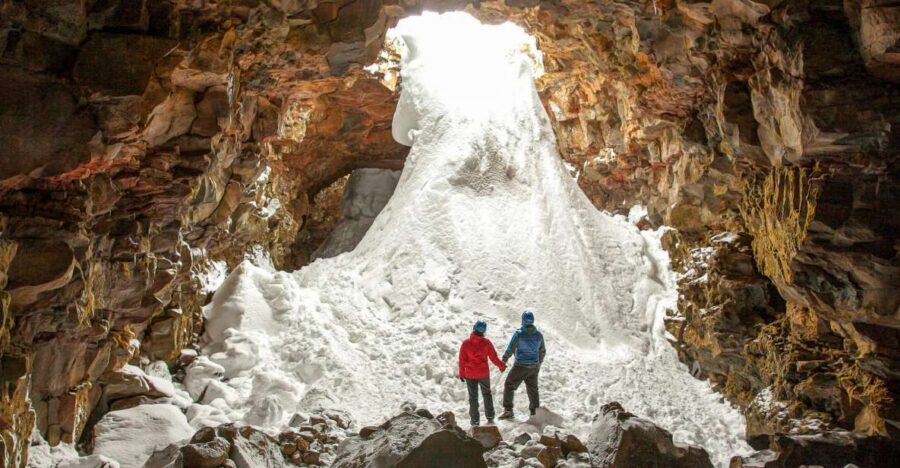
This is a straightforward, high-impact Iceland activity. You start at Raufarhólshellir lava tunnel and spend roughly 1 hour moving through the tube while a live guide brings the place to life.
The tour has two phases. First, you do the guided walk where the route matters and your guide points out formations you’d miss on your own. Then, you’ll have a short window to slow down, look closely, and take photos as you head back.
That tight timing is part of the value. In one hour you get a guided lesson, a physical walking experience, and the big black-out moment. It’s also a good option if the rest of your day is packed with waterfalls, glaciers, or a road trip back toward Reykjavík.
You can also read our reviews of more tours and experiences in Hveragerdi.

Getting ready: helmets, headlamps, and winter crampons
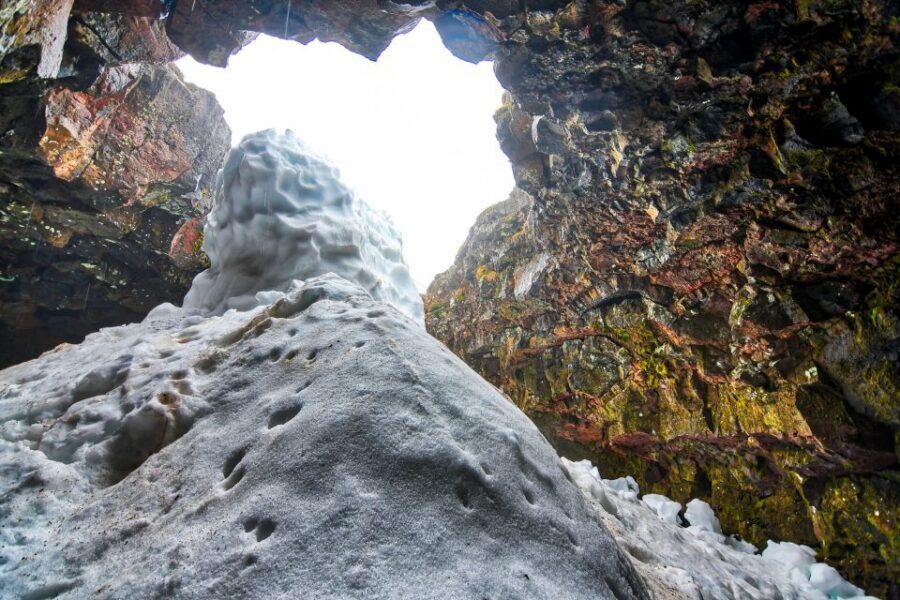
You don’t need to bring cave gear. Your tour includes a helmet and headlamp, which makes the lighting situation manageable and keeps your hands free for steady walking and photo-taking.
In winter conditions, you’ll get crampons as part of the tour. This matters because the cave floor and edges can be slick, especially where ice and meltwater cling to the rocks. If you’re visiting in colder months, plan your timing so you don’t rush your boot-up process.
A helmet is not just safety here—it changes how you experience the cave. With your light fixed to your head, you can see textures more clearly as you move from one section to another, and you won’t have to juggle a flashlight.
Entering the tunnel: rough ground, footbridges, and volcanic textures
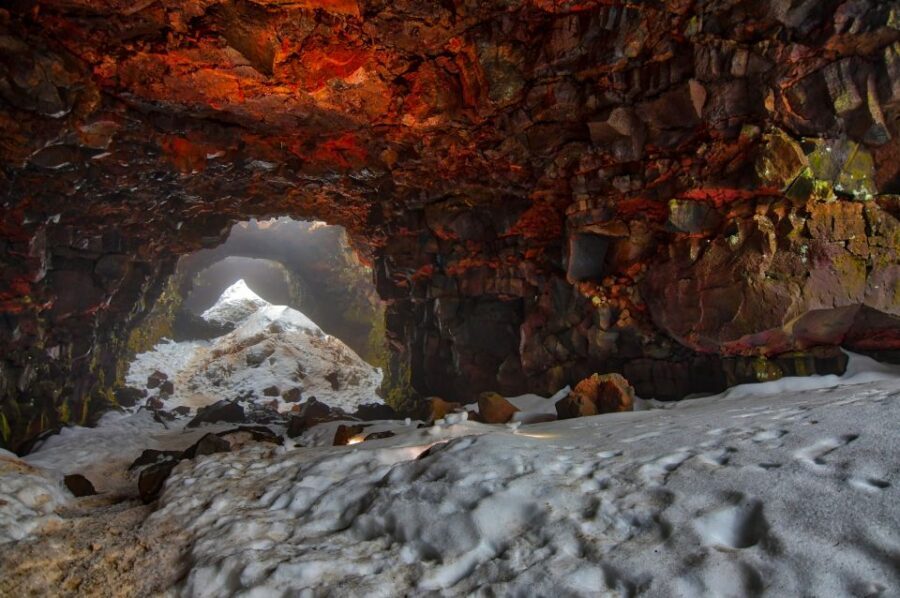
Inside the Raufarhólshellir lava tube, the terrain can be rough. That’s normal for a natural lava channel that still carries the scars of how it cooled—so you’ll want to take it slow and keep your eyes on your footing.
Your guide leads you along the maintained route, including a footbridge pattern. In practice, it means you’ll keep moving but won’t feel lost, and you’ll stop at key spots to understand what you’re seeing.
This is where the “lava tube” idea turns real. You’re not looking at a polished show cave. You’re walking through a genuine volcanic feature with textured walls, mineral stains, and color shifts that change as your headlamp angle changes.
If you’re hoping for icicles and icy shapes, you’re in luck in the right season. Some past tours described ice accumulation and ice stalagmites, especially in late spring and winter months.
The guided portion: geology + stories that make it stick
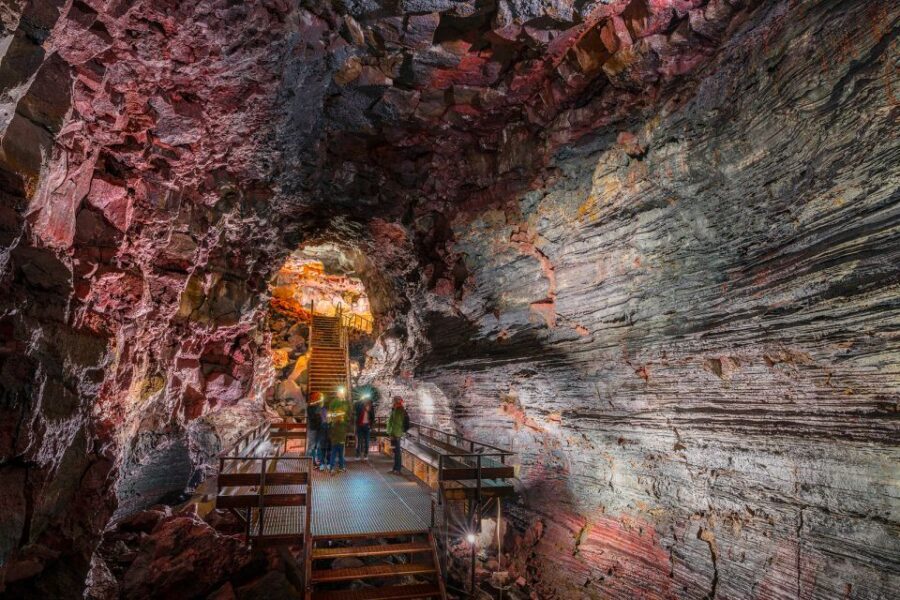
The best part of this tour is how the guide turns rocks into a clear story. Guides often explain how lava tunnels form—then they connect the tunnel’s details to what you’re looking at right now in the cave.
The guide also brings the human side. Many tours include entertaining cave-history tidbits, including references to Hollywood adventures. That mix makes the time go quickly without turning the walk into a lecture-only event.
I like when a guide can name the “what” and the “why” without slowing you down. In feedback from past groups, guides such as Alex, Dmitri, Demetris, Elisa, Benjamin, Juan, Jose, and Anna got praised for combining solid explanations with jokes and a light tone.
If you want a fun, science-friendly guide, look for someone who takes questions and points out details along the way. Even when you think you’re just walking, the guide’s stops teach you how to read the cave.
The pitch-black moment: what to expect when they turn off the lights
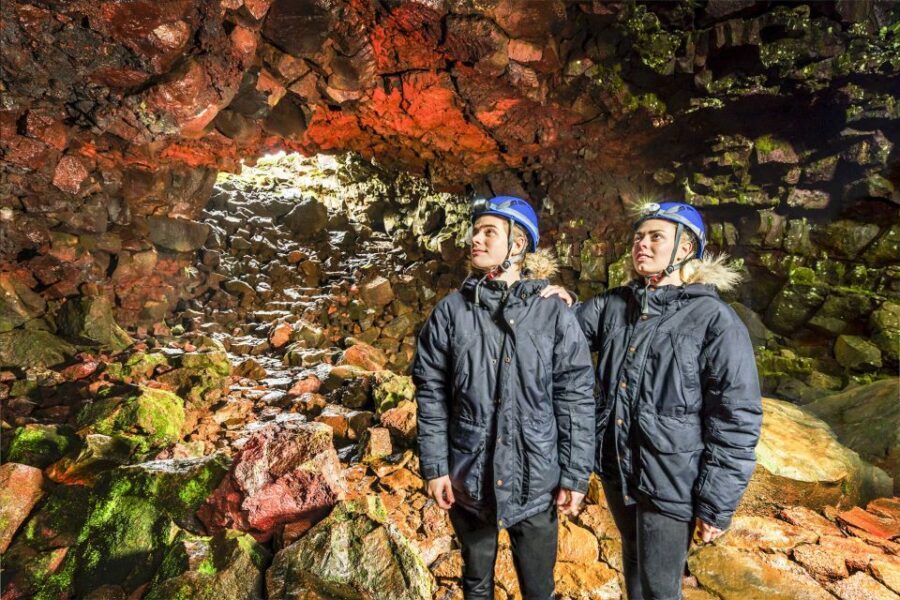
This is the signature event: at some point, the guide will turn off the lights so you can experience near total darkness. It’s short, but it hits hard because your brain has to recalibrate when you can’t rely on sight.
To prepare, keep your expectations realistic. You’re still in a guided group, so you won’t be left to wander. But you’ll feel how quiet and dark a cave is when every headlamp shuts off at once.
This moment also makes photos harder, which is part of the point. The value is the sensation and the contrast: you look at glowing minerals and textures, then the cave turns into true darkness. Some visitors specifically call this the most memorable part of the entire trip.
If you’re claustrophobic or uncomfortable in low light, it’s worth thinking twice. The tour is designed for a range of comfort levels, but the black-out is real and brief.



Walk back at your own pace: time for photos and close-up looking
You’ll get more than just a “follow the leader” experience. Many tours include a bit of time toward the end where you can move a little more freely and spend extra moments on photos.
That “slow down” time matters because lava tube details are subtle. Color isn’t uniform; textures can change even over short distances. When your headlamp sweeps across the wall, you start seeing banding, mineral shifts, and small ice features that stand out.
There’s a practical downside too. Some groups report there isn’t a ton of quiet time in the cave itself, and others mention that larger groups can feel tight once you’re inside.
So I’d aim for patience. If you’re a serious photographer, consider that you’ll get your best shots where the guide pauses and where people naturally spread out. If you’re sensitive to crowding, choose off-peak times if your schedule allows.
Price and value: is $73 worth your time?
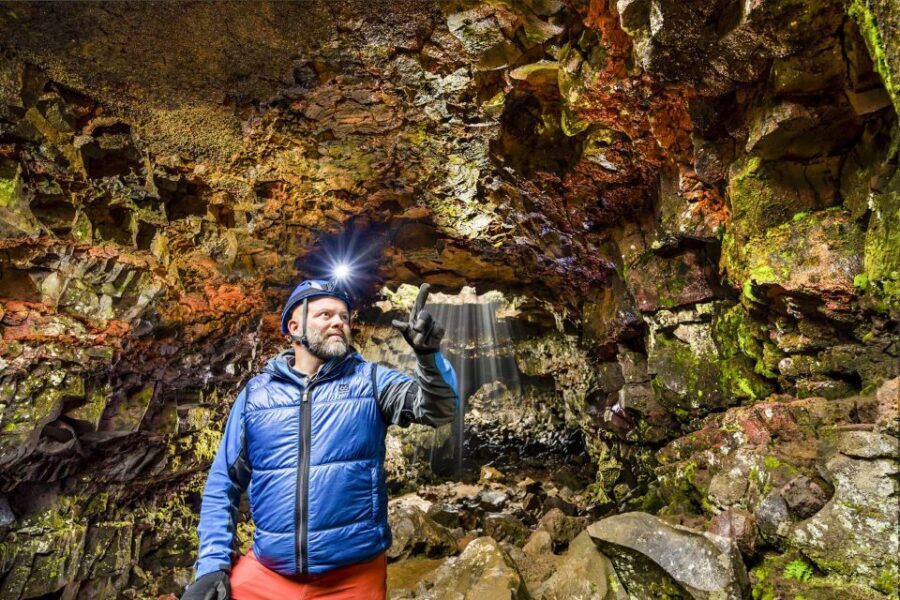
At about $73 per person for roughly 1 hour, this isn’t a “cheapest activity in Iceland” deal. But it does include a lot that you’d otherwise have to handle yourself: guided interpretation, helmets, headlamps, and (in winter) crampons.
That’s what makes it feel like good value. You’re not just buying entry—you’re buying a short, focused underground lesson plus safety support and gear.
I also like the timing. One hour means you can fit the tour without losing a full chunk of a driving day. It’s the kind of activity that pairs nicely with other Southern Region stops, letting you spend daylight outside and use the cave hour as a weather-proof break.
A small caution: the cave walk is short. If you’re hoping for a long trek deep into darkness, this format may feel brief. But if your goal is a dramatic, well-explained lava tube experience, the duration is well-matched.
What to wear: sure footing beats fancy outfits
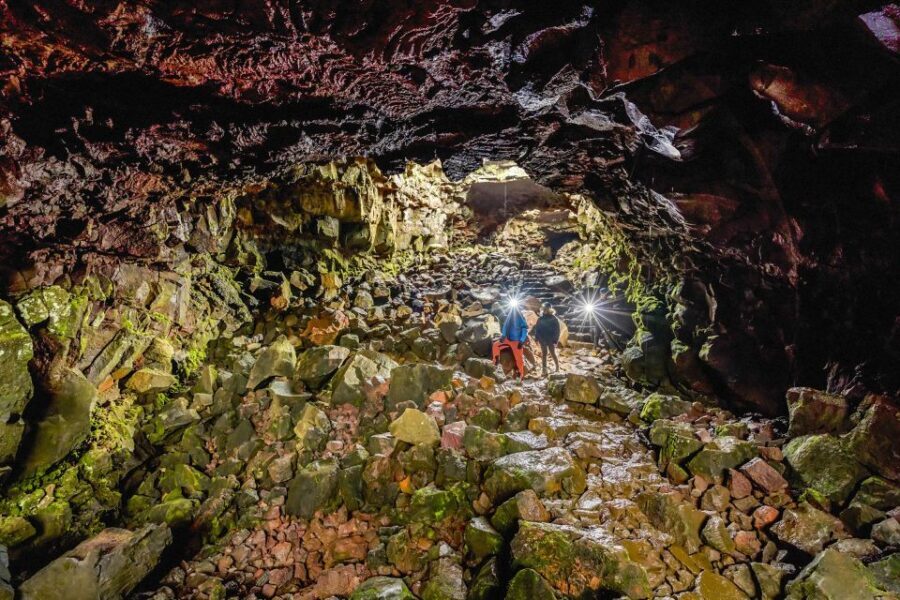
This is an activity where your shoes matter more than your outfit. Past visitors have directly advised good walking shoes, especially because surfaces can be slick and uneven.
In winter, assume you’ll be in crampons at some point, which helps, but you still need steady boots with grip. Wear layers because you’re moving in a cool underground environment, and Iceland weather aboveground can swing quickly.
Also, keep your hands free. The headlamp system is designed for it, but you’ll move better if your camera gear is secured and you can adjust as needed.
If you have any mobility concerns, focus on comfort and balance rather than speed. The tour is guided, but it’s still inside a natural lava tube with real-world footing.
Who should book this lava tunnel expedition?
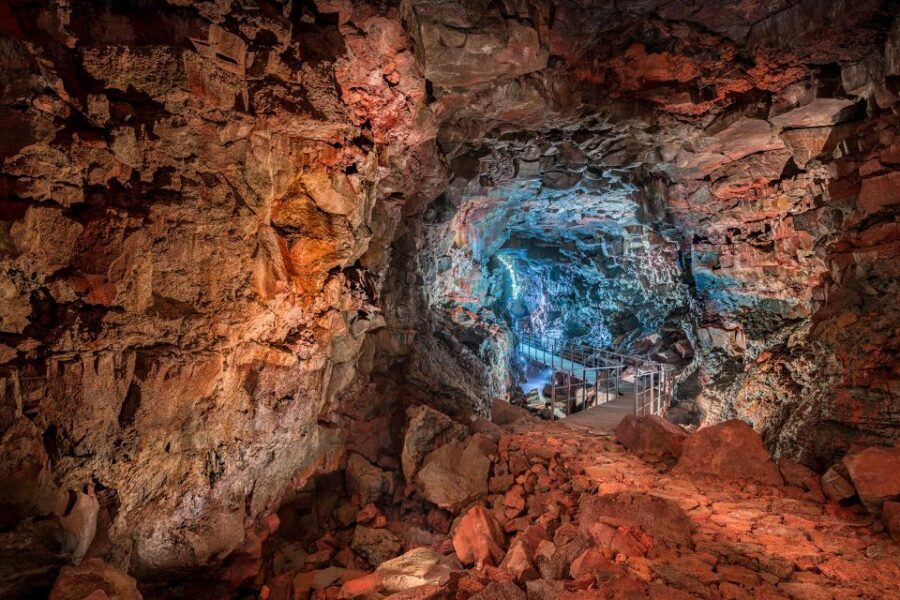
I think this tour is ideal if you want a memorable Iceland experience that’s not too long and doesn’t require climbing gear or special planning.
It’s a great fit for:
- First-timers who want to see an authentic lava tube feature close to Reykjavík’s road network
- People who like geology explanations but don’t want a long academic session
- Anyone who wants a weather-proof indoor adventure that still feels dramatic
- Families and groups who benefit from a maintained route and guided stops
It may be less ideal if:
- You dislike uneven footing and low light
- You’re extremely sensitive to crowds inside enclosed spaces
- You want a long, self-paced exploration of the cave rather than a structured hour
Should you book the Raufarhólshellir Lava Tunnel?
If you like science with a sense of humor, and you want the real experience of walking inside a lava tube with a true darkness moment, I’d book it. For the price, you get the essential gear, a guided interpretation, and a memorable sensory highlight that’s hard to replicate elsewhere.
If you’re unsure, base your decision on one question: can you handle slick, uneven cave surfaces for about an hour? If yes, you’ll likely walk away feeling like Iceland isn’t just volcanoes on a postcard—it’s a living underground world.
FAQ
FAQ
How long is the Raufarhólshellir lava tunnel tour?
The tour lasts about 1 hour.
Is the tour guided, and is it offered in English?
Yes, it’s a live guided tour in English.
What equipment is included?
You receive helmets and headlamps for the visit.
Do I need crampons in winter?
Crampons are provided in winter.
Is the cave totally dark at any point?
Yes. The lights are turned off so you can experience pure darkness for a short time.
Where do I meet for the tour?
The meeting point is Raufarhólshellir lava tunnel on Þorlákshafnarvegur.
What’s the cancellation option?
Free cancellation is available up to 24 hours in advance for a full refund.