REVIEW · REYKJAVIK
From Reykjavik: Whale Watching Tour by Speedboat
Book on GetYourGuide →Operated by Katla Whale Watching · Bookable on GetYourGuide
Whales, right off Reykjavik. This 2-hour RIB ride into Faxaflói Bay is built for close whale viewing and warm waterproof gear, while you hunt for puffins on the islands; the only real catch is that whale sightings can’t be guaranteed.
You’ll start at the old harbor and cruise past the Harpa Concert Hall area and the Sun Voyager sculpture before heading out to the wildlife-rich waters.
Meet at Ægisgarður 5G, put on the provided waterproof coveralls and life jacket, and skip sandals or open-toed shoes because the deck can get wet.
In This Review
- Key highlights worth your time
- The RIB experience: comfort first, speed always
- Where you start in Reykjavik: old harbor to Harpa in minutes
- Faxaflói Bay: the real reason this tour exists
- What you’re likely to spot out there
- Puffins up close: islands, flying, and that one egg
- The boat’s rhythm: what wind and waves actually feel like
- Price and value: why $192 can be fair (or not)
- What’s included (and what you should bring)
- Guidance quality: facts you can use while you scan
- Who this tour is best for
- Should you book Katla’s Reykjavik whale watching by speedboat?
- FAQ
- How long is the Reykjavik whale watching tour by speedboat?
- Where is the meeting point?
- What type of boat do you ride?
- What wildlife will we look for?
- Is a whale sighting guaranteed?
- What gear is included?
- What shoes should I wear?
- Is this tour suitable for kids?
- What languages are the guides available in?
- Is there free cancellation?
Key highlights worth your time
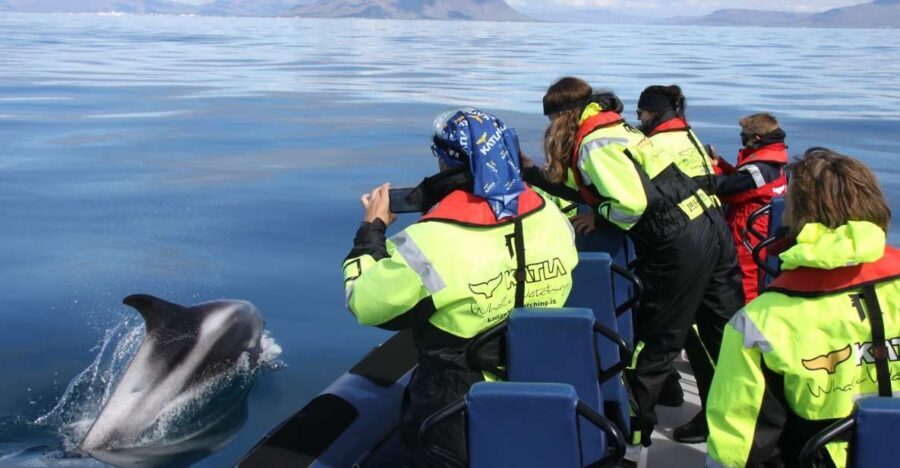
- Faxaflói Bay wildlife search: you’re out in waters where many whale species, plus dolphins and seals, can show up
- A brand-new 12-seat RIB with suspension seats: more comfort than the typical skiff, especially when the water gets rough
- Harpa Concert Hall and Sun Voyager pass: sightseeing bundled into the first stretch of the cruise
- Puffins near egg-laying islands: you may see puffins flying and swimming close to the boat while they’re active around the nesting areas
- Real field guidance: your guide shares whale and wildlife facts while also helping you spot what’s actually there
The RIB experience: comfort first, speed always
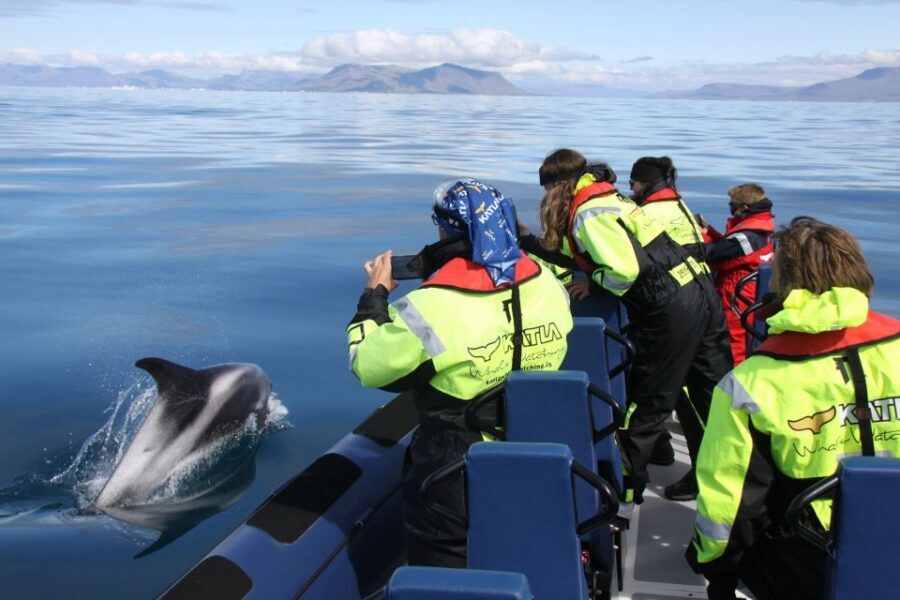
This isn’t a slow “sit and watch from afar” setup. You’re riding a rigid inflatable boat designed for quick movement and close positioning, the kind of boat that can get you to sightings fast when conditions line up.
The big practical advantage is the 12-seat layout with suspension seats. That matters in Iceland, where the harbor can feel calm and the open water can still turn choppy on a windy day. Suspension seating helps take the sting out of the ride, so you spend more time looking out at the horizon and less time thinking about your spine.
And then there’s the gear. You don’t just get told to dress for weather—you’re given a warm waterproof overall, plus gloves and goggles, and you’ll rent a life jacket. You bring your own whale watching scarf, which is a smart move because it gives you something soft and warm around your neck once you’re suited up.
You can also read our reviews of more whale watching tours in Reykjavik

Where you start in Reykjavik: old harbor to Harpa in minutes
Your meeting point is at Ægisgarður 5G, about a 5-minute walk from the city center. That’s convenient if you’re staying central, and it keeps the pre-trip stress low.
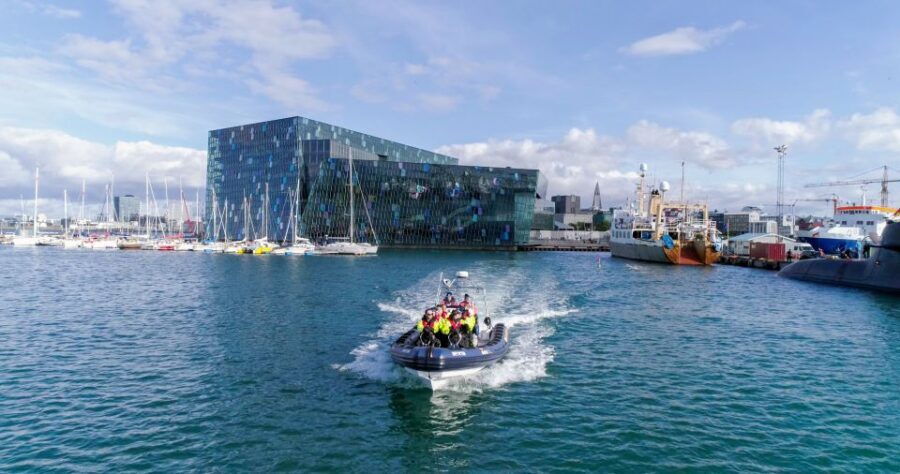
After check-in, you’ll get geared up with the waterproof overall and life jacket rental. Then the tour kicks off by passing major landmarks from the water. You’ll cruise by the Harpa Concert Hall area and the Sun Voyager sculpture early on, which works well because it gives you a “city-to-coast” feeling right away.
This part is also a gentle warm-up for the actual whale watching. Even if the wildlife doesn’t show immediately, you’re already out on the bay, getting used to the boat’s motion and learning where to look.
Faxaflói Bay: the real reason this tour exists
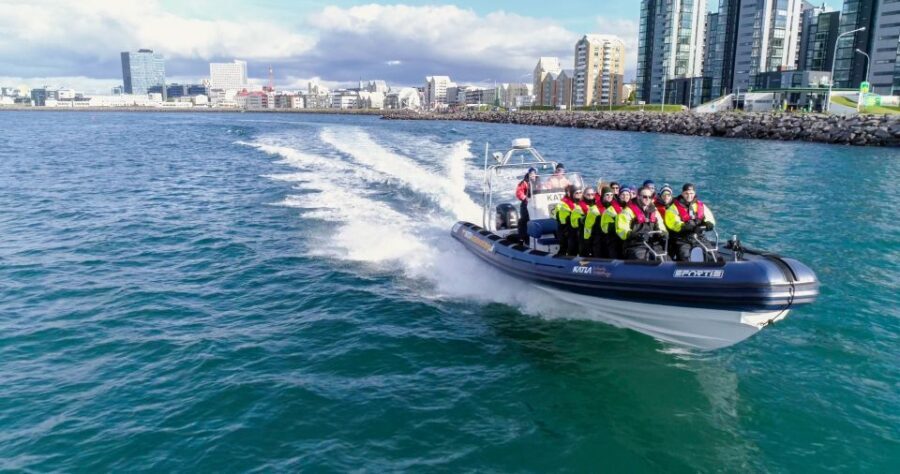
The action happens in Faxaflói Bay, where the coast of Iceland tends to concentrate wildlife at the right times. The tour plan is built around scanning for whales and other mammals in their natural environment, not just viewing animals behind glass.
You’re also not stuck on one long, straight line. The boat moves as sightings happen, which is key because whales are not like fish in a tank. They surface briefly, blow air, and then go back under. With a faster boat and active guiding, you have a better shot at catching those short windows.
What you’re likely to spot out there
The tour information points to up to 23 species of whales, along with dolphins and seals, plus sea birds. In practice, that means you can get a mix of:
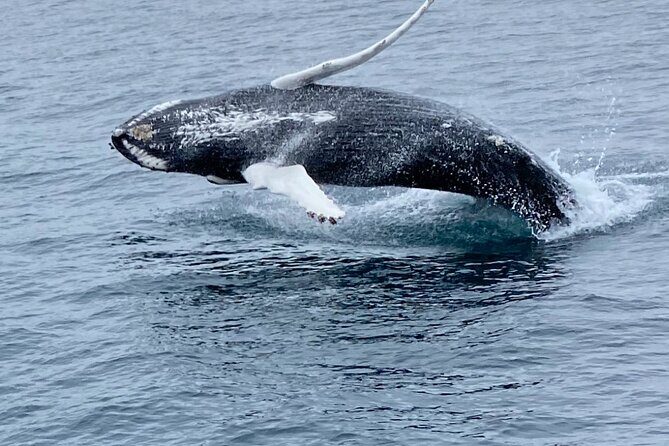
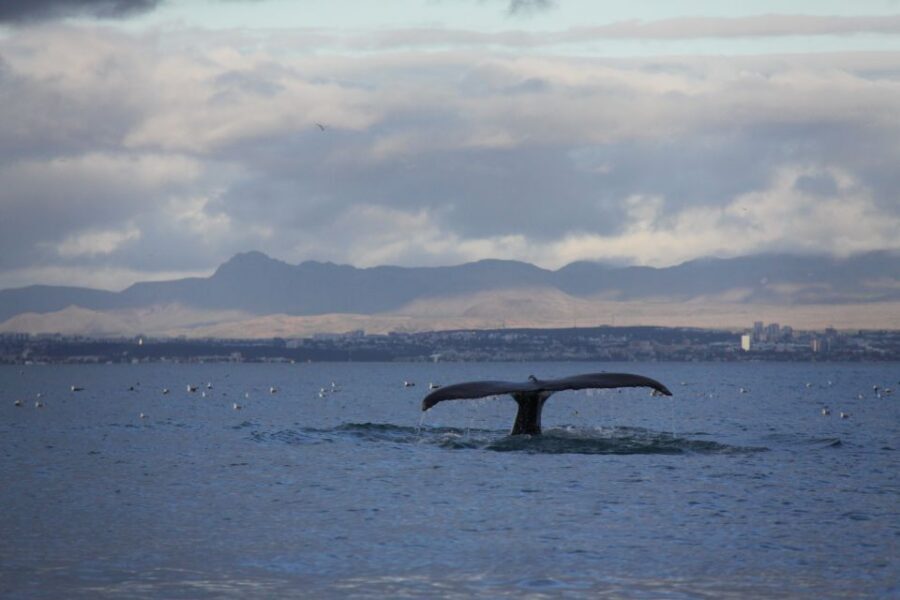
- Whale sightings that may be mostly surface time (backs, blows, and occasional full surfacing)
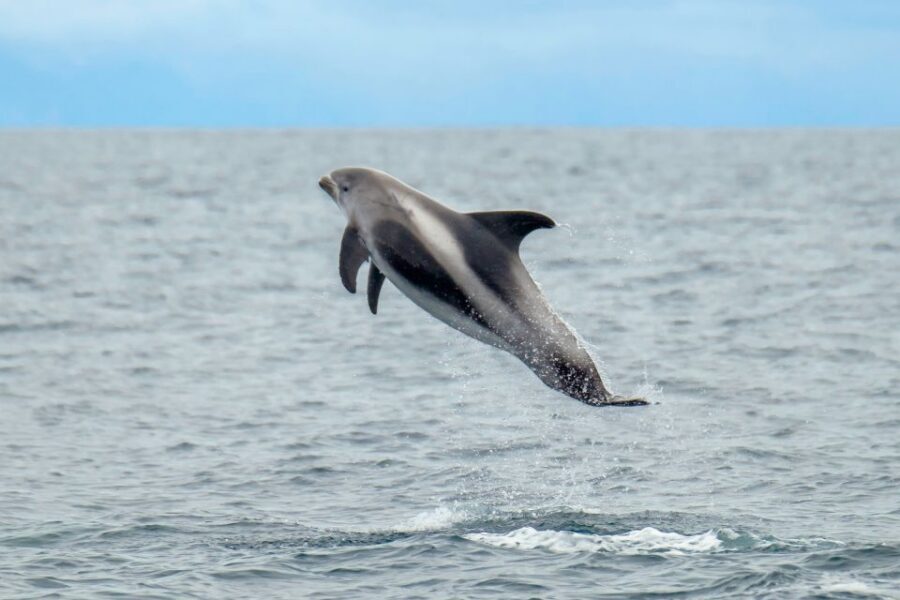
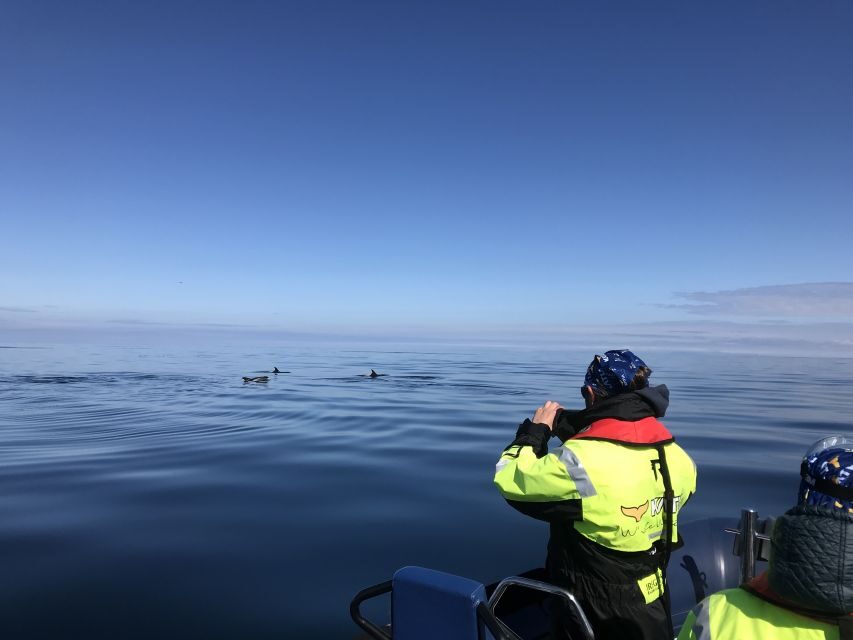
- Dolphins that can appear suddenly and then follow for stretches, sometimes moving close to the boat
- Seals that pop up where you’d least expect
- Bird activity that often gives a clue that something interesting is happening below the surface
One helpful reality check: whale watching here is harder than in an oceanarium because you can’t control visibility, lighting, and water surface conditions. Your guide helps with spotting, but you still shouldn’t treat a whale sighting as a guarantee.
Puffins up close: islands, flying, and that one egg
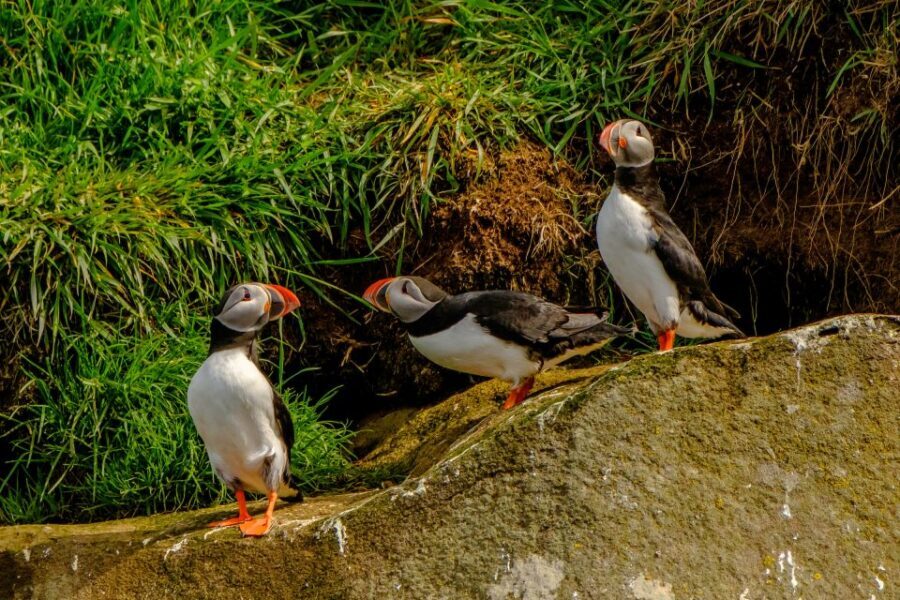
After the main wildlife searching, you get time in the puffin nesting area. Faxaflói Bay includes islands where puffins come to lay a single egg. Watching puffins around the nesting islands is a different kind of thrill than chasing whales—it’s busy, fast, and visually obvious.
If the conditions and timing are right, you may see puffins flying close to the water and swimming around the boat’s path. You might also notice puffins on cliffs or shoreline areas from the cruise, not just in the air. This is the part of the tour that often turns “just another wildlife trip” into a memory with lots of motion and noise.
Also, puffins are small and quick. It’s easiest to enjoy them when you stay focused and don’t overthink it. Look for sudden movement against the rock lines and the water surface, then try to track the direction they’re heading.





The boat’s rhythm: what wind and waves actually feel like
Iceland can be dramatic fast. Even when you’re in Reykjavik, wind can push the sea into a higher, steeper chop. When that happens, the RIB ride can feel rougher than people expect.
The upside is that the boat is made for this. Suspension seating plus the waterproof gear helps you stay warm and on task. The downside is that this is still a speedboat ride. If you’re sensitive to motion or you’re uneasy about waves, don’t assume it will feel like a calm ferry.
A practical tip: if you can choose among departure times, look for the calmer-sounding part of your day. And bring the right layers under the waterproof overall—warm clothing is not optional here.
Price and value: why $192 can be fair (or not)
At $192 per person for a 2-hour cruise, you’re paying for three things at once:
1) a fast, flexible RIB out into whale habitat (not just a harbor loop)
2) guided spotting and interpretation while you’re scanning the water
3) real weather protection: warm waterproof overalls, gloves, goggles, and life jackets
If you compare it to tours that are longer but slower, or to experiences where you’re mostly watching from distance, this price starts to make more sense. You’re buying time on the water when wildlife is most likely to show itself—and you’re getting gear so you’re not standing around half-dressed.
That said, whale watching is always a bit of a gamble. If you’re booking with a strict schedule and you’d be disappointed with dolphins and puffins but no whales, keep your expectations realistic. The tour is designed to maximize your odds, but nature sets the final rules.
What’s included (and what you should bring)
Here’s the included setup that matters most once you’re moving:
- 2-hour cruise aboard a 12-seat luxury RIB with suspension seats
- Full guidance about whales, wildlife, and Reykjavik
- Warm waterproof overall plus gloves and goggles
- Life jacket rental
- Your own whale watching scarf (you’ll use this as part of staying warm and covered)
And here are the restrictions you should take seriously:
- No sandals or flip-flops
- No open-toed shoes
Even if you’re prepared for cold, the deck can get wet and splash can happen. Closed shoes help you stay steady, safe, and comfortable.
Guidance quality: facts you can use while you scan
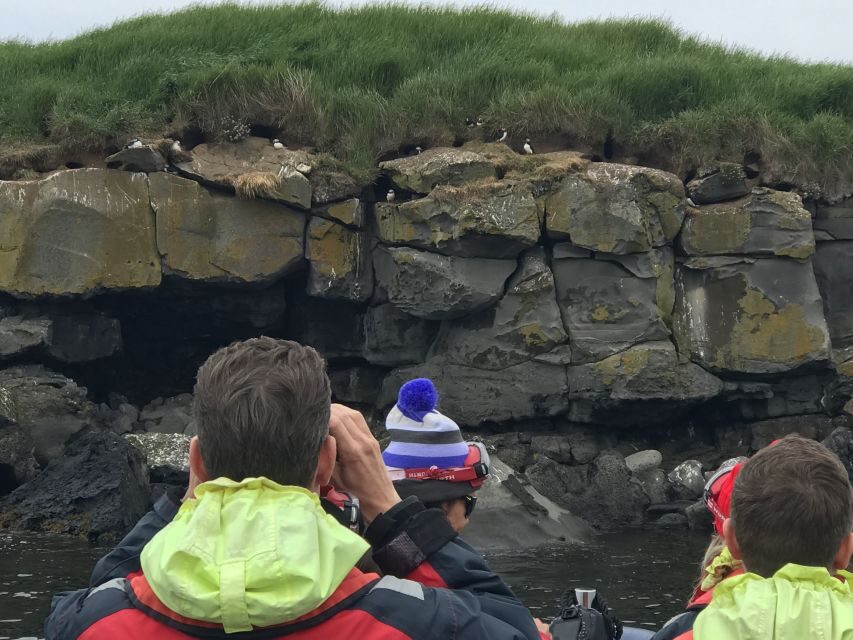
Part of the value here is the human layer. Your guide gives full guidance and adds context—what to look for, how whales behave when they’re feeding or moving, and what the birds around you might be signaling.
This is the difference between spotting random spouts and understanding why a certain patch of water is worth watching. It also keeps the tour engaging even if visibility isn’t perfect.
The best way to make use of the guide’s expertise is simple: ask questions during scanning stops. If you notice whales-like movement but aren’t sure what you’re seeing, ask right then rather than waiting for the debrief.
Who this tour is best for

This whale watching experience is a strong fit if you:
- want real-time wildlife spotting from a speedboat rather than a slow cruise
- are comfortable with a bumpy ride when the wind picks up
- care about puffins as much as whales
It’s not suitable for children under 10, which is worth keeping in mind when you’re building your Iceland itinerary.
If you’re traveling as a couple or small group, the intimate 12-seat format also helps. You’re not lost in a crowd; you can actually see what’s happening and follow the guide’s pointing and instructions.
Should you book Katla’s Reykjavik whale watching by speedboat?
Book this tour if you want your Reykjavik whale watching to feel like an active hunt with close-up chances: whales, dolphins, seals, and the high-energy puffin island segment. The combination of fast RIB access, comfort-focused seating, and warm waterproof gear is the kind of setup that helps you enjoy the experience even when weather gets moody.
Skip it (or at least reconsider) if you’re counting on a guaranteed whale sighting or you’re very sensitive to motion and wind-driven chop. No guide can control nature, and whales can be hard to spot in open sea conditions.
If you can handle that uncertainty, you’ll likely come away with the kind of wildlife memories that don’t feel staged: sharp blow spouts, sudden dolphin movement close to the boat, and puffins doing their busy routine around the nesting islands.
FAQ
How long is the Reykjavik whale watching tour by speedboat?
It’s a 2-hour cruise.
Where is the meeting point?
Meet at Ægisgarður 5G, which is about a 5-minute walk from the city center.
What type of boat do you ride?
You ride a luxury rigid inflatable boat (RIB) with 12 suspension seats.
What wildlife will we look for?
The tour focuses on whales in Faxaflói Bay, and you may also see dolphins, seals, sea birds, and puffins in the nesting area.
Is a whale sighting guaranteed?
No. Seeing whales cannot be guaranteed, and whales are harder to spot in the sea than in an oceanarium.
What gear is included?
You get a warm waterproof overall, gloves, and goggles, plus life jacket rental. You also use your own whale watching scarf.
What shoes should I wear?
Sandals, flip-flops, and open-toed shoes are not allowed.
Is this tour suitable for kids?
It is not suitable for children under 10 years old.
What languages are the guides available in?
The live tour guide is available in English and Icelandic.
Is there free cancellation?
Yes. You can cancel up to 24 hours in advance for a full refund.