REVIEW · VIK
Black Sand Beach Horse Riding Tour from Vik
Book on Viator →Operated by Vik Horse Adventure · Bookable on Viator
Black sand, calm horses, and sharp ocean views. This one-hour horseback ride from Vík gives you a front-row seat to Víkurfjara from the back of an Icelandic horse, with a guide keeping things smooth and safe. I also love that you get helmet rental included, and the guides teach you enough at the start to feel comfortable. One drawback to plan for: the pace stays mostly gentle (walking), and there can be last-minute weather changes if conditions get too windy.
You’ll especially appreciate how personal it feels. With a max group size of 10, you’re not just shuffled onto a horse and sent off—you get real attention, including safety talk and guidance on what to do. And if you’re lucky with conditions, the guides may offer a short try at Icelandic moves like tölt later in the ride.
In This Review
- Key things to know before you ride Víkurfjara
- Why a black sand horse ride works so well in Vík
- Meet your Icelandic horse: calm by design, not by accident
- The stable start: what you do before you head to the beach
- Riding on Víkurfjara: timing, pace, and photo moments
- Weather is part of the deal in Iceland (and here it matters a lot)
- Who this tour suits best (and who should look elsewhere)
- What you get for the price: value at $133.02 per person
- Practical tips to make your ride smoother
- Should you book the Vik Horse Adventure black sand beach ride?
- FAQ
- How long is the Black Sand Beach Horse Riding Tour from Vík?
- Where does the tour start and end?
- What is included in the tour price?
- Are shoes included?
- Do they offer the tour in English?
- What are the age and weight limits?
- Can pregnant travelers ride?
- What group size should I expect?
- What kind of physical fitness do I need?
- What happens if weather is too poor to ride?
- Is free cancellation available?
Key things to know before you ride Víkurfjara
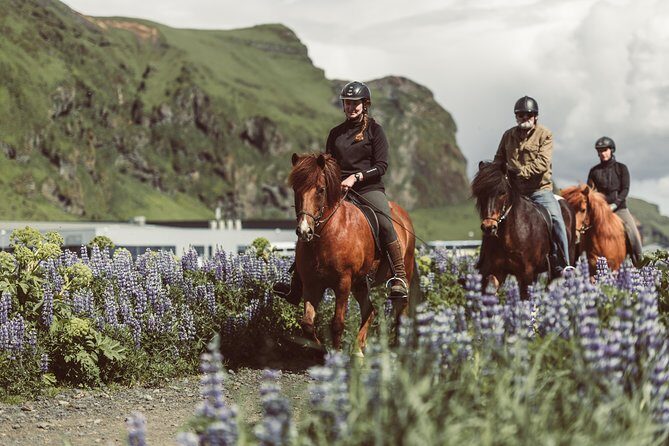
- Helmet is included, so you can focus on riding instead of packing gear.
- Small-group cap (10 riders) helps the guides stay hands-on and answer questions.
- Riding is beginner-friendly, with most of the time spent at a walk for rider and horse safety.
- You can sometimes try tölt, but it’s usually a shorter segment, not the whole ride.
- Weather can cancel the beach ride, since safety on black sand and wind matters here.
Why a black sand horse ride works so well in Vík
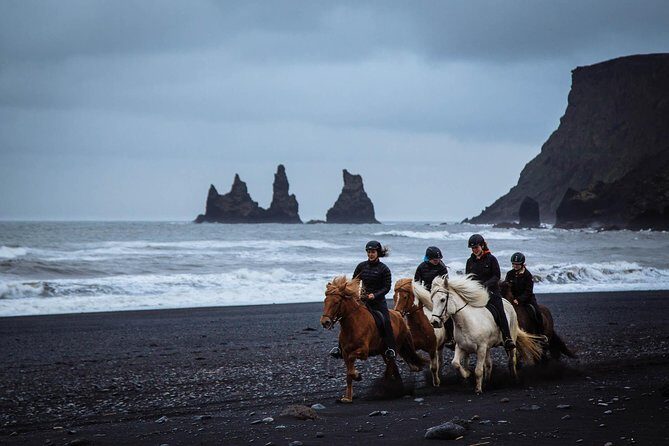
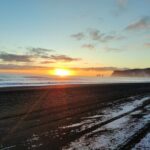
There are plenty of Iceland tours that look great on paper. This one earns its hype because the setting is built for it: Víkurfjara is dramatic, and black sand changes how you see everything—shadows, texture underfoot, and even how the ocean light hits the beach. From horseback, the beach stops being a quick photo stop and becomes a slow, moving viewpoint.
What you’re really buying is perspective. Walking on black sand is one thing; riding across it is another. The horses’ steady rhythm helps you slow down, breathe, and take in the coast instead of racing from viewpoint to viewpoint. And because you’re on Icelandic horses—known for their calm nature—you get a more controlled experience than you might from a typical “wild” beach ride.
The best part is that you’re not just sitting there looking pretty. You get guided interpretation of the horses and the local surroundings, so the ride turns into a story you can repeat later, not just a bunch of pictures.
You can also read our reviews of more tours and experiences in Vik.
Meet your Icelandic horse: calm by design, not by accident
The heart of this tour is the Icelandic horse, and the operation leans hard into care and consistency. The horses are described as well behaved, with riders calling them gentle and easy to handle. On top of that, the stable clearly trains riders to stay safe—guides keep close watch, and they explain basics at the start so you’re not guessing once you mount up.
The horses are also smaller than you may expect, even if you’ve ridden other breeds before. Some riders note the horses feel short and compact compared with what they’re used to, which is part of why the tour works for beginners. It’s also why the weight rules matter: there’s a 100 kg / 220 lb weight limit, and the stable can request you step on a scale.
If you love animals, you’ll like the up-close feel. People talk about the way the horses have personalities, and how much the guides seem to care about them. Even when weather short-circuits the ride, many guests still end up spending time around the horses, which keeps the experience from turning into a total bust.
One extra detail I found useful: one guide named Yohanna gets called out in reviews for being patient and informative. That lines up with what this type of tour needs—clear directions, calm energy, and good timing.
The stable start: what you do before you head to the beach
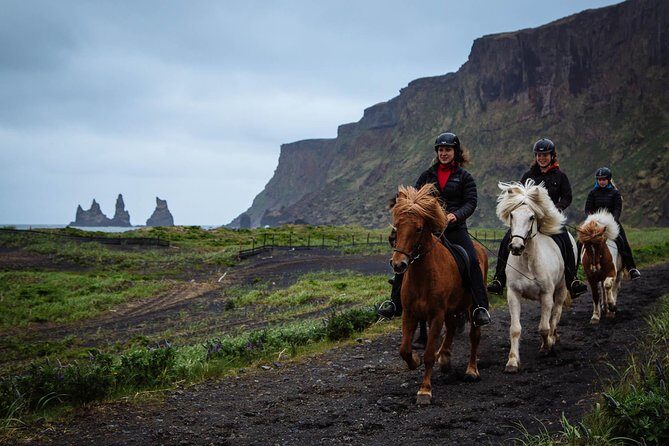
Your tour begins and ends at the stable in Vík (the practical starting point is the facility that runs the rides). Expect a short intro session before you’re led out. The goal is simple: get you mounted safely, teach you basic handling, and explain how the ride will work so you’re not stressed once you’re out on the beach.
You’ll receive a helmet as part of the tour. Shoes are not included, so plan on bringing footwear that works on sand, rocks, and possibly wet ground. Black sand beaches can be tricky underfoot, especially if the surface is uneven or darker sand hides depth.
Physically, the experience is set up for moderate fitness, which usually means you’re walking a bit, mounting/dismounting, and staying balanced. The minimum age is 10, and pregnant travelers can’t ride. There’s also a specific note that the stable can deny riding if you don’t meet their conditions—so treat the limits as part of the safety design, not as small print.
Think of the stable start as your confidence-builder. If you’re nervous, this is where you settle in, learn the basics, and figure out how the horse moves under you.
Riding on Víkurfjara: timing, pace, and photo moments
Once you’re on your horse, you’ll head along the local black sand beaches at Vík í Mýrdal, known as Víkurfjara. The total tour length is about 1 hour, and the actual riding time is often described as 50–60 minutes, with a bit of time set aside for instruction and brief stops.
Here’s the pacing truth: this is a beginner-friendly ride. That means most riders should expect a controlled walk along the beach. If you’re hoping for a long, fast gallop, this likely won’t be the right fit because the beach has deep sand and hidden rocks. The guides keep things careful for rider and horse safety.
That said, some guests do get to go faster. A common highlight is trying Icelandic gaits like tölt—often offered as a short segment later in the tour, sometimes on the ride back, and dependent on conditions and rider experience. People also mention trotting or tölt opportunities when they’re ready, but it’s not the whole experience. You can think of the ride as: steady cruising first, then a chance to show off a little if you can handle it.
And yes, there are photo moments. Riders mention good photo opportunities on the beach, and guides also take photos for you in some cases. If you want the best pictures, bring layers and dress for wind—one of the simplest pieces of advice from guests is to bundle up, especially if you’re going near sunset or in cooler months.
Finally, the beach itself is the star. The black sand makes everything feel cinematic, and the ocean air keeps you alert. It’s not a theme-park ride. It’s you, a horse, and a weather-driven coastline.
Weather is part of the deal in Iceland (and here it matters a lot)
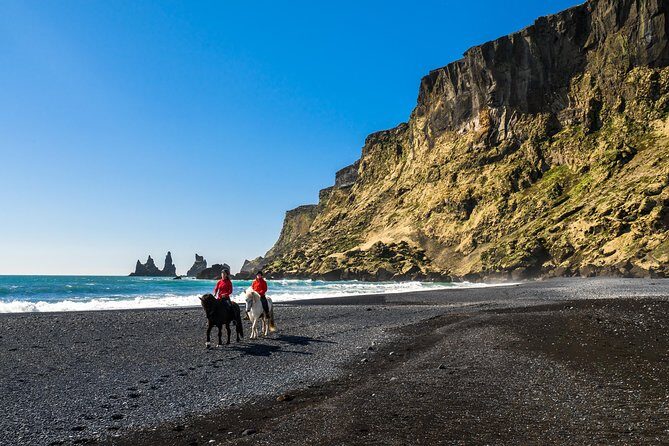
Iceland weather doesn’t wait for your schedule. This tour runs on outdoor conditions, and wind can be a reason the beach ride doesn’t happen. There’s a strong safety-first approach—if conditions are too rough, the stable may cancel the ride rather than risk it.
The good news is that the company typically stays in touch about possible changes, and guests report clear communication before the scheduled time. And if conditions prevent the full ride, some visitors still get a chance to be around and interact with the horses, which keeps the experience meaningful.
So how should you plan? Don’t treat this as your only chance to do horseback riding. Build in a little flexibility. If your trip includes multiple days in Vík, you’ll have an easier time rescheduling if the weather forces a change. Even if you’re set on a specific day, you’ll feel better if you’re dressed for multiple weather scenarios—rain, wind, and temperature swings are normal here.
If you’re traveling in winter, it can still work. People in cold months report going without issues when dressed appropriately, and they describe the horses as gentle and steady even in winter conditions.
Who this tour suits best (and who should look elsewhere)
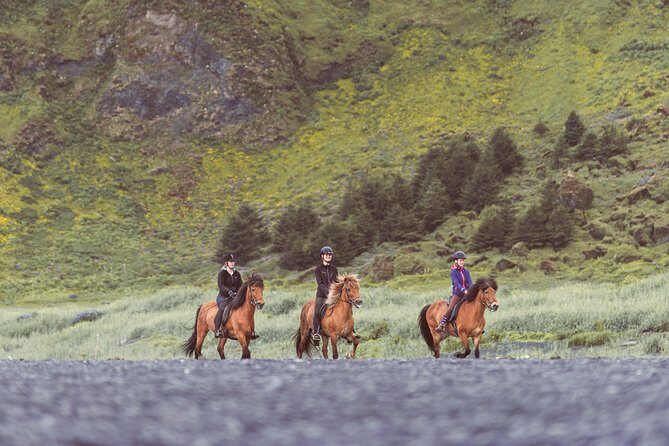
This ride is ideal if you want a safe, scenic horse experience without needing advanced riding skills. It’s also a strong option for first-timers. Multiple guests mention feeling comfortable quickly—partly because the guides focus on safety, and partly because Icelandic horses tend to be calm and predictable under a trained handler.
You should especially like it if:
- You want a short, efficient tour (about an hour) that fits easily into a Vík itinerary.
- You care about animal welfare and enjoy seeing horses treated with care.
- You want the black sand views from horseback, not just from a viewpoint.
It may not be your best match if:
- You’re an experienced rider looking for long, high-speed action. The ride is mostly walk-based.
- You’re over the 100 kg / 220 lb limit, or you’re pregnant (both are not allowed).
- You’re expecting a fully customizable ride pace. The beach conditions and safety rules shape the experience.
Also note the scale possibility. If you’re right near the top end of the weight limit, it’s worth mentally preparing for an on-the-spot check. That’s not meant to be personal—it’s how the stable protects the horses.
What you get for the price: value at $133.02 per person
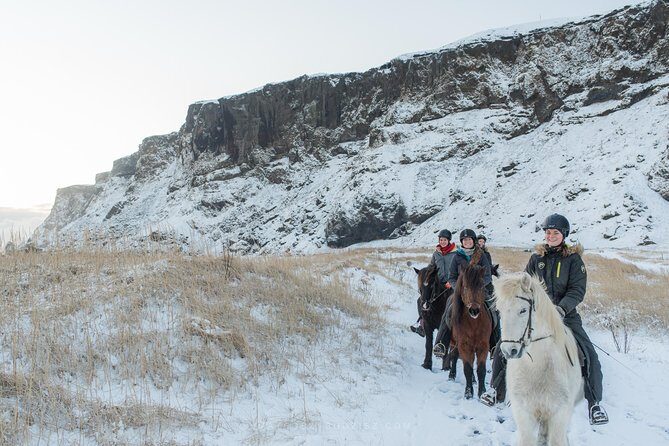
At $133.02 per person for about an hour, this is not a budget activity. But the cost starts to make sense when you weigh what’s included and what’s limited.
You get:
- Helmet rental
- An Icelandic horse experience on Víkurfjara
- Guided instruction and a guided route
- A small-group experience (max 10 riders)
- Some photo stops, depending on the flow of the ride
What you don’t get: shoes are not included. So the real value comparison isn’t just the ticket price—it’s also whether you already own decent footwear. If you’re coming prepared, you won’t feel nickeled-and-dimed.
The other value lever is the horse-and-guide ratio implied by a small group. In a world where some “attraction rides” can feel like production-line tourism, a cap of 10 tends to bring better attention and fewer bottlenecks. That matters most for first-timers and for riders who need a little extra reassurance.
Is it expensive compared with a standard walking tour? Yes. But it’s also a completely different kind of experience—one where the cost is mostly paying for horses, care, and trained handling. If you want something genuinely Iceland in feel, this is one of the more direct ways to do it.
Practical tips to make your ride smoother
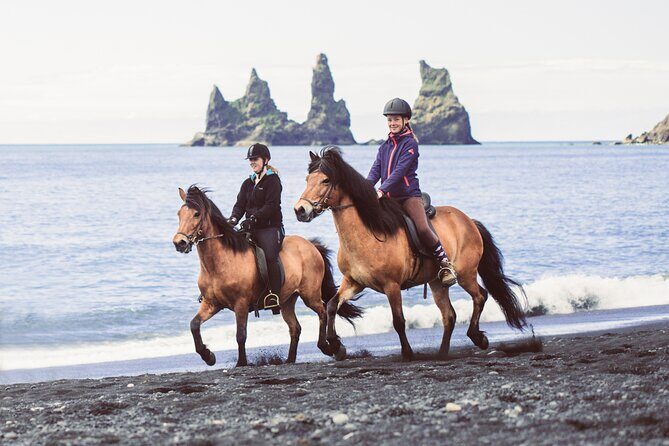
A few small choices can make a big difference on a black sand beach.
- Dress for wind. Reviews repeatedly flag how windy it can feel. Layers beat one thick jacket because you can adjust as you mount and walk.
- Bring grippy shoes. You need traction on sand and rocky patches. Shoes are not included, so plan for it.
- Expect a mostly walking pace. If you want faster movement, keep your expectations flexible and be ready for a short tölt or trotting segment instead of a long fast ride.
- Ask questions at the start. If you’re unsure about handling yourself on the horse, this is the moment. The guides are there to help.
- Have realistic weather expectations. Iceland weather can change quickly, and this tour takes wind seriously.
If you’re taking photos, don’t wait until you feel cold or distracted. Some of the best moments are the planned photo stops and the transitions between walking sections and any gait trials.
Should you book the Vik Horse Adventure black sand beach ride?
I think you should book this if you want an Icelandic horse experience that’s short, scenic, and guided—especially if you’re traveling as a couple, in a small group, or as a first-time rider. The combination of Víkurfjara views, a beginner-friendly pace, helmets included, and a small group size makes it an easy yes for most people who want something memorable without needing advanced skills.
I’d hesitate if you’re craving a long, fast ride, because the beach is safety-sensitive and the tour is built for broad comfort levels. Also consider whether you can handle the reality of wind-driven changes in Iceland. If you can travel with a flexible day or two, you’ll feel much better pressing the button.
If you fit the limits and your expectations match the format, this is one of those Vík activities that converts a simple outing into a story you’ll remember long after the black sand fades from your boots.
FAQ
How long is the Black Sand Beach Horse Riding Tour from Vík?
The tour is approximately 1 hour.
Where does the tour start and end?
It starts at the stable meeting point in Vík and ends back at the same meeting point.
What is included in the tour price?
You get a helmet and an Icelandic horse.
Are shoes included?
No. Shoes are not included.
Do they offer the tour in English?
Yes, the tour is offered in English.
What are the age and weight limits?
Minimum age is 10. Maximum weight is 100 kg / 220 lb. The stable may also ask riders to step on a scale.
Can pregnant travelers ride?
No, pregnant travelers are not allowed.
What group size should I expect?
There is a maximum of 10 travelers.
What kind of physical fitness do I need?
You should have a moderate physical fitness level.
What happens if weather is too poor to ride?
This experience requires good weather. If it’s canceled due to poor weather, you’ll be offered a different date or a full refund.
Is free cancellation available?
Yes. You can cancel up to 24 hours in advance for a full refund.