REVIEW · SKAFTAFELL
Adventurous Vatnajökull Glacier Exploration – Full Day Hike
Book on Viator →Operated by Ice Guardians Iceland · Bookable on Viator
Vatnajökull hiking turns your legs into ice machines. This full-day trek in Iceland gives you a max-4 group plus close safety coaching as you learn gear, then move into steeper glacier terrain. I especially liked how the day mixes practical skills with real glacier talk, from glaciology to how climate change is reshaping the ice. One thing to consider: this is for strong hikers, because you’ll be on rough, sometimes steep ground for most of the day.
You start the day with a real-world meeting point at Freysnes Gas Station, then get kitted out and guided across Europe’s biggest ice cap, Vatnajökull. If you want more than a scenic stroll—plus time with an instructor who adjusts the pace to your ability—this kind of small-group glacier outing is a smart pick.
In This Review
- Key things that make this glacier hike worth your time
- Freysnes Gas Station to the glacier car park: start smart, not stressed
- Your first glacier step: gear fitting and a safety walkthrough
- Crossing Vatnajökull: learning the work guides do on steeper ice
- National Park time: where the geology lessons actually connect to your feet
- Small group pace: when max 4 means you aren’t stuck behind a crowd
- Price and value: what you pay for (and what you still need to budget)
- Weather reality: what happens when the ice won’t cooperate
- Who should book this glacier hike, and who should not
- Should you book this Vatnajökull full-day hike?
- FAQ
- Where do I meet for the tour?
- What time does the hike start?
- How big is the group?
- What’s included in the price?
- Do I need my own boots or water?
- What if weather is bad?
Key things that make this glacier hike worth your time
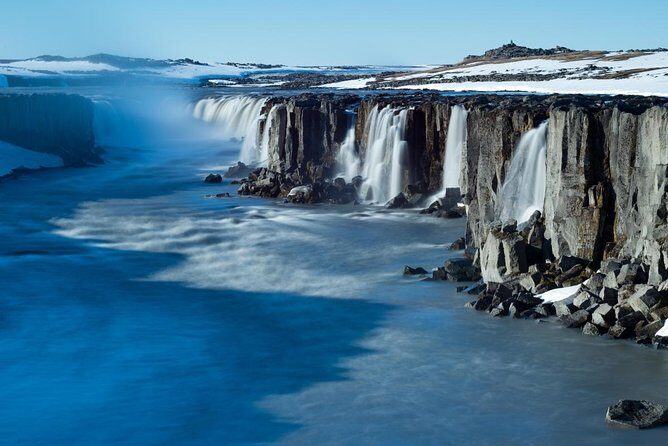
- Max 4 on the glacier: less waiting, more attention, and a pace that actually matches your group
- Safety gear included: helmet, harness, crampons, ice axe/s, so you’re not piecing together rentals
- Training first, then steeper ice: you learn on easier ground before the more adventurous sections
- Real glacier technique: anchors, ropes, and cutting steps show how guides manage risk on moving ice
- Lots of geology talk: you’ll get explanations tied to what you’re standing on and seeing
- English-led with pre-trip check-ins: WhatsApp or email plus a weather/conditions update 1–2 days before
Freysnes Gas Station to the glacier car park: start smart, not stressed
The day begins at Freysnes Gas Station with a 9:00 am meeting time. I like this kind of setup because you can handle the boring-but-important stuff right away: use the bathroom and pick up snacks before you drive off. Since the tour doesn’t include bottled water, this is also where you can think ahead about hydration.
From there, you follow your guide for a short drive to the glacier car park. You’ll need your own car to reach Freysnes, so plan to arrive early enough to park without turning your pre-hike nerves into a traffic drama. The whole day moves quickly once you’re out near the ice, so treat the drive as part of your warm-up.
Also note the pace you’ll feel right from the start: you’re not just arriving at a viewpoint. You’re starting a day that’s built around walking onto a glacier with equipment and technique, which means you’ll want to be mentally ready for cold air, wind, and that slippery-rock-to-ice transition.
You can also read our reviews of more hiking tours in Skaftafell
Your first glacier step: gear fitting and a safety walkthrough
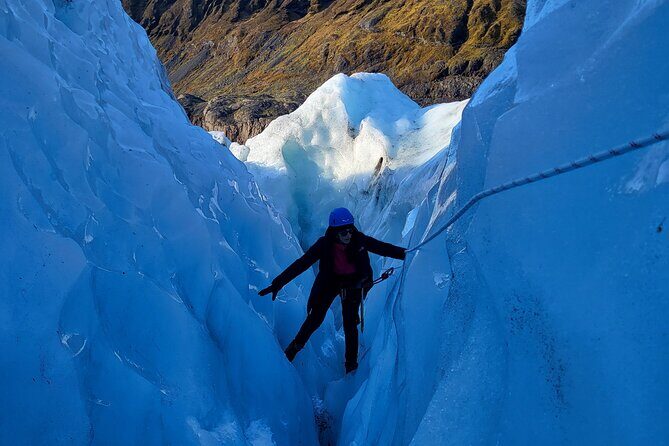
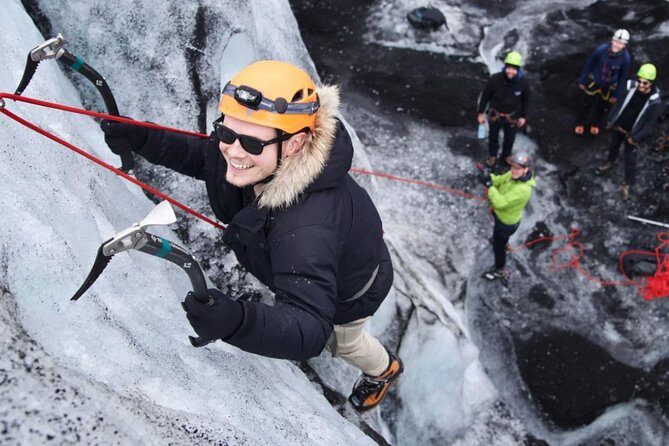
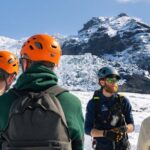
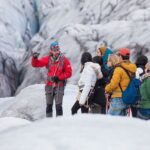
At the glacier car park, the tour equips you with the essentials: helmet, harness, ice axe/s, and crampons. You’ll also get safety instructions before you walk farther out onto the ice. I like that the day isn’t just hands-off sightseeing. It’s teaching you what matters so you can move confidently.
Before any steeper terrain, there’s a short walk on a trail to the glacier front. Once you’re on the glacier, expect a staged approach: you’ll move through easy terrain first to get familiar with the equipment and the basic techniques for progressing safely.
This is where the small group size pays off. With max 4 travelers, you can actually ask questions and get corrected in real time. And because you’re learning before the harder sections, you’re not guessing when the glacier gets steeper or more technical.
Practical tip: if you’re bringing your own boots, make sure you’re comfortable and secure. If you don’t have mountain boots, there’s boot rental available for €15.00 per person. Since rentals are an extra step, it’s worth deciding before you show up.
Crossing Vatnajökull: learning the work guides do on steeper ice
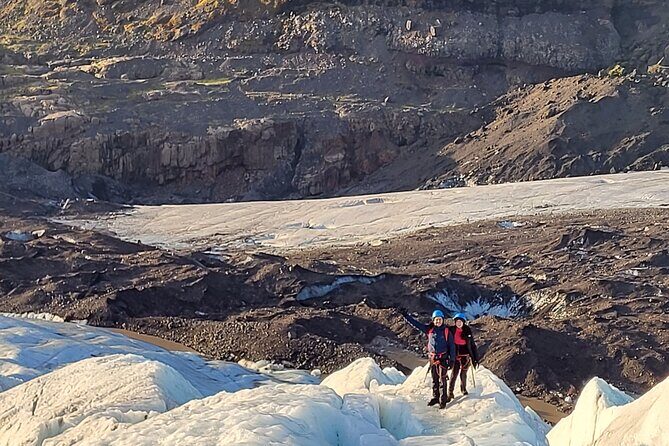
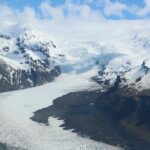
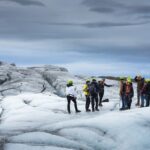
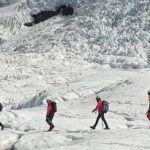
Vatnajökull isn’t a museum glacier. It’s active, layered with hazards, and it demands respect. After the initial practice, your guide takes you into steeper and more adventurous terrain beyond the crowds.
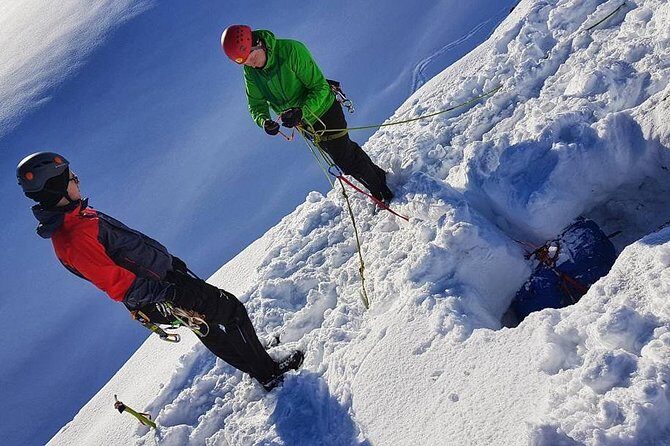
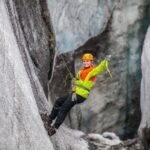
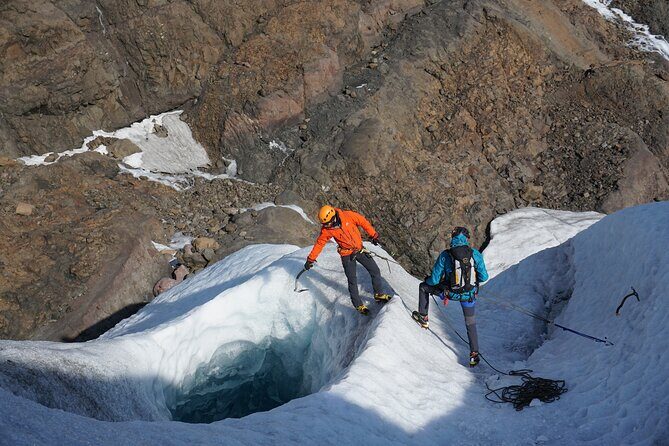
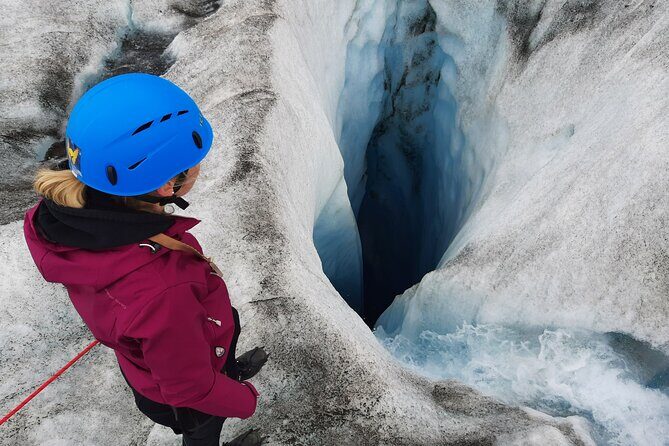
What’s especially valuable here is that you’re not just walking carefully—you’re learning what the guide is doing. You may see anchoring systems set up, ropes used for safer movement, and even steps cut into the ice. That’s more than a cool visual; it explains the logic behind glacier travel: how guides manage friction, fall risk, and the route you take across uneven surfaces.
This approach also shapes your experience emotionally. I’ve found that when you understand why someone is clipping you in, you relax faster. The gear stops feeling like a mystery and starts feeling like a tool.
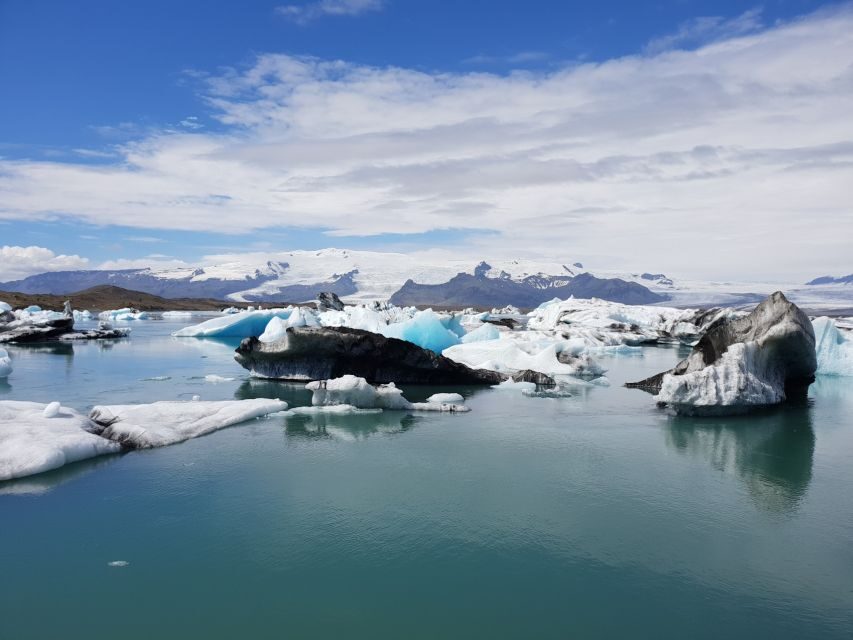
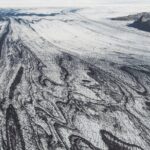
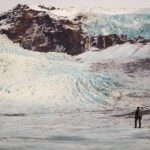
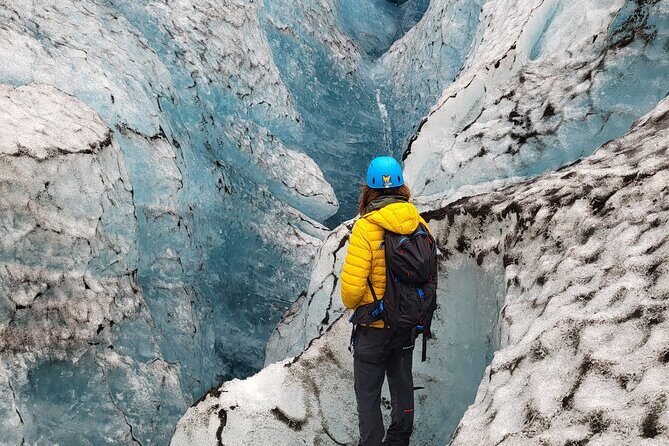
And yes, you’ll get photo chances. The glacier shows different textures and colors as you move—plus you’re in an area where huge ice sheets can create dramatic effects. One of the best moments you can hope for is that sense of scale: you’re on Europe’s largest and most voluminous ice cap, and the ice is not static. It’s moving, calving, and changing.
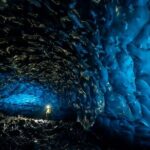
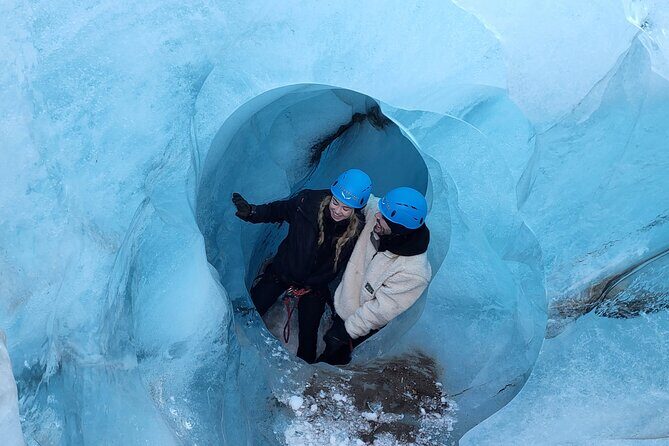
Depending on conditions, you might also encounter interesting ice formations along the route. On some days, people have mentioned seeing ice caves forming and even exploring a small one with the right supervision—so keep your camera ready, but trust your guide’s call on what’s safe to approach.
National Park time: where the geology lessons actually connect to your feet
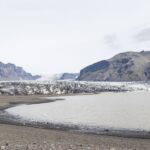
This hike includes time in Vatnajökull National Park and ends up around Skaftafell National Park. The value isn’t just the paperwork of protected land. It’s that your guide connects explanations to what you can see right now: cracks, ice structure, layers, and how the glacier behaves.
The guide focuses on geology and glaciology, including recent glacier changes and what the future may look like in a world affected by climate change. I like this style because it’s not abstract doom-and-gloom. It’s tied to visible evidence on the ice—so the story feels grounded, not lecture-y.
You’ll also hear about Icelandic history and geology as part of how the region formed and how ice and land interact. Even if you’re not a science person, glacier travel makes the concepts physical. When you’re walking on ice that’s been changing for decades, the talk clicks.
If you’re the type who loves learning while moving—rather than stopping every five minutes—you’ll likely enjoy the rhythm of this day.
Small group pace: when max 4 means you aren’t stuck behind a crowd
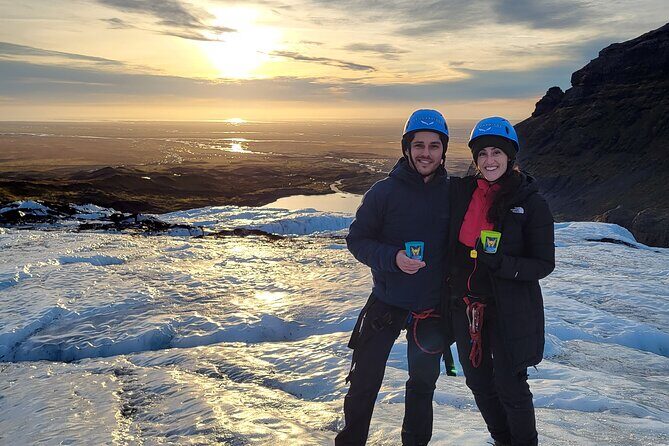
One of the most praised parts of this tour is the fact that it’s capped at 4 travelers. That isn’t just a comfort perk. On a glacier, it changes everything.
With a bigger group, you get bottlenecks: one person struggling with crampons, another needing instructions, the rest stuck behind the slowest moment. With only four people, your guide can adjust technique, offer quick fixes, and guide you along a route that fits the group’s skill level.
In the experience of guides running this kind of glacier hike, you may find instructors such as Richard who challenge the group based on skills and use different paths than the larger groups. Another guide you might run into in similar setups is Kish, who’s described as balancing knowledge with safety and energy on the ice. Even when the guide changes, the key idea stays the same: small groups let you spend the day with a focused instructor, not a crowd-control supervisor.
This matters most if you care about getting away from the obvious tourist flow. The tour’s approach takes you beyond the busiest areas into terrain that’s more interesting and more skill-based.
Price and value: what you pay for (and what you still need to budget)
At $408.48 per person, this is not a budget excursion. But it can be good value for the kind of day you’re getting.
Here’s what your money covers:
- Safety equipment (helmet, harness, crampons, ice axe/s)
- Coffee and/or tea
- A weather and expected conditions report 1–2 days before (via WhatsApp/email)
- Safety instruction and guidance all day on the ice
- Tour communication in advance so you’re not walking in blind
What’s not included:
- Bottled water
- Lunch
- Mountain boot rental if you need it (€15.00 per person)
- Transportation to the meeting point (you need your own car)
So how do you judge value? I think this is the sweet spot: if you’d otherwise have to rent gear, add transportation, and hire a guide for specialized glacier instruction, the price starts making sense. Also, the small-group cap means you’re paying for attention and safer pacing, not just access to a glacier.
If you’re trying to travel on a tight food budget, plan ahead for lunch and water. A cold glacier hike burns energy, and you don’t want to rely on guessing where you’ll grab something after you’re already suited up.
Weather reality: what happens when the ice won’t cooperate
Glaciers run on weather rules. This tour requires good weather, and the operator provides an expected conditions report 1–2 days before your trip. You’ll get that info through pre-trip communication on WhatsApp or email, which is useful because glacier days can change quickly.
If the tour has to be canceled due to poor weather, you’ll be offered a different date or a full refund. That’s the kind of safety-first flexibility you want for something technical like glacier hiking.
I also recommend you keep your schedule flexible if you can. In Iceland, one weather window can make or break a day, especially when you’re going onto ice.
Who should book this glacier hike, and who should not
You’ll be a great fit if:
- You have strong physical fitness
- You want a hands-on glacier experience, not just a viewpoint stop
- You like instruction and want to learn how guides manage steeper terrain safely
- You enjoy geology and glaciology talk that’s connected to what you see
You might want to skip this if:
- You don’t feel comfortable with long, active time outdoors in cold conditions
- You’re looking for an easy walk with minimal technical movement
- You’re not prepared for the fact that lunch and bottled water aren’t included
The best part is that the tour is built for confidence. You start easy, practice your gear, then gradually move into tougher ground. That progression is the difference between fear and focus.
Should you book this Vatnajökull full-day hike?
If you want to feel like you actually did something on Vatnajökull—not just stood near it—this is the kind of tour that delivers. I’d book it if you care about small group control, real safety technique, and learning glacier science while you walk across the ice cap.
I’d hesitate only if your fitness level is uncertain or your schedule is tight with no flexibility for weather changes. The day is intense enough that it rewards preparation and the right mindset.
FAQ
Where do I meet for the tour?
You meet at Freysnes Gas Station (Freysnes 785), and the tour ends back at the same meeting point.
What time does the hike start?
The start time is 9:00 am.
How big is the group?
This activity caps at a maximum of 4 travelers per guide.
What’s included in the price?
Coffee and/or tea are included, along with safety equipment: helmet, harness, ice axe/s, and crampons. You also get a weather and expected conditions report 1–2 days before your trip, plus pre-trip communication with your guide via WhatsApp/email.
Do I need my own boots or water?
Mountain boot rental is available for €15.00 per person if you don’t have your own. Bottled water and lunch are not included, so you’ll need to plan for them.
What if weather is bad?
This tour requires good weather. If it’s canceled due to poor weather, you’ll be offered a different date or a full refund.