REVIEW · REYKJAVIK
8 Day Winter Circle Tour, Ring Route of Iceland with Snæfellsnes Peninsula
Book on Viator →Operated by Troll Expeditions · Bookable on Viator
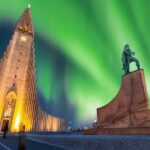
Eight days, one well-run Iceland route. You get the Ring Road big hits in winter, then wrap it with Snæfellsnes Peninsula sights. The plan also builds in chances for the Northern Lights by sleeping away from city glow.
What I like most is the mix of famous stops and “you only get this in winter” moments. You’ll get included glacier equipment and a real glacier experience, plus a whale-watching outing from Hauganes.
One thing to think about: winter travel means long days and weather call-outs. If conditions aren’t good, some outdoor plans can shift, and meals are on your own.
In This Review
- Key highlights worth planning around
- Winter Circle basics: how this Ring Road route saves you time
- Price and value: where the $679 really goes in winter
- Day 1: Þingvellir, Gullfoss, Geysir, then dark-sky hopes in Hvolsvollur
- Day 2 to Vík: Skógafoss, Reynisfjara black sand, and the Sólheimajökull hike
- Day 3: Crystal ice cave, Jökulsárlón seals, and Black Diamond Beach
- Day 4: East Fjords viewpoints, Djúpivogur pace, optional horses, and the Vök Baths question
- Day 5: Námafjall and Dimmuborgir, then Goðafoss to Akureyri
- Day 6: Hauganes harbor, included whale watching, and Grábrók crater skies
- Day 7: Snæfellsnes by the sea—seals at Ytri Tunga to Kirkjufell’s arrowhead look
- Day 8: Deildartunguhver and Reykholt, then Hraunfossar and the Víðgelmir cave option
- Should you book this Winter Circle Tour with Snæfellsnes?
- FAQ
- What time does the tour start?
- Where does the tour take place?
- Is pickup included?
- What are the main winter activities included?
- Is the Northern Lights a guaranteed part of the trip?
- What’s included in the accommodation?
- Are meals included?
- Can I add optional activities during the trip?
- Can I rent winter gear like waterproof jackets and pants?
- What happens if the tour can’t run due to weather?
Key highlights worth planning around
- Weather-driven winter flexibility: the tour is designed for winter days, but the experience still depends on conditions
- Glacier time that’s actually guided: glacier equipment is included, and the glacier hike runs with a guide
- Super jeep access to an ice cave: less time stuck in cold logistics, more time on ice
- Whale watching from Hauganes: a true North Iceland activity included in the price
- Full Snæfellsnes day: Gerðuberg, seals at Ytri Tunga, basalt cliffs, and Kirkjufell
Winter Circle basics: how this Ring Road route saves you time
This is the kind of winter tour that lets you focus on Iceland, not spreadsheets. Your start time is 8:00 am, and you’re picked up from designated bus stops with a mobile ticket. That matters because Iceland in winter punishes DIY planning: delays happen, daylight is short, and detours eat your schedule.
You’re also traveling with a group that stays small (maximum 17). For a long route, that size helps you feel like a team instead of an endless line of strangers. Add onboard WiFi, and the day-to-day grind feels more manageable.
The route covers a classic Ring Road arc, then pivots to the west with Snæfellsnes. That pairing is smart. You get Iceland’s “top-of-the-world” geothermal and glacier drama early, then end with west-coast scenery that’s close to film set material.
A few more Reykjavik tours and experiences worth a look
Price and value: where the $679 really goes in winter
At $679 for about 8 days, the value comes from what’s included—not the sticker price. You get 7 nights of accommodation, an English-speaking guide, pickup/drop-off, and WiFi onboard. You also get major activity support: glacier equipment and glacier access by super jeep.
The other value play is that you’re not paying separately for every “big ticket” moment. The itinerary includes a glacier hike on Sólheimajökull (3 hours, with certified glacier guide learning included) and includes whale watching from Hauganes. Those two alone can eat a big chunk of a winter trip budget.
What’s not included is also important. Lunch and dinner are on you, plus optional add-ons include horse riding, Vök Baths, and the Víðgelmir Lava Cave. The tour also lists rentals for winter gear (waterproof jacket/pants, etc.), which you may or may not need depending on what you already own.
Day 1: Þingvellir, Gullfoss, Geysir, then dark-sky hopes in Hvolsvollur
You start with Iceland’s must-see political history at Þingvellir National Park. This is where the Icelandic Althingi was formed, and it sits on the UNESCO World Heritage list. In winter, Þingvellir feels extra stark—great for photos, and a good reminder that Iceland isn’t just landscapes, it’s history in basalt.
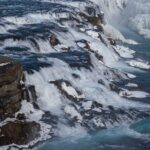
Next comes Gullfoss, the Golden Waterfalls. It’s fed by melting water from Langjökull and drops into a deep canyon. The tour gives you a short stop, but in winter those waterfalls are at their most dramatic.
You’ll then hit Geysir. Here’s the payoff: Strokkur erupts about every 7 minutes. When you’re on a guided schedule, you can catch the rhythm without standing around like you’re waiting for a bus.
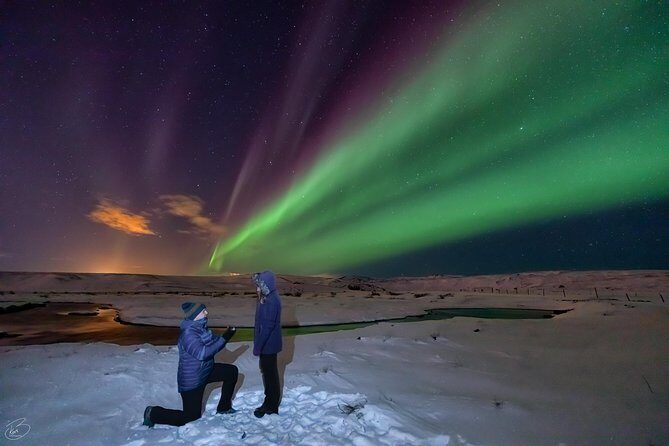
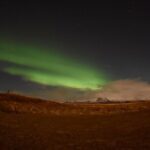
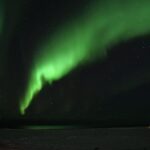
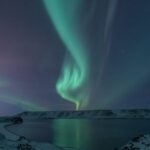
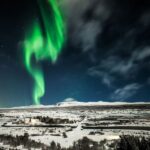
Night is where the winter planning shows. You stay in Hvolsvollur, positioned to improve odds for the Northern Lights by getting you away from light pollution. After a long day of stops, that sleep strategy is one of the quieter but smartest parts of the whole trip.
Day 2 to Vík: Skógafoss, Reynisfjara black sand, and the Sólheimajökull hike
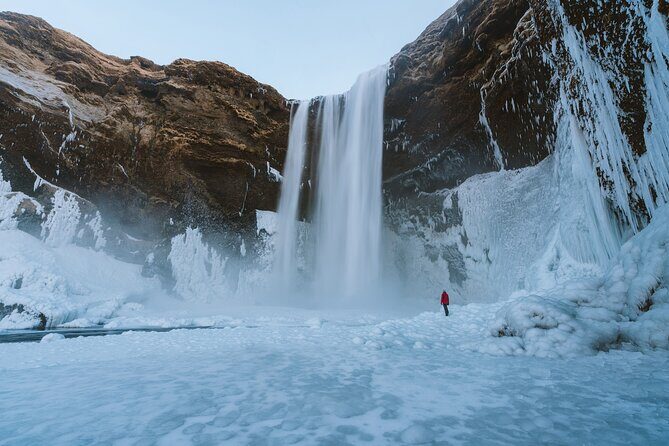
Day 2 stacks iconic waterfalls and Atlantic coastline. Seljalandsfoss is first, and yes, it’s the one you can walk behind. Winter brings fewer crowds and more mood, but you’ll still want steady footing and good layers.
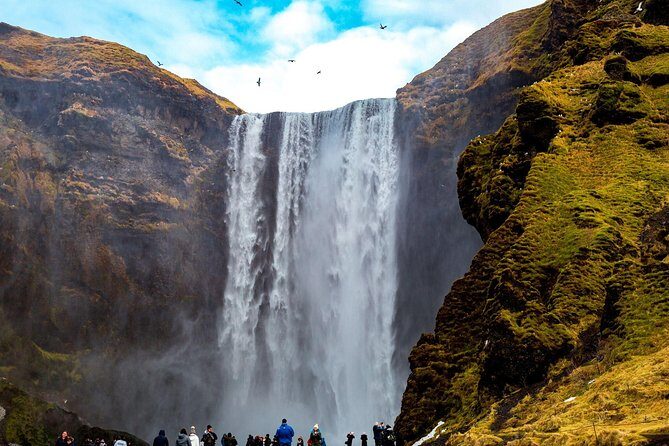
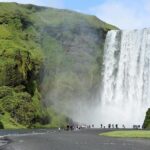
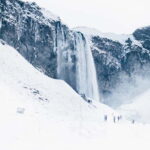
Then you reach Skógafoss, where the river Skógá tumbles down a 60-meter cliff before continuing toward the Atlantic. It’s a stop where sound and spray do half the work for your camera.
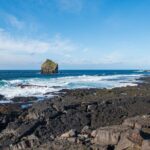
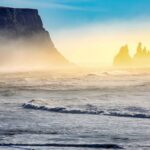
Next is Reynisfjara Beach, the famous black sand shore with big waves pounding basalt formations. In winter, the coastline can feel intense fast. Keep your distance from the waterline and follow guide safety cues—this is one of those places where “close to the edge” gets punished.
The day’s big activity is your Sólheimajökull glacier hike. It’s a 3-hour glacier walk with a certified glacier guide. You’ll learn about the glacier and get the kind of footing and equipment support you need for ice trekking. This is exactly the kind of experience that’s hard to DIY safely in winter.
You end in Vík í Mýrdal for the night. The village is small, and that helps with Northern Lights viewing chances.
Day 3: Crystal ice cave, Jökulsárlón seals, and Black Diamond Beach
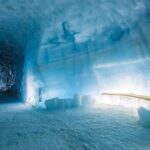
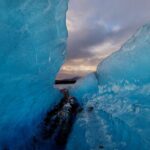
This is the day where Iceland feels like a winter theme park, but the kind built by geology, not marketing. You’re in Vatnajökull territory, and the itinerary takes you into the Crystal Ice Cave at Breiðamerkurjökull. The experience is centered on ice formations shaped by nature—those bright winter textures tend to look unreal even on a phone.
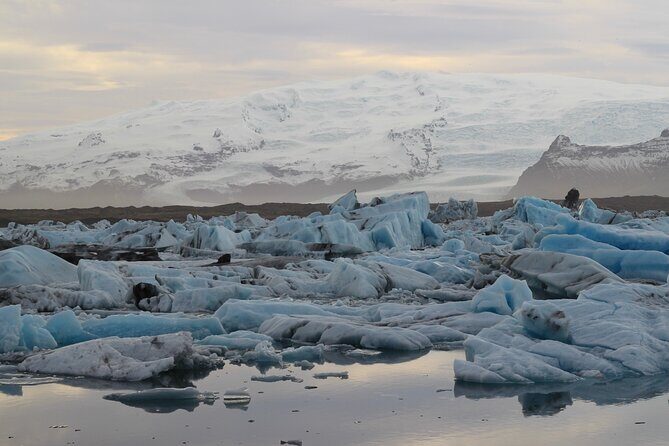
You’ll also get glacier lagoon time at Jökulsárlón. In winter, the lagoon draws seals—hundreds can be around as they hunt. Even if you’re not a wildlife superfan, watching icebergs float in cold water is one of those slow, jaw-dropping moments that resets your whole trip mindset.
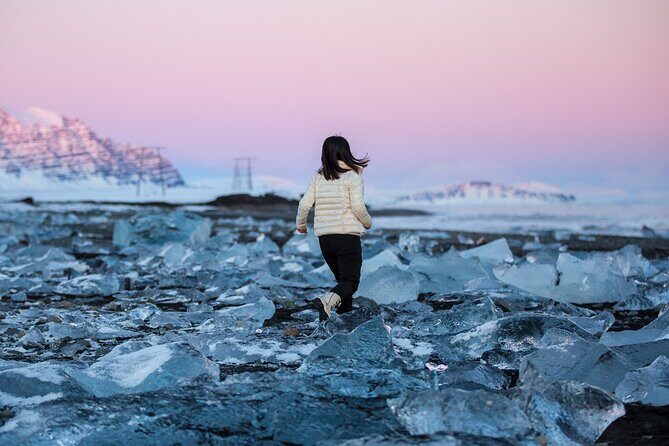
Then you step to Breiðamerkursandur, also called Black Diamond Beach. It’s black sand with diamond-like ice fragments that wash ashore on their way toward the Atlantic. The contrast is the point: dark ground, bright ice.
The day includes a stop at Hvannadalshnjúkur, Iceland’s highest peak at 2110 meters. You’re not climbing anything—just seeing the scale of the Öræfajökull crater area. It’s a useful reminder that Iceland’s beauty comes with real volcanic engine power.

Day 4: East Fjords viewpoints, Djúpivogur pace, optional horses, and the Vök Baths question
Day 4 shifts you from “big road” Iceland into the East Fjords mood—less rush, more contrast. First up is Búlandstindur, a pyramid-shaped mountain that overlooks your East Fjords stop. The symmetry is the visual hook, and it also helps you orient your brain in a region that can feel more spacious than the ring-road core.
Then you reach Djúpivogur, a tiny fishing village linked to the Cittaslow movement. It’s described as a community effort to improve quality of life by slowing down the pace. In practice, it’s a good stop for a quick reset: short walk, photos, and a moment where you feel the trip is moving with you rather than through you.
Next is a winter-friendly cultural detour option: Hallormsstaðarskógur, Iceland’s only largest forest, where most growth is native birch wood. It’s not “woods” in the European fairytale sense, but it’s still a rare change from lava and wind.
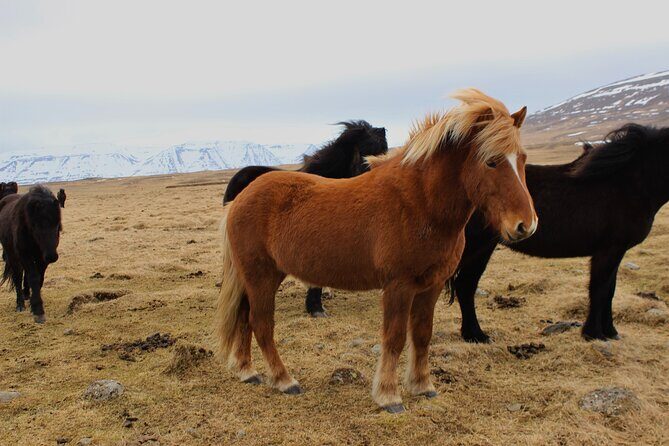
The itinerary then offers Finnsstaðir Horse Rental. This is not included, but it’s real Iceland: you meet local farmers Helga and Siggi at their farm. If you want the iconic Icelandic horse experience and you’re comfortable adding an extra, it’s a natural fit on this day.
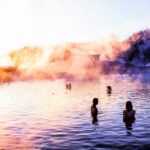
The day ends at Egilsstaðir with the Vök Baths geothermal option on Lake Urriðavatn. Because it’s listed as an extra, don’t plan on it being included. But the details you get—floating pools out on the lake, a sauna, and a cold tunnel with mist shower—make it an excellent recovery choice after driving days.
Day 5: Námafjall and Dimmuborgir, then Goðafoss to Akureyri
If Day 3 is icy drama, Day 5 is geothermal punch. You stop at Námafjall near Námaskarð, where you can see colorful sulphurous mud springs and steaming fumaroles. It sits in the Krafla volcano fissure zone, so the visuals feel like live geology rather than a museum exhibit.
Then comes Dimmuborgir, translated as Dark Castles. It’s a large lava field near Lake Mývatn with unusually shaped formations. The “grotesque” shapes are part of the fun here—your brain keeps trying to name animals, ruins, and towers.
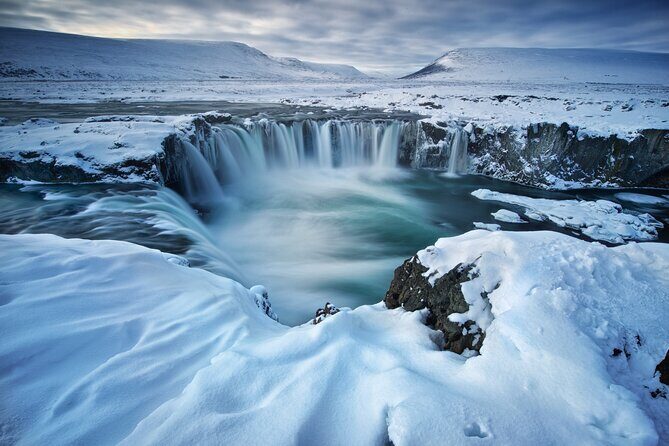
After that, you’ll see Goðafoss, the Waterfall of the Gods. It’s described as one of Iceland’s most beautiful waterfalls and includes a history angle. Even with limited time, it’s a strong stop because waterfalls in winter keep their character: fast water, hard air, and strong contrast.
The long push ends in Akureyri, the north’s “capital.” The itinerary notes a stop in town and a chance to notice those heart-shaped stop signs at traffic lights—small detail, but it makes Akureyri feel friendly, not just functional. If cloud cover plays nice, this is also where Northern Lights viewing might be possible around town.
Day 6: Hauganes harbor, included whale watching, and Grábrók crater skies
Day 6 is built for a different kind of wonder: wildlife. You start with Akureyri, then head to Hauganes, a small harbor town. There’s even a black sand beach viewpoint area with tall mountains around it, which is great if you want a walk that doesn’t feel like “hike just to hike.”
The star is the whale watching tour from Hauganes. It’s included and lasts about 2 hours, taking you out into Eyjafjörður Fjord. The tour highlights that Northern Iceland is globally recognized as one of the best places for whale experiences. Whether you get whales close enough for a full photo frenzy depends on conditions, but the whole setup is aimed at maximizing your chances.
After the boat outing, you’re done with “active” and move into “slow sky watching” mode. The day ends at Grábrók Crater, where the moss-clad lava around the crater comes from an eruption thousands of years ago. It’s also positioned as a possible Northern Lights spot if the sky clears.
Day 7: Snæfellsnes by the sea—seals at Ytri Tunga to Kirkjufell’s arrowhead look
This is your western finale day, and it’s packed with variety. First are Gerðuberg basalt columns, those massive clusters of hexagonal basalt. They’re one of those natural patterns that make your brain stop trying to explain things and just accept “wow.”
Next is Ytri Tunga, where the highlight is unusual white sand in a country famous for black. The beach is also described as a seal colony, and you might spot seals lounging on rocks. In winter, it’s a quick stop rather than a long hang, but it’s one of the more fun “I didn’t expect that” moments of the route.
You’ll then see Budakirkja (the black church of Budir). It’s small, simple, and very Iceland in the way it sits against wind and sky.
After that, Arnarstapi is your walking coast stop under the pyramid-shaped Mount Stapafell. The route includes a short time here to stretch your legs and soak in the shoreline vibe.
At the tip of Snæfellsnes, you reach Snæfellsjökull Glacier, a stratovolcano last erupted around 200 AD. The tour also connects it to Jules Verne’s Journey to the Center of the Earth, where it’s described as the entrance to the earth’s core. Even if you’re not a novel reader, the cultural link helps this spot feel like more than a glacier photo.
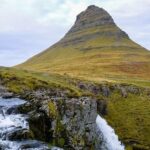
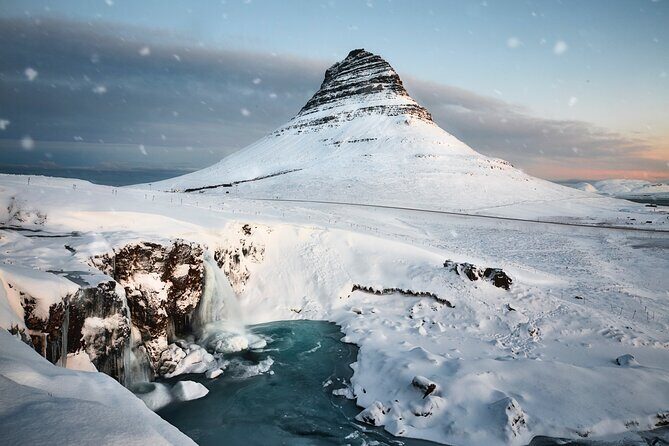
You finish with Londrangar basalt cliffs, Djúpalónssandur black beach (access via a footpath through mossy volcanic towers), and finally Kirkjufell. Kirkjufell is described as the most photographed mountain on the island, and it’s also noted for its Arrowhead Mountain filming use in Game of Thrones.
Day 8: Deildartunguhver and Reykholt, then Hraunfossar and the Víðgelmir cave option
Your final day is a cool mix of hot water, waterfalls, and Icelandic literature history. First is Deildartunguhver Thermal Spring, noted as Europe’s largest and most powerful hot spring, producing about 180 liters per second of 100°C water. It’s the kind of stop that makes “Iceland is geothermal” feel real in seconds.
Then comes Reykholt, a small village with huge historical weight. It’s described as one of Iceland’s most important historical places and a cultural center for centuries. Snorri Sturluson lived there from 1206 to 1241, so you’re touching the literary roots of Iceland here.
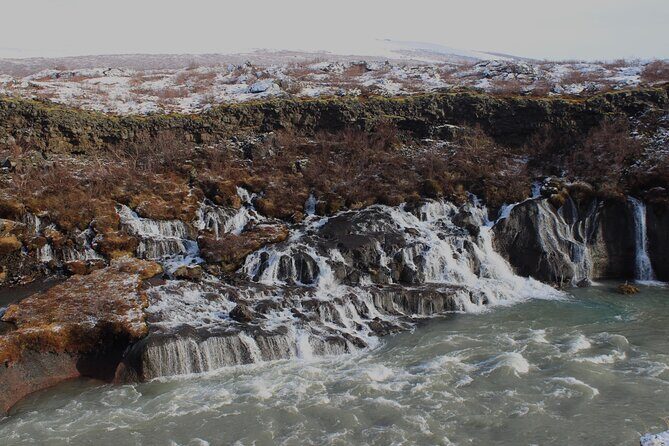
Next, you’ll see Hraunfossar, Lava Falls. The key detail is the scale: rivulets stream over about 900 meters from the lava fields of Hallmundarhraun. Then there’s Barnafoss, Children’s Fall, tied to a Christmas-day saga where two children fell in after refusing to go to church.
The last “choice” is Víðgelmir Lava Cave, Iceland’s largest lava cave. The itinerary describes a comfortable guided cave journey, but it’s explicitly listed as not included, so you’ll need to decide if you want to pay extra.
Should you book this Winter Circle Tour with Snæfellsnes?
Book it if you want Iceland’s biggest winter highlights without doing the planning work yourself. The strongest reasons are practical: included lodging for 7 nights, pickup/drop-off, an English-speaking guide, glacier equipment, a super jeep ice cave approach, and included whale watching. This is the kind of route that can keep you moving and still feeling cared for.
Think twice if you hate cold-weather logistics or want full control of meals and timing. Lunch and dinner aren’t included, and winter conditions can influence what’s possible outdoors. Also, some of the most relaxing “extras” like Vök Baths and the lava cave are add-ons.
One more thing: you’re not always guaranteed perfect continuity if groups need reshuffling. Keep your expectations flexible, and focus on the fact that the plan is built to minimize stress.
If you’re after value, comfort, and high-impact winter sights, this one is an easy yes.
FAQ
What time does the tour start?
The meeting time is 8:00 am.
Where does the tour take place?
It starts in Reykjavik, and the route follows Iceland’s Ring Road with an added focus on the Snæfellsnes Peninsula.
Is pickup included?
Yes. Pickup and drop-off from designated bus stops are included, and WiFi is available onboard.
What are the main winter activities included?
Glacier equipment is included, you do a glacier hike at Sólheimajökull, and you also get access to a crystal ice cave using a super jeep. Whale watching from Hauganes is also included.
Is the Northern Lights a guaranteed part of the trip?
No. The itinerary includes several nights in darker areas to improve odds, but it depends on weather and cloud cover.
What’s included in the accommodation?
The tour includes 7 nights of accommodation.
Are meals included?
No. Lunch and dinner are not included.
Can I add optional activities during the trip?
Yes. Horseback riding, Vök Baths, and the Víðgelmir Lava Cave are listed as optional extras you can add.
Can I rent winter gear like waterproof jackets and pants?
Yes. Waterproof jacket, waterproof pants, and boots rental are listed as available add-on rentals.
What happens if the tour can’t run due to weather?
The experience requires good weather. If it’s canceled due to poor weather, you’ll be offered a different date or a full refund.