REVIEW · REYKJAVIK
Reykjavik: 1-Hour Puffin Watching Tour
Book on GetYourGuide →Operated by Elding Adventure at Sea · Bookable on GetYourGuide
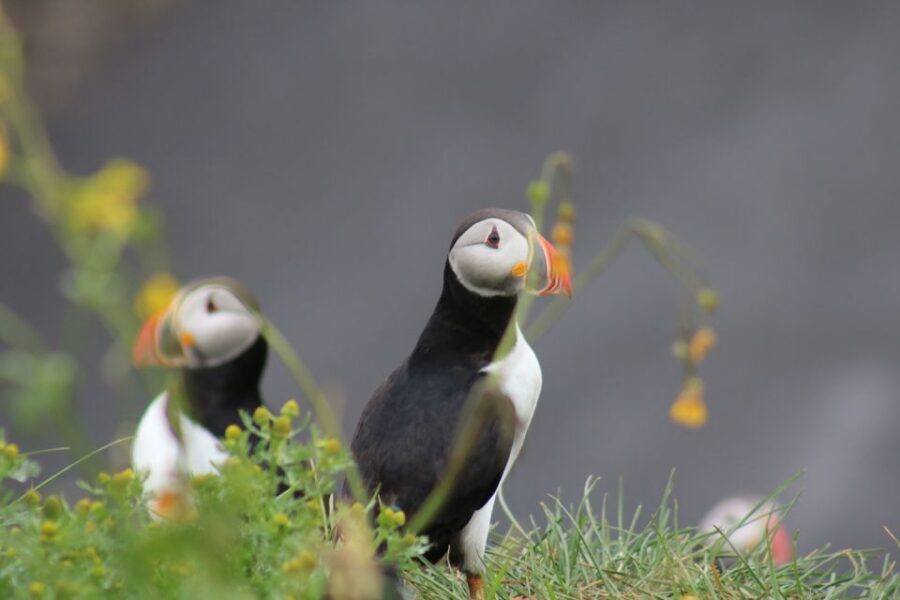
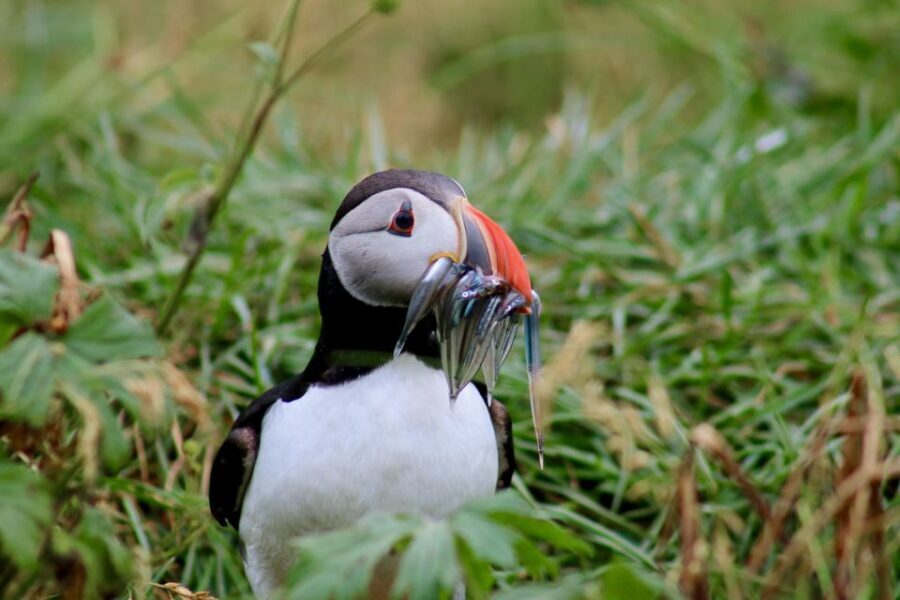
Puffins in Reykjavik’s harbor air. On Elding’s puffin-watching yacht you get close enough to appreciate their colorful bills, and the included on-board binoculars make the small birds actually easy to spot. I also like that a naturalist guide turns the boat ride into real birdwatching, not just a drive-by photo stop. One consideration: on some days (tides and weather matter) you may not get as close to shore as you hoped, since puffins are small and you’re watching from the water.
This is one of the best short tours when you want wildlife without committing to a long day out of town. You’ll sail toward small islands used by puffins for breeding—often Lundey, Engey, or Akurey—and you’ll likely spot other seabirds too. Pack for cold and wind, because even in summer the harbor can bite.
In This Review
- Key things I’d prioritize before you go
- Puffins in Reykjavik: why this short outing works
- Getting started at Ægisgarður 5 (and why arriving early helps)
- On the yacht: warm gear, binoculars, and a guide who points out what matters
- Choosing between Lundey, Engey, and Akurey
- The wildlife-viewing segment: what 30 minutes really means
- Comfort details that make or break a winterless Iceland day
- Price and value: is $66 actually fair?
- Who should book this puffin tour—and who should skip it
- Practical tips to maximize your puffin sightings
- Should you book this Reykjavik puffin tour?
- FAQ
- How long is the Reykjavik puffin watching tour?
- Where do I meet for the tour?
- What bird areas will the boat visit?
- What’s included in the price?
- What should I bring or wear?
- Are refreshments included?
Key things I’d prioritize before you go
- Free binoculars on board so you’re not squinting at tiny specks
- Warm overalls, raincoats, and blankets included, which changes how comfortable you feel
- A naturalist guide who explains what you’re seeing as the birds move
- Different island choices (Akurey, Engey, or Lundey) based on tides and weather
- Rocky breeding shores viewed from the water, with captains steering for the best spots
- You’re supporting wildlife research tied to responsible tourism projects
Puffins in Reykjavik: why this short outing works
Reykjavik is great for big adventures, but it’s also great for the short ones. This puffin tour hits a sweet spot: you get out on the water quickly, you spend a chunk of time focused on birdwatching, and you come back without feeling like you lost half your day.
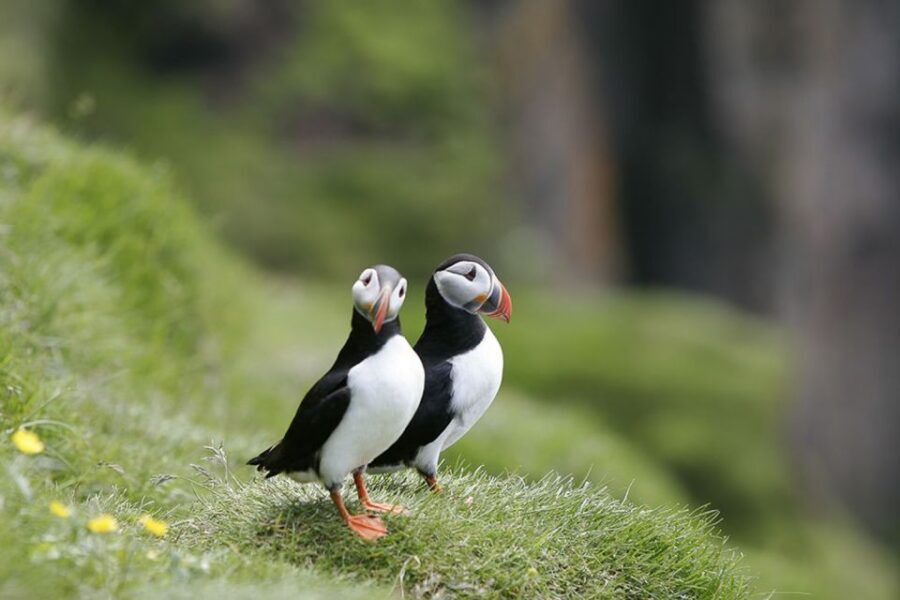
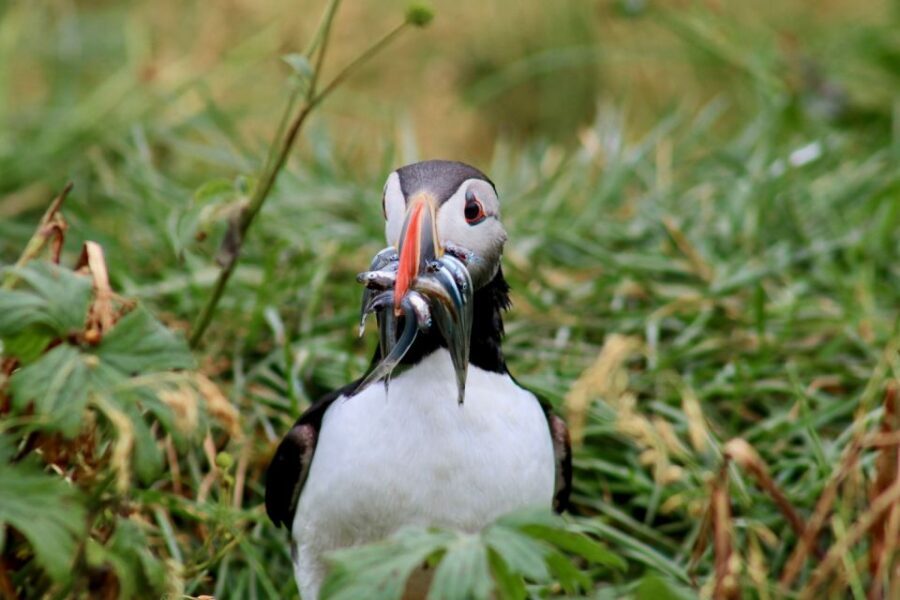
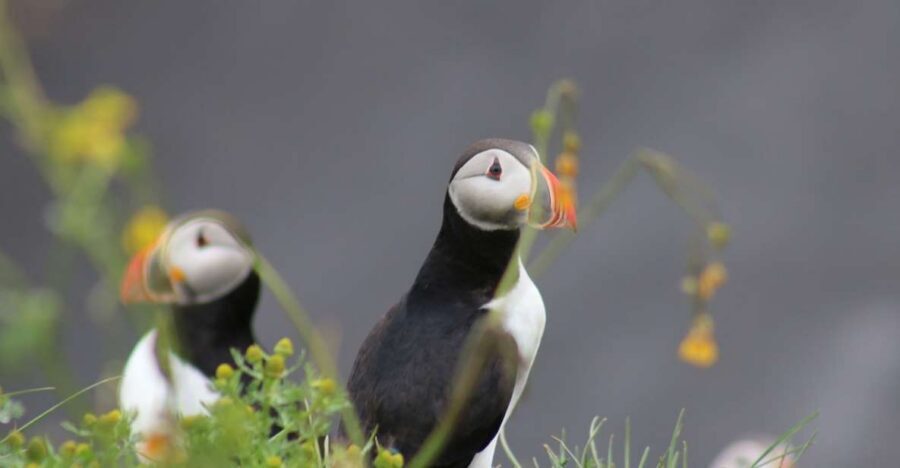
The puffins themselves are why this works. In the breeding season they show off bright bills and bold black-and-white plumage—so even when you’re looking from a distance, they stand out from the other seabirds. If you’ve heard Icelandic puffin nicknames like sea parrot or clown of the ocean, this is where you start to understand the hype. The guide’s running commentary helps you spot behavior—who’s perched, who’s flying, and where activity clusters near the islands.
What I really like is that this isn’t built around forcing puffins to do something. The idea is to watch them in their breeding habitat while the boat positions you for visibility. On a good day, the captain even slows down or turns off engines so you can listen for the birds’ calls. That detail matters: it makes the whole experience feel calmer and more respectful.
One more plus: puffins are comparatively small, but the tour solves that with free binoculars and by timing the approach around what the birds are doing.
A few more Reykjavik tours and experiences worth a look

Getting started at Ægisgarður 5 (and why arriving early helps)
Check in at Elding’s ticket office at Ægisgarður 5 in the center of Reykjavik. It’s right where you want to be—downtown, easy to walk to, and close to other harbor sights.
Once you’re there, you can look around the Whale Watching Centre while you wait. It’s a nice way to use time that might otherwise feel like standing around in the cold. You’ll see videos, skeletons, information boards, and gifts for sale—small stuff, but it keeps the waiting period from feeling dead.
Practical tip: if you’re driving, plan ahead. Parking can be tricky in this area, so give yourself a buffer. Also, keep your setup simple—no large bags or luggage on board.
On the yacht: warm gear, binoculars, and a guide who points out what matters
The ride is the gateway to the birds. This isn’t a “sit and hope” situation. The tour provides warm overalls, raincoats, and blankets, and that’s a bigger deal than it sounds. When your body stays warm, you watch longer and you miss less.
You’ll also be borrowing on-board binoculars. Puffins can look like moving dots from the wrong angle. With binoculars, they turn into birds with actual personality—bill color, posture, and the way they hop and pause near breeding areas.
If you’re prone to motion sickness, you’ll probably feel better knowing the crew can help some passengers with motion-sickness pills (this has come up in past experiences). Still, Iceland can be a windy place, so dress for spray even when the forecast looks mild.
And then there’s the naturalist guide. Guides on this route talk about puffin life in a way that makes spotting them easier. You’ll hear what they eat, how they breed, how deep they dive, and what threatens them. On top of that, some guides take photos during the outing and people have reported that they can get those images after the tour—so you might leave with more than just memories.
Choosing between Lundey, Engey, and Akurey
You won’t always go to the exact same island. Depending on tides and weather, the captain heads to Lundey, Engey, or Akurey. All three are known for serious seabird activity during breeding season.
Because the landing isn’t the point, what matters most is how the captain positions the boat. These islands have rocky shores, and the crew aims for the best viewing spots—close enough for you to see puffins clearly, without pushing behavior too hard. That’s the environmental part: watching from water while keeping distance respectful.
If you’re wondering what else you might see besides puffins, this tour can deliver. Puffins share space with other birds such as eider ducks, arctic terns, guillemots, cormorants, fulmars, geese, and oystercatchers. On some days, you might even spot additional wildlife like seals or dolphins, but treat that as a bonus, not a guarantee.
The key thing to know: if your goal is truly close-up views of birds sitting on land, you might find this tour more “close-enough” than “staying at their doorstep.” The binoculars help a lot, but the viewing distance is still shaped by safety rules and natural protection for nesting birds.
The wildlife-viewing segment: what 30 minutes really means
This outing is built around a short, focused window. The plan goes like this in practical terms: you spend time transiting from the harbor, then you get about 30 minutes aimed at wildlife viewing, then you cruise back.
That pacing is good value for a one-hour tour. You don’t burn energy on long storytelling or endless cruising loops. You just get out there, settle in, and watch.
Here’s the reality check: puffins are small, and they’re often at or near burrows on rocky islands. So even when you get “close,” you’re still scanning and using binoculars to pick them out. A few good moments—birds flying low, birds landing near the same section of shore—can make the whole half-hour feel productive.
Tides and weather can also change how close the boat can get to the island’s most active areas. One thing I’d do before you go: ask which tour times tend to work better at higher tide, if that information is available when you check in. If the captain has more flexibility, you often get better shore access.
Also, keep an eye on how the birds move. Puffins don’t just sit still. If you watch the water too, you’ll often spot birds flying by or diving and resurfacing nearby. On a calm, clear day, you’ll feel like you’re watching the seabird traffic pattern. On a drizzly day, it can still be great—just plan to keep your camera and phone protected and focus on the binocular views.






Comfort details that make or break a winterless Iceland day
This tour is short, so comfort choices matter even more. I love that the essentials are handled for you.
- Warm overalls and blankets mean you can concentrate on birds instead of shivering.
- Raincoats help if the harbor weather turns sideways.
- If you’re lucky, you might get seaman’s coffee to warm up while you’re waiting and watching.
- You’re also allowed to borrow rain jackets, which is a lifesaver if you packed the wrong layer.
One more detail: high-heeled shoes aren’t allowed, and you’ll want shoes with grip. That’s not just a rule; boat decks can be slick, and you’ll be moving around to find the best viewing angle.
Group size can be a factor too. The experience tends to feel comfortable, with people able to shift position on the yacht without fighting crowds. Past groups have been around a dozen, which is just enough to feel lively but not enough to block your view.
Price and value: is $66 actually fair?
At $66 per person for an hour, this isn’t the bargain basement of Iceland tours. But it also isn’t just a “boat ride.”
You’re paying for a package:
- the guided wildlife spotting from a naturalist,
- binoculars included (not everyone gets that on similar tours),
- and the real comfort gear—warm overalls, raincoats, and blankets—that makes the weather tolerable.
When you add in the fact that purchasing the ticket supports summer research projects and responsible wildlife protection efforts, the price starts to make more sense. You’re not only paying for your own views; you’re also helping fund work that keeps these seabird populations safer.
If you’re on a tight schedule in Reykjavik, this is one of the better “bang for time” options. If you’ve got all day and you’re chasing extreme close-ups, you might want a smaller private-style boat or a longer trip. But for a quick, well-run introduction to puffins, this is strong value.
Who should book this puffin tour—and who should skip it
Book this tour if:
- You want puffins without a full-day commitment.
- You’re happy with viewing from the water using binoculars.
- You value a guide who explains the birds instead of just pointing and shrugging.
- You want a family-friendly, organized wildlife outing with warm gear.
Consider skipping (or looking at a different style of tour) if:
- You’re a wheelchair user. This tour is not suitable for wheelchair access.
- Your dream is birds right next to the boat at land level for ultra-close photos. This experience is more about respectful proximity than front-row landing.
- You’re expecting guaranteed sunshine. Iceland weather is fickle, and gloomy days can still produce birds, but your visibility and photography will be more challenging.
Practical tips to maximize your puffin sightings
A few small moves can make a big difference on the day:
Dress like you plan to stand outside. Even with gear on board, you’ll be happier if your base layers are windproof and you’ve got gloves or at least warm sleeves. The boat ride and the viewing period are the coldest minutes of your day.
Ask about tides at check-in. If you can, find out which departure times are more likely to help the captain get closer. Even with binoculars, you want the best possible positioning.
Bring a camera you can handle quickly. Puffins can appear suddenly—flying over, perching, or changing position near shore. If your camera is slow to wake up, you’ll miss the easiest moments.
Use binoculars like a photography tool. If you’re trying to line up your phone or camera with what you see, take your time and stabilize your grip. People have even improvised phone positioning at the binocular lens for sharper results.
Stay flexible. If the captain changes island choice to match conditions, it’s usually for a reason. The route is built around getting you bird time in workable weather.
Should you book this Reykjavik puffin tour?
I’d book it if you want a short, well-organized puffin experience that actually helps you see the birds instead of just advertising the idea of puffins. The included binoculars and warm gear are not small perks—they’re the difference between enjoying the birds and giving up after ten minutes. Add a naturalist guide who can spot what you’re looking at, and you get something that feels worth the time and the $66.
I’d hesitate only if your top priority is extreme shore-level close-ups on land. This is a respectful, from-the-water watch, and tides can limit how close you get. Still, even on tricky weather days, you can come away feeling like you checked off a very Iceland bucket-list moment—one puffin at a time.
FAQ
How long is the Reykjavik puffin watching tour?
The tour duration is listed as 1 hour, with about 30 minutes dedicated to wildlife viewing.
Where do I meet for the tour?
Check-in is at Elding’s ticket office at Ægisgarður 5, 101 Reykjavík. It’s within easy walking distance of downtown.
What bird areas will the boat visit?
Depending on tides and weather, the captain sails to Lundey, Engey, or Akurey to view puffins at their breeding grounds.
What’s included in the price?
Included are warm overalls, raincoats and blankets, on-board binoculars to borrow, and a naturalist guide.
What should I bring or wear?
Bring weather-appropriate clothing. High-heeled shoes are not allowed, and you should avoid bringing luggage or large bags.
Are refreshments included?
Refreshments are not included, but you can purchase drinks on board.