REVIEW · REYKJAVIK
Reykjanes Peninsula Tour
Book on Viator →Operated by Oak Travel Service · Bookable on Viator
Iceland’s geology hits fast. This private Reykjanes Peninsula day mixes major tectonic sights with hotel pickup and a guide who explains what you’re seeing. I especially like that it’s limited to your group, so the pace feels human, not rushed.
The catch is simple: everything other than the Blue Lagoon is timed nicely, but Blue Lagoon entry costs extra and you’ll need to pre-book.
Having the guide team available (often Thorir or Siggi) can make a real difference. One of the best parts of this experience is how they can stay responsive to weather and keep you moving toward good views, not just a checkbox route.
In This Review
- Key highlights you’ll feel right away
- Reykjanes Peninsula: why this route feels different
- Pickup and timing: how the 5-hour flow works
- Bridge Between Continents: the tectonic-plate moment
- Krýsuvík and Seltún geothermal area: steam, mud, and red hills
- Reykjanes Lighthouse: 1878 to 1905 to 1929
- Kleifarvatn Lake: mythology plus geothermal intrigue
- Gunnuhver Hot Springs: the steam-field stop that grabs attention
- Blue Lagoon transfer: how to budget and what to expect
- Guide approach and group size: where private tours shine
- Price and value: is $929 per group a smart buy?
- What to pack for a geothermal day in Reykjavik area
- Should you book the Reykjanes Peninsula Tour?
- FAQ
- How long is the Reykjanes Peninsula tour?
- Is pickup from Reykjavik hotels included?
- Where does the tour start and end?
- Is this a private tour?
- How many people are in a group?
- What is included in the tour price?
- Is Blue Lagoon admission included?
- How much is Blue Lagoon admission?
- What language is the tour offered in?
- Is service available for animals?
- What happens if weather is poor?
Key highlights you’ll feel right away
- Private group, real flexibility: you’re not sharing the van with strangers.
- Fast hit of big geology: tectonic plates, steam vents, hot mud, and lava-country scenery.
- Guided stops with free admission: the key viewpoints include ticket-free access.
- Kýsuvík/Seltún boardwalk time: you get safe routes over geothermal ground.
- Gunnuhver’s steam field: color, sulfur smells, and smoking vents in one concentrated area.
- Blue Lagoon transfer included: you pay for entry, but the logistics aren’t a mess.
Reykjanes Peninsula: why this route feels different
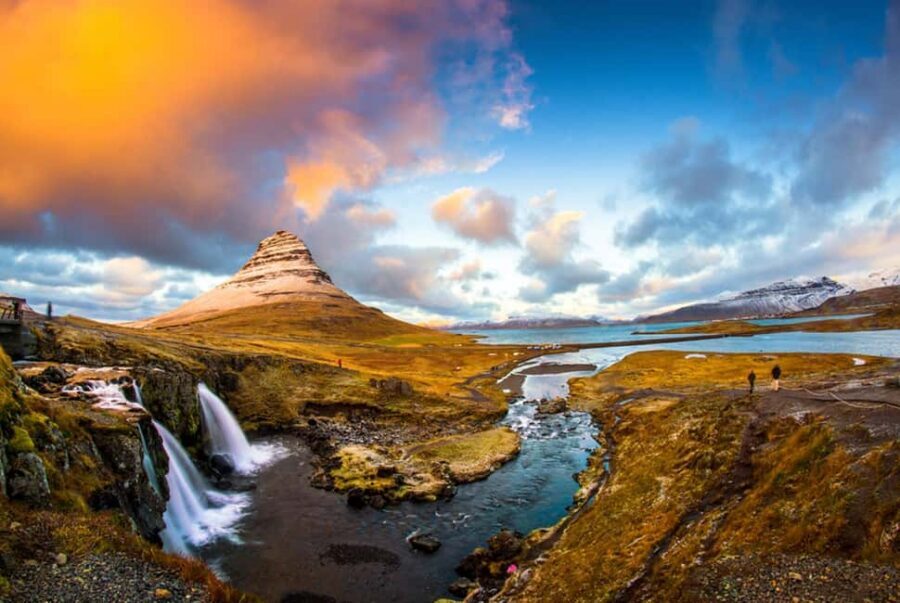
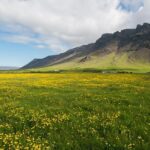
Most Iceland trips start with waterfalls or glaciers. This one starts with the engine beneath your feet. The Reykjanes Peninsula sits on the boundary where Earth’s plates grind and separate, so the “wow” isn’t just scenery—it’s process. You’re walking near boiling ground, steam vents, and geothermal fields that look almost unreal until your guide puts it into plain words.
I like that the day is built around short, focused stops. Each stop is long enough to get out, take photos, and understand what makes the place special. If you’re the type who gets tired after hours of driving with no context, you’ll probably appreciate this structure.
And because it’s private, you have more room to match the day to your mood—more photos at a plume of steam, more time at a viewpoint, less time in a spot that isn’t cooperating with the weather.
You can also read our reviews of more tours and experiences in Reykjavik.

Pickup and timing: how the 5-hour flow works
The tour runs about 5 hours and is designed to fit neatly into your Iceland schedule. It starts at Harpa, 101 Reykjavík, and you return there at the end.
Pickup is offered from most Reykjavik hotels, which matters more than it sounds. Reykjavik can be walkable, but weather here can turn fast. Being picked up means you spend less time hunting for the right bus stop and more time outside at the stops that actually count.
You’ll also get a mobile ticket, and the tour is offered in English. Service animals are allowed, and most people can participate, which is helpful if you’re traveling as a couple, family, or small group.
One practical note: this is an outdoors-heavy day. The experience requires good weather, so if conditions are bad, you may be offered another date or a refund. Plan to pack a rain layer you’d actually wear, not something you hope will stay clean and dry.
Bridge Between Continents: the tectonic-plate moment
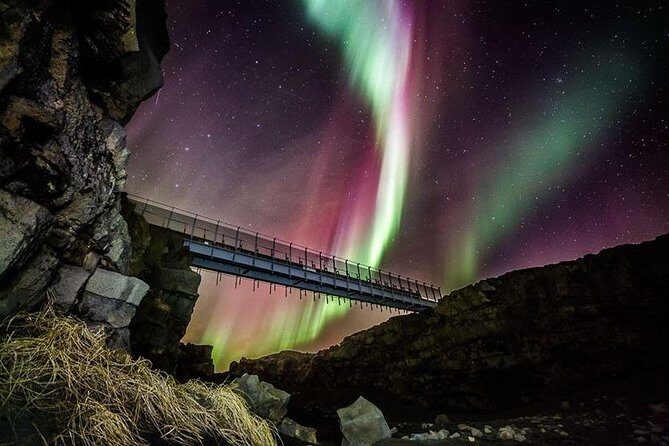
Stop one is the kind of place you can’t fully understand until you see it: a bridge where you can stand at the point where North America and Europe meet. It’s quick—about 30 minutes—but it’s also unforgettable in a different way than a waterfall. You’re not just looking at nature. You’re standing near a geological boundary.
What I like about this stop is the “story to tell” factor. It gives you a clean explanation for why Reykjanes looks the way it does—fractures, heat, and constant change. If you’ve ever wondered why Iceland is so geologically active, this is where the day starts making sense.
Potential drawback: because the stop is short, you’ll want to treat it like your photo-and-briefing time. If you show up under poor visibility, you might spend more time waiting than learning.
Krýsuvík and Seltún geothermal area: steam, mud, and red hills
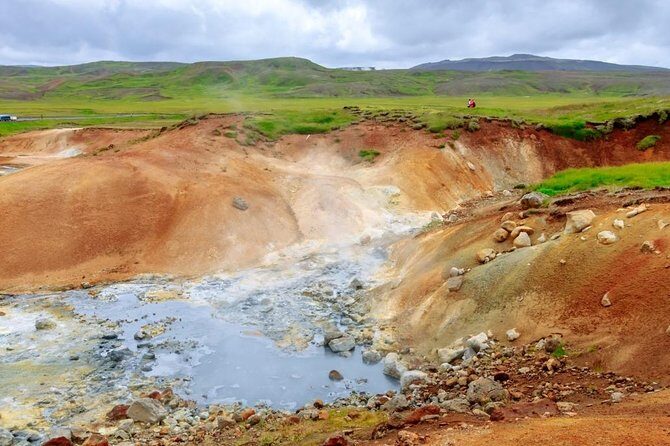
Next comes Krýsuvík and Seltún, one of the peninsula’s most iconic geothermal zones. You’ll see bubbling mud pots and rising steam from fumaroles, and you’ll be guided to walkways designed to keep you safely above geothermal ground.
This stop also lasts about 30 minutes, which is exactly what it should be. In places like this, too-long visits can get monotonous fast—unless you’re the type who reads every sign. The time window keeps it focused: see the activity, understand why it’s happening, then move on.
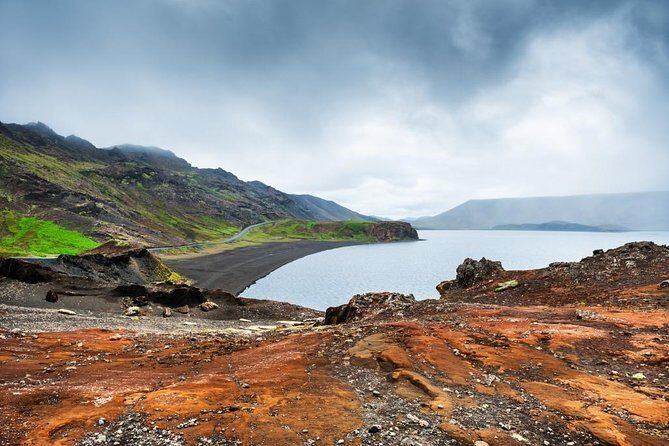
You’ll likely notice the vivid red tones of the hills. The basic idea your guide helps you connect is that something relatively deep below turns into steam and gas rising through fractures. On the boardwalk, it feels like you’re hovering right over the action—without needing to guess where it’s safe.
What to watch for: geothermal sites can be smelly and slick. Bring shoes you’re comfortable getting dirty and quick to wipe off. Wind can also shove steam around, so if you want photos, step into the spot your guide recommends.
Reykjanes Lighthouse: 1878 to 1905 to 1929
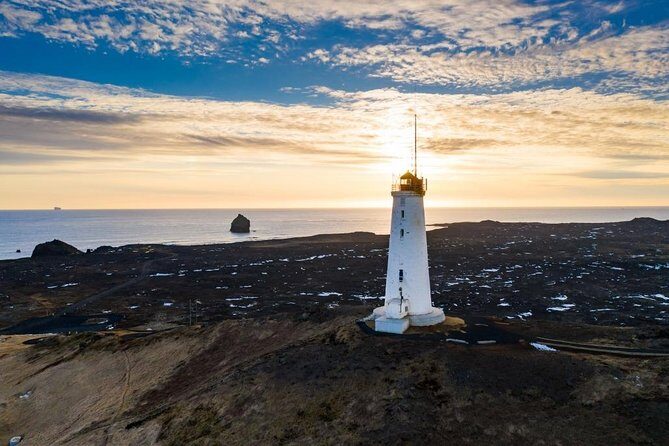
Then you’ll head to Reykjanes Lighthouse (Reykjanesvíti). This is one of the older lighthouses on the peninsula, built in 1878 and later damaged in a major earthquake in 1905. After repairs, it was rebuilt in 1929 at a new location that was considered safer.
This stop is about 30 minutes. It’s not the longest part of the day, but it adds an important layer: Iceland isn’t only geology—it’s also how people survive and navigate it.
What I like here is the emotional payoff. You look at a lighthouse and you’re forced to think about time, risk, and why engineers and communities had to adapt. If you enjoy history that feels tied to the physical world, this is a good moment to slow down.

Kleifarvatn Lake: mythology plus geothermal intrigue
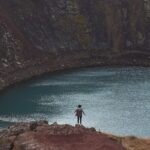
At Kleifarvatn Lake, the focus shifts from “hot springs you can smell” to geothermal springs connected to the lake. The area is known as an exciting spot especially for snorkelers and divers (so if you’re not geared for water-time, you may still enjoy the viewpoints and the geothermal story).
This stop is also 30 minutes, which helps keep expectations realistic. You’re not going to turn this into an all-day water activity. Instead, you get a chance to see why the lake has such a reputation and how the geothermal systems tie into the area’s mythology.
If you’re not planning any water play, consider using the time to ask your guide what’s happening beneath the surface. That’s where this stop can feel more “Iceland-brainy” than just scenic.
Gunnuhver Hot Springs: the steam-field stop that grabs attention
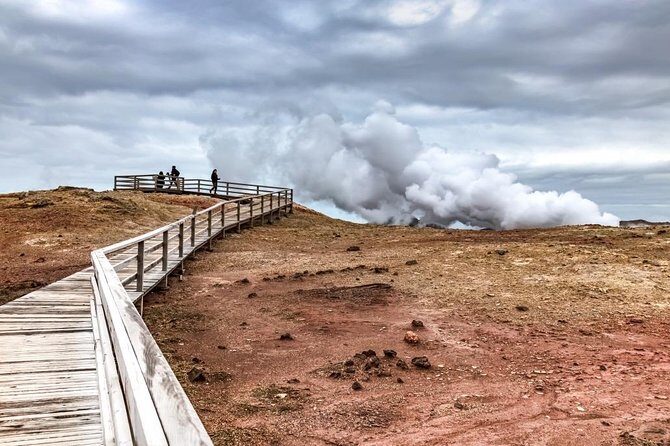
If you want one place that delivers pure atmosphere, it’s Gunnuhver Hot Springs. This geothermal field is described as a huge area of hot mud pools, steam, fumaroles, and mineral-stained ground. It’s visible from far away because the steam production is intense.
This stop is about 30 minutes, and that’s enough to see multiple vents and get a sense of how restless the ground is. You’ll likely feel the heat and smell the minerals. The colors—rocks and mineral tones—are part of the experience, too.
A quick consideration: steam fields can be harsh in wind. If conditions are poor, you might see less activity from your viewing angle. This is where having a guide who adjusts the approach matters. Aim for the viewing spot that gives you the best combination of safety and visibility.
Blue Lagoon transfer: how to budget and what to expect
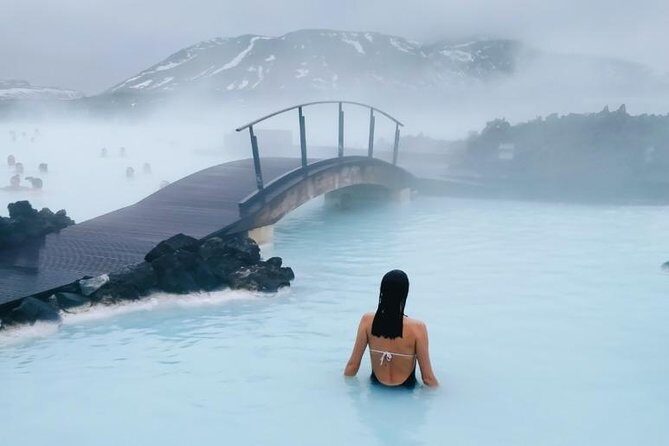
The tour includes transfers to and from the Blue Lagoon, but Blue Lagoon entry is not included. You’ll need to pre-book, and the listed admission fee is $150 per person.
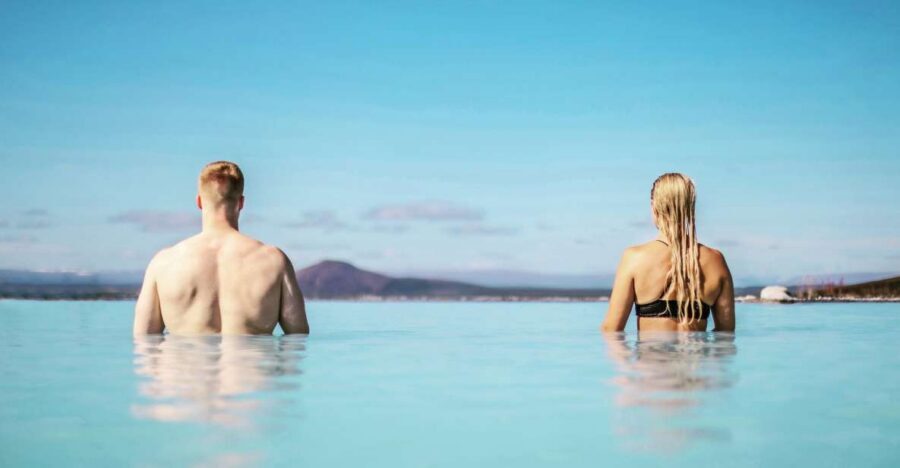
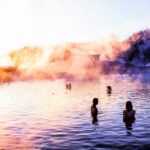
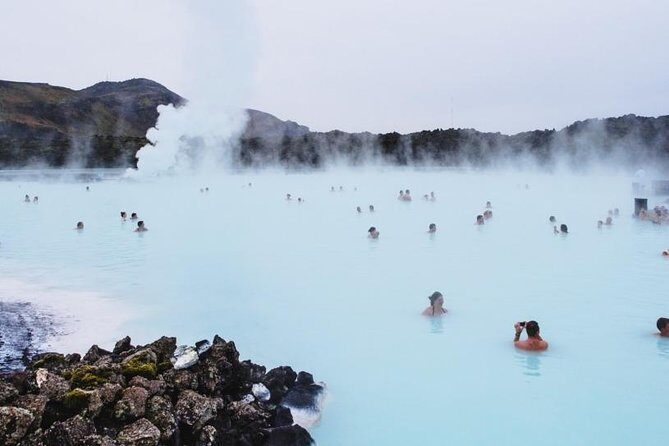
This matters for value. Yes, $150 is a real add-on, but it’s also a common reason people choose this tour in the first place—because the Blue Lagoon is one of Iceland’s most famous geothermal spas. The lagoon’s water is kept around 37–40°C (98–104°F), and it’s supplied from deep water sources used in geothermal power before reaching the lagoon.
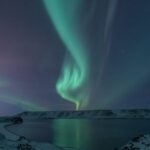
If you go in wintertime, the idea of northern lights is part of the appeal. You may or may not see them, but the setting can make you feel like you’re relaxing inside a lava-world. The visuals are the main event: milky water, steam, and that stark lava-field backdrop.
Practical tips so you don’t get stressed:
- Bring swimwear and expect a wet, warm environment even if it’s freezing outside.
- Consider which Blue Lagoon package you choose (Basic, Comfort, or Luxury are offered).
- Plan for a full two hours on the Blue Lagoon portion.
Guide approach and group size: where private tours shine
This is a private experience limited to your group of up to 3 people. That’s a sweet spot. You get the benefits of a private van (quiet, flexibility, easier photo stops) without paying for a giant group experience.
The other big advantage is guidance quality. The guide names you might be paired with include Thorir or Siggi. A standout pattern from how the guides operate is responsiveness—helping adjust the day as weather changes, and staying practical even when the unexpected happens. If you’re the type who wants explanations in real time while you’re driving between stops, you’ll likely appreciate that approach.
That said, one possible drawback exists: if you prefer a super-structured lecture style, you’ll want to communicate what you want from the guide. Some guides can lean more into driving and pacing than into detailed commentary, even while still delivering a great day.
Price and value: is $929 per group a smart buy?
The price is $929 per group (up to 3), for about 5 hours. That pricing looks steep until you map it to what you actually get: private transport, a guide, multiple key geothermal and tectonic stops with free admission included, and Blue Lagoon transfer included.
Here’s how I’d judge value for your situation:
- If you’re traveling as two or three people, the per-person cost can feel more reasonable than you might expect for a private Iceland outing.
- If you want a flexible day that can shift with clouds or wind, private format is often worth the premium.
- If you’d otherwise rent a car or join a shared tour and still pay for guided context, this can start to look like efficient spending.
But be honest about the Blue Lagoon cost. With $150 per person as an add-on, the day can quickly add up. If you don’t care about the lagoon itself, you might feel the cost is heavier than the benefits. On the flip side, if Blue Lagoon is a must, the transfer and timing become part of what you’re paying for.
What to pack for a geothermal day in Reykjavik area
This tour sits in a geothermal, windy corner of Iceland. Pack like you’re going to be outside near steam and mineral ground—because you are.
I’d bring:
- Waterproof jacket and pants if you have them
- Warm layers you can strip down in the van
- Sturdy shoes with grip
- Sunglasses and sunscreen (steam days can still be bright)
- A small towel or wipes, because geothermal stops can leave grit and mineral dust behind
Also: keep your phone charged. Between driving, quick stops, and photo moments, the day can move faster than you expect.
Should you book the Reykjanes Peninsula Tour?
Book it if you want a private, guided Reykjanes Peninsula day that makes Iceland’s geology feel understandable, not random. The mix of tectonic-plate storytelling, Krýsuvík’s steaming boardwalk zone, and Gunnuhver’s steam-field drama is a strong combination for people who like learning while they look.
Skip or reconsider if Blue Lagoon entry is the only reason you’d book, because the tour price does not include that $150 per person ticket—and you’ll want to plan that budget before committing. Also consider whether you want a highly chatty guide versus a more driver-and-timing style.
If you’re traveling with up to three people and you want fewer crowds and more control over pacing, this is the kind of private Iceland outing that tends to pay off.
FAQ
How long is the Reykjanes Peninsula tour?
The tour lasts about 5 hours.
Is pickup from Reykjavik hotels included?
Pickup is offered from most Reykjavik hotels.
Where does the tour start and end?
It starts at Harpa, 101 Reykjavík, and ends back at the same meeting point.
Is this a private tour?
Yes. It’s private, and only your group participates.
How many people are in a group?
The price is per group up to 3 people.
What is included in the tour price?
An experienced guide is included, and transfers to and from the Blue Lagoon are included.
Is Blue Lagoon admission included?
No. Blue Lagoon entry is not included in the tour price. You must pre-book.
How much is Blue Lagoon admission?
The listed Blue Lagoon fee is $150 per person.
What language is the tour offered in?
The tour is offered in English.
Is service available for animals?
Service animals are allowed.
What happens if weather is poor?
The experience requires good weather. If it’s canceled due to poor weather, you’ll be offered a different date or a full refund.