REVIEW · REYKJAVIK
Reykjanes Geopark Small-Group Tour with Airport Transfer
Book on Viator →Operated by Gateway to Iceland · Bookable on Viator
Windy lakes and boiling mud pools. This Reykjanes Geopark small-group tour is all about the Iceland most visitors skip: lakes in fissures, crater-water color changes, and weird coastal geology.
I especially like the small group setup (minibus, max 19) because it keeps the day flexible and makes it easier to hear the live guide commentary. I also really value the included pickup and drop-off, with the option to end at the Blue Lagoon or Keflavik Airport.
One possible drawback: if you choose the airport drop-off, the timing can be earlier than you expect, so you’ll want a buffer for security lines and parking.
In This Review
- Key Things That Make This Tour Worth Your Time
- A Half-Day Geology Fix Near Reykjavik
- Pickup, Minibus Size, and Why It Matters for Real Comfort
- Airport and Blue Lagoon Drop-Off: Convenient, But Time Your Buffer
- Reykjanes in Motion: Passing Hafnafjörður Before the Geothermal Shows
- Stop 1: Kleifarvatn Lake and the Fissure-Zone Feel
- Stop 2: Grænavatn’s Crater Water That Looks Like Teal Paint
- Stop 3: Krysuvík Hot Springs Walk on a Colorful Hillside
- Stop 4: Gunnuhver Mud Pools and the Ghost Story Add-On
- Stop 5: Grindavík’s Lava Fields and Abandoned City Atmosphere
- Stop 6: Reykjanesviti Lighthouse and the Rock-Formation Views
- Stop 7: Bridge Between Continents and the Mid-Atlantic Ridge Moment
- Lunch in Keflavík: A Practical Pause You Control
- What It Costs (and What You’re Actually Getting)
- Timing, Weather, and Why Your Day Should Stay Flexible
- Who This Reykjanes Geopark Tour Fits Best
- Should You Book This Tour?
- FAQ
- What time does the tour start?
- How long is the tour?
- Are food and drinks included?
- Can I choose to be dropped off at the Blue Lagoon or Keflavik Airport?
- Are there admission fees for the stops?
- What should I do if roads close in winter or the route changes?
Key Things That Make This Tour Worth Your Time
- Small-group minibus (max 19) means less waiting and more real conversation with the guide.
- Geology-first stops: lakes, sulfur-green crater water, and geothermal mud pools.
- Ghost story at Gunnuhver adds personality to the steam and grime.
- Keflavík lunch break gives you a practical place to eat without feeling rushed.
- Bridge Between Continents drive is a memorable quick lesson in plate tectonics.
- Weather and road changes happen (snow and volcanic activity), so you’ll stay flexible.
A Half-Day Geology Fix Near Reykjavik
This tour has one job: get you out to the Reykjanes peninsula and show you how Iceland’s ground works when it’s not busy with crowds. You start from central Reykjavik, ride in a climate-controlled minibus, and spend the day bouncing between geothermal fields, crater lakes, and coastal viewpoints that feel otherworldly in the real sense.
The best part is how the day teaches you to see the place. After a few stops, you start recognizing patterns: fissures, sulfur traces, and the way geothermal activity reshapes the coastline. Even the quick stops feel intentional rather than like check-the-box photo breaks.
And yes, you’ll cross into that fun human idea—two continents—without needing to do anything complicated. The day turns into a geology lesson you can photograph.
A few more Reykjavik tours and experiences worth a look
Pickup, Minibus Size, and Why It Matters for Real Comfort
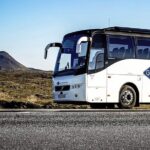
Iceland tours can be hit-or-miss on comfort, but this one is built for the practical reality of a cold, windy peninsula day. You’re on a minibus that keeps the group tight. With a maximum of 19 passengers (and in many cases fewer), you’re less likely to feel herded.
Pickup is offered from select central Reykjavik hotels, and if your hotel falls inside Reykjavík’s driving restrictions, you’ll meet at a nearby bus stop—usually just a few minutes’ walk. That small detail matters because you won’t waste your morning sprinting across town in bad weather.
You also get live commentary onboard. With geothermal terrain, the guide’s explanations make the sights stick. Without that, it’s still impressive—but with it, you’ll leave thinking about fissures and sulfur for days.
Airport and Blue Lagoon Drop-Off: Convenient, But Time Your Buffer
This tour can end where it’s most useful for you. You’ll return to your original departure point, or you can choose Keflavik Airport for flights departing 4pm or later, or the Blue Lagoon drop-off.
Here’s the practical caution: airport drop-offs can happen significantly earlier than your flight time. If you’re on a tight schedule, I’d plan for extra time at the airport (and for the real-world odds of lines, parking, and weather). In other words: don’t treat the driver timing as your only cushion.
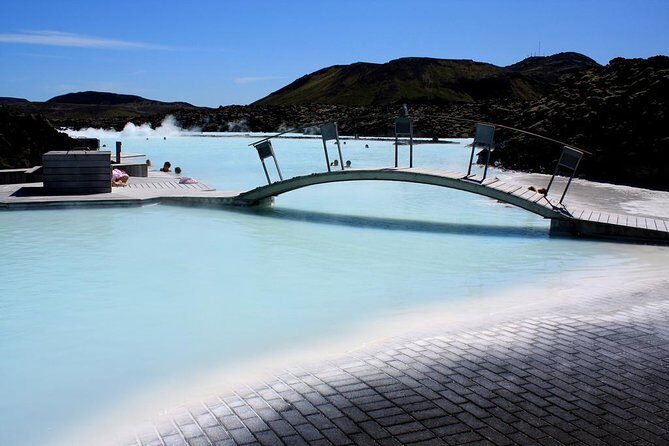
If you’re going to the Blue Lagoon, ending the tour there can be a great fit because it turns a cold, outdoors-heavy day into a warm soak. Just remember Blue Lagoon admission isn’t included—you arrange that separately.
Reykjanes in Motion: Passing Hafnafjörður Before the Geothermal Shows
Before you even hit the Geopark highlights, the ride gives you context. You head southwest from Reykjavík with cameras ready. You’ll pass by the president’s house and old fishermen’s houses in Hafnafjörður before reaching the Reykjanes peninsula.
That small prelude is useful. It reminds you that you’re not only chasing volcanic scenery—you’re also traveling through places with people and history. Icelandic culture here is tied to the land’s moods: storms, geothermal steam, and the constant sense that the ground is alive.
And once the peninsula scenery starts, you’ll understand why this area feeds folklore and stories. The land is dramatic, not decorative.
Stop 1: Kleifarvatn Lake and the Fissure-Zone Feel
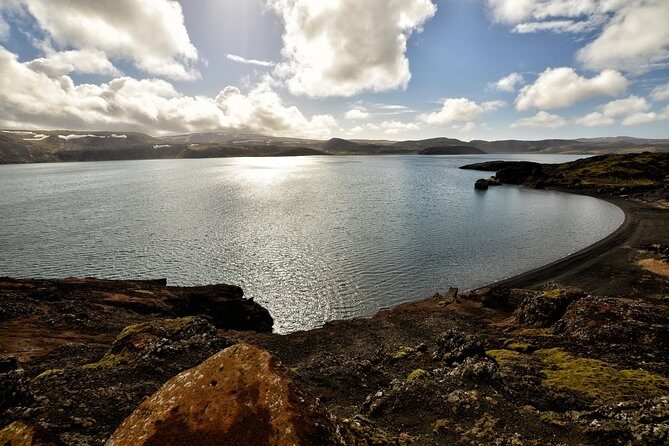
The first official stop is Kleifarvatn Lake, a picturesque water body that sits on top of a fissure zone. It’s fed entirely from underground, which helps explain both the lake’s character and why the area attracts myths.
You’ll get a short viewing window—about 10 minutes. The benefit of a quick stop is that you’ll spend more time where the visuals change fastest. The downside is you’re mostly here for a viewpoint, not a long walk.
Pro tip: Kleifarvatn can be windy, and that wind can be rough even when the air temperature seems manageable. Dress like you expect gusts, not like you’re strolling in a city.
A few more Reykjavik tours and experiences worth a look





Stop 2: Grænavatn’s Crater Water That Looks Like Teal Paint
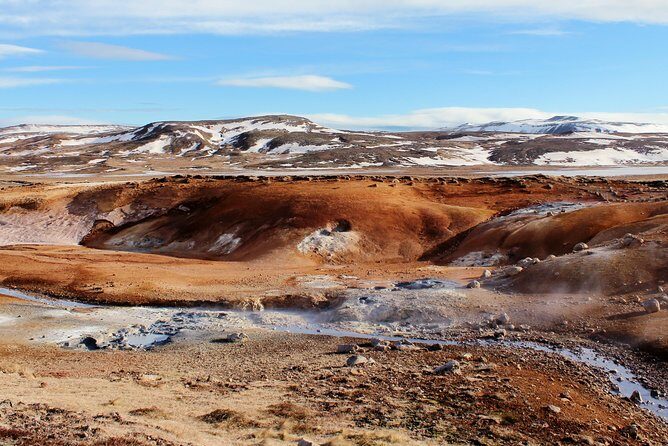
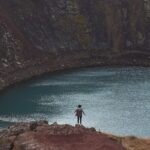
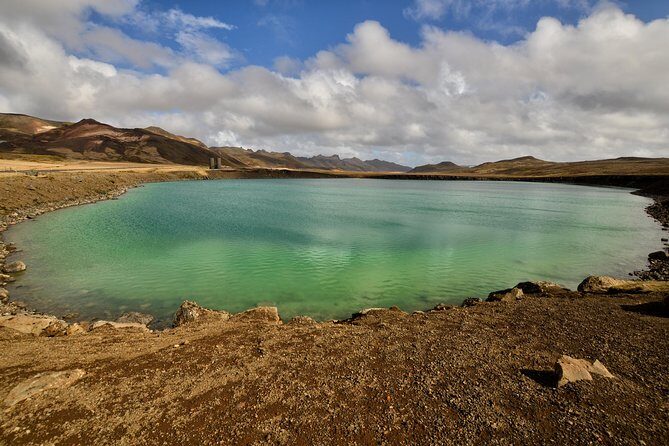
Next up is Grænavatn, which translates to green lake—named for the color and the chemistry behind it. This water sits in a volcanic crater, and the green tint comes from sulfur plus depth (around 45 meters).
You’ll again have roughly 10 minutes. The color is the show here. In photos, it can look unreal. In person, it still shocks you—partly because it looks too colorful for a place you associate with black rocks and steam.
If you like geology, this stop is a quick lesson in how minerals change water appearance. It’s also a reminder that Iceland’s “impossible” colors often have boring reasons—just in a dramatic setting.
Stop 3: Krysuvík Hot Springs Walk on a Colorful Hillside
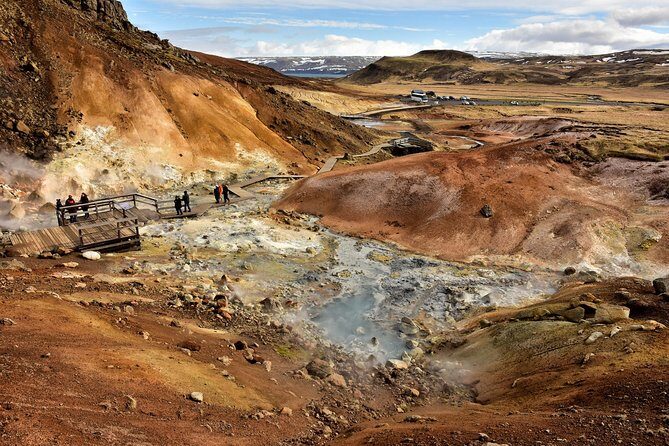
Then you move to the geothermal area at Krysuvík, where you can take a walk between bubbling hot springs. This is where the day starts to feel alive in a direct way—heat, steam, and vivid ground colors all in one view.
You’ll have about 30 minutes here, which is a better window than the lake stops. That extra time helps because you’ll want to move around for photos and because the steam patterns can change as the wind shifts.
Comfort note: even if your walk is short, it’s still outdoors and still often windy. Warm layers and waterproof shoes matter more here than people expect.
Stop 4: Gunnuhver Mud Pools and the Ghost Story Add-On
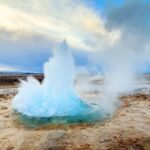
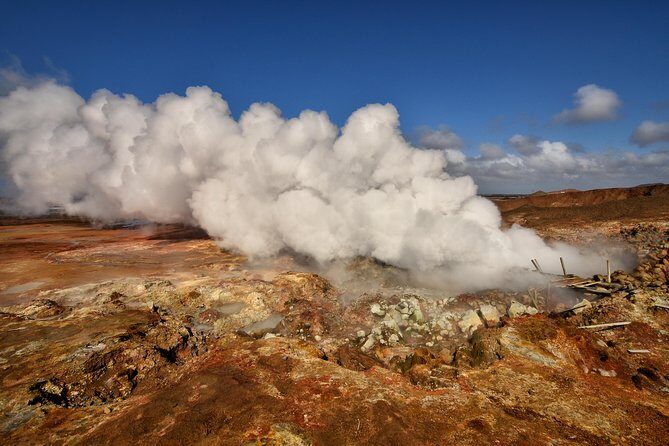
The highlight stop for pure geothermal weirdness is Gunnuhver Hot Springs. This is a geothermal field known for mud pools, and the visit includes a ghost story that ties into the site’s past.
Your time window is about 20 minutes, which works well because mud pools are visually intense but also hard on patience if the wind drives spray into your face. You’ll want to use this time to watch the ground carefully—steam vents and bubbling areas can look like they’re doing slow tricks.
This is also one of those stops where the guide’s narration makes a difference. You’re not just looking at steam; you’re connecting it to why people feared or respected the area.
Stop 5: Grindavík’s Lava Fields and Abandoned City Atmosphere
Next comes Grindavík, where the scenery turns into something more eerie. You’ll see dramatic terrain around the area, including newly formed lava fields and the look of an abandoned city that once was thriving.
You get about 15 minutes, which is short, but enough for the main viewpoints. This stop tends to hit differently because it’s not just about beauty—it’s about change. The land is reshaping itself, and the human side shows too.
If you enjoy photography, this is where you’ll chase angles along ridges and lava textures. If you’re sensitive to bleak scenes, take your time mentally here and enjoy the geology without forcing yourself to feel a certain way.
Stop 6: Reykjanesviti Lighthouse and the Rock-Formation Views
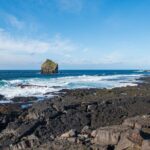
After the geothermal drama, you’ll shift to a more classic coastal landmark: Reykjanesviti, the oldest lighthouse in Iceland. The viewpoint also features impressive rock formations near the Valahnúkamöl ridge.
This stop gives you around 20 minutes. It’s a nice break from boiling mud and crater water because lighthouses put a “fixed point” into the chaos. You can reset your eyes on coastline lines and layered rock.
It’s also where you’ll likely see seabirds if the weather cooperates. The coast can be quiet or busy depending on wind and visibility, so treat bird spotting as a bonus, not a promise.
Stop 7: Bridge Between Continents and the Mid-Atlantic Ridge Moment
The day culminates with the Bridge Between Continents, where you drive between tectonic plates associated with Europe and North America over a major fissure linked to the Mid-Atlantic Ridge.
You’ll have about 20 minutes here. It’s long enough to step out, take photos, and understand why this spot is famous—not because it’s a themed attraction, but because it’s literally a visible clue of plate movement.
If you like science, this is the moment you’ll carry the rest of the day. The earlier stops now make more sense: fissures explain the lakes, sulfur explains the color, and geothermal heat explains the mud pools.
Lunch in Keflavík: A Practical Pause You Control
Between geothermal stops, you’ll stop for lunch in the harbor town of Keflavík. You can bring your own food, or you can purchase lunch during the break.
This part is valuable because it resets you. Half-day tours can be exhausting if every stop is outside and every meal is improvised. Here you get a built-in window to warm up slightly, eat something real, and decide whether you want something quick or sit-down.
You’re not paying for food in the tour price, but you’re also not stuck with a prepackaged meal. That’s a better deal for people with dietary needs or strong food preferences.
What It Costs (and What You’re Actually Getting)
At $134 per person, the question isn’t just the number—it’s what’s included.
You’re paying for:
- Professional local driver/guide with live commentary
- Pickup and drop-off from designated Reykjavik points
- Small-group minibus with limited seats
- Multiple stops where admission tickets are listed as free (at least for the stops specified like Kleifarvatn, Grænavatn, Krysuvík, Gunnuhver, and Reykjanesviti)
Food is not included, and Blue Lagoon admission isn’t included.
So the value comes from convenience and guidance. If you tried to DIY this peninsula in one day, you’d spend time solving transport, parking, and route choices—plus you’d miss a lot of interpretation. This tour gives you a logical sequence and a guide who can connect the dots between what you see and why it matters.
Timing, Weather, and Why Your Day Should Stay Flexible
This tour runs about 7 hours on paper, but in real-world conditions it functions like a half-day with multiple short stops. The route can also change.
There are two big factors:
- Volcanic activity in the region can lead to longer driving times and rare changes to which sections are accessible.
- Winter snow can close roads around Kleifarvatn, Krýsuvík, and Grænavat, which can trigger alternate stops.
The practical takeaway: plan on outdoor time in wind. Dress for it. Even the best weather day can shift fast near the coast and open lava fields.
Who This Reykjanes Geopark Tour Fits Best
This is a strong choice if:
- You want an Iceland day that feels off the main tourist grid
- You care about geology, geothermal activity, and tectonics
- You like small groups and hate feeling rushed
- You want convenient pickup in Reykjavík
- You want a clean way to reach either Keflavik Airport or the Blue Lagoon afterward
It might be less ideal if:
- You want long hikes at each stop (most windows are short)
- You need extra time for a slow, extended meal (lunch break exists, but it’s not a full restaurant day)
Should You Book This Tour?
I’d book it if you want a smart, guided way to experience the Reykjanes peninsula without spending your day driving and guessing. The best reasons are the small-group format, the mix of geothermal plus tectonic plate storytelling, and the fact that the day ends exactly where you need it—Reykjavík, the Blue Lagoon, or Keflavik Airport.
If you’re choosing the airport option, build in extra time. And if weather turns rough, go with the flow—this area rewards flexible expectations.
FAQ
What time does the tour start?
The tour starts at 9:00 am.
How long is the tour?
The duration is listed as about 7 hours.
Are food and drinks included?
No. Food and drinks are not included, though you can purchase meals during stops or bring your own.
Can I choose to be dropped off at the Blue Lagoon or Keflavik Airport?
Yes. You can select your preferred drop-off when booking: Blue Lagoon or Keflavik International Airport (for flights departing 4 pm or later) or return to Reykjavík.
Are there admission fees for the stops?
Admission tickets are listed as free for the specified stops (like Kleifarvatn Lake and Grænavatn). Blue Lagoon admission is not included and must be arranged separately.
What should I do if roads close in winter or the route changes?
The route can change due to volcanic activity and winter road closures. You should expect alternate routes and stops if sections are unavailable. It’s also recommended to dress for cold wind and use waterproof, warm outdoor clothing.