REVIEW · REYKJAVIK
Iceland’s south coast G spots
Book on Viator →Operated by G spot Iceland · Bookable on Viator
Some places in Iceland hit fast.
This small-group south coast day trip turns Reykjavik into a launch pad for towering waterfalls, black-sand coasts, and glacier ice, plus a real shot of volcanic energy around Eyjafjallajökull. I like that the route doesn’t feel like a checklist race—it’s guided, paced, and built for seeing the big stuff and a few quieter moments.
I’m especially taken with two parts: the mix of coasts and ice (Reynisfjara to Solheimajökull) and the way the itinerary gives you different angles on the same forces—volcanoes, glaciers, and water. The main thing to consider is that this is a long, packed 9–10 hour day, and weather can change how much time you’ll comfortably spend outside.
In This Review
- Key Things That Make This South Coast Tour Worth Your Time
- Why Iceland’s South Coast Feels Like Another Planet
- The Small-Group Advantage (And Why It Matters at Every Stop)
- Reykjavik Pickup and the Real Pace of a 9–10 Hour Day
- Reynisfjara Beach: Basalt Formations and Ocean Muscle
- Dyrhólaey: Volcanic History, Black-Sand Views, and Puffins
- Solheimajökull Glacier: Climate Ice That Retreats
- Skógafoss: One of Iceland’s Best Waterfalls, Plus Context
- Seljalandsfoss: Walk Behind the 60-Meter Falls
- Thórsmörk: The Interior Gateway Between Volcanoes
- Price and Value: What $350 Buys You in Iceland
- What You’ll Remember Most (And Why It’s Not Just the Stops)
- Who This South Coast Tour Suits Best
- Should You Book This South Coast Tour?
- FAQ
- What time does the tour start from Reykjavik?
- How many people are on the tour?
- How long is the south coast day trip?
- Is pickup included?
- Which stops are included?
- Can I cancel and get a full refund?
- Are service animals allowed?
Key Things That Make This South Coast Tour Worth Your Time
- Max 4 people small-group feel for a more personal pace
- Early 8:30 am start from Reykjavik for maximum daylight
- Reynisfjara + basalt formations paired with Dyrhólaey views over black sand
- Solheimajökull Glacier stop focused on fast-moving climate ice
- Two major waterfalls: Skógafoss and Seljalandsfoss (including time to walk behind)
- Thórsmörk valley for interior-style scenery between volcanoes
Why Iceland’s South Coast Feels Like Another Planet
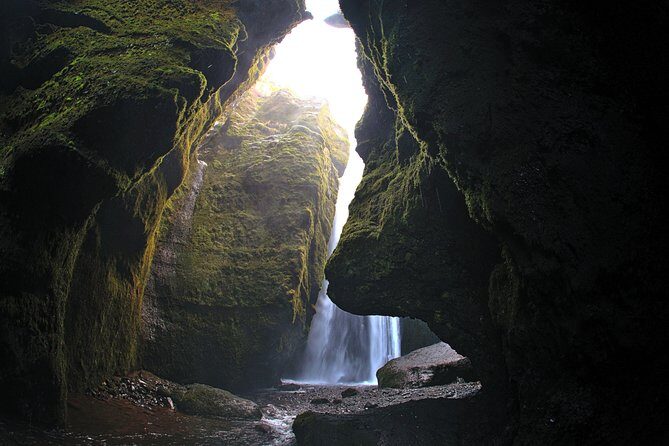
If you’ve done the Golden Circle already, the south coast is where Iceland stops being postcard neat. You get raw edges: black sand meeting ocean muscle, waterfalls pouring out of cliff walls, and glacier ice sitting in a landscape that still feels geologically young. This tour leans into that. You’re not just driving past wonders—you’re stopping long enough to absorb the scale.
What I like most is the variety of “Iceland logic” on one day. You see how volcanic history created headlands and sea stacks, how glaciers carve and retreat, and how water does what it always does: it finds the weakest spot and keeps going. Eyjafjallajökull’s power is part of the context for this region, and the stops you’ll make help you feel that connection without needing a geology degree.
The vibe is also practical. The itinerary is structured, with set time at each stop, so you spend less time guessing and more time looking.
You can also read our reviews of more tours and experiences in Reykjavik.

The Small-Group Advantage (And Why It Matters at Every Stop)
This is a maximum of four travelers, which changes the whole day. In large buses, you’re often fighting for sightlines and moving in a swarm. Here, you can actually look around. You can pause for photos, step aside to catch a better angle at a waterfall, and ask real questions without the guide having to rush through everything.
In one of the past tours, the guide Damian stood out for being detailed and completely un-rushed, and for tailoring the route to the group. That kind of flexibility is a big deal on the south coast because weather and visibility can swing quickly. If conditions aren’t ideal, a small group makes it easier for a guide to adjust your focus without turning it into a frantic shuffle.
Also, when there are only a few people, the conversation matters. The best days are the ones where you’re learning something without feeling like you’re stuck in a lecture.
Reykjavik Pickup and the Real Pace of a 9–10 Hour Day
You’ll start at 8:30 am with pickup offered from Reykjavik-area accommodations. That early start matters because this itinerary leans scenic and outdoors-heavy, and daylight is your friend in Iceland. The overall duration is about 9 to 10 hours, and the schedule is built from short-but-not-too-short stop times—usually around 30 minutes per main stop.
Here’s what that means for you: you’ll be moving through a lot of scenery, but you won’t get stuck in one place for so long that the day drags. You also won’t feel like you’re sprinting. Still, it’s a full day. Wear layers, plan for changing conditions, and accept that some stops may feel brief if the weather is fierce.
This is also where the small-group setup helps: you’re less likely to lose people, and it’s easier to keep a steady rhythm.
Reynisfjara Beach: Basalt Formations and Ocean Muscle
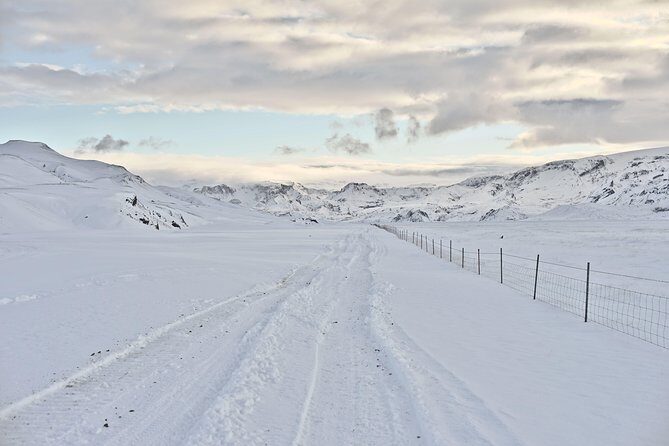
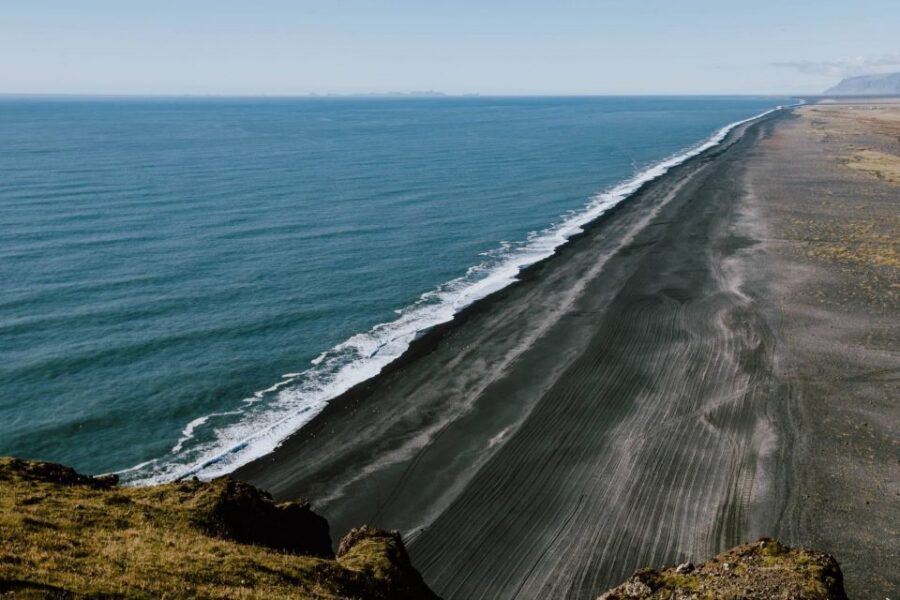
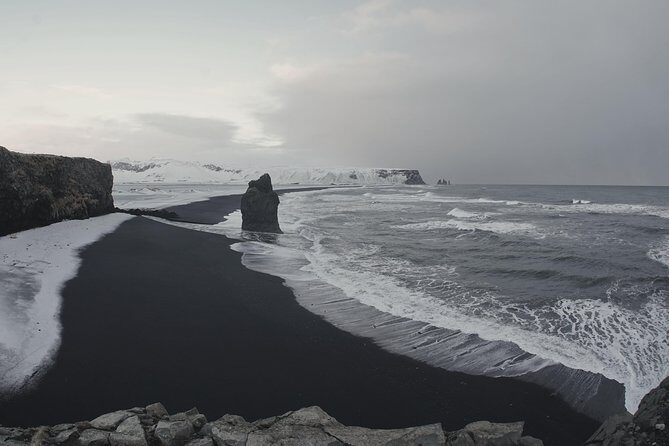
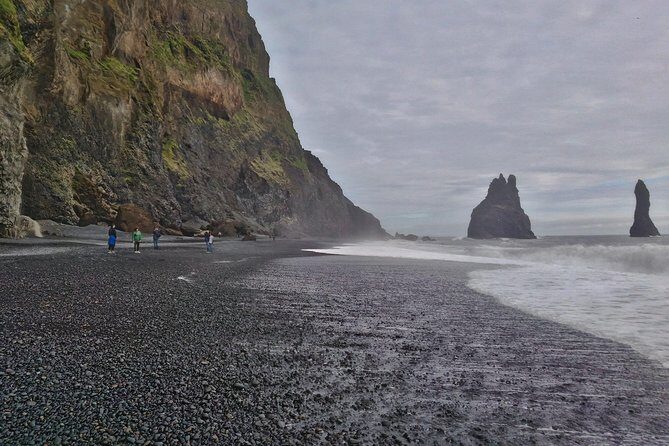
Your first stop is Reynisfjara Beach, the black-sand coast known for dramatic waves and striking basalt formations. It’s one of those places where the scenery is gorgeous, but the ocean doesn’t act polite. The contrast is part of the appeal—beauty on one side, force on the other.
This is a great early stop because it sets the tone for the whole trip. Iceland’s south coast isn’t just pretty; it’s active. Basalt shapes hint at volcanic processes, and the ocean’s power reminds you that everything here is in motion. You’ll have about 30 minutes, with admission included.
Practical tip: bring shoes you trust on uneven ground. Even with a short stop, the shorelines and slick rocks can be tricky. And if the wind is pushing, it’s worth slowing down and letting your eyes adjust—some of the best viewing is from angles where you can see both the black sand and the sea stacks.
Dyrhólaey: Volcanic History, Black-Sand Views, and Puffins
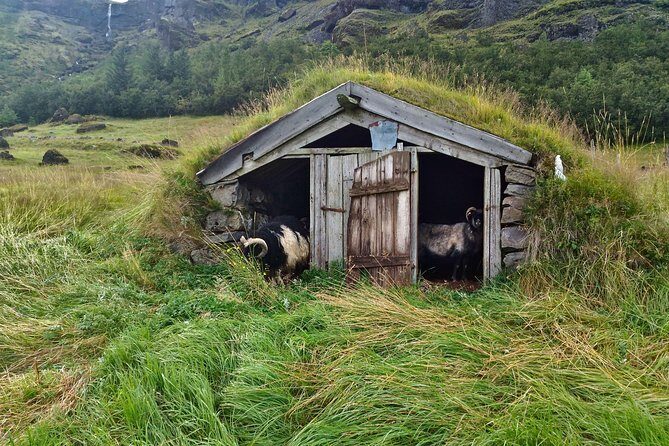
Next up is Dyrhólaey, a spot that rewards you for looking beyond the obvious postcard view. Dyrhólaey was once a volcanic island, and there’s a sense of layered time here—your guide can connect it to how the south coast used to sit about 120 meters lower than it does now. That’s the kind of detail that makes the place feel more than scenery.
You’ll get views over black-sand beaches and glacier-and-coast context (depending on conditions), and in summer there can be lots of puffins around. The stop is about 30 minutes, with admission included.
Why I like this stop: it changes your perspective from “wow, waves” to “wow, geology.” You see how the land itself was built, then reshaped.
Consideration: puffins are seasonal, and wildlife spotting can never be guaranteed. If you go outside summer, focus on the viewpoints and coastal structure instead of expecting birds.

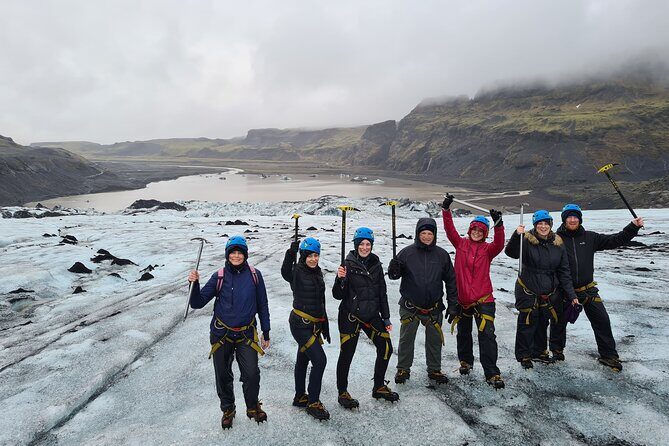
Solheimajökull Glacier: Climate Ice That Retreats
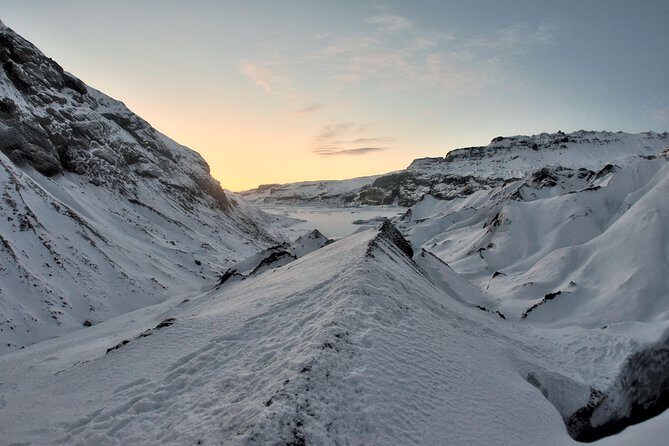
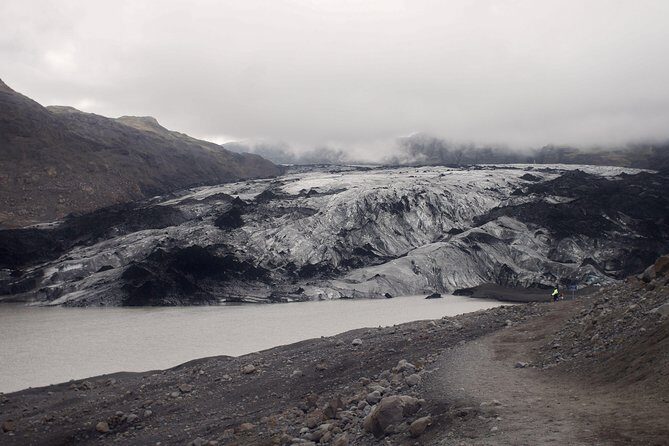
Then you shift from ocean drama to ice reality at Solheimajökull Glacier, part of the larger Mýrdalsjökull glacier system. This glacier is described as a climate glacier that reacts quickly to climate changes. Since 1930 it has retreated almost 1 kilometer—a sobering detail that makes the ice feel urgent, not romantic.
The stop is about 30 minutes, with admission included. It’s not a long glacier day, but it’s long enough to get oriented and take in what’s happening at the ice edge. Even without technical info, you can read the glacier like a timeline: the shape, the exposed areas, and the way ice meets rock.
A note on value: this stop is one of the reasons I think this tour works. You’re not just seeing Iceland’s “big name” waterfalls—you’re also seeing ice that’s actively changing. That turns photos into understanding.
Skógafoss: One of Iceland’s Best Waterfalls, Plus Context
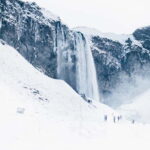
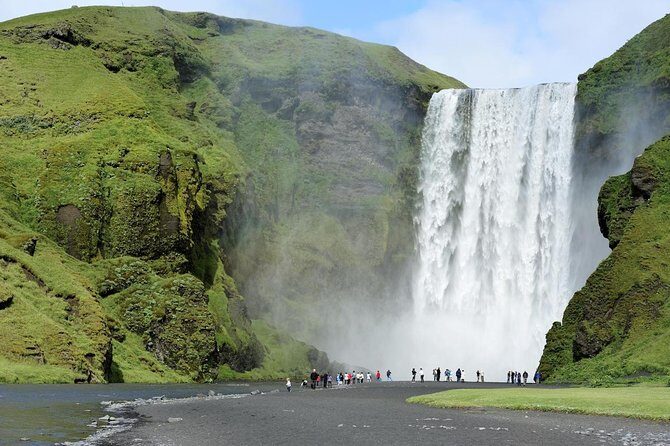
Skógafoss is the waterfall stop everyone recognizes, and for good reason. It’s one of the biggest and best-known in Iceland, dropping straight from a cliff edge that used to be the old coastline. Your guide can also tie the spot to the way volcanoes and glaciers have shaped Iceland over time, and it’s been used in film scenes.
You’ll have about 30 minutes, with admission included.
This is also a good place for conversation. With time to pause, you can ask questions about how glaciers carve land and how volcanic activity sets up the terrain water later exploits. And if you’ve ever wondered why Iceland’s waterfalls look like they do—this is where you can start seeing patterns instead of just staring upward.
Consideration: like most big waterfalls, Skógafoss can be misty. Bring a hood or waterproof layer, and keep your camera protected when the spray ramps up.
Seljalandsfoss: Walk Behind the 60-Meter Falls
At Seljalandsfoss, you get something different: the chance to walk the path behind the falls. The waterfall is described as 60 meters, and that behind-the-water perspective changes the whole experience. It’s not just a view of water—it’s water wrapping you.
This stop is about 30 minutes, and admission is free. Sunset is specifically called out as a particularly beautiful time, so if conditions allow, you’ll want to keep an eye on how your day’s timing lines up. Even outside sunset, it’s still one of those moments where you stop thinking in photos and start thinking in motion and sound.
Why this stop feels worth it: standing behind a waterfall gives you a more complete sense of scale. You see how the cliff holds the water, and you understand the power in a more physical way.
Practical note: the path can be slick. Take your time and wear shoes with good grip.
Thórsmörk: The Interior Gateway Between Volcanoes
The final wow factor is Þórsmörk (Thorsmörk), a valley that cuts between volcanoes—one of the gateways toward Icelandic interior. It’s the kind of place that feels less like a viewpoint and more like a region. The description also points to a big reality: this area gets powerful floods, so the landscape has a tough relationship with water.
You’ll have about 30 minutes, with admission included.
Even with a short stop, Þórsmörk is memorable because it looks “in-between”—between valleys, between volcanic structures, and between coast and interior. It’s a good way to end the day because it adds depth. You started with black sand and waves, moved to ice and waterfalls, and finish in a landscape shaped by volcanic activity and shifting water systems.
Consideration: depending on conditions, the ground and weather can feel more intense than near the coast. Dress for wind and rain, and don’t plan to do anything extra beyond the stop itself.
Price and Value: What $350 Buys You in Iceland
At $350 per person, this isn’t a budget tour—but it also isn’t priced like a private charter. What justifies the cost is the combination of things you’re getting at once:
- A small-group cap (max four)
- Pickup from your Reykjavik-area accommodation
- A full slate of major sights: Reynisfjara, Dyrhólaey, Solheimajökull, Skógafoss, Seljalandsfoss, and Þórsmörk
- A guide who can keep the day from feeling rushed
The best value comes when the guide can tailor the pacing and keep the conversation going. In the reviews, Damian is singled out for being wonderful, knowledgeable in the practical sense, and for keeping everything un-rushed. That matters because a day like this can either feel like chaos or feel like you’re actually seeing things.
One more way to think about value: 9–10 hours with guided stops reduces decision fatigue. Instead of piecing together multiple day plans, you trust the route and spend your energy paying attention.
What You’ll Remember Most (And Why It’s Not Just the Stops)
This tour sticks with you because it shows Iceland’s forces as a system. You’ll see basalt from past volcanic activity at Reynisfjara. You’ll look at landform history at Dyrhólaey. You’ll stand near climate ice at Solheimajökull and learn it has retreated almost a kilometer since 1930. Then you get waterfalls where water dramatizes the terrain that glaciers and volcanoes built.
Even the pacing supports that. Short blocks of time at each location prevent you from burning out. You get enough time to enjoy each stop, then you move on before boredom sets in.
And the human factor helps too. Great conversation can make the landscape feel personal, not just huge. One past group praised Damian for being easy to talk with, and that kind of guide energy is a real part of the experience.
Who This South Coast Tour Suits Best
You’ll probably love this if you:
- Want a high-impact day without managing driving, timing, or parking
- Like your sightseeing explained in plain, useful terms
- Prefer small-group tours over big bus days
- Want both the coast and the glacier side of Iceland, not just one theme
It’s also a strong fit for first-timers who have already done a basic introductory route and want the south coast’s more dramatic personality. If you’re the type who loves hearing why a place looks the way it does, you’ll get more from each stop.
Should You Book This South Coast Tour?
I’d book it if you want a guided day that hits the south coast’s headline natural wonders while keeping the group size small. The route makes sense: black-sand coast, volcanic viewpoint territory, climate-glacier ice, and two major waterfalls, ending in Þórsmörk’s interior gateway vibe.
Skip it (or at least think twice) if you hate packed days, dislike time outdoors in changing weather, or want a slow travel style with long stretches in just one location. This tour is built for momentum, not wandering.
If you’re going soon, consider booking earlier—this kind of tour is often scheduled around 16 days in advance, so popular slots can fill.
FAQ
What time does the tour start from Reykjavik?
The start time is 8:30 am.
How many people are on the tour?
The experience has a maximum of four travelers, so it stays small-group.
How long is the south coast day trip?
The duration is approximately 9 to 10 hours.
Is pickup included?
Yes. Pickup is offered from Reykjavik-area accommodations.
Which stops are included?
The tour includes Reynisfjara Beach, Dyrhólaey, Solheimajökull Glacier, Skógafoss, Seljalandsfoss, and Þórsmörk.
Can I cancel and get a full refund?
Yes. You can cancel up to 24 hours in advance for a full refund.
Are service animals allowed?
Yes. Service animals are allowed.