REVIEW · REYKJAVIK
Geological Lava Tunnel Adventure – Arnarker Cave
Book on GetYourGuide →Operated by Geoadventures ehf · Bookable on GetYourGuide
Lava tunnels can feel unreal. Arnarker Cave is a real 500 m lava tube adventure with a small group cap of 6, plus a professional guide who explains how Iceland’s volcanism builds these weird, beautiful spaces. You’ll go beyond the easy, tourist-style route and into something more natural and more hands-on.
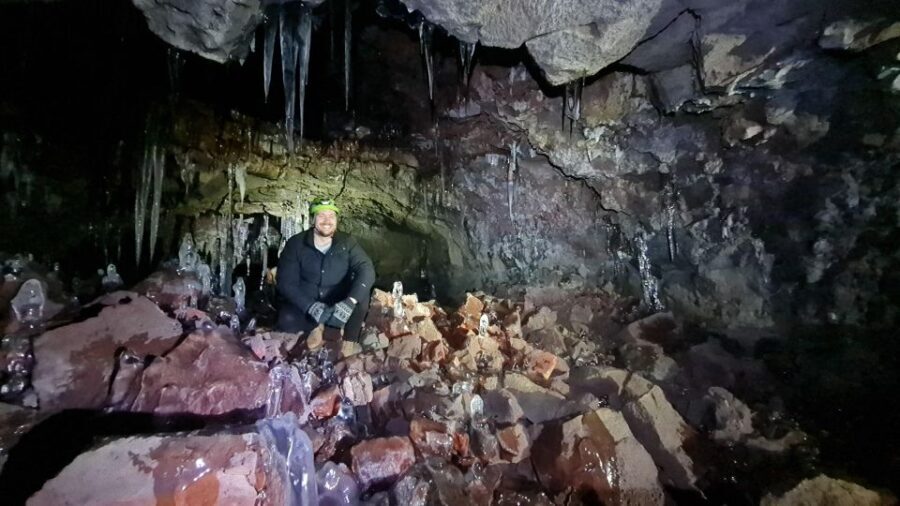
What I like most is the way the geology comes through in plain language, with lots of stops to look closely and learn what you’re seeing. I’m also a big fan of the winter bonus—ice formations can appear inside when conditions allow. The main drawback to plan for: there’s no man-made path, so expect uneven ground, boulders, and climbing over rock.
In This Review
- Key things you’ll want to know
- Arnarker Cave and the 500 m Lava Tube That Feels Wild
- Pickup in Reykjavik and How the Drive Sets the Tone
- Gear Up: Cold Cave Temps, Wet Drops, and What You Should Bring
- Inside Arnarker: Route Details, Climbing Over Rock, and the Real Pace
- Geology Lessons That Actually Connect to What You See
- Winter Ice Formations and Why Weather Usually Doesn’t Ruin This Day
- Small Group Caving: Why Up to 6 People Changes Everything
- Who Should Book, and Who Should Skip This One
- Price and Value: Is $214 Worth It?
- Quick Tips to Make Your Caving Day Easier
- Should You Book Arnarker Cave?
- FAQ
- Where do I meet for the Arnarker Cave tour?
- How long is the tour?
- What group size should I expect?
- Is there a guide, and what language do they speak?
- What equipment is provided for caving?
- What should I wear or bring?
- How cold is it inside the cave?
- Is there a man-made path inside the cave?
- Who is this tour not suitable for?
- What is the cancellation policy?
Key things you’ll want to know
- A small cap of 6 people keeps the cave experience personal and focused.
- A 500 m lava tube gives you a satisfying route without feeling rushed.
- Professional geologist guidance helps you connect rock shapes to Iceland’s volcanic story.
- Helmets, headlamps, and gloves mean you’re not stuck hunting gear before you go.
- Winter ice formations may appear, but the tour runs year-round and isn’t stopped by typical weather.
- No paved route inside means balance and a decent fitness level matter more than speed.
Arnarker Cave and the 500 m Lava Tube That Feels Wild
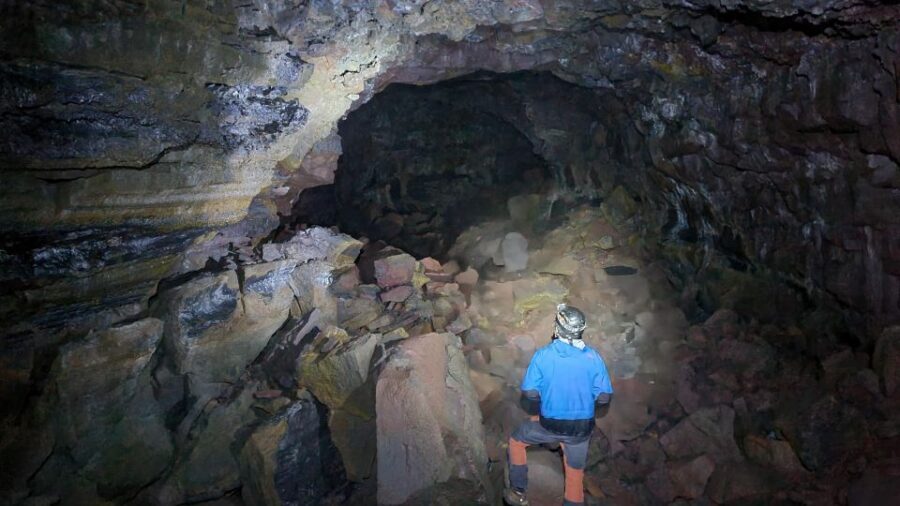
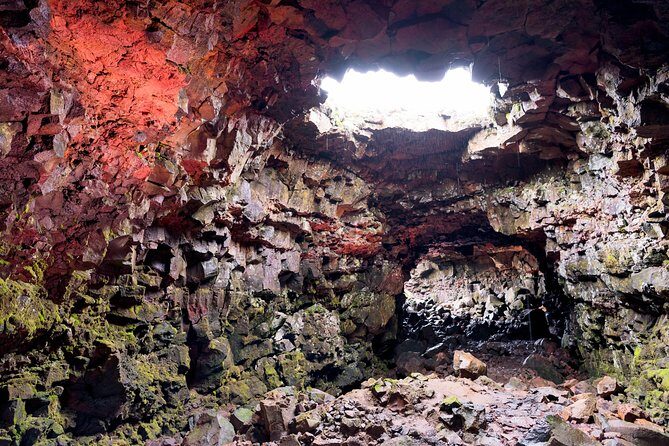
Arnarker Cave is the kind of Iceland activity that doesn’t try to impress you with staging. You’re moving through a lava tunnel that formed in the aftermath of volcanic activity, and it still looks like nature built the place—because it did. At about 500 meters long, it’s long enough to feel like a true journey, but not so long that you’re worn out before the best formations show up.
What makes this one especially appealing is the vibe: more unknown than the famous lava-tunnel option, and more adventurous. In practice, that means you’re not walking on a curated line of steps. You’re navigating a natural cave floor, using your hands when needed, and trusting your guide’s route. If you want a cave that feels like you entered something real, this delivers.
You can also read our reviews of more tours and experiences in Reykjavik.

Pickup in Reykjavik and How the Drive Sets the Tone
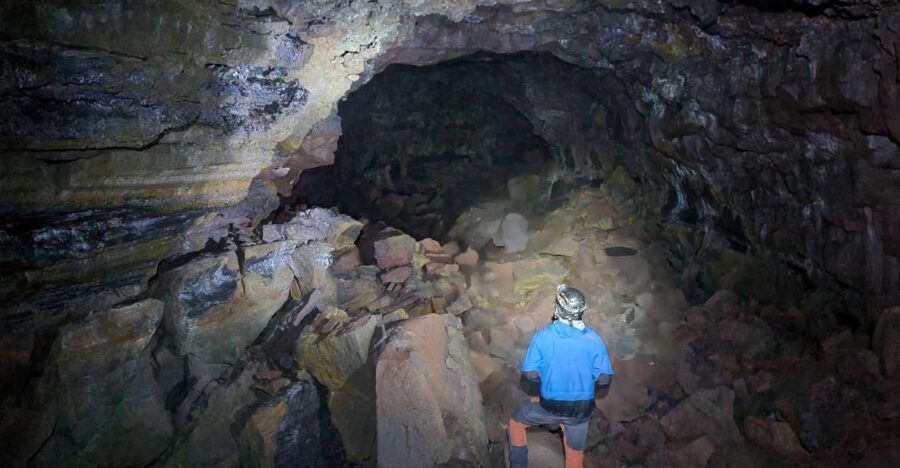
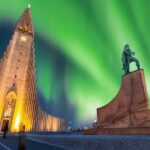
The tour starts with a pickup in Reykjavík at Bus Stop 8, in the parking lot by Hallgrimskirkja. From there, you’ll travel from the city into the countryside toward the cave area. The whole experience lasts about 5 hours, including the ride.
In terms of what that ride feels like, expect roughly an hour each way in many cases. There’s also a chance you’ll take a more scenic route and pass areas tied to more recent lava activity, depending on the day. Even if you’re not a geology nerd, it helps to see volcanic terrain on the way in—so when you finally step into the tube, it clicks faster.
Gear Up: Cold Cave Temps, Wet Drops, and What You Should Bring
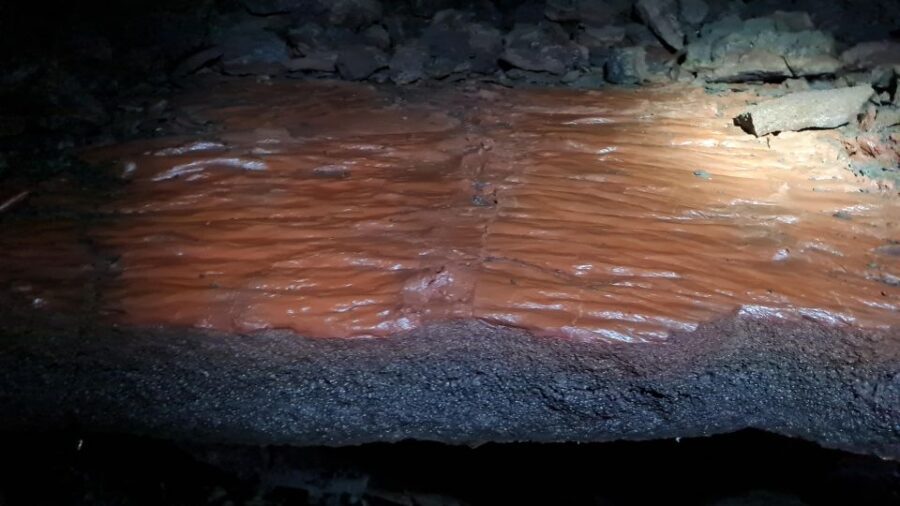
The essentials are handled for you: you get a helmet, headlamp, and gloves. That matters because caving gear is part of safety and part of comfort. A headlamp keeps your hands free. Gloves protect you when you need to steady yourself on rock. Helmet coverage is a must in a cave where you’ll be moving close to the ceiling and walls.
You still need to show up prepared. Hiking boots with ankle support are necessary. The cave interior isn’t a smooth walkway, and your ankles will thank you when you step up, step down, and climb over boulders. Also bring a waterproof jacket if you have one. Water can drip from the ceiling, especially once you’re moving in slower, more enclosed sections.
Temperature is another big one. Inside the lava tube, it rarely exceeds about 4°C, even in summer. Dress warm. Think layers you can move in, not just a windbreaker. Inside a cold cave, warmth is safety too—because you want your muscles working well for balance.
Inside Arnarker: Route Details, Climbing Over Rock, and the Real Pace
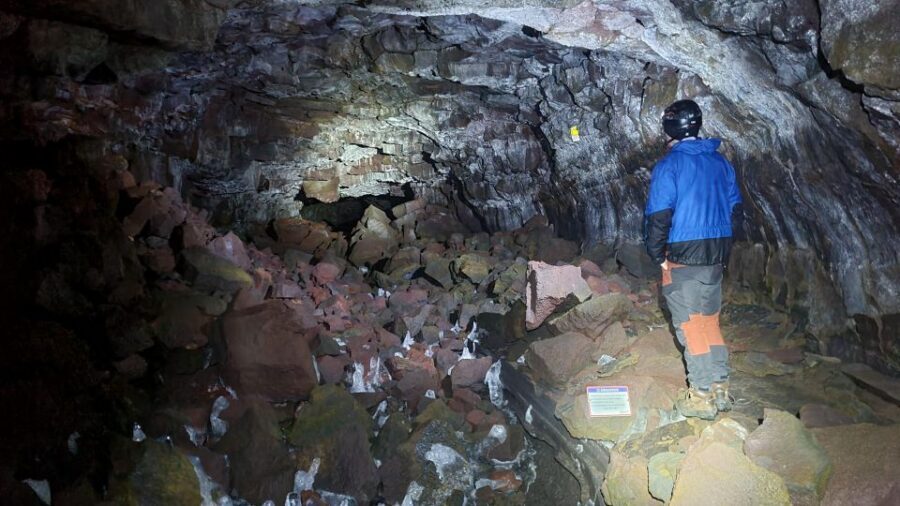
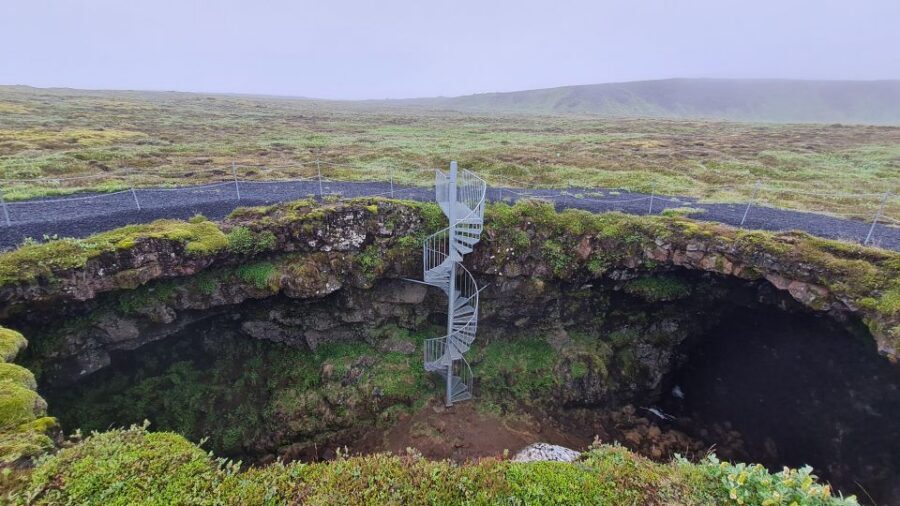
This is the part of the day you’ll remember: the moment you enter the lava tunnel and realize there’s no easy lane to follow. The route has no man-made path, and climbing over boulders is common. You’ll need a good sense of balance and willingness to move carefully. The tour isn’t about speed—it’s about getting to the right places and looking at them properly.
Here’s what the cave feels like in practical terms. The route includes two main segments. The first is around 100 meters and can take roughly an hour. The second is about 400 meters, often around 1.5 hours. That timing makes sense once you’re in there: it’s not just distance, it’s maneuvering—stepping around rock piles, negotiating uneven ground, and occasionally using hands to get past rough sections.
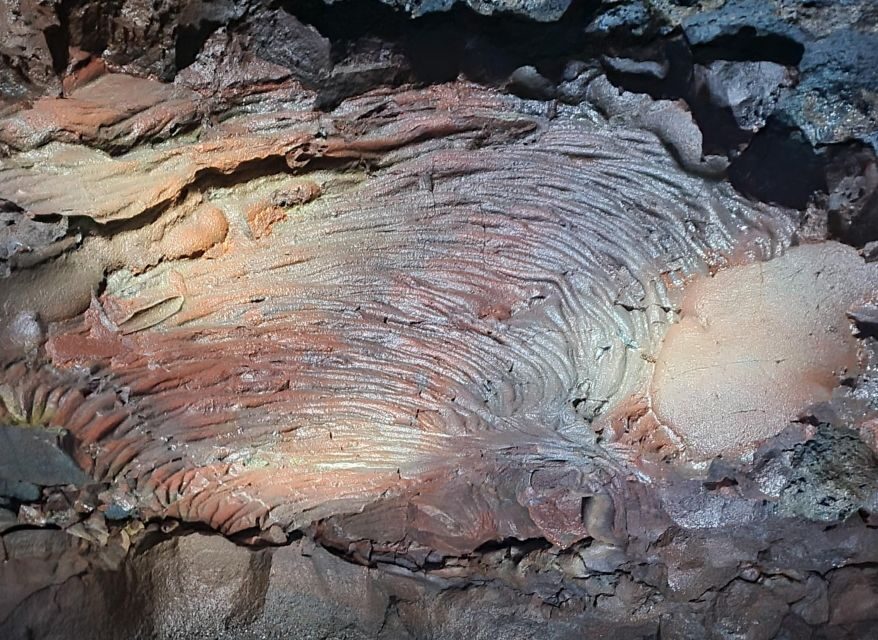
One key reason this is so satisfying is that you’re close to the lava tube environment rather than protected from it. You’re touching the rock, feeling textures, and seeing the shapes that cooled and hardened as lava flowed and then drained away. That tactile element is a big part of what makes Arnarker feel more like an expedition than a stroll.
Geology Lessons That Actually Connect to What You See
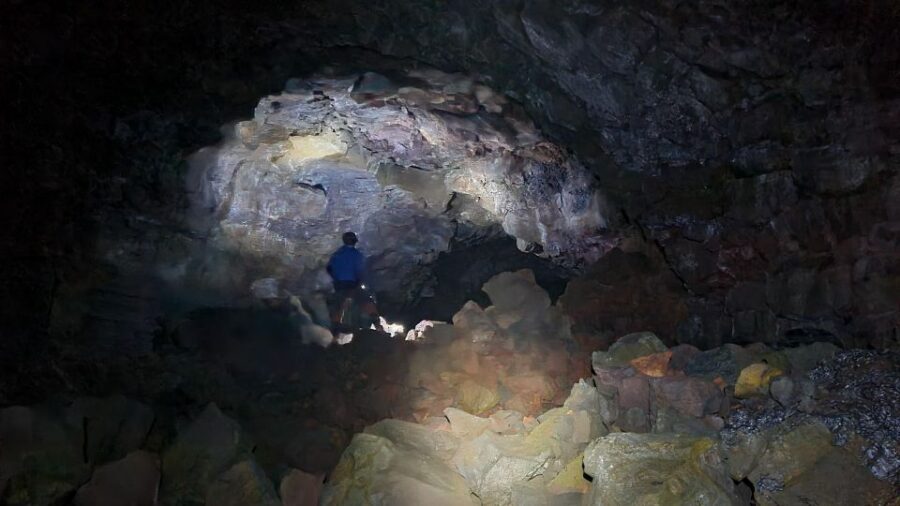
You’re not just in the cave with gear and a flashlight. You’re with a professional geological guide—and the experience leans hard into explaining how these caves form in Iceland’s volcanic setting.
This is where the tour earns its price. Instead of giving you a lecture after the fact, you learn while you’re facing the rock shapes themselves. You’ll stop for photo moments, look closely at formations, and get explanations you can apply immediately. The goal is simple: once you understand how lava tubes form, every bend, ceiling feature, and floor variation becomes meaningful.
In fact, the guide approach is often described as both professional and very approachable—someone who can explain complex processes in a way that feels doable, not intimidating. If you want one of those days where you leave with more than memories—where you also leave with real understanding—this kind of guide-led cave tour is exactly that.

Winter Ice Formations and Why Weather Usually Doesn’t Ruin This Day
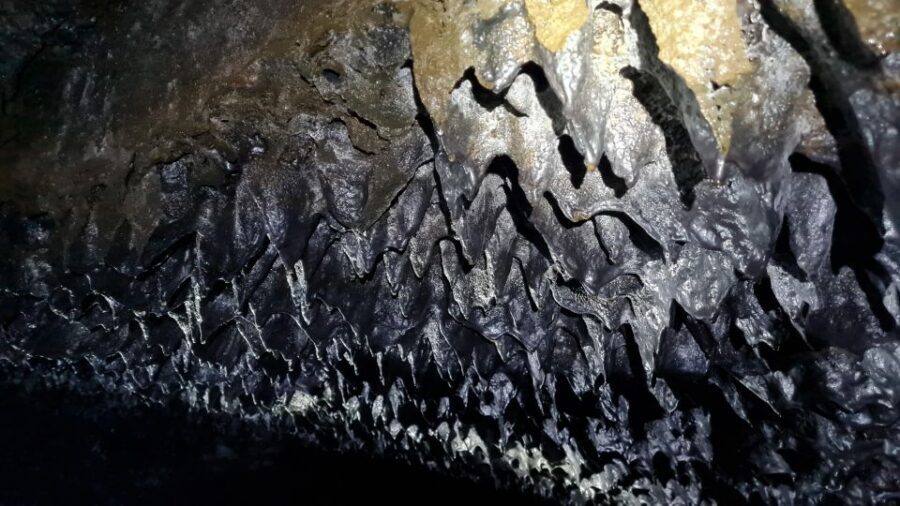
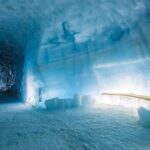
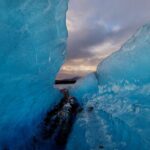
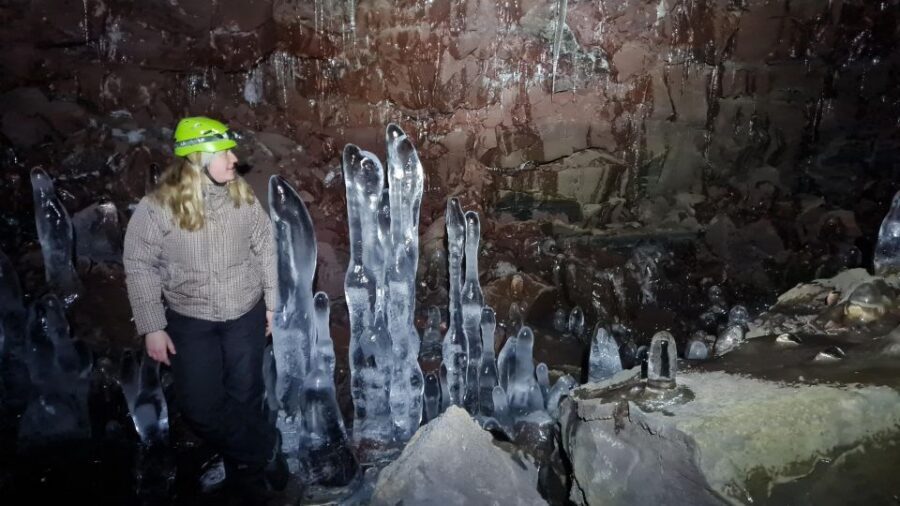
Iceland in winter can be gorgeous for one reason only: it makes everything sharper and colder. In the cave, that cold can create a special effect. During winter, you can discover ice formations along the cave’s geological features—adding contrast to the lava shapes.
The good news for planning is that the tour is designed to run across the year. Bad weather conditions do not impact the tour in the way they might for some outdoor activities. That doesn’t mean you ignore weather entirely—you still dress right—but it means you’re less likely to lose the day to a cancellation due to wind or typical Iceland conditions.
So if you’re visiting in shoulder season or winter and want something different from just chasing waterfalls or views, the cave is a strong option. It turns the cold into a feature, not a problem.
Small Group Caving: Why Up to 6 People Changes Everything
A cap of 6 participants sounds like a detail, but it changes the entire tone of the day. In a small group, the guide can actually manage pace and route decisions based on how you’re moving—especially when the terrain is uneven and climbing over boulders is required.
It also changes your experience in a practical way. You can hear instructions clearly, you don’t get stuck behind a slow-moving line, and you get more time at the rock features that need looking. On some days, the group can be very small, making the cave feel even more personal and quiet.
If you dislike crowded tours, this one fits your style.
Who Should Book, and Who Should Skip This One
This is not a sit-in-a-van kind of activity. It’s caving, and caving demands a certain body type and comfort level.
You need:
- Good physical shape
- Good balance
- A willingness to move over uneven ground
- Ability to handle cool temperatures inside a cave
Also keep these restrictions in mind. The tour is not suitable for:
- Children under 15
- Pregnant women
- People with back problems
- People with mobility impairments
- People with claustrophobia
- People with heart problems
- Wheelchair users
- People over 6 ft 6 in (200 cm)
- People over 65 years
- People over 275 lbs (125 kg)
- People with recent surgeries
- People with low level of fitness
If any of those apply, it’s better to choose a different Iceland activity. The cave is controlled enough for a guide to lead safely, but the environment itself still requires comfort with movement and confined space.
Price and Value: Is $214 Worth It?
At $214 per person for about 5 hours, this tour isn’t cheap. But in caving, you’re paying for the combination that usually costs more when booked separately: safe guiding, specialized gear, and a route that’s not just a simple sightseeing walk.
Here’s the value logic:
- You’re getting transportation from Reykjavík (pickup and drop-off at Bus Stop 8).
- You’re getting a live English guide who’s there for instruction and safety, not just narration.
- You’re getting the core caving gear: helmet, headlamp, gloves.
- You’re paying for something you can’t easily DIY—access to a lava tube experience with route navigation.
Also, the small-group limit matters. If you’re the type of traveler who likes quieter, more hands-on days, this is exactly the kind of activity where a small group is part of what you’re buying.
Add in the possibility of winter ice formations, and the science-heavy guide experience, and $214 starts to look less like a splurge and more like a fair price for a unique, guided adventure.
Quick Tips to Make Your Caving Day Easier
These are the practical details that help the day go smoothly:
- Wear warm layers under your waterproof jacket. The cave runs around 4°C.
- Use ankle-support hiking boots. They’re not optional.
- Bring a jacket you don’t mind getting damp from ceiling drips.
- Move slowly and trust the guide’s pace. The route takes time for a reason.
- Focus on balance. This is more about careful footwork than athletic speed.
The cave rewards calm attention. If you go in with patience, you’ll enjoy the formations more and feel safer negotiating the rough spots.
Should You Book Arnarker Cave?
Book this tour if you want:
- A real lava tube experience that feels natural and adventurous
- A guide-led day focused on Iceland’s volcanism and cave formation
- A small group setting that keeps things manageable
- The chance to see ice formations in winter
Skip it if you:
- Don’t handle uneven ground or climbing over boulders well
- Feel uncomfortable in confined spaces
- Have mobility, back, heart, or fitness limitations listed as unsuitable
If you’re an active traveler who likes geology in a hands-on way, Arnarker Cave is the kind of experience that sticks. Not because it’s fancy. Because it’s honest: you go into a lava tube, you learn what shaped it, and you come out with a new way to see Iceland’s volcanic power.
FAQ
Where do I meet for the Arnarker Cave tour?
You meet at Bus Stop 8 in the parking lot of Hallgrimskirkja. The tour also includes pickup and drop-off in Reykjavík at that point.
How long is the tour?
The duration is 5 hours.
What group size should I expect?
This is a small group tour limited to up to 6 participants.
Is there a guide, and what language do they speak?
Yes, there is a live tour guide and the tour is in English.
What equipment is provided for caving?
You’ll be provided with a helmet, headlamp, and gloves.
What should I wear or bring?
You should wear hiking shoes (with ankle support is necessary). The tour also recommends a waterproof jacket because water can drop from the ceiling. Hiking boots are not included.
How cold is it inside the cave?
The cave temperature rarely exceeds 4°C, even in summer, so you should dress warm.
Is there a man-made path inside the cave?
No. There is no man-made path inside, and climbing over boulders is necessary in most parts.
Who is this tour not suitable for?
It’s not suitable for children under 15, pregnant women, people with back problems, mobility impairments, claustrophobia, heart problems, wheelchair users, people over 200 cm, people over 65, people over 125 kg, people with recent surgeries, or people with low fitness.
What is the cancellation policy?
The tour offers free cancellation up to 24 hours in advance for a full refund.