REVIEW · AKUREYRI
Akureyri: Whale Watching in the Midnight Sun
Book on GetYourGuide →Operated by Whale Watching Akureyri · Bookable on GetYourGuide
Whales under the midnight sun feel unreal. This Akureyri cruise lets you hunt for humpbacks in Iceland’s longest fjord while the sky never fully darkens, and I love the midnight-sun setting plus the heated indoor seating for staying comfortable during long stretches. The main drawback to plan for is that whales are never guaranteed, and the trip can run long if the captain keeps searching farther out.
What really adds value is the human touch: a live naturalist guides you through what you’re seeing, and you’re also encouraged to check the online whale diary for conditions and sightings. Still, one practical note: if you’re hoping to catch every word from the speaker system while outside on the deck, sound can be harder to hear at higher speeds.
In This Review
- Key highlights you’ll care about
- Akureyri at midnight sun: why timing matters for humpbacks
- Meeting at Elding Whale Watching Akureyri: what to expect before you board
- The boat experience: heated indoor viewing, big windows, and deck time
- On Eyjafjörður fjord: what humpbacks look like from a whale-watch boat
- The guide, the whale diary, and learning fast without slowing down
- Midnight sun viewing tips: how to get the most out of the light
- Timing and the real math of a 3-hour cruise
- Comfort and practical touches: thermal gear, Wi‑Fi, and photos
- Value and price: is about $101 per person fair?
- Who should book this midnight-sun whale watch (and who should think twice)
- My practical advice for a smoother, more satisfying night
- Should you book this Akureyri midnight-sun whale watching tour?
- FAQ
- Where is the meeting point for this tour?
- How long is the tour?
- What language is the guide?
- What is included in the price?
- Is food included?
- Is pickup or drop-off included?
- Are thermal overalls provided?
- Is there Wi‑Fi on the boat?
- What if I need to cancel?
- How do I keep track of sightings before the tour?
Key highlights you’ll care about
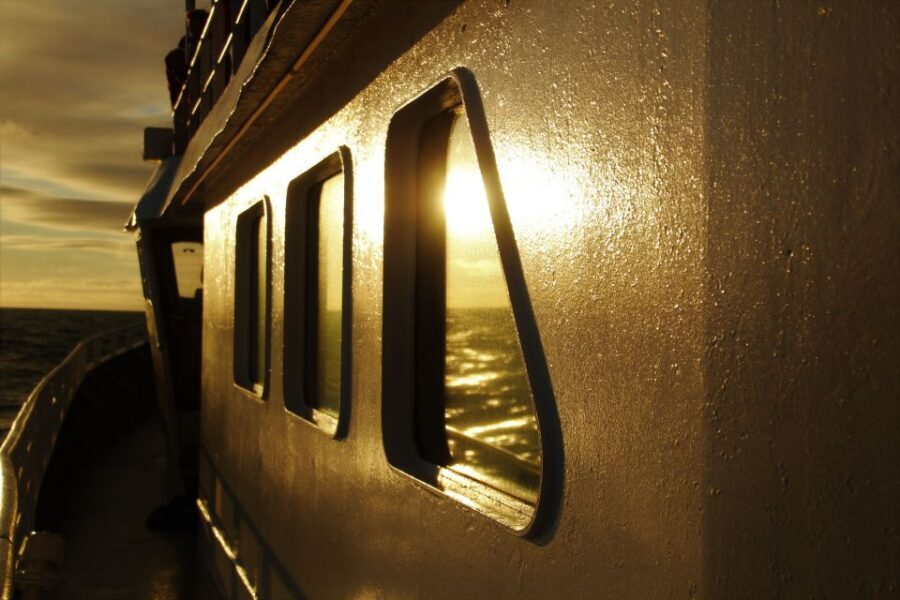
- Midnight sun on the water: soft, nonstop light while you scan Eyjafjörður for humpbacks
- Heated comfort by default: indoor seating and large viewing windows keep the experience workable in cool conditions
- Thermal overalls included: you get proper gear, including children’s sizes
- A captain who keeps searching: the crew actively looks for whales, not just a quick pass-by
- Help with spotting: you may be invited to join the scanning, like a small crew member
- Online whale diary updates: you can monitor conditions and sightings before you board
Akureyri at midnight sun: why timing matters for humpbacks
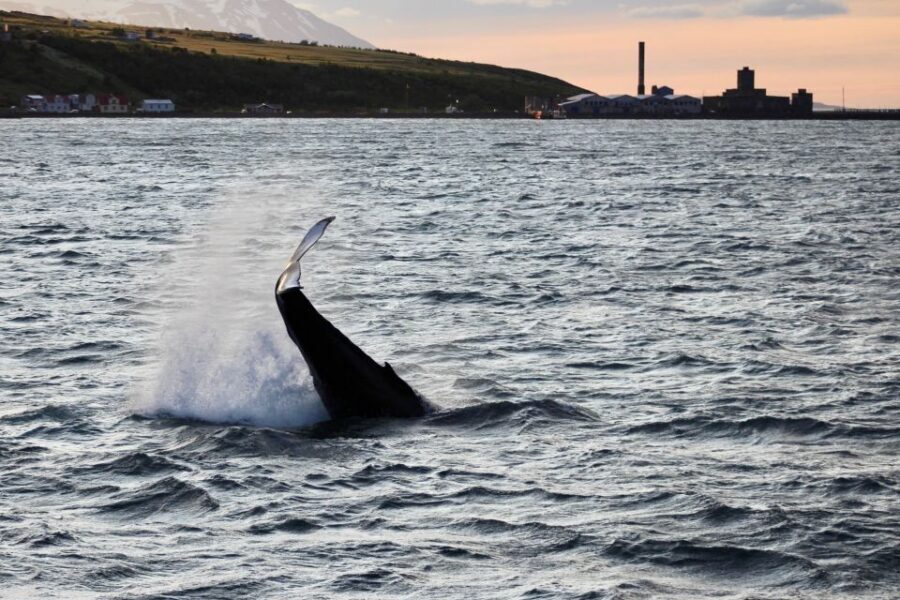
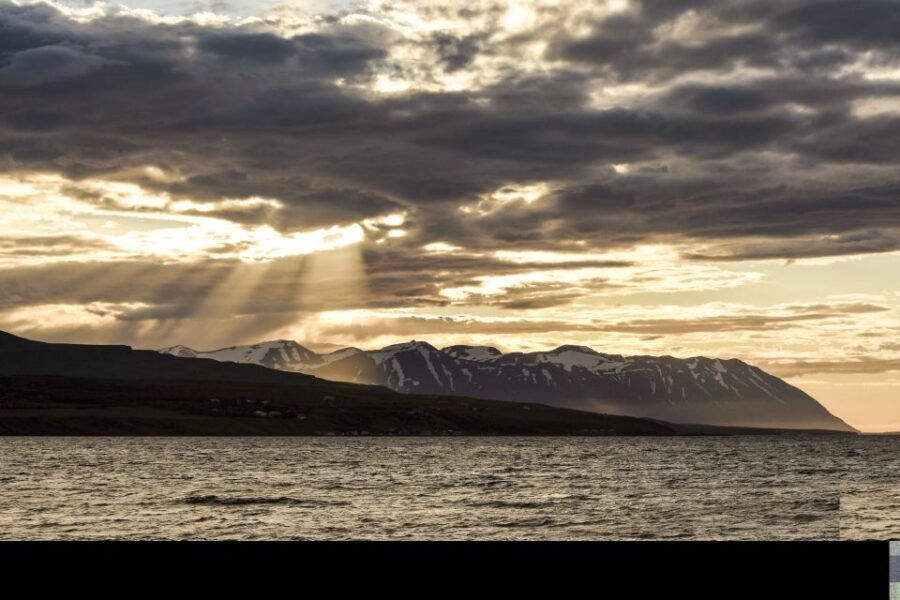
Akureyri is a great base for a night like this because it puts you close to Eyjafjörður, the big fjord where whale watching here tends to make sense. The magic is the midnight sun itself: you’re on the water during Iceland’s summer stretch when daylight hangs on, so you’re not just seeing whales in moonlight—you’re seeing them in a sky that stays bright and calm-looking.
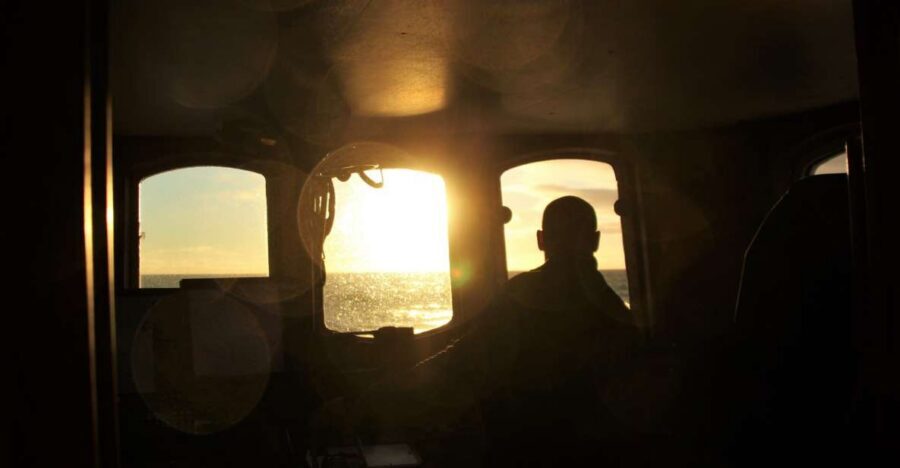
For your eyes, that changes everything. In flat daylight, you can spot subtle movement at the surface: a slow wake line, a dark dorsal shape, or the telltale change in the water when a whale surfaces. And because the light is steady, you’re not constantly adjusting between dark and bright as you shuffle between inside warmth and outdoor viewing.
That said, midnight sun doesn’t make whales predictable. The tour runs because the captain and crew are actively scanning and responding to sightings. If no whales are close, you may travel farther and longer to find them.
You can also read our reviews of more whale watching tours in Akureyri


Meeting at Elding Whale Watching Akureyri: what to expect before you board
You meet at Elding Whale Watching Akureyri, Oddeyrarbót 2, right next to the HOF cultural center. That matters because you can make your timing simple: get to the shop area, check in, and then shift into cruise mode.
From there, the crew focuses on two things early on:
- Getting you comfortable (especially if you’re going outside for long viewing stretches).
- Getting your eyes on the water as soon as conditions allow.
The operator is set up for comfort—heated indoor space, big windows, and thermal overalls. So even if you’re not someone who wants to be outside constantly, you’re not stuck. You can watch from the warm side, then step out when you hear the crew shift into spotting mode.
The boat experience: heated indoor viewing, big windows, and deck time
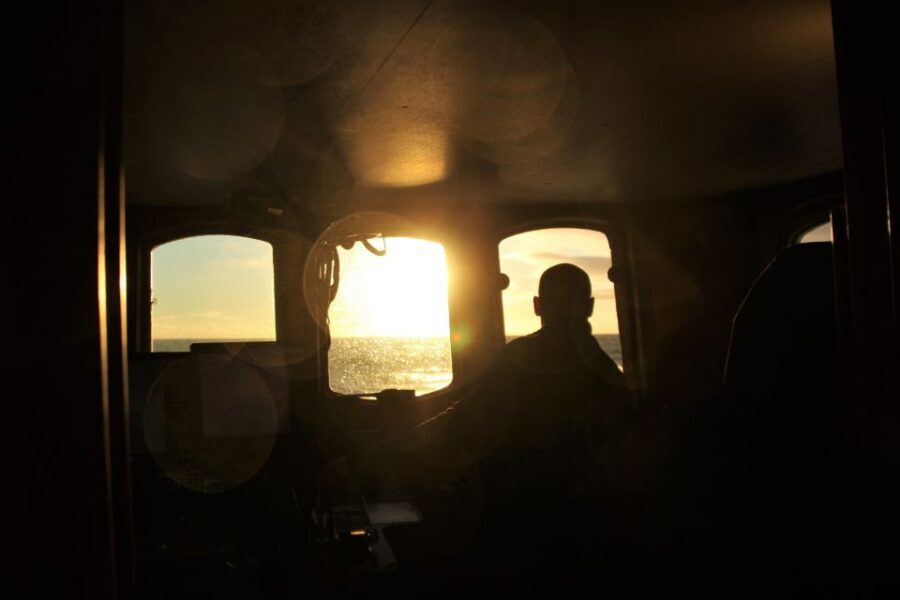
This is a high-speed boat designed for comfort and good views. The layout is meant for whale hunting: outdoor viewing platforms for scanning, plus an indoor area if you want shelter from wind or chill.
Here’s what you should pay attention to:
- Heated indoor seating with large viewing windows means you can stay warm and still watch the fjord.
- Thermal overalls are provided, including children’s sizes, so you aren’t hunting down winter gear at the last minute.
- There’s a cafeteria onboard where you can buy food and drinks during the trip.
One practical reality from experience on similar boats: if the sea gets rough, your comfort depends on where you are and how the boat moves when it stops to let everyone look. In one account, the boat rolled noticeably when they paused after spotting whales. If you don’t have much sea-legs, that’s worth factoring in.
Also, the onboard sound system can be a mixed bag. Indoors, the guide audio tends to land better; outside while the boat is moving at higher speed, it can be harder to catch. My advice: if you really want the guide’s commentary, plan to listen from inside at least part of the time, then go outside when you’re seeing action.
On Eyjafjörður fjord: what humpbacks look like from a whale-watch boat
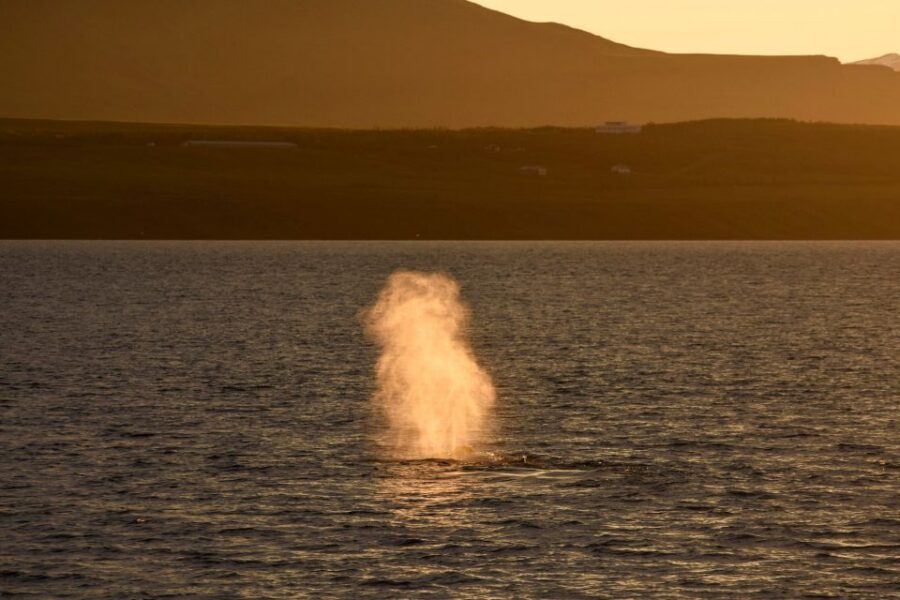
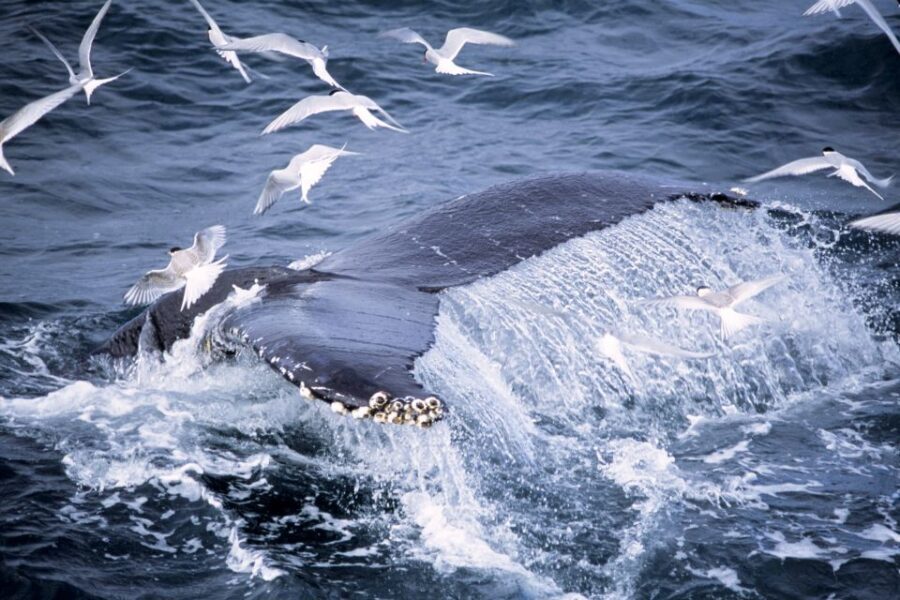
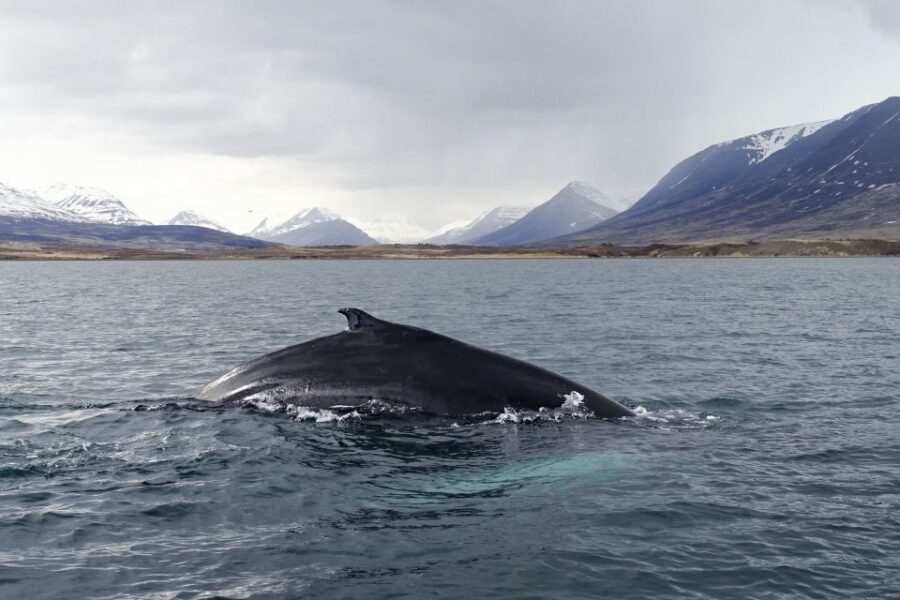
Eyjafjörður fjord is the stage, and humpback whales are the headline. In real whale watching, the viewing can range from dramatic surface moments to brief, quick signs. That’s not a failure of the tour—it’s just how whale behavior works.
Based on the pattern of results from this kind of trip, you can get:
- clear sightings with whales surfacing and moving in view
- brief appearances like small tails or a quick surface break
- long scanning stretches where the crew keeps repositioning for the next possible encounter
A key point: the captain works hard to find whales, and that effort can mean changing distance and timing. If whales are farther out than expected, you’ll still be doing the right thing by staying patient and ready. It’s often the case that the most rewarding part comes after the search, not during the first moments.
And since you’re in the midnight sun, you’re not dealing with darkness that erases detail. You still have to read the water, but the light helps.
The guide, the whale diary, and learning fast without slowing down
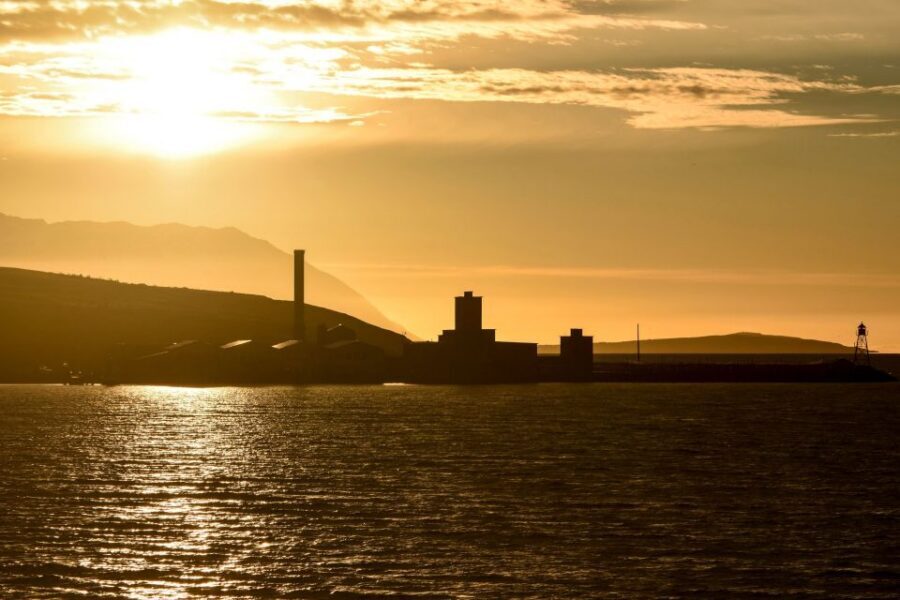
This tour is guided by a live naturalist guide in English. That’s a big deal because it turns whale watching from a simple scan-and-hope activity into something you can actually interpret.
A strong naturalist guide helps you answer questions you’d otherwise miss:
- What you’re seeing at the surface and why it matters
- How whales move through the fjord
- What the surrounding wildlife tells you about conditions
You’re also supported by an online whale diary that helps you monitor conditions and sightings. That changes how you plan the evening. Instead of going in blind, you can look for updates and see whether sightings activity is trending.
One more touch: you may be invited to help spot whales. That sounds small, but it boosts focus. When you feel like part of the scanning process, you’re less likely to miss the moment when something subtle breaks the surface.



Midnight sun viewing tips: how to get the most out of the light
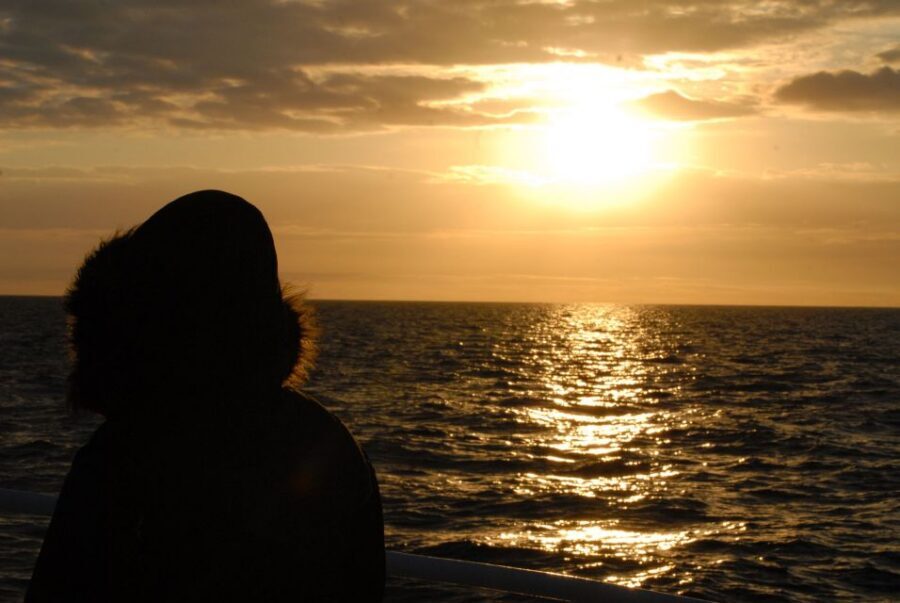
When the sun is still up at midnight, your “camera strategy” and your viewing strategy should adjust. The sky stays bright, and glare can be a thing, especially from inside large windows. If you find reflections, try:
- repositioning to a window angle with less glare
- alternating between indoor viewing and quick deck scans
- keeping your eyes on the water line rather than looking for whales in the sky
Because you’re on a fjord, you also get long sightlines. That’s good. It means if a whale is moving through the area, you may see the trail of activity over time. It also means the crew will often look for patterns: where to focus next, where the surface activity seems concentrated, and whether a sighting is likely to lead to more.
In practice, the midnight sun makes patience easier. You don’t feel like you’re waiting in darkness. You’re still watching, learning, and reacting, which keeps the experience alive even when the first sightings aren’t instant.
Timing and the real math of a 3-hour cruise
The tour is advertised with a 3-hour duration, with the cruise time ranging roughly from 2.5 to 3.5 hours in Eyjafjörður fjord. That built-in flexibility matters because whale watching isn’t a clock-based performance.
One experience described a shift from 3 hours to about 5 hours. That’s the trade-off you’re accepting when you book a whale hunt rather than a fixed sightseeing route. If the whales are out of range, the captain can spend extra time traveling and searching.
So here’s how I’d plan around it:
- treat it like a late-night activity that can run long
- keep your next plans loose
- be ready for the ride to feel like part of the adventure, not a simple commute
If you’re sensitive to long stretches or you hate late nights, this is the part that could test you. If you’re flexible and want a real attempt at whale viewing, this structure is part of the value.
Comfort and practical touches: thermal gear, Wi‑Fi, and photos
This trip is set up to keep you comfortable and watching as much as possible.
What’s included that you’ll actually notice:
- Thermal overalls (including children’s sizes)
- Heated indoor area with plenty of seating
- Large viewing windows for when you want to stay warm
- Complimentary Wi‑Fi onboard
- Crew-taken photographs when possible
That last point—photos taken by the crew—can be a pleasant bonus if the crew has a good chance to capture the moment. It’s not guaranteed in the sense of every whale moment, but the fact that it’s part of the onboard workflow is helpful. It lowers the pressure on you to get the shot and still makes the trip more shareable after.
And yes, you can use the onboard Wi‑Fi. So if you’re traveling with family or want to post an update during the cruise, you can.
Value and price: is about $101 per person fair?
At around $101 per person, this tour sits in the midrange for whale watching, but it’s not just paying for a boat ride. You’re paying for several things at once:
- a naturalist guide in English
- an actively searching crew (not a quick pass)
- thermal overalls and heated shelter
- onboard viewing setup designed for spotting
- the online whale diary component that helps you make smarter choices
For me, the value comes from the combination of comfort plus active effort. If you were paying the same price for a low-comfort trip where you stayed cold and out in the wind, it would feel different. Here, even when whales are elusive, you’re not miserable waiting.
The one thing that affects perceived value is result quality. If you end up with only brief surface appearances—like quick tail sightings rather than full, dramatic moments—some people will feel disappointed. But that’s the nature of whale watching, and the tour’s job is to keep searching, teach you what you’re seeing, and give you the best odds in the fjord under the midnight-sun conditions.
Who should book this midnight-sun whale watch (and who should think twice)
This tour fits best if you:
- want a summer night experience with unusual light
- enjoy learning from a live guide, not just scanning from a distance
- are okay with some waiting time while the boat searches
- want comfortable gear included (thermal overalls, heated cabin)
It may be a weaker fit if:
- you strongly dislike late-night activities that can run longer
- you get seasick easily or don’t have much tolerance for rolling on the boat
- you need clear audio outside the whole time; indoor guide sound may be better than deck sound during higher-speed travel
If you fall into the second group, you’re not doomed—you just need to go in with realistic expectations about motion and sound.
My practical advice for a smoother, more satisfying night
Based on how these cruises tend to play out, here’s how you can maximize your odds and your comfort:
- Plan to alternate inside and out. Indoor comfort helps you stay focused, and deck time gives you the best scanning angles.
- Use the whale diary before you go. It’s there for a reason: to help you understand conditions and sighting chances.
- Don’t treat the first whale sighting as guaranteed. If the captain keeps searching, that’s normal for the experience.
- If you want the guide’s info, listen where sound is clearest. Indoors can be the sweet spot when the boat is moving fast.
- Bring patience. The best moments can happen after the search, not at the beginning.
And if you get a chance to help spot, take it. It turns you from a passenger into an active observer, which is often when whale watching clicks.
Should you book this Akureyri midnight-sun whale watching tour?
I think you should book if you’re excited by three things: midnight-sun viewing, comfortable boat setup with thermal overalls and heated windows, and the idea of an actively guided search for humpbacks in Eyjafjörður. The price feels fair when you factor in the guide, included gear, and the effort the crew puts into finding whales.
I’d hesitate only if you have little flexibility with time, struggle with rough water, or you’re expecting a guaranteed show. Whale watching is always a partnership with nature, and sometimes the “best you get” is a quick tail or a short surface moment rather than big breaches.
If that trade-off sounds okay to you, this is a strong way to spend an Iceland summer night in Akureyri.
FAQ
Where is the meeting point for this tour?
You meet at Elding Whale Watching Akureyri, Oddeyrarbót 2, 600 Akureyri, next to the HOF cultural center.
How long is the tour?
The duration is listed as 3 hours, with a cruise time of about 2.5 to 3.5 hours in Eyjafjörður fjord.
What language is the guide?
The live guide provides the tour in English.
What is included in the price?
Included are the 2.5–3.5 hour cruise in Eyjafjörður fjord, a live naturalist guide, thermal overalls (children sizes available), complimentary Wi‑Fi, a heated indoor area with seating, large viewing windows, and crew photos when possible.
Is food included?
Food and drinks are available for purchase on board, but they are not included.
Is pickup or drop-off included?
No, pickup and drop-off are not included.
Are thermal overalls provided?
Yes. Thermal overalls are included, and children’s sizes are available.
Is there Wi‑Fi on the boat?
Yes, there is complimentary Wi‑Fi onboard.
What if I need to cancel?
Cancellation is free up to 24 hours in advance for a full refund.
How do I keep track of sightings before the tour?
The experience highlights an online whale diary so you can monitor conditions and sightings ahead of your trip.