REVIEW · AKUREYRI
Traditional Whale Watching from Húsavík by Local Family Company
Book on Viator →Operated by Gentle Giants Whale Watching · Bookable on Viator
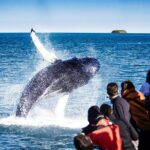
First-rate whale watching starts with the right water and boat. This tour from Húsavík heads out over Skjálfandi Bay on a traditional oak boat, with live commentary and nature spotting designed to help you actually find whales, dolphins, and seabirds in real time. The advertised chances for sightings are very high, and the experience feels local: warm gear, a guided approach, and views of Iceland’s coast from the water.
Two things I really like about it are the warm safety overalls (not just a light jacket) and the fact that the crew provides live, on-the-water guidance so you’re not wandering around with binoculars guessing. One drawback to plan for: the sea can be choppy, and if you’re prone to motion sickness you’ll want to take it seriously before boarding.
In This Review
- Quick hits before you go
- Why Húsavík and Skjálfandi Bay are the whale-watching sweet spot
- The oak-boat ride: what “3 hours” feels like on the water
- What you’ll do at the single big stop: Gentle Giants whale searching
- Warm gear, cold wind, and staying comfortable enough to enjoy it
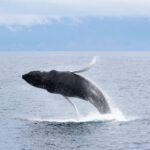
- Wildlife you might see: whales, dolphins, and puffins on the same outing
- Crew energy: how the guide and captain style shapes your day
- Practical value: is $102.58 a good deal for Húsavík whale watching?
- Who should book this tour, and who should consider alternatives
- Booking timing, confirmation, and what to do before you show up
- Should you book Gentle Giants Whale Watching?
- FAQ
- How long is the whale watching tour?
- Where does the tour depart from in Húsavík?
- What’s included in the price?
- What if no whales or dolphins are spotted?
- What should I wear?
- What happens if the tour is canceled due to poor weather?
Quick hits before you go
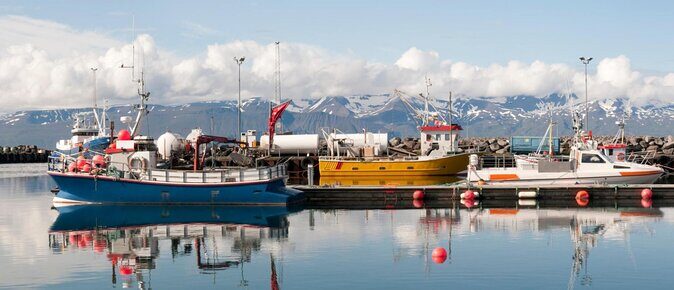
- Skjálfandi Bay hunting ground: You’re not just cruising aimlessly. The plan is to search the bay for wildlife from the boat.
- Traditional oak boat feel: Slower, steadier, and very “Iceland” compared with faster vessels.
- Live commentary plus nature guiding: You get real-time explanations while you’re out there.
- Warm overalls and rain jackets: Cold wind at sea is real; they help a lot.
- Max 70 travelers: Big enough for good energy, but still crowded if everyone is trying to photograph at once.
Why Húsavík and Skjálfandi Bay are the whale-watching sweet spot
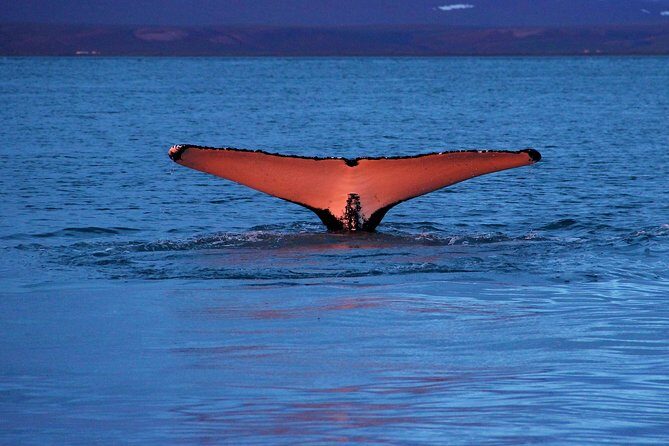
If you’re choosing where to do whale watching in Iceland, Húsavík is a smart bet. This tour is built around that reputation, heading into Skjálfandi Bay, where whales and dolphins regularly show up. Even with wild animals, the operator lists very strong odds for sightings (97–99%), which matters because whale watching is one of those activities where the “maybe” factor can make or break your day.
The bay also gives you something extra besides mammals. You’re out on open water with a good chance of seeing seabirds too. In the real world, that can turn your outing from a single-animal mission into a full wildlife day, with whales if you’re lucky, and supportive life in the same area if you’re not quite at the perfect moment.
You can also read our reviews of more whale watching tours in Akureyri

The oak-boat ride: what “3 hours” feels like on the water
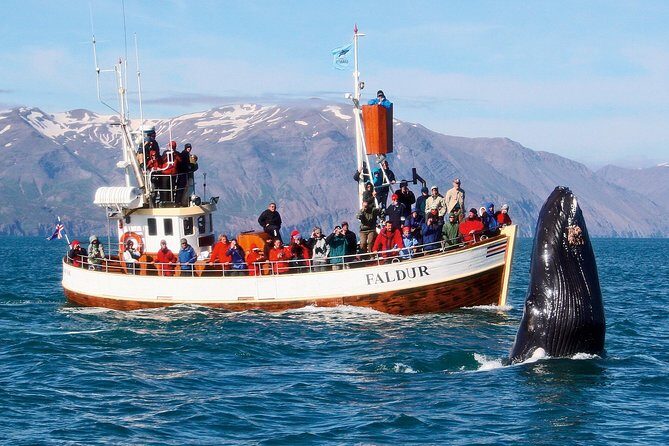
This is a 3-hour, fully guided outing on a traditional oak boat. The basic rhythm is simple: meet early, get kitted out, head out from Húsavík, search the bay with expert spotting, and return to the same meeting point.
Here’s the practical part: on slower boats, you’ll often spend more time traveling between the harbor and the likely whale area than you would on a faster vessel. Some people love the slower pace because it feels less frantic and more comfortable for watching. Others want more time right where the whales are. If your priority is maximum “spotting minutes,” this is worth thinking about.
Also, expect the boat to be busy. The tour caps at 70 travelers, and when whales appear, everyone naturally shifts positions at once. That can make it a little harder to move around for the best angles—especially if the day is full and the boat is packed.
What you’ll do at the single big stop: Gentle Giants whale searching
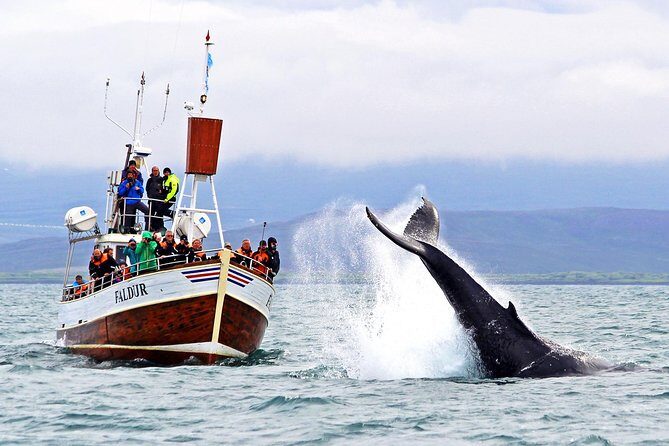
There’s one main stop: Gentle Giants Whale Watching in Skjálfandi Bay. This sounds simple, but the value is in how the crew runs the search.
You’re looking for wildlife that doesn’t sit still. Whales come up, breathe, and then disappear. Dolphins move fast and often travel in groups. Seabirds can hint that something is happening in the water below. Your guide’s job is to keep you coordinated—where to look, what to watch for, and how to react quickly when something surfaces.
I like that the commentary is live and provided by a professional guide. It makes a difference because whale behavior isn’t obvious. When someone explains what you’re seeing—like the difference between a whale’s surfacing patterns or how dolphins behave around feeding—you stop treating the outing like a lottery and start treating it like a guided hunt.
One more reality check: sightings aren’t guaranteed, and the ocean decides the schedule. But the guidance and active searching approach helps you maximize your chance.
Warm gear, cold wind, and staying comfortable enough to enjoy it
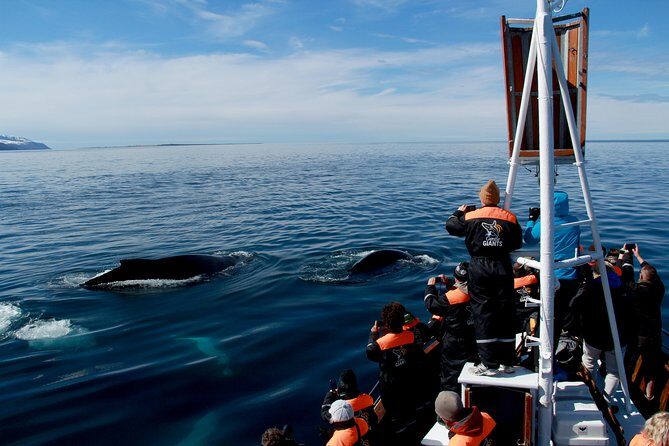
The operator gives you warm safety overalls and rain gear when needed. That’s not a small detail in Iceland. At sea, wind + spray can strip warmth fast, and once you get cold, it’s hard to focus on wildlife.
From what’s been shared, people consistently credit the overalls for making the experience tolerable, even on harsher days. If you tend to get cold easily, this is a big reason to book this style of tour rather than a casual “bring your own jacket” option.
Still, comfort depends on you too. The tour info tells you plainly: bring warm and waterproof clothing. That means layers under the overalls and protection against wet spray. And if you’re sensitive to motion sickness, take precautions. One of the most repeated practical lessons from real outings is that sea conditions can cause nausea for some passengers, even when the whales show up.
Wildlife you might see: whales, dolphins, and puffins on the same outing
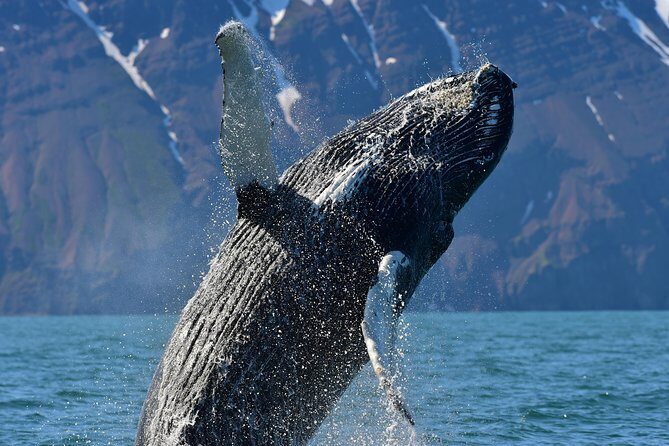
The tour focuses on whales and dolphins, and the operator specifically highlights chances up to 97–99% for sightings. In real conditions, that usually means you’re likely to leave with at least one meaningful encounter—sometimes whales in multiple surfacing events, sometimes dolphins, sometimes a mix.
What I like about this setup is that it’s not only about whales. Many departures can include other ocean life. For example, people have reported not just whale sightings but also dolphins and puffins in the same trip. That matters if your group has different interests, or if you’re doing this on a day when you’d rather not spend the whole time staring into fog hoping for a single breach.
When whales do appear, the best moments come fast. Guides help you spot the right area quickly so you’re ready with your phone or camera when the animal surfaces. If you care about photos, consider bringing a small setup that can handle quick movement—because the “good angle” changes as the boat repositions and the animals travel.


Crew energy: how the guide and captain style shapes your day
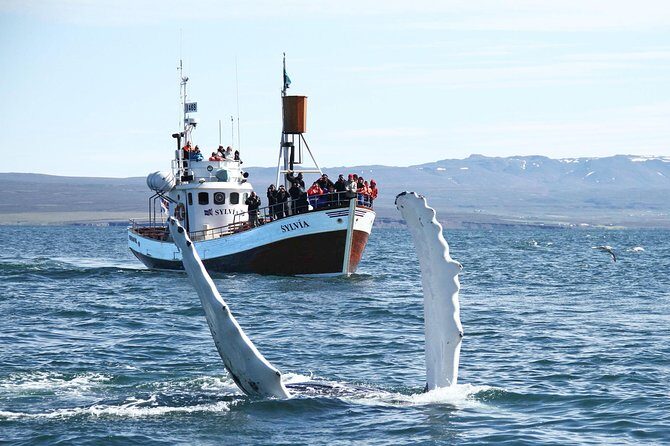
On whale watching tours, your experience is often about the people on the boat. This one is guided, with live commentary and active spotting.
From the names that show up in feedback, I’d keep an eye out for guides like Victoria, Fabio, and crew members such as Matteo and Nicola. The recurring theme is that when a guide is good at explaining what you’re looking at and quickly pointing out where to look next, the whole trip feels more satisfying. It turns “we went out and searched” into “we learned something and got real sightings.”
Another pattern: responsiveness. Some captains can reposition quickly when whales show nearby. That matters because whales move on their own clock, and speed to position often determines how close you get.
Practical value: is $102.58 a good deal for Húsavík whale watching?
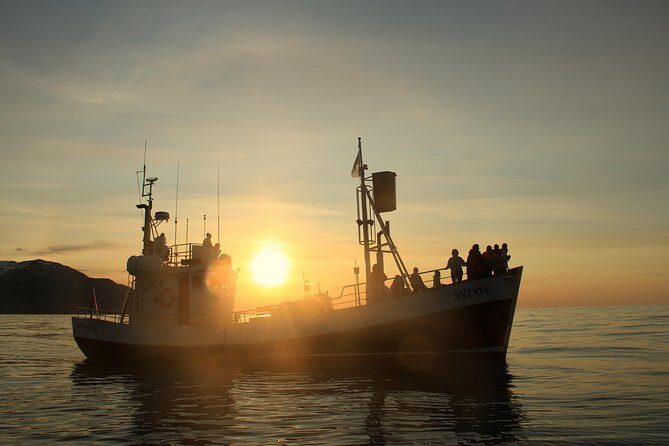
At $102.58 per person, you’re paying for a guided, gear-supported experience that targets wildlife in a known whale area. That price can feel steep if you compare it to a scenic boat ride. But it makes more sense when you treat it as a nature-guided search with equipment support and on-the-spot explanations.
Here’s what drives value:
- Guiding + live commentary: You’re not just paying for transport; you’re paying for interpretation and spotting help.
- Warm gear included: Overalls and rain protection reduce the risk that the day turns uncomfortable.
- High advertised sighting odds: Whale watching is gamble-style tourism. Strong odds reduce the “pay and pray” stress.
- Local, traditional boat style: The oak-boat approach is part of why many people pick this operator in the first place.
The main “value risk” is the one nobody can control: if there are no whales or dolphins spotted, refunds aren’t offered. Instead, a voucher may be provided depending on availability. That policy is common in the industry, but it does change how you should judge value. If your budget is tight, set expectations that you might need to be happy with partial wildlife sightings (or accept the voucher option).
Who should book this tour, and who should consider alternatives
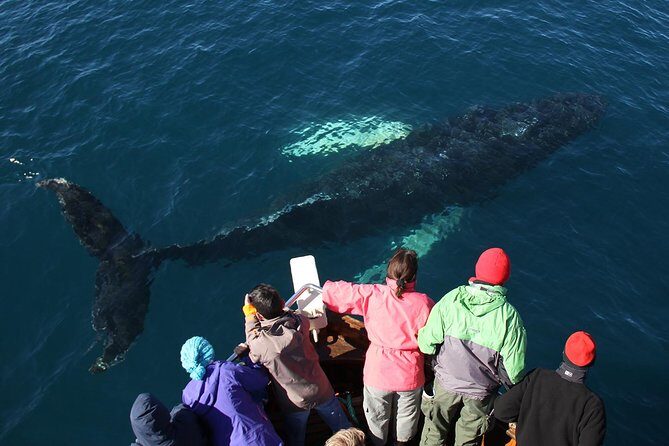
This tour is a good match if you want a guided, traditional Húsavík whale-watching outing with warm gear and active spotting in Skjálfandi Bay.
You’ll likely enjoy it most if:
- You’re traveling with a group that wants safety gear and direction.
- You value live explanations while you search.
- You’re okay with the reality of a wild-animal schedule.
You might want to think harder if:
- Motion sickness is a major issue for you. With sea chop, some passengers can feel sick for much of the trip. Bring remedies and plan layers and hydration.
- You’re sensitive to crowding around the rail for photos. With up to 70 travelers, movement can get slow when everyone leans at once.
- Your top priority is the most time possible right beside whales. If you’re stuck on the slower oak-boat timing, you may wish the trip spent more time in the densest zone. The tour is built for a traditional pace, not a sprint.
Also, kids must travel with an adult. If you’re traveling with younger passengers, build in time for warm clothing and patience while you wait for the animals to show.
Booking timing, confirmation, and what to do before you show up
This type of tour sells because demand can spike. The data shows it’s commonly booked about 46 days in advance on average, so if you have fixed travel dates, earlier booking usually gives you more choices.
After booking, confirmation comes within 48 hours based on availability. On the day, plan to arrive at the ticket center at least 40 minutes before departure. That buffer matters because you’ll need time for check-in and gearing up before you head out.
Since departure is stated as within walking distance in Húsavík, you should expect to manage local transit yourself. If you’re staying in Húsavík, you’ll likely find it easy to get there on foot. If you’re coming from elsewhere (like a nearby city or a cruise stop), you’ll want to factor in enough time to reach the meeting point without rushing.
Should you book Gentle Giants Whale Watching?
I’d book this tour if you want a traditional, guided whale hunt in Skjálfandi Bay with included warmth. The biggest reasons are the live guiding, the overalls that help you stay outside and watching, and the operator’s strong sighting odds.
Skip it or reconsider if your travel style is “comfort first no matter what,” or if you’re very prone to motion sickness and hate even the idea of a choppy ride. In that case, adjust your plan: come prepared with sea-sickness help, bring proper waterproof layers, and don’t underestimate how quickly conditions can change on the water.
If your goal is to go out, learn what you’re seeing, and maximize your chance of whales and dolphins in Húsavík, Gentle Giants is a solid choice.
FAQ
How long is the whale watching tour?
The tour lasts about 3 hours.
Where does the tour depart from in Húsavík?
Meet at Gentle Giants – Husavík Whale Watching, Garðarsbraut, 640 Húsavík, Iceland. The tour ends back at the same meeting point.
What’s included in the price?
The ticket includes a professional guide, live commentary on board, and warm safety overalls (plus rain jackets if needed).
What if no whales or dolphins are spotted?
If no whales or dolphins are sighted, refunds are not permitted. You may receive a voucher to join a traditional whale watching tour free of charge, depending on availability.
What should I wear?
Bring warm and waterproof clothing. The tour provides warm overalls and rain jackets if needed, but you should still dress for cold, wet wind at sea.
What happens if the tour is canceled due to poor weather?
If canceled due to poor weather, you’ll be offered an alternative date or a full refund. There’s also a minimum passenger requirement, and if that isn’t met, the departure can be changed or canceled with alternative options or a full refund.