REVIEW · REYKJAVIK
8-Days Northern Lights Exploration Tour from Reykjavík
Book on Viator →Operated by GJ Travel · Bookable on Viator
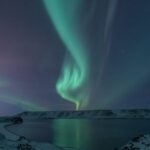
Eight days, one big mission: the aurora. This Reykjavík-based winter tour strings together classic Iceland stops—geysers, waterfalls, black-sand coasts, and glacier lagoons—while building in nightly chances to see the northern lights with a dedicated Northern Lights Academy program.
I love that it’s not just a drive to a few viewpoints. You get real science-and-nature context through the academy, plus guided time inside Vatnshellir cave, one of Iceland’s most famous lava tubes.
One thing to consider: the price is premium and the days run full. Also, meals beyond breakfast aren’t included, so you’ll want cash (or a card) ready for lunch and dinner.
In This Review
- Key things I’d circle before you book
- Reykjavik start and finish: convenient hotels near Laugavegur
- Getting to the tour: Flybus Plus transfer and a 9:00 meeting
- Day 2 in West Iceland: Grábrók, Deildartunguhver, and the lava falls
- Snæfellsjökull area: Kirkjufell photo time and going underground at Vatnshellir
- Golden Circle day: Thingvellir, Geysir/Strokkur, Gullfoss, and Fridheimar
- South coast and volcano education: Lava Centre, Skógar Museum, Reynisfjara, Skógafoss
- Glacier lagoon and Diamond Beach: Jökulsárlón, Fellsfjara, Hof, and Vatnajökull area
- Vík and two iconic falls: Seljalandsfoss and a Blue Lagoon reset
- Northern Lights Academy: how the tour improves your odds
- Price and value: what $3,186 buys in winter Iceland
- Who this northern lights tour suits best
- Should you book this northern lights exploration tour from Reykjavík?
- FAQ
- FAQ
- What is the meeting point in Reykjavík?
- Is an airport transfer included?
- What language is the tour offered in?
- Is the tour fully guided?
- Are meals included besides breakfast?
- Is Vatnshellir Cave a guided visit?
- Does the tour include northern lights equipment?
- What is the Northern Lights Academy?
- How many nights are included, and are breakfasts included?
- Is Blue Lagoon included?
Key things I’d circle before you book
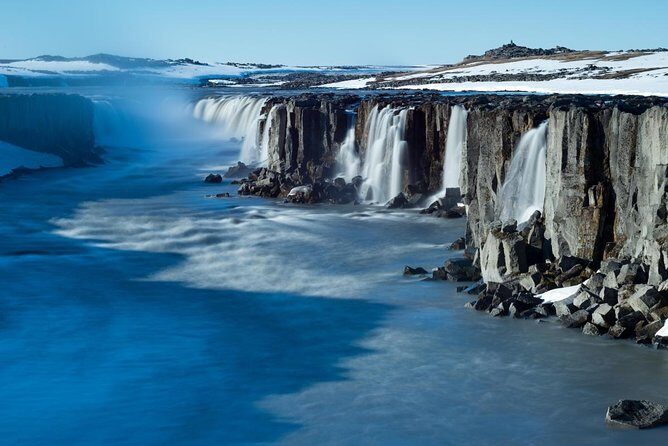
- Northern Lights Academy with film, presentations, and nightly searches so you’re not just standing outside hoping
- Vatnshellir cave guided tour going 35 meters underground through a lava tube
- Geothermal tastings like geothermally cooked bread, eggs, and hot-spring flavors
- Big glacier-country stops including Jökulsárlón and the ice-scattered Diamond Beach area
- Winter-ready gear included: snow and ice grippers (spikes) plus a flashlight
- Small-ish group size with a maximum of 40 people, which helps on photo stops and in town
Reykjavik start and finish: convenient hotels near Laugavegur
Your tour begins and ends with time in Reykjavík, and the hotel location is practical. You’re set up at Hotel KletturMjolnisholt, which is walkable to Laugavegur, Reykjavík’s main shopping street, so you can stretch your legs on arrival day—or just keep it low-key if you’re tired from travel.
On day one, you’ll have a few hours to settle in. There’s no pressure to cram sightseeing if you’re dealing with jet lag; Iceland winter travel is beautiful, but it’s also dark and cold, so an easy start can actually help.
In the same way, day eight gives you a breather before you head home. If your schedule allows, you can do a short final wander instead of rushing everything into your last evening.
You can also read our reviews of more tours and experiences in Reykjavik.
Getting to the tour: Flybus Plus transfer and a 9:00 meeting
Airport transfer is included via FLYBUS Plus shuttle, and it’s handled without a guide. When you land, you pick up a voucher and look for the Reykjavik Excursions Flybus shuttles just outside the terminal area.
Plan for a transfer that takes about 45 minutes to Reykjavík’s BSI bus station, and then you may connect to a smaller coach to reach your hotel. It’s worth budgeting your energy for this first leg, since you’ll be outdoors later for northern lights viewing.
Your tour guide meets you at Hotel Klettur before the departure at 09:00. That timing matters: mornings are when Iceland’s roads and light are most forgiving, and you’ll be grateful for an early start.
Day 2 in West Iceland: Grábrók, Deildartunguhver, and the lava falls
The West Iceland day is where the trip starts feeling like Iceland, fast. You begin with Grábrók Crater, a small climb option with a 20-minute walk up to the rim. It’s one of those stops where the views are worth the effort, and you’ll likely get a good sense of how old lava fields shape the ground here.
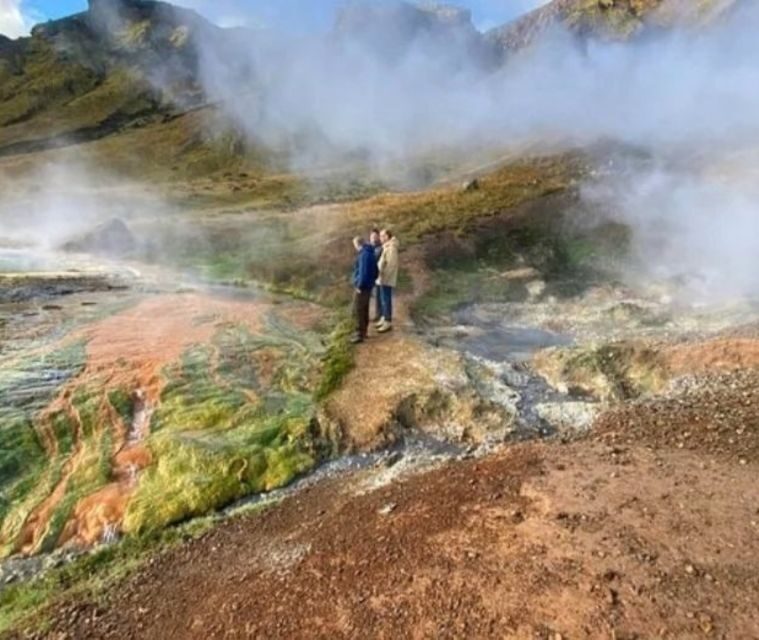
Next comes Deildartunguhver, described as Europe’s most powerful hot spring. It outputs roughly 180 liters per second at nearly boiling temperatures (97°C), so the steam and heat aren’t a vibe—they’re the main event. If you’ve never stood near something that’s basically pumping geothermal power straight into the air, this is a strong first taste.
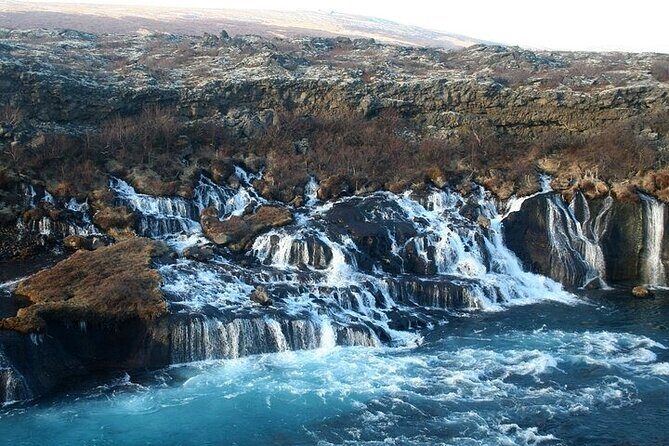
Then you move to Hraunfossar (Lava Falls) and Barnafoss. Hraunfossar is wide and strange in the best way: natural springs appear under a birch-covered lava field and form a waterfall that stretches across hundreds of meters. A few minutes’ walk brings you to Barnafoss, with rock formations carved into odd shapes and a tragic tale attached—something you can read about quickly and then see for yourself.
A practical note: these are quick stops. You’ll want grippy footwear and a warm layer you can remove and re-add without thinking.
Snæfellsjökull area: Kirkjufell photo time and going underground at Vatnshellir
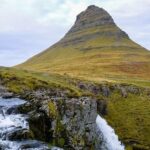
The next big shift is more scenic and a bit more cinematic. You get a photo stop at Kirkjufell Mountain, one of Iceland’s most photographed shapes against the bay. Even if you only have about 10 minutes, it’s usually enough to get a few angles—especially if the weather cooperates.
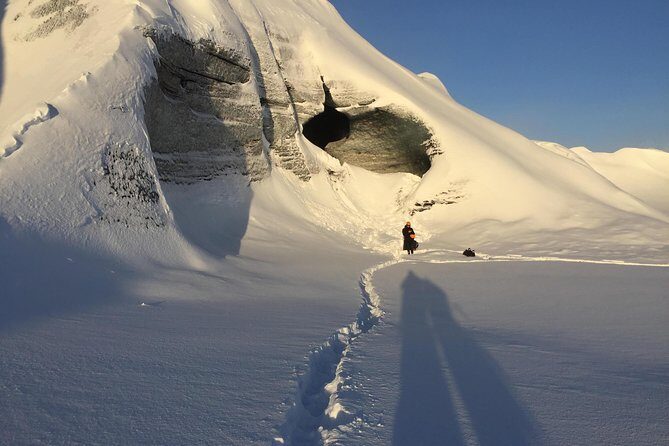
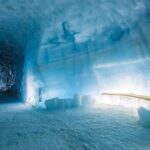
After that, you head into the ground at Vatnshellir Cave. The experience is guided, and it takes you about 35 meters below the surface and roughly 200 meters into a lava tube under the glacier Snæfellsjökull. Inside, it’s all about geology and scale—lava created this tunnel system, and winter light doesn’t reach in there.
This is also a good day to keep your expectations realistic. You’re dealing with a real cave environment, so movement is slower and you’ll feel that underground cool. But that’s also why it’s memorable: it’s not just another waterfall stop.
Golden Circle day: Thingvellir, Geysir/Strokkur, Gullfoss, and Fridheimar
This is the day that gives you the Iceland you’ve seen on postcards, but with enough context to make it stick.
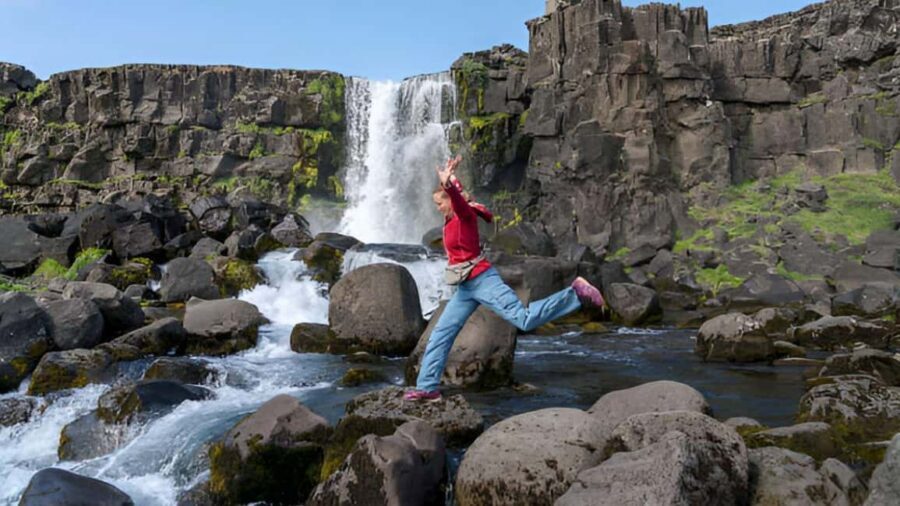
First is Thingvellir National Park, a UNESCO World Heritage site since 2004. It’s famous for the Alþingi, the oldest existing parliament in the world, and it’s also a place where Iceland’s geology is front and center. The plain sits between major fissures, right by Thingvallavatn, so you get that feeling of standing in a landscape shaped by plate boundaries.
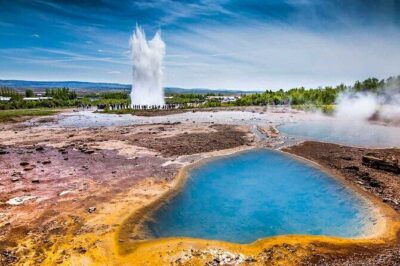
Then you roll to Geysir, where the original geyser is dormant but Strokkur erupts at intervals of about 5–10 minutes. That timing is a gift for photographers and for anyone who just wants to plan. You’ll also have a meal-style moment here: freshly baked hot spring bread served with Icelandic butter, boiled eggs, and herring. It sounds unusual until you realize it matches the geothermal theme perfectly.
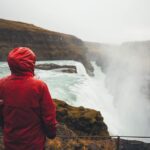
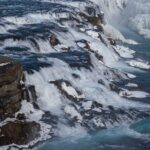
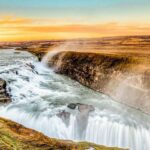
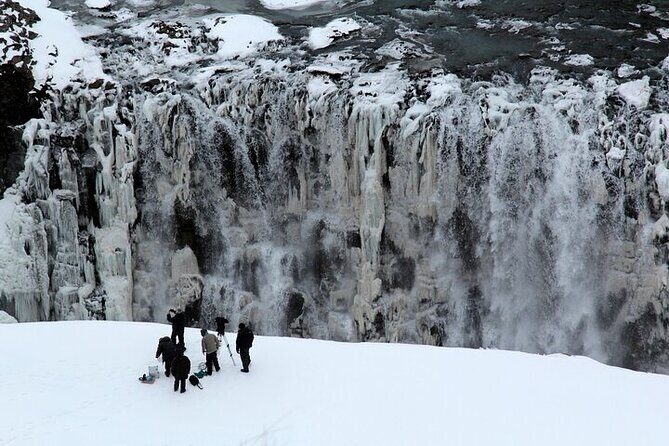
Next up is Gullfoss, Iceland’s Golden Falls. It’s a glacial river (Hvítá) dropping in a double cascade with a 32-meter height. On a sunny day, rainbows are possible because of the spray, but even without sun, the power is impressive.
You finish with Fridheimar, where you learn about Icelandic horses and visit a geothermal greenhouse. The “horse + greenhouse” combo isn’t something most tours do, and I like it because it shows how geothermal energy and local living overlap in day-to-day Iceland.

South coast and volcano education: Lava Centre, Skógar Museum, Reynisfjara, Skógafoss
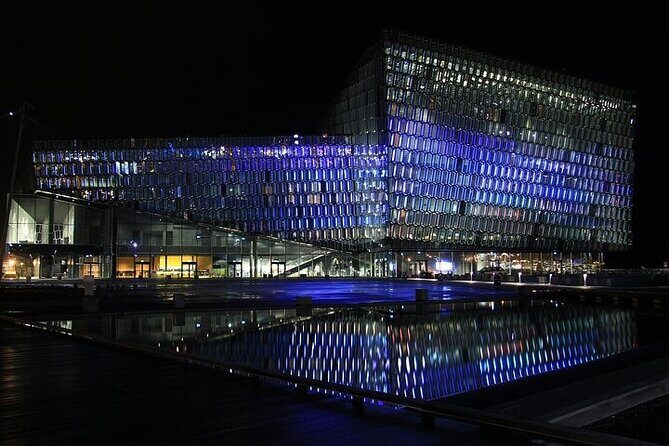
As you push farther south, the tour leans into volcano culture and coast views.
You start at the Lava & Volcano Exhibition Centre, a high-tech interactive stop focused on geology and active volcanoes. Even if you’re not a science person, the appeal here is that it makes the rest of your Iceland driving make more sense. Iceland isn’t a set of random sights; it’s a place built by eruptions and moving plates.
After that comes Skógar Museum, one of Iceland’s strongest folk-museum stops. You’ll see farm and domestic artifacts and several turf-built houses—turf architecture is one of those details that makes Iceland feel real instead of just dramatic.
Then you hit the Eyjafjallajökull Volcano Information Center presentation. You’ll learn about the volcano linked to the 2010 eruption that caused huge disruption to air traffic across Europe for about a week. It’s a useful reminder that these natural systems affect humans in very direct ways.
On the coast, Reynisfjara Black Sand Beach delivers the strong visuals: black lava sand, bird cliffs, caves, and columnar basalt. It’s also one of those places where wind can cut fast, so keep your jacket on and don’t wander where conditions feel sketchy.
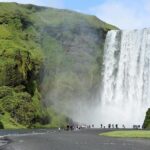
Next you get Skógafoss, a 60-meter waterfall near the village of Skógar. It’s a classic for a reason, and the timing is just right for a short walk and photos without turning the day into a marathon.
Glacier lagoon and Diamond Beach: Jökulsárlón, Fellsfjara, Hof, and Vatnajökull area
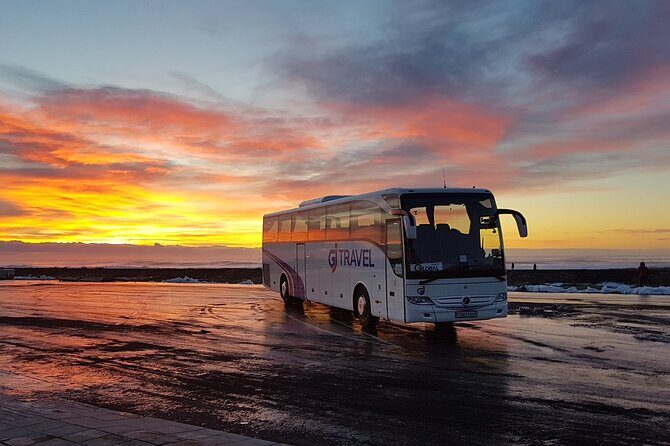
This is the day most people remember because it looks otherworldly.
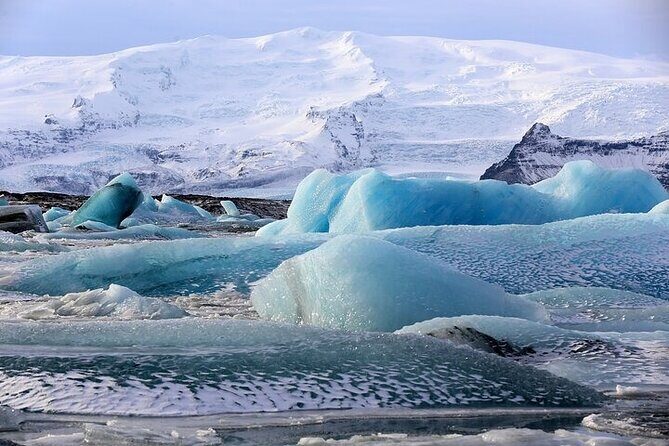
First is Jökulsárlón, a glacial lagoon filled with floating icebergs. The stop time is about 40 minutes, and the big perk is that you’re right there watching how ice drifts and changes in the water. There’s also a chance you’ll see seals swimming in arctic waters, which adds a living-feel to the scene.
Across the road is Fellsfjara, known as Diamond Beach. Here, larger icebergs wash up and get stranded on the black sand, giving you that sparkling look—without you needing fancy camera tricks. It’s a great spot to take your time because the details keep shifting as new ice settles.
You also make a photo stop at Hof, a tiny turf church built in 1883 and noted as the youngest turf church in Iceland. It’s short, but it adds a human scale to the giant glacier story.
Finally you spend time at Vatnajökull National Park, Europe’s largest national park and home to Iceland’s largest glacier, Vatnajökull. You’ll see alpine environments and high mountain country, but the key value is that this stop frames the whole glacier-and-ice section of your trip as part of one large system rather than disconnected sights.
Vík and two iconic falls: Seljalandsfoss and a Blue Lagoon reset
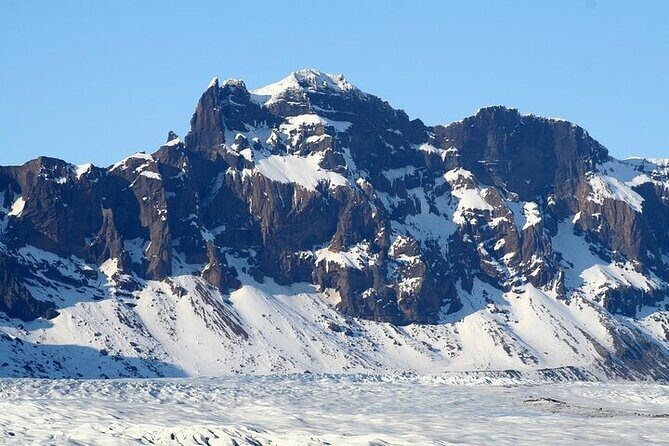
Your next block of days is about dramatic waterfalls and ocean-edge viewpoints.
You start with Vík, including a photo stop at the black lava beach with high bird cliffs and pounding waves. Vík is wind-heavy in winter, so think in layers: one thick warmth layer plus a wind shell you can keep on.
Then comes Seljalandsfoss, a waterfall that drops from an overhanging lava cliff. The tour includes time to walk behind it, but plan for getting wet—you won’t stay dry, even with the best intentions. That said, the walk-behind angle is a unique payoff, and it’s why Seljalandsfoss is such a favorite stop.
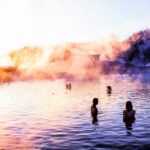
After the falls, you get a major “you’re doing great” break: Blue Lagoon. Admission and towel are included, and you’ll spend about two hours at the geothermal pool set in a dramatic lava field. It’s a popular spot, but the practical value here is real: after cold days on the road, a warm soak helps reset your energy for future driving and nights outdoors.
One note from real-world experience: in at least one case, the Blue Lagoon was closed due to volcanic activity, and the group was rebooked for Sky Lagoon instead. That doesn’t mean it will happen to you, but it does show the operator can handle changes without leaving you with nothing.
Northern Lights Academy: how the tour improves your odds
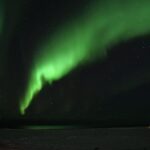
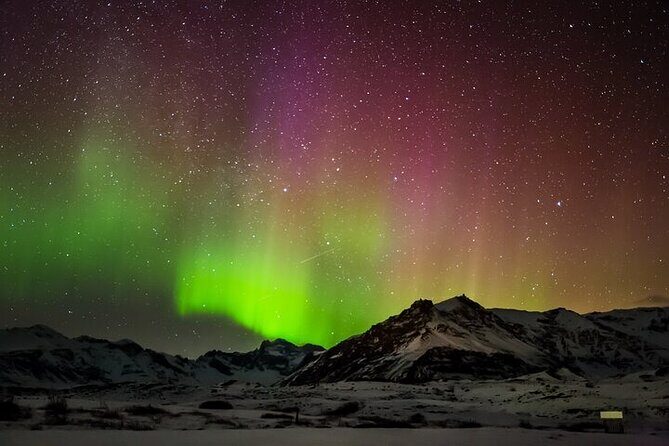
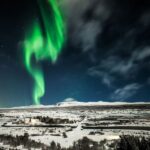
The aurora part is built in, not tacked on. You’re told to keep watch nightly, and you’re also given the Northern Lights Academy program, which combines presentations, film, and Northern Lights searches.
Here’s why this matters. Seeing the aurora isn’t just luck; it’s also about knowing what you’re looking for, how the sky might shift, and how to stay comfortable and ready through long waits. The equipment you receive supports that: snow and ice grippers spikes for safer footing and a flashlight so you’re not fumbling in the dark.
I also like that the group size is limited (up to 40 people). Big crowds can mean more time waiting and less time watching. With a smaller set, your guide can better manage where people stand and when to move.
A practical strategy for you: dress for the cold as if you’ll stand still for a long time, because you will. Keep your “warm bits” easy to access—hat, gloves, and layers that don’t require a struggle to adjust.
And remember: no company can force the sky. What you can do is stack multiple nights of effort with proper guidance, and that’s what this tour is designed to do.
Price and value: what $3,186 buys in winter Iceland
At $3,186.01 per person, this is not a bargain tour. The value comes from bundling a lot of what normally costs extra into one package.
You’re getting airport transfer via FLYBUS Plus shuttle, seven nights in comfort tourist-class hotels with breakfast, and an air-conditioned coach with WiFi. You also have guided components that can be hard to recreate on your own in winter, including the guided Vatnshellir cave, the hot spring tasting with geothermally cooked bread and eggs, and the northern lights training.
On top of that, you’re provided winter and aurora gear: shoe spikes and a flashlight. Those details matter because winter conditions in Iceland are not a suggestion.
Where you’ll feel the extra cost is meals and drinks beyond breakfast. The tour data lists those as not included, so budget for lunches and dinners. If you plan to eat out often, it’s smart to pick simple places close to where you’re staying, not drive across town in the cold.
If you want a “highlight circuit” with structure, education, and a lot of key sights packed into eight days, the price starts to make sense. If you’re chasing a budget trip, this likely won’t be your best fit.
Who this northern lights tour suits best
This tour fits best if you want a guided Iceland winter with strong structure. You’ll likely enjoy it if you value the mix: science and nature, not just photo stops; plus enough time in each region to feel the change from geothermal areas to glaciers.
It also suits you if you don’t want to plan driving routes, cave logistics, and night aurora searching on your own. Winter road planning is a job. Here, you get an organized plan and an equipment setup built for the conditions.
If you prefer very flexible schedules with lots of free time, you might find the stops fairly time-defined. The tradeoff is that you’ll cover a lot of ground in 8 days.
Should you book this northern lights exploration tour from Reykjavík?
I’d book it if your top goal is to increase your chances of seeing the aurora while still enjoying a full Iceland winter sampler. The Northern Lights Academy plus nightly searches, the included winter gear, and the guided cave make this more than a casual sight-seeing loop.
I would think twice if $3,186 feels steep for you, or if you hate structured days where meals and timing are largely your responsibility. Also, if you’re only interested in one region of Iceland, this does a wide sweep instead of staying local.
For many people, the best question isn’t whether this is “worth it.” It’s whether you want a guided, packed, winter-ready experience that teaches you what you’re seeing while giving the northern lights multiple nights to show up.
FAQ
FAQ
What is the meeting point in Reykjavík?
You meet at Hotel KletturMjolnisholt 12-14, Reykjavik 105 Iceland. Your tour guide meets you there before the 09:00 departure.
Is an airport transfer included?
Yes. Arrival and departure airport transfers are included via FLYBUS Plus shuttle. It does not include a guide.
What language is the tour offered in?
The tour is offered in English, with an English-speaking guide or driver-guide.
Is the tour fully guided?
It includes a fully escorted 6-day bus tour with an English-speaking guide or driver-guide, plus a guided entry for the cave.
Are meals included besides breakfast?
Breakfast is included for 7 mornings. Additional meals and drinks are not included.
Is Vatnshellir Cave a guided visit?
Yes. There is a guided tour into Vatnshellir cave.
Does the tour include northern lights equipment?
Yes. You receive winter and Northern Lights equipment, including snow and ice grippers spikes for your shoes and a flashlight.
What is the Northern Lights Academy?
It is a program that combines presentations, film, and Northern Lights searches, paired with nightly aurora watching.
How many nights are included, and are breakfasts included?
The tour includes 7 nights of accommodation in comfort tourist-class hotels, and breakfast is included each morning.
Is Blue Lagoon included?
Yes. Blue Lagoon admission and a towel are included for the visit on the tour’s later day.