REVIEW · HEIMAEY ISLAND
Boat Tour in Vestmannaeyjar
Book on Viator →Operated by Ribsafari · Bookable on Viator
Puffins fly over black rock and volcano scars. A Ribsafari boat tour around Heimaey in Vestmannaeyjar gives you wide-open sea views, plus a lively crew story about geology and wildlife. I also like that safety is taken seriously with a lifejacket and that you still get time for highlights like Elephant Rock and a sea cave. One thing to keep in mind: from the water, puffins may not be close enough for those postcard cliff shots.
This is a 1 hour 30 minutes cruise (about) that starts at Tangagata 7 at 2:15 pm, and ends back at the same meeting point. The tour is offered in English, capped at 50 travelers, and you’ll get a mobile ticket. And if the weather turns, plans can shift; one review even notes a reroute to a smaller group when the boat captain canceled.
In This Review
- Key Points You’ll Care About on This Heimaey Cruise
- Why A RIB Boat Makes Sense for Heimaey
- Timing and Where You Meet: Tangagata 7 at 2:15 pm
- The Route: Sailing Around Heimaey With a Sea Cave Stop
- Volcano Stories, New Lava, and the Island’s Geology
- Elephant Rock: One Landmark, Many Ways to Read It
- Puffins and Seabirds: What You’ll Likely See (and What You Might Not)
- Orcas Can Happen: Why the Boat View Is Worth It
- Guide Talk: Chris, Local Storytelling, and the Pace of the Tour
- Safety and Comfort: Lifejackets, Wind, and Real-World Conditions
- Weather Plans: When the Captain Says Not Today
- Price and Value: Is $114.65 a Good Deal?
- Who This Tour Suits Best (and Who Might Not Love It)
- Should You Book This Heimaey Boat Tour?
- FAQ
- FAQ
- Where is the meeting point for the Heimaey boat tour?
- What time does the tour start?
- How long is the boat tour?
- What does the tour include besides sailing?
- Will I see puffins and other seabirds?
- Is the tour offered in English?
- Is a lifejacket provided?
- What is the maximum group size?
- Is the experience weather-dependent?
- Is there free cancellation?
Key Points You’ll Care About on This Heimaey Cruise
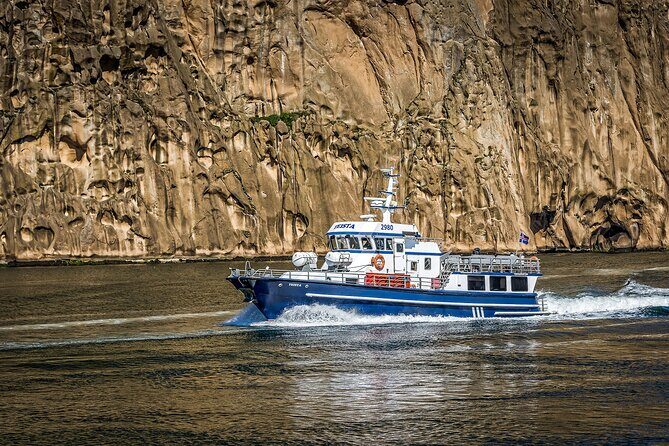
- Sea cave plus volcanic context: You’re not just riding waves—you’re following the island’s eruption story.
- Elephant Rock from a different angle: It’s easier to understand the formation when you see it from the water.
- Wildlife is the main event: Puffins and seabirds are part of the show, and you might even score orcas.
- Local guide energy: Guides like Chris (and other island-born storytellers) make the geography feel personal.
- Bring realistic photo expectations: Even a 300mm lens may not guarantee close puffin shots from the boat.
- Good weather matters: The cruise depends on conditions, and changes can happen if seas are rough.
Why A RIB Boat Makes Sense for Heimaey
Heimaey is shaped by fire, then sculpted by the ocean. A rib safari style boat helps you get to the action faster and gives you that direct, on-the-water sense of scale—big cliffs, dark volcanic rock, and sea caves you can’t really appreciate from a viewpoint alone.
I like that this trip is built around movement: sailing around the island, hitting a sea cave stop, then carrying on to landmarks like Elephant Rock. It’s a smart way to spend about 90 minutes if you want geology and wildlife in one go, without turning it into an all-day commitment.
You can also read our reviews of more tours and experiences in Heimaey Island.

Timing and Where You Meet: Tangagata 7 at 2:15 pm
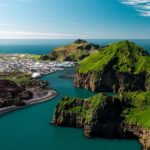
You’ll meet at Tangagata 7, 900 Vestmannaeyjabær, Iceland. The start time is 2:15 pm, and the activity ends back at the meeting point, so you don’t have to worry about getting stranded across the island.
This is also a practical choice for scheduling. It’s short enough to pair with another activity the same day, and it’s near public transportation, which helps if you’re not driving.
The Route: Sailing Around Heimaey With a Sea Cave Stop
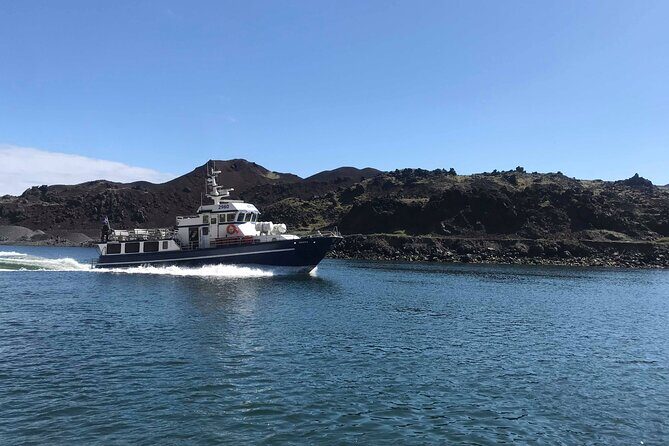
The core of the itinerary is simple and effective. You’ll sail around Heimaey in Vestmannaeyjar, visit a sea cave, and get guided interpretation of what you’re seeing.
The sea cave stop is where the tour feels most “I’m actually here” instead of just scenic. Dark rock, ocean access, and volcanic forms come together in a way that’s hard to replicate from land, especially when the guide points out what the eruption and later shaping did to the coastline.
Volcano Stories, New Lava, and the Island’s Geology
This tour’s explanation isn’t vague. You’ll learn about the volcanic eruption, see new lava, and get the history behind the island’s dramatic transformation. For me, that’s the value: you’re not just watching rock—you’re building a mental map of how the island became what it is.
And it helps that the crew connects the dots between geology and what animals are doing out there. When seabirds circle and puffins swim, the guide’s wildlife context makes the environment feel alive instead of like a static backdrop.
Elephant Rock: One Landmark, Many Ways to Read It
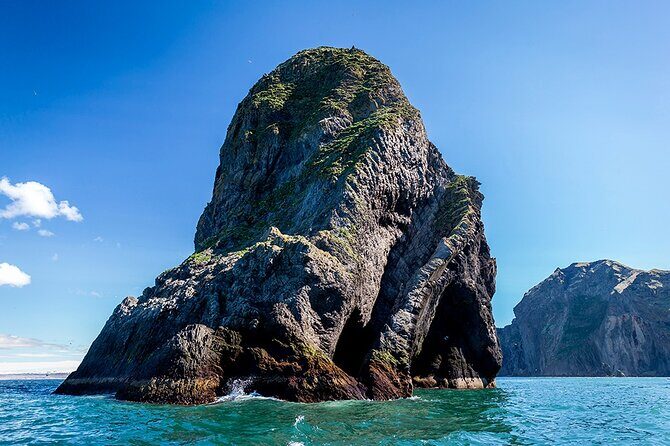
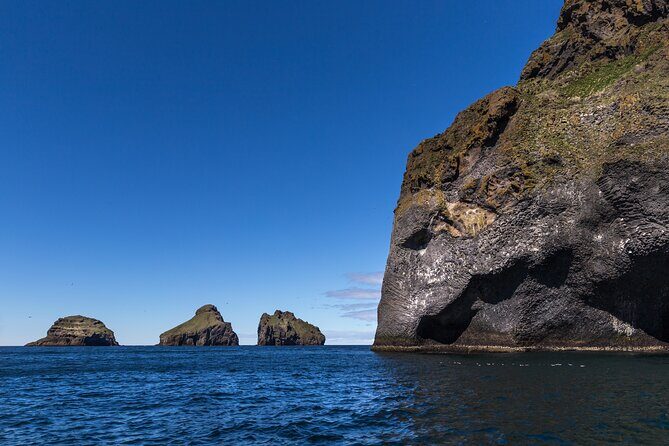
Elephant Rock is one of those names that sounds playful, but it’s also a strong visual marker. From the boat, you get a clearer sense of how it sits in the water and why it’s a recognizable feature of Heimaey’s coastline.
The advantage of seeing it by sea is that you can judge shape and position. From land, you might get one “side.” From the water, it becomes part of a bigger volcanic-and-coastal story.
Puffins and Seabirds: What You’ll Likely See (and What You Might Not)
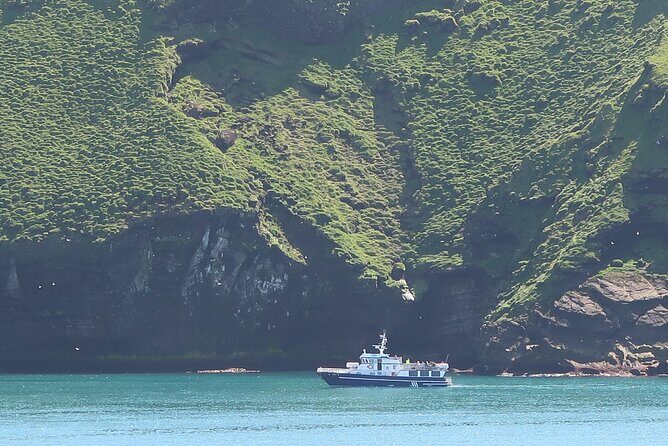
Wildlife is front and center. Expect puffins and other seabirds swimming and flying above you during the sail. That’s the part of the experience most people come for, and it’s also why the cruise works so well with the guide’s commentary.
Now for the honest photo reality. One review notes that puffins were not really close to the cliffs, making it hard to get great shots even with a 300mm lens. So if you’re chasing tight, close-up images, plan around the possibility that you’ll be viewing from a bit farther out.
If puffin closeness is your top priority, you might prefer land-based viewing for that specific job. The boat is better for the overall scene: birds in motion, ocean context, and the sense of the islands at work.
Orcas Can Happen: Why the Boat View Is Worth It
While puffins are the expected highlight, this cruise can also surprise you. One review calls out seeing a pod of orcas as the standout moment.
That’s a big reason I think a boat tour here is worth it. You’re not locked into one kind of sighting. The sea is a moving system, and being out on the water puts you in the zone where unexpected wildlife shows up.
Guide Talk: Chris, Local Storytelling, and the Pace of the Tour
The crew matters on a tour like this, because you’re learning while you move. Reviews consistently mention a guide who had deep local knowledge and was born and raised on the island, plus a fun, history-rich style.
Chris is specifically mentioned as an entertaining guide who knows the island and shares lots of interesting stories. Another detail that came up: the cruise uses a soundtrack while sailing, which adds to the mood and keeps the ride from feeling purely like a lecture.
Practically, what you should look for is how the guide stops you at the right moments. You want brief “pause and listen” segments so the facts land, but not so long that you feel like you’re drifting. This tour’s structure seems to hit that balance.
Safety and Comfort: Lifejackets, Wind, and Real-World Conditions
You’ll be provided a lifejacket, and safety is part of the experience from the start. That’s especially important on a sea cave portion where you want calm, consistent procedure.
Comfort-wise, you should dress for wind and spray. Even in pleasant weather, a boat can feel colder than the town. Also, bring what you need for photos and steady viewing—handwarmers and a camera strap can make a difference when you’re watching birds overhead.
Weather Plans: When the Captain Says Not Today
This is an outdoor cruise, and it requires good weather. That means cancellation or changes are possible if conditions are unsafe or uncomfortable.
One review describes a situation where bad weather led the captain to cancel the tour, but the company called and worked to make it right by offering a place with a smaller group. That’s the kind of contingency you want to see from a provider: responsive communication and backup options rather than a simple shrug.
My advice: treat weather as part of the trip plan. If your schedule is tight, consider building in some flexibility around your sailing time.
Price and Value: Is $114.65 a Good Deal?
At $114.65 per person for about 1 hour 30 minutes, this isn’t a budget throwaway. But it also isn’t “pay a lot for nothing.” You’re paying for a combo: boat time around Heimaey, a sea cave stop, and expert storytelling that explains volcano history and wildlife in the same session.
Value gets better when you factor in what you’re avoiding. Instead of piecing together multiple transport-heavy stops to get geology, coastal viewpoints, and wildlife context, this bundles the experience into one guided ride. Plus, with a maximum of 50 travelers, it’s not an endless cattle-car situation.
Where the price can feel less justified is if you’re only there for close puffin shots. Given the reality that puffins can be farther out from the boat, you’re paying for the scene and interpretation, not guarantee-level “right next to the cliff” viewing.
Who This Tour Suits Best (and Who Might Not Love It)
This boat tour is a great fit if you want:
- Volcanic and wildlife context in one short outing
- Open views from the water, including sea cave time
- A guide who’s energetic and locally informed, like Chris
- A chance at varied wildlife, including possible orcas
It may be less ideal if you’re the type who only cares about extreme closeness—especially for puffin photography. In that case, you may still love the stories and scenery, but you’ll want to pair the boat with a land-based plan so your photos match your expectations.
Also, the tour notes that most travelers can participate. If you can handle being out on the water for about 90 minutes, this is typically the kind of activity that works for a wide range of ages.
Should You Book This Heimaey Boat Tour?
If your goal is the Westman Islands in motion—volcanic geology, birds overhead, and a guide who brings the place to life—then I think you should book this. The best-case scenario is exactly why the reviews are so strong: big scenery, entertaining storytelling, and wildlife surprises like orcas.
Book with two expectations aligned. First, you’re buying the experience of being out on Heimaey’s coast and hearing the volcanic story, not just a guaranteed puffin close-up. Second, go in prepared for weather realities and potential schedule changes. If you can do that, the $114.65 price starts to feel fair for what you get: a focused, guided, ocean-level look at one of Iceland’s most unusual islands.
If you want puffin photos above all else, consider using this as the “whole ecosystem” half-day idea, then add a land plan for the tight viewing shots.
FAQ
FAQ
Where is the meeting point for the Heimaey boat tour?
You’ll meet at Tangagata 7, 900 Vestmannaeyjabær, Iceland.
What time does the tour start?
The start time is 2:15 pm.
How long is the boat tour?
It runs for about 1 hour 30 minutes.
What does the tour include besides sailing?
The tour includes sailing around Heimaey and a visit to a sea cave, with stops to learn about volcanic eruption history, wildlife, new lava, and Elephant Rock.
Will I see puffins and other seabirds?
Yes, puffins and other seabirds are expected to be swimming and flying above you during the cruise.
Is the tour offered in English?
Yes, the tour is offered in English.
Is a lifejacket provided?
Yes, you’ll be provided a lifejacket and should wear it while at sea.
What is the maximum group size?
The tour has a maximum of 50 travelers.
Is the experience weather-dependent?
Yes. The experience requires good weather, and if it’s canceled due to poor weather, you’ll be offered a different date or a full refund.
Is there free cancellation?
Yes. You can cancel for a full refund up to 24 hours in advance of the experience’s start time.
If you want, tell me your travel dates and whether puffin photography is your top goal—I can suggest how to sequence this with a land-based plan for the best odds.