REVIEW · AKUREYRI
Whale Watching on a Traditional Oak Sailing Ship from Husavik
Book on Viator →Operated by North Sailing · Bookable on Viator
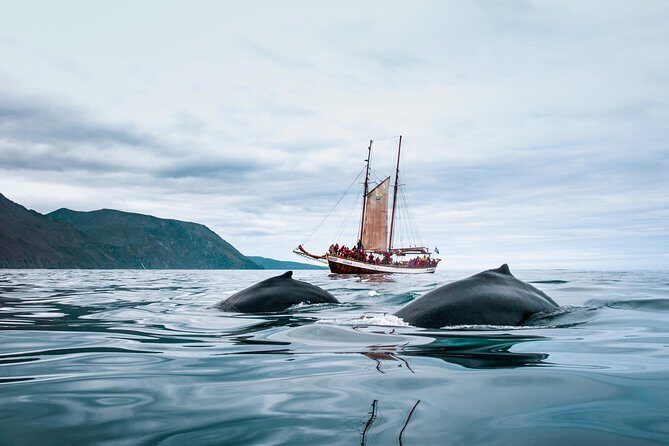
Whales feel closer on an old wooden schooner. This 3-hour whale-watching trip out of Húsavík pairs traditional sailing with guided narration, plus the option to help sail. It’s a hands-on way to watch for whales while the North Iceland wind and waves keep the experience real.
I especially like the cold-weather suits they provide, because they turn a chilly sea outing into something you can actually enjoy without rushing back to your hotel. And I love the simple finish: cinnamon buns and hot chocolate waiting on the way back.
The one drawback to be honest about: whale sightings are never guaranteed, and the sea can get rough when conditions are windy or misty.
In This Review
- Key highlights that matter
- A Traditional Oak Schooner in Húsavík: Why It Feels Different
- Getting There Smoothly: North Sailing Check-In by the Church
- Boarding the Haukur, Opal, or Hildur: What You Should Expect On Deck
- Helping Sail: How Crew Participation Makes Whale Spotting Click
- Staying Warm: Suits, Wind, and the Real Cold-Weather Strategy
- The 3-Hour Whale Search: How the Timing Works in Real Life
- What You Might See: From Humpbacks to Quiet Days
- Price and Value: What US$106 Is Really Buying
- Who Should Book This Sailing Whale Watch (and Who Should Think Twice)
- Booking Smart: How to Choose the Best Departure Time
- Should You Book This Whale Watching on a Traditional Oak Sailing Ship?
- FAQ
- How long is the whale watching tour?
- Where do I pick up tickets, and where does the tour start?
- Are cold-weather suits provided?
- What’s included in the price?
- Are there multiple departure times?
- What if the tour is canceled due to weather?
Key highlights that matter
- Traditional schooners with hands-on crew time: hoist sails and haul ropes if you want.
- Proper cold-weather suits: designed to keep you warm and dry while you scan the water.
- Narration during the search: science and conservation talk while you look for whales.
- On-deck viewing from both sides: good access helps when spotting happens fast.
- Cinnamon buns and hot chocolate on the return: a real morale boost on cold days.
- Smaller group size (max 45): more room on deck than the big-boats crowd.
A Traditional Oak Schooner in Húsavík: Why It Feels Different
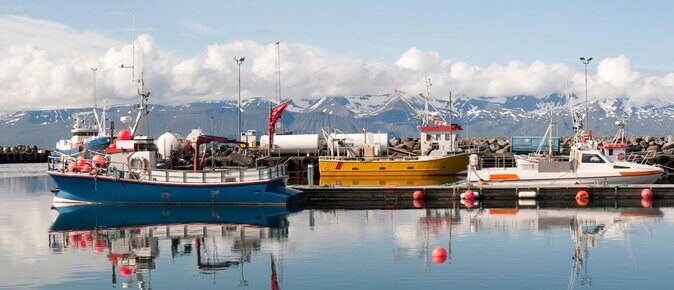
Húsavík is one of those North Iceland places where wildlife is not an afterthought. It’s the point. This whale-watching experience leans into that by putting you on a traditional wooden sailing ship, not just a seat with binoculars.
What makes it feel different is the motion and the pacing. You’re not stuck in a constant roar like some faster craft. Instead, you’re sailing out far enough to search the bay, then slowing down and watching carefully when the guide spots the signs that matter. The crew narration helps you read what you’re seeing, instead of just staring at open water and hoping.
The deck setup also helps. If you’ve ever been on a tour where everyone crowds one side, you know how fast a sighting can become chaos. Here, the boats are set up so you can get to good viewing positions on more than one side, which matters because whale surfacing can be brief.
Finally, there’s the human side: you can join in with sailing tasks if you like. That shifts you from passive passenger to part of the operation. You don’t need any sailing background. The crew runs the show, and you follow instructions.
You can also read our reviews of more boat tours in Akureyri

Getting There Smoothly: North Sailing Check-In by the Church
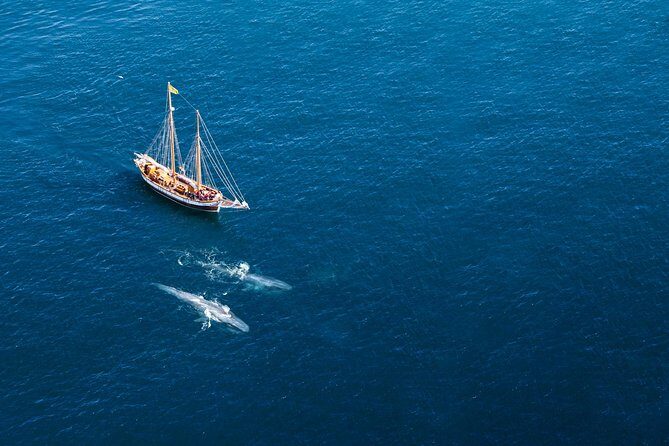
Plan on starting earlier than you might for other tours. You’ll pick up tickets at the North Sailing Ticket Centre at Hafnarstett 9, Húsavík—across the street from the church.
A key practical detail: arrive about 30 minutes before departure and give yourself time to redeem tickets. From the ticket office, it’s roughly a two-minute walk to the harbor.
Good to know: the tour offers multiple departure times, and you choose your preferred time at checkout. That’s useful in Iceland, where weather changes can happen faster than you’d expect. If one time looks questionable, you can often shift your plan rather than losing the whole day.
Also note: the experience ends back where it starts (so you’re not dealing with a mid-bay transfer or an awkward return). You’ll be back after about 3 hours on the water.
Boarding the Haukur, Opal, or Hildur: What You Should Expect On Deck
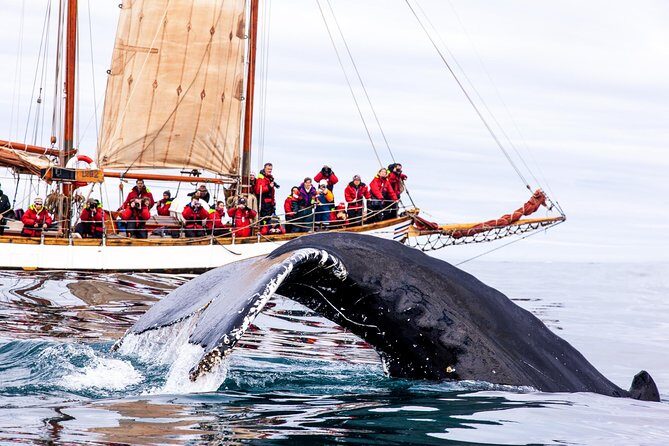
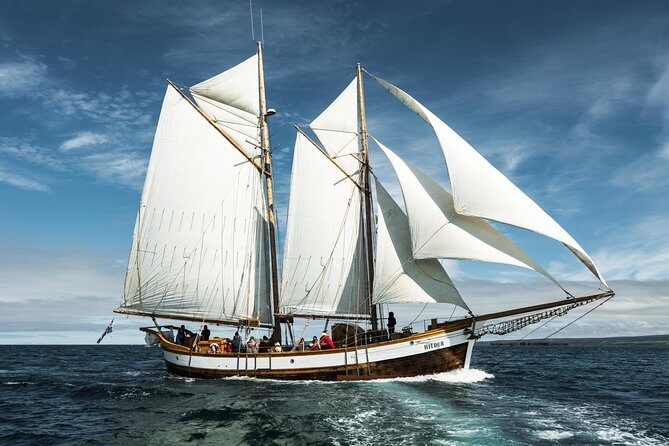
At the harbor, you step aboard one of North Sailing’s traditional wooden boats used for these excursions: Haukur, Opal, or Hildur.
Because these are wooden sailing vessels, the overall feel is practical and sturdy. You’re outside on deck for the whale search, and you’ll want to dress for wind and spray even on bright days. Iceland loves to change the temperature the moment the boat turns or the wind shifts.
You’ll also see how crew operations work. The boats are set up for movement—people shift positions as they scan for spouts and movement. That’s another reason the group size is kept to a maximum of 45: you can move without feeling like you’re stepping over elbows every time someone points.
If you’re hoping for comfort, focus on two things the tour provides: warm suits and the chance to get into a good viewing spot on both sides. If you’re sensitive to cold, those two details are not small—they’re what separate a pleasant outing from a “quick photo and go home” mission.
Helping Sail: How Crew Participation Makes Whale Spotting Click
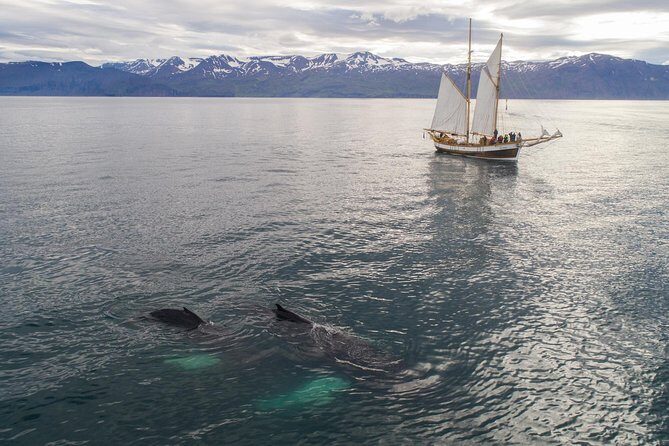
This is one of the most “I’m actually doing something” parts of the trip. Once you’re onboard, you can help the crew with tasks like hoisting sails and hauling ropes.
You don’t have to be fearless. You just have to be willing to follow directions. The crew is running the boat, and your job is to assist, not to steer. That said, even a small role changes your mindset. When you feel the boat working under you, the whale watching becomes less like waiting and more like part of a real voyage.
It also helps with attention. You’re learning how the ship moves and where your best viewing angles might be. That matters because whale surfacing often happens when you’re adjusting your sightline, not when you’re perfectly still.
If you’re traveling with kids, this part often lands well too. The trip becomes a story: sails up, scanning the bay, listening for whale cues in the guide’s narration. It turns “stand in cold air” into something that has a purpose.
Staying Warm: Suits, Wind, and the Real Cold-Weather Strategy
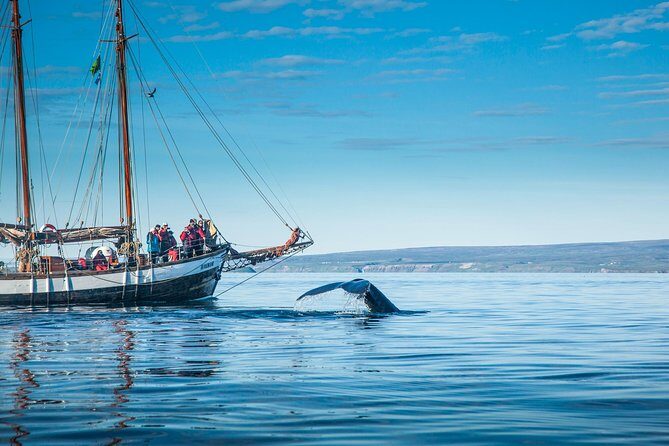
Cold is the main obstacle on nearly every whale tour in North Iceland, and this one handles it the smart way: you’re provided special cold-weather suits to keep you warm and dry.
Even with suits, remember this island rule: layers matter. One review noted that while the overalls keep you dry, it still gets cold, so arriving with warm layers is the difference between enjoying the ride and spending the whole time wishing you could go back on land.
Here’s my advice: treat the suit as protection from the wind and spray, not as a magic blanket. Wear warm base layers underneath. If you’re the kind of person who feels cold easily, be extra conservative with your clothing choice.
The good news is that the tour doesn’t ignore comfort. After the sailing, you get cinnamon buns and hot chocolate while you’re on the way back—exactly the sort of “reset” that makes a cold day feel worth it.



The 3-Hour Whale Search: How the Timing Works in Real Life
This excursion runs for about 3 hours. You’ll spend the bulk of that time out in the bay searching for whales, guided by narration from the crew.
A common pattern is:
- you sail out and settle into viewing positions,
- the guide watches the water and calls out potential signs,
- you scan for spouts, surfacing, and movement patterns,
- when whales appear, the boat adjusts to keep you in the right area,
- then you return toward harbor.
Whale watching is always partly about luck and timing. Some days whales are curious and close. Other days they stay spread out. You might see whales from a distance, or you might get a longer look with repeated surfacing. That variation is normal.
That’s why I like that the tour includes real guidance. The narration doesn’t just say “look for whales.” It gives context while you’re doing the scanning. If you get a guide with strong storytelling (for example, guide Laura has been praised for clear explanations), you’ll understand more than just where to stare—you’ll understand what behavior you’re seeing.
Also worth knowing: the crew may warn you about sea and weather conditions. If your body is sensitive to motion, take it seriously. There’s enough wind on some days that you might want motion-sickness support as a backup plan.
What You Might See: From Humpbacks to Quiet Days
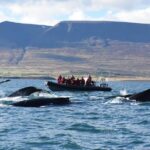
The tour is whale focused, but what you actually spot can vary. In the experience, the whales most often mentioned include humpback whales, and you may also see minke whales depending on the conditions.
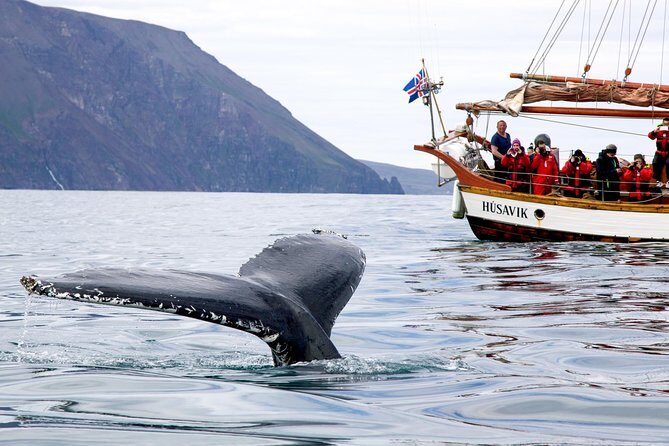
You might spot a single whale from afar, or you might have a better day with multiple sightings. Some outings include close moments like a humpback showing features such as flukes after surfacing. Other days the whales are present but shy, and you’ll still get the chance to search and learn.
Beyond whales, dolphins are sometimes spotted during the sailing. There are also mentions of flying puffins in the wider experience around Húsavík, though sightings depend heavily on the day and where the boat spends time.
If you’re going in with realistic expectations, you’ll enjoy it more. You’re not buying a guarantee. You’re buying:
- time out on the water where whales are known to show up,
- knowledgeable guidance,
- proper cold-weather gear,
- and the sailing experience that makes the whole hunt more than just waiting.
Price and Value: What US$106 Is Really Buying
At around $106 for about 3 hours, this tour isn’t the cheapest way to watch wildlife from a boat. But it does bundle several things that add up quickly if you were paying for them separately.
You’re paying for:
- a professional guide and narration while you search,
- time on a traditional sailing ship in the whales’ area,
- cold-weather suits (so you don’t have to gamble on what to wear),
- light refreshments (cinnamon buns and hot chocolate),
- and the option to participate in sailing tasks.
If you’ve ever priced out a cold-weather day in Iceland—gear, transport, food, and guided time—this format starts to look like straightforward value. The tour saves you from two common problems: under-dressing for wind and overpaying for a short, mostly passive wildlife cruise.
Where value can feel lower is when weather is rough or whales are quiet. That’s not a failure of the tour. It’s the nature of ocean wildlife. What matters is how the company handles those conditions and keeps you safe and informed.
Who Should Book This Sailing Whale Watch (and Who Should Think Twice)
This tour is a strong fit if you want:
- a traditional Icelandic sailing vibe rather than a pure speedboat chase,
- hands-on participation on deck,
- guided narration that helps you make sense of what you spot,
- and comfort support through provided suits.
It’s also a good choice for people who dislike the idea of being stuck on one platform for hours. You can move around and get better viewing angles.
You should think twice if:
- you know you get seasick easily in wind and choppy conditions,
- you’re expecting a guaranteed “close whale every time” experience,
- or you dislike tours that involve frequent announcements and practical guidance while scanning for wildlife.
If you want quiet, you’ll have to accept that this kind of tour depends on communication. The point is to spot whales efficiently and keep everyone safe in changing sea conditions.
Booking Smart: How to Choose the Best Departure Time
Because the experience needs good weather, booking smart can make a big difference.
Use the multiple departure times to your advantage. If your schedule allows, pick a time when you’re most likely to have decent visibility and calmer seas. Iceland weather doesn’t wait for your itinerary, so having more than one option is a real benefit.
When you arrive, take the crew’s cues seriously. If the bay conditions are challenging, they’ll guide you on what to expect and how to dress.
And if you’re sensitive to cold or motion, treat this as a day for preparation, not a surprise. The suits help a lot, but your comfort still comes down to layers and staying aware of sea conditions while out on the water.
Should You Book This Whale Watching on a Traditional Oak Sailing Ship?
Yes, if you want whale watching that feels like real sailing, with gear that keeps you comfortable and narration that makes the hunt meaningful. This is the kind of trip where the experience isn’t only about what swims up—it’s about how the crew works, how the ship moves, and how much you learn while you scan.
Book it with two expectations set correctly: whales can be shy, and Iceland wind can be rough even when you do everything right. If you go in prepared, you’ll likely come away feeling like your time in Húsavík had purpose, not just luck.
FAQ
How long is the whale watching tour?
It runs for about 3 hours (approx.).
Where do I pick up tickets, and where does the tour start?
Pick up your tickets at the North Sailing Ticket Centre at Hafnarstett 9, Húsavík (across from Húsavík Church). Tours depart from Húsavík harbour, about a 2-minute walk away.
Are cold-weather suits provided?
Yes. Special cold-weather suits are provided to keep you warm and dry while you look for whales.
What’s included in the price?
The tour includes a professional guide and light refreshments.
Are there multiple departure times?
Yes. You can choose your preferred departure time at checkout.
What if the tour is canceled due to weather?
This experience requires good weather. If it’s canceled due to poor weather, you’ll be offered a different date or a full refund.