REVIEW · LAVA CENTRE
Volcano Movie – Experience the Latest Eruptions in Iceland
Book on GetYourGuide →Operated by LAVA Centre - Volcano Exhibition · Bookable on GetYourGuide
Eruptions in 4K, minus the lectures. At LAVA Centre in Hvolsvöllur, this Volcano Movie stands out for its 4K-quality footage and its no vocal narrative approach, letting the visuals and natural sound carry the story. One thing to keep in mind: this is a cinema experience, so it won’t replace going outside to see Iceland up close and live.
I like how the film gives you a tight, cinematic tour of volcanoes you’ve heard about and a few you probably haven’t, with a timeline that runs from older eruptions to the most recent eruption series. For about $16 for an entrance ticket, you also get a head start at the building with free information on earthquakes and major volcanoes around the Lava Centre.
If you’re the type who wants an active outdoor day, plan this as your weather-proof stop (and add a drive or short walk elsewhere). If you’d rather understand Iceland’s volcanic rhythm without reading a stack of books, you’re in the right place.
In This Review
- Key things I’d circle before you go
- LAVA Centre in Hvolsvöllur: where the volcano movie actually starts
- How the no voice-over format changes what you get
- The eruption timeline you watch: from Katla (1918) to newer series
- Eyjafjallajökull 2010: the eruption that shut down air traffic
- Grímsvötn 2011 and Holuhraun 2014–2015: massive eruptions with different levels of attention
- The latest activity: Fagradalsfjall / Fagradalseldar right up front
- Price and value: is the $16 entrance fee worth it?
- Who should book this volcano movie (and who should skip it)
- Should you book the Volcano Movie at LAVA Centre?
- FAQ
- Where is the meeting point?
- How much does it cost?
- How long is the experience?
- Is there vocal narration or voice-over in the film?
- Are food and drinks allowed?
- What languages are used?
Key things I’d circle before you go
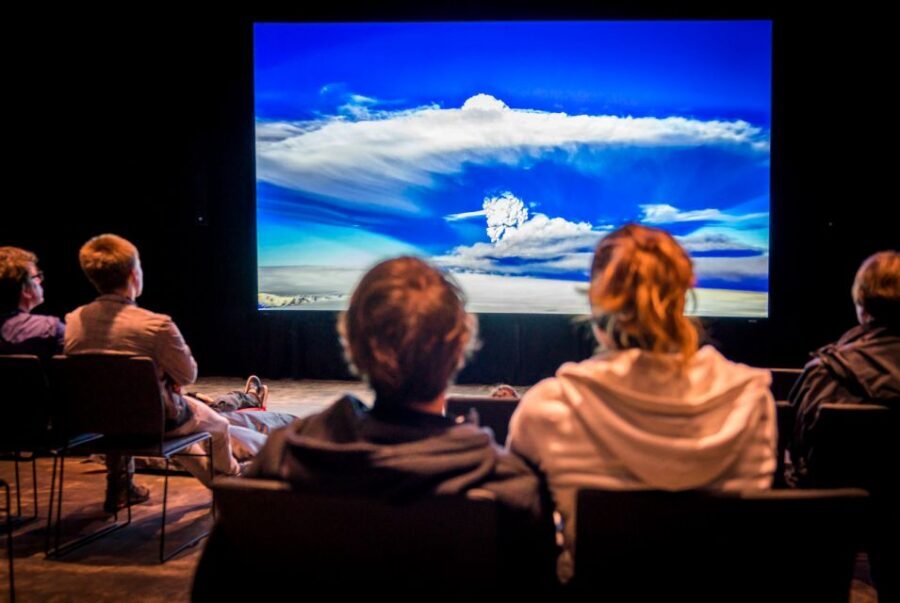
- 4K or better footage keeps the eruptions sharp enough that you can actually follow what’s happening.
- No vocal narrative means the film relies on video and sound to tell the story.
- A clear eruption timeline moves from Katla and Hekla to more modern events.
- Eyjafjallajökull 2010 is shown as more than a local story, with its air-traffic impact.
- Holuhraun 2014–2015 is highlighted as a massive eruption the world didn’t hear about.
- Fresh coverage of Fagradalsfjall/Fagradalseldar brings the story right up to the latest activity.
LAVA Centre in Hvolsvöllur: where the volcano movie actually starts
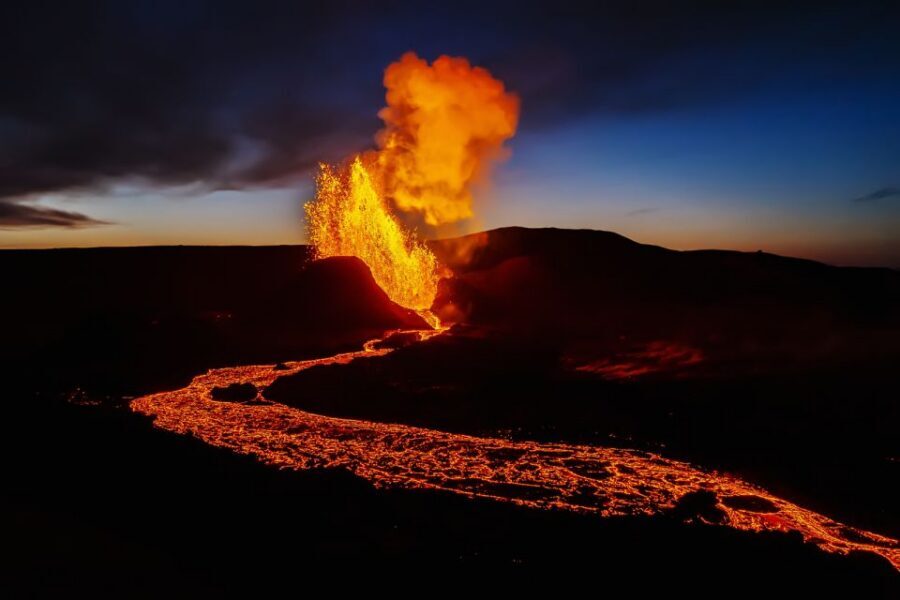
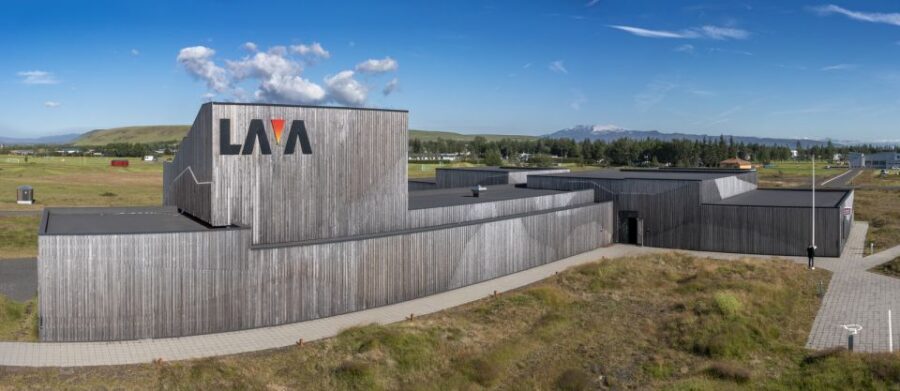
This whole experience is based at LAVA Centre, Austurvegur 14, 860 Hvolsvöllur. The helpful part is the location: it’s described as the first building on the left when you’re coming from Reykjavík or the Golden Circle, so you won’t be hunting around for it.
Before the film begins, you can stop at the entrance and pick up free information about earthquakes in Iceland and the major volcanoes surrounding the Lava Centre. I find that little “prep” matters. When you go in with even a few names (Katla, Hekla, Eyjafjallajökull, Holuhraun), the movie hits harder because you recognize what you’re seeing rather than treating it like one more set of dramatic visuals.
Also, you’ll be greeted by an English or Icelandic host/greeter, and the venue is wheelchair accessible, which is a simple but meaningful detail if you’re traveling with mobility needs.
How the no voice-over format changes what you get
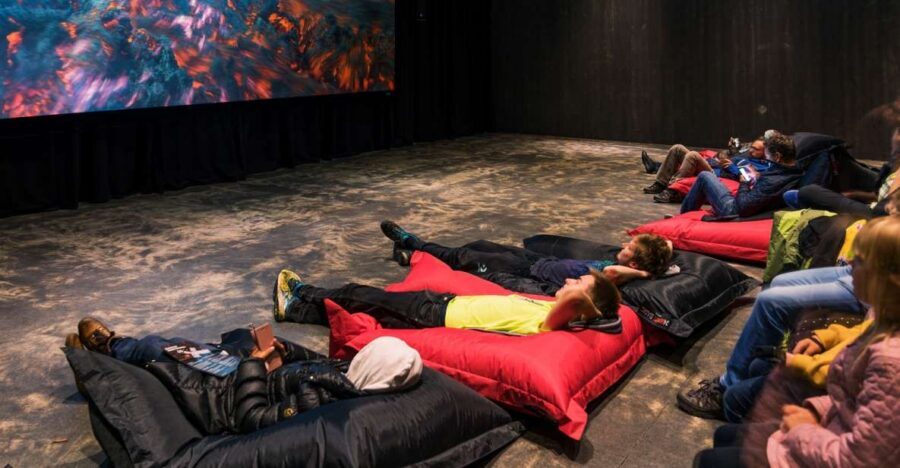
This film is built differently from a typical documentary. There is no vocal narrative or voice-over. Instead, it’s only video and sound, designed to show the eruptions and their forces in a very direct way.
Here’s why that’s a plus: when there’s no narrator, your brain tends to focus on what changes in the scene—steam-to-ash movement, shifting eruption intensity, and the scale implied by sound. It also keeps the tone consistent, so the older eruption timeline doesn’t feel like a school presentation. You still learn, but the delivery is more visceral than explanatory.
One caution from a practical standpoint: if you’re the kind of traveler who really wants a running explanation of geography, distances, and scientific context, this format may feel like it gives you less “how” and more “what it looked and sounded like.” The film still tells a story, just without spoken guidance.
The eruption timeline you watch: from Katla (1918) to newer series
The movie starts with an overview of Iceland’s eruptions and then moves through events in sequence. It begins with major eruptions such as Katla (1918), then Hekla (1947), followed by Askja (1961), Surtsey (1963), and the Westman Islands (1973). Later it includes Krafla (1975) and other eruptions, building your understanding of how recurring volcanic activity shapes Iceland.
What I like about this structure is that it gives you perspective on scale and frequency without needing you to chase details around the internet mid-trip. The film also frames Iceland’s eruption rhythm—on average, there’s an eruption every 4–5 years—so the “latest eruptions” theme feels grounded, not random.
And it does something else that’s easy to miss: by naming multiple volcanoes across decades, it helps you stop thinking of Iceland as one single volcano. It’s really a system of volcanoes, each with its own character, and the timeline format makes that idea stick.
Eyjafjallajökull 2010: the eruption that shut down air traffic
The film then shifts to the more modern era, covering the 2010 Fimmvörðuháls eruption and then the big one: Eyjafjallajökull, the eruption that blocked air traffic in Europe for days.
I find that pairing (Fimmvörðuháls first, then Eyjafjallajökull) helps you understand why 2010 became so memorable. It wasn’t just a dramatic eruption happening somewhere remote. The story connects volcanic activity to real-world travel disruption, which is a theme you’ll recognize even if you weren’t in Europe at the time.
In a practical sense, this part of the film is also a good reality check. Iceland’s eruptions aren’t only “something to watch.” They can affect schedules, supply chains, and daily life far beyond the island. You’ll come out with a more grounded sense of why residents take volcanic risk seriously.
Grímsvötn 2011 and Holuhraun 2014–2015: massive eruptions with different levels of attention
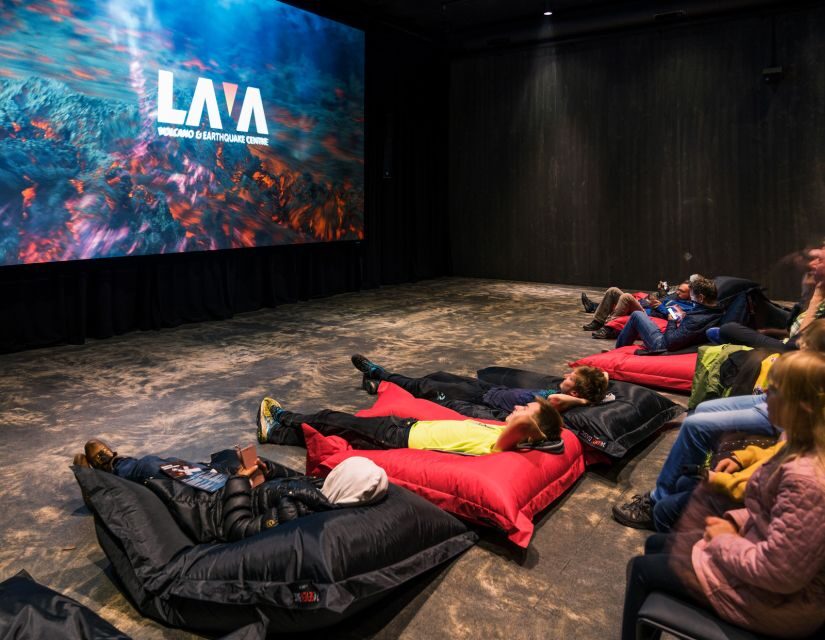
After 2010, the film includes Grímsvötn (2011), and then it makes a standout point with Holuhraun (2014–2015). This eruption is presented as massive, but one the world didn’t hear about.
That contrast is the lesson. Some eruptions become headline events because they connect to aviation or other major systems. Others are enormous yet quieter in the global news cycle. Watching them back-to-back in a single film helps you avoid the “only famous eruptions matter” mindset.
For your trip, this is valuable because it shapes how you interpret what you see around Iceland. Instead of treating volcanic activity as a one-off spectacle, you get a more balanced idea of how eruptions can vary in public visibility while still carrying real weight for people living on the island.
The latest activity: Fagradalsfjall / Fagradalseldar right up front
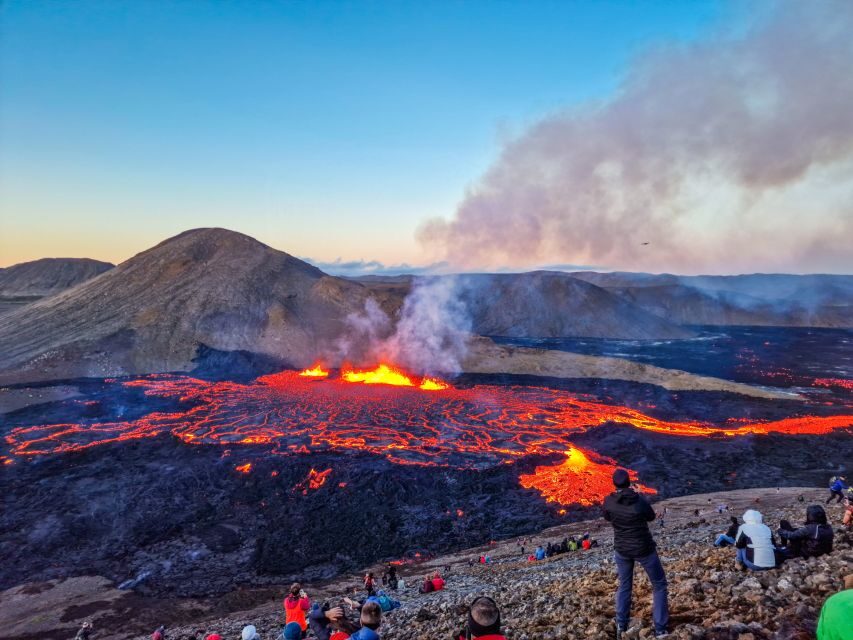
Near the end, the movie brings the story to the latest eruption series, referred to as Fagradalsfjall and Fagradalseldar.
I like ending here because it keeps your experience from feeling like a history-only museum show. You’re not stuck looking at old clips and moving on. You finish with the sense that Iceland’s volcanic story is ongoing, and that recent eruptions are part of the same long-running pattern the film started with.
If you’re visiting Iceland soon after hearing about a recent eruption, this final section can also help you connect the headlines to what the eruptions actually look and sound like. Even though the viewing is indoors, the film’s emphasis on video and sound makes the events feel immediate.
Price and value: is the $16 entrance fee worth it?
At $16 per person, you’re paying for the cinema entrance fee to watch the film. The duration is listed as 1 day, which makes this a flexible stop: you can slot it into a travel day without building your schedule around a long guided outing.
Is it good value? I think it is if:
- you want a high-quality 4K overview of multiple eruptions,
- you enjoy learning through visuals and sound rather than reading,
- you’re looking for a weather-proof activity in Southern Iceland.
Two practical value notes:
1) Food isn’t included, and food and drinks aren’t allowed inside the movie experience. If you get hungry, you’ll need to handle it outside the cinema area.
2) There is an in-house restaurant and shop at Katla, so you can buy food and supplies without leaving the building complex.
That’s a decent setup for travelers who want to keep the day simple. You can come, watch, and then eat on-site if you’re staying nearby.
Who should book this volcano movie (and who should skip it)
This works best for people who want context fast. If you’re visiting for the first time and you don’t want to spend your whole trip trying to sort out Iceland’s eruption history, you’ll likely like the way the film connects names and events in order.
It’s also a strong choice if you enjoy documentaries but get impatient with talking heads. The no vocal narrative format keeps the experience moving, and the story is driven by the eruption footage and sound.
I’d skip or at least pair it carefully if you:
- expect a hands-on museum-style lesson with hands-on displays during the film itself,
- want a guided walk or an outdoor viewpoint as part of the main event,
- need lots of spoken explanation of geography, since the film doesn’t provide vocal narration.
Should you book the Volcano Movie at LAVA Centre?
If you’re spending time in Southern Iceland and want a focused way to understand Iceland’s eruptions—from Katla and Hekla through Eyjafjallajökull 2010 and Holuhraun 2014–2015, ending with Fagradalsfjall/Fagradalseldar—this is an easy yes. The combination of 4K or better visuals, a sound-first presentation, and the quick timeline format makes it a smart use of a travel-day slot.
Book it if you value clarity, pace, and a cinematic education that doesn’t depend on perfect weather. Consider pairing it with an outdoor stop and a little time at the surrounding information area, so you leave not only impressed, but oriented.
FAQ
Where is the meeting point?
The experience takes place at LAVA Centre, Austurvegur 14, 860 Hvolsvöllur, Iceland. It’s described as the first building on the left when coming from Reykjavík or the Golden Circle.
How much does it cost?
The price is $16 per person for the entrance fee to the cinema.
How long is the experience?
It’s listed as valid for 1 day. Start times depend on availability.
Is there vocal narration or voice-over in the film?
No. The movie uses video and sound only, with no vocal narrative.
Are food and drinks allowed?
Food and drinks are not allowed. You can buy food at the in-house Katla restaurant and shop.
What languages are used?
The host/greeter is available in English and Icelandic, and the experience is listed with English and Icelandic.