REVIEW · SELFOSS
Silfra: Snorkeling Tour Between Tectonic Plates
Book on GetYourGuide →Operated by ICELANDIA · Bookable on GetYourGuide
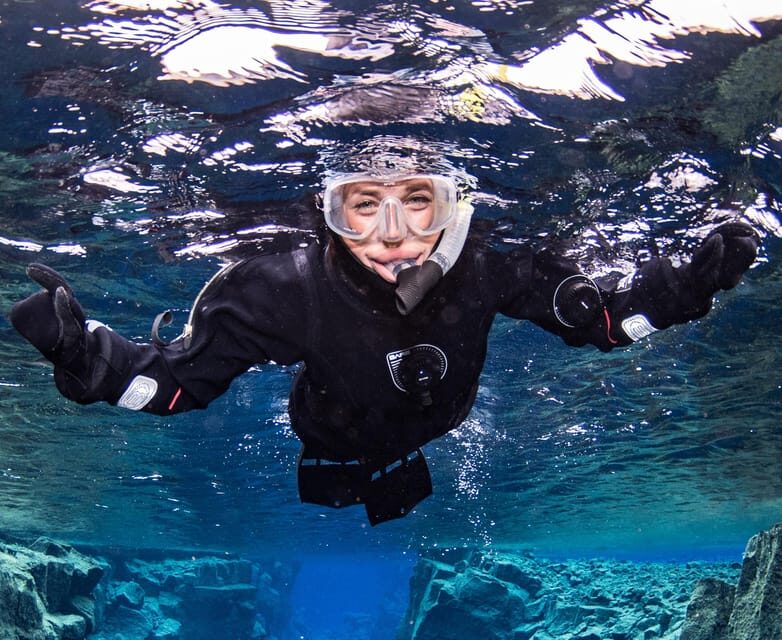
You float in a crack in Earth’s armor. That’s Silfra: guided snorkeling in the Silfra Fissure where you literally drift between the Eurasian and North American plates in jaw-dropping clarity. Thingvellir National Park adds the extra layer of meaning, since you’re also in a UNESCO World Heritage site on the Golden Circle. Guides like Elsa and Quim help you feel calm, learn the route, and focus on what you’re really seeing.
I love two things most: first, the 300 feet (100 meters) visibility makes the water feel weightless, like you’re swimming in glass. Second, the guides keep the experience hands-on and safety-first while still making it fun—people come out talking about how guides like Filip and Armand explained everything before you ever touch the water. I also like that you’re not just dropped in and forgotten; you get a plan and support.
One real consideration: it’s cold water. Even in a drysuit, your face can feel chilly, and the suit process can feel a bit awkward if you’re sensitive to tight gear or claustrophobic moments on land.
In This Review
- Key things you’ll notice in Silfra
- Silfra’s main magic: swimming between tectonic plates
- The day’s flow: 1 hour briefing, 45 minutes in the fissure, and time to reset
- Meeting in Thingvellir: where the logistics matter
- Getting suited up: drysuit reality and how to stay comfortable
- Inside the fissure: Big Crack, Silfra Hall, and Silfra Cathedral
- What you’ll actually see (and what “no marine life” means)
- The guides: safety-first, but also human
- Cold-water comfort: socks, face warmth, and midges
- Price and value: what $140 buys you, and what might cost extra
- Who should book, and who should skip
- Should you book Silfra snorkeling?
- FAQ
- How long is the snorkeling portion?
- What’s the total tour duration?
- Do I need scuba certification to snorkel Silfra?
- What should I bring?
- What’s included in the price?
- Where do I meet for the tour?
Key things you’ll notice in Silfra
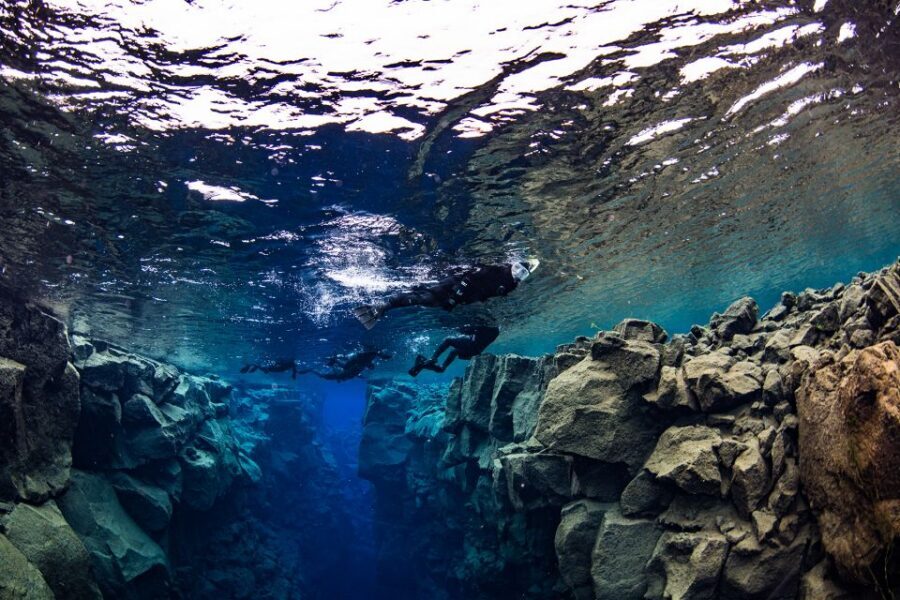
- 300 feet / 100 meters visibility turns glacial silt and rock texture into a surreal show underwater
- Small groups of 6 mean more individual attention and easier help with drysuit fit
- Big Crack → Silfra Hall → Silfra Cathedral gives you variety, from narrow “almost-touch” rock to wider breathing room
- About 45 minutes in the water is long enough to enjoy it, not so long you lose your focus
- Heated van + hot chocolate and cookies make the finish feel human, not just survivable
- Bring extra warm socks—your feet will thank you when you get out
Silfra’s main magic: swimming between tectonic plates
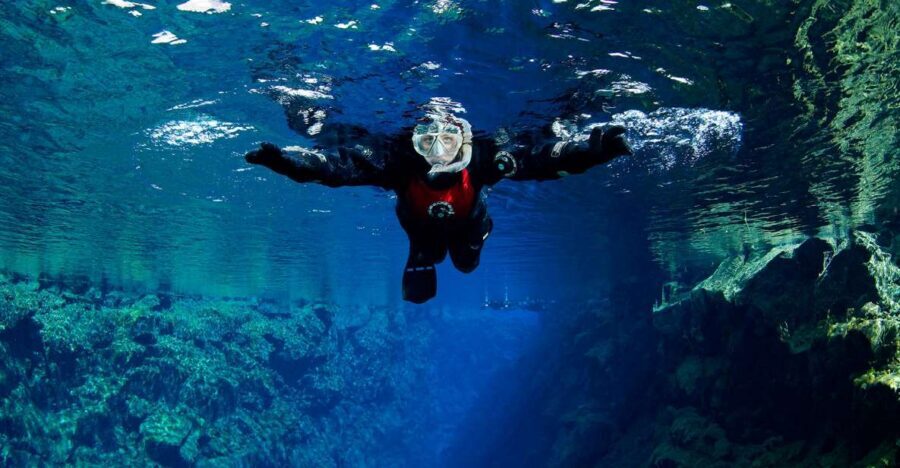
Silfra is Iceland’s rare combo of science and wonder. You’re in a fissure that runs between two tectonic plates that are slowly drifting apart, so your body is moving through the real boundary where Iceland’s geology is actively changing. The feeling is hard to describe until you’re there: you’re not staring at a museum model. You’re floating in the real thing.
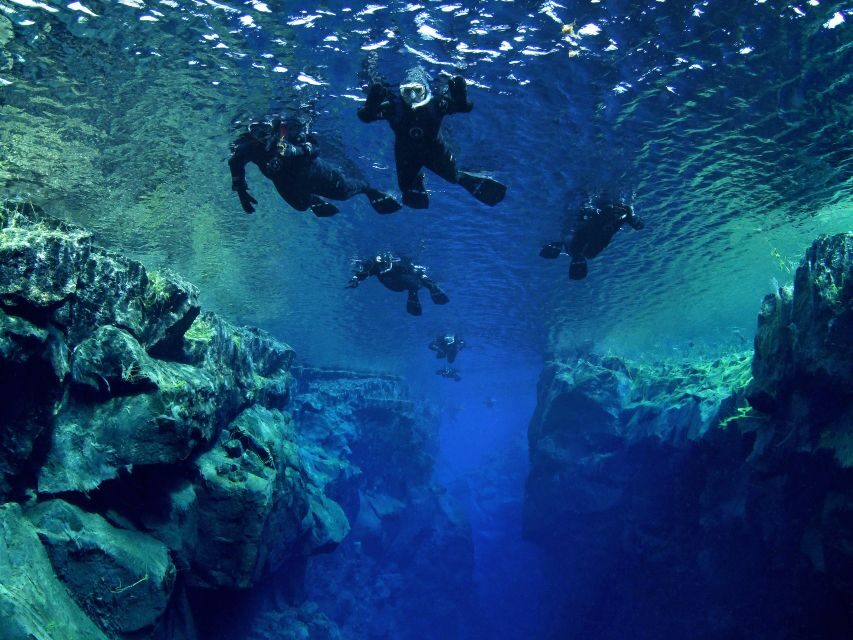
What makes it special is the clarity. The tour description calls it the clearest water in the world, with around 300 feet of visibility. In practice, that means you can often see rock edges, silt patterns, and boulder shapes with a level of definition that feels almost too clean. Several people also mention the color—glacial meltwater can show faint blues and grays, and the water’s “purity” makes the geology feel more dramatic.
The route also helps. You don’t just swim one straight line. You move through different “rooms” in the fissure—narrow and tight in spots, then wider and more open. That variety keeps you from thinking only about the cold.
You can also read our reviews of more tours and experiences in Selfoss.
The day’s flow: 1 hour briefing, 45 minutes in the fissure, and time to reset
Plan on a 2.5 to 5 hour day, depending on your start time and pickup option. Most of the experience is structured so you’re ready before you go in the water. The schedule typically goes like this:
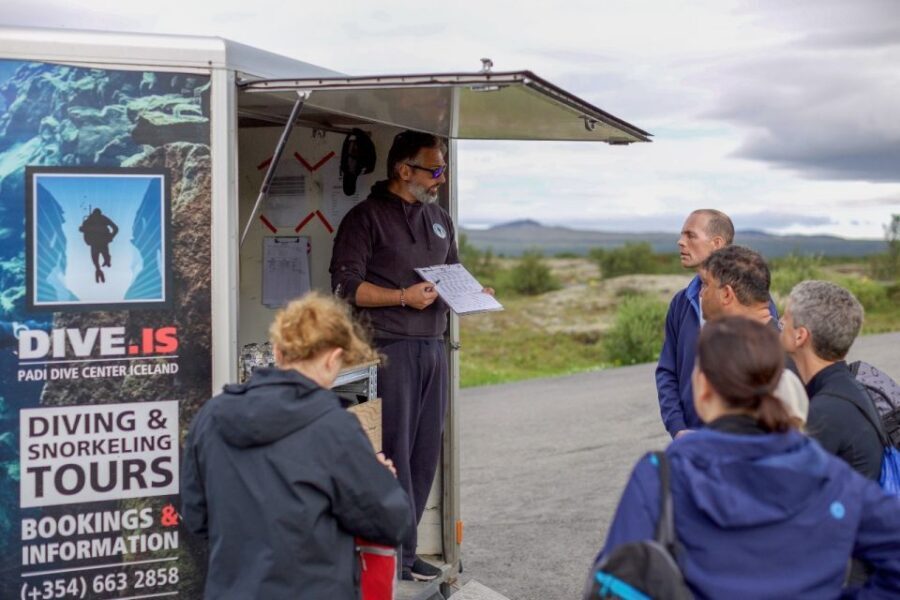
First comes a safety briefing that lasts about 1 hour. This isn’t filler. It’s where you learn the drysuit basics, how to handle the mask and snorkel, and what the guide wants you to do in the water. People repeatedly say the guides felt hands-on while fitting suits, which helps because you’ll be dealing with cold, gear, and buoyancy all at once.
Then it’s a short walk (about 10 minutes) to reach the water area. Next comes the centerpiece: about 45 minutes of guided snorkeling. After that, you walk back (another 10 minutes) and get a break/free time slot of about 30 minutes.
That timing is actually one of the best parts for most people. You get enough time to enjoy it without turning it into a long cold test. Also, the break gives your body time to recover—your hands and feet will often be the first to feel the cold once you’re out, even if you stayed comfortable underwater.
Meeting in Thingvellir: where the logistics matter
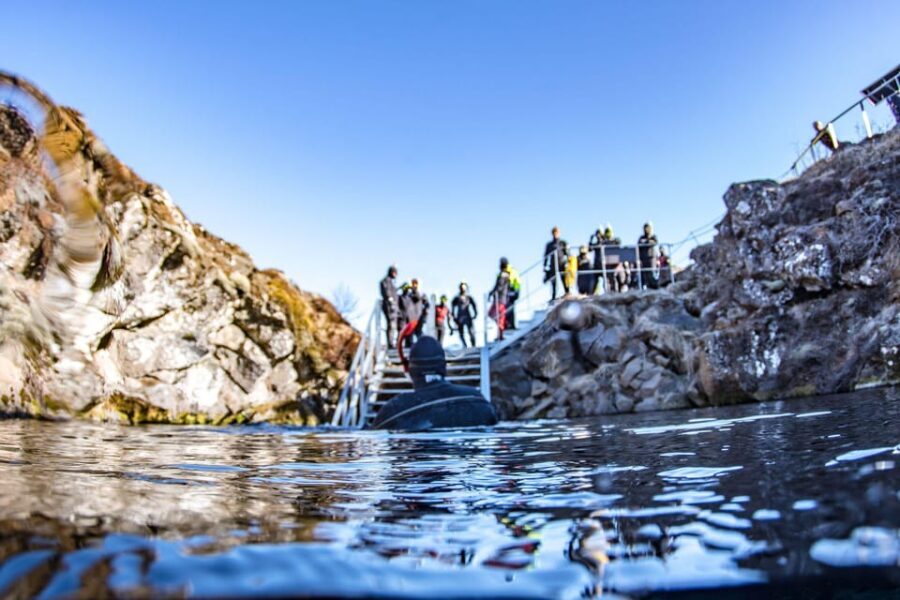
You meet at Silfra Fissure in Thingvellir National Park. The directions are straightforward: turn onto road 36, keep going until you spot the local partner’s company cars at the Silfra Meeting Point, then continue a little further to parking lot P5.
If you’re coming from Reykjavík, pickup can be optional, and drop-offs can be spread across lots of Reykjavík stops. That’s useful because it reduces the stress of doing the drive yourself and figuring out exact parking in winter conditions. Several people also liked the drive and timing, especially when their session wrapped near sunset and the national park looked gorgeous from above.
One practical note: you’ll be dealing with outdoor suit-up in Iceland weather. Even if the van helps, you’ll still want warm layers before you go anywhere near the water area.
Getting suited up: drysuit reality and how to stay comfortable
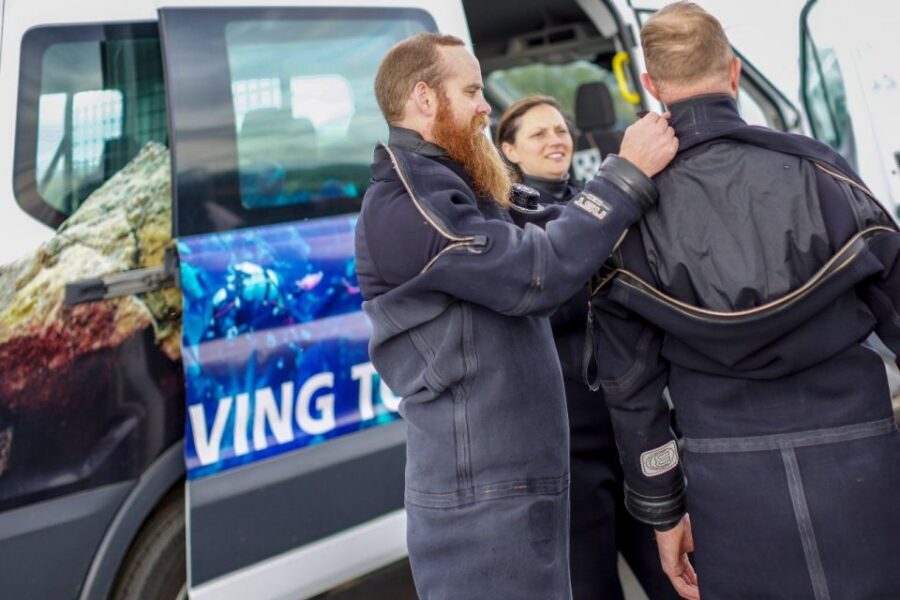
This is a drysuit tour, not a casual “put on a snorkel and go” experience. The included gear list is a big deal: you get snorkeling gear, plus a drysuit and warm undersuit. You also use a heated van to change clothes, and you’ll warm up after with hot chocolate and cookies.
The drysuit helps a lot. Many people say they stayed surprisingly warm in the suit, with cold mainly limited to faces. Still, don’t underestimate the “first contact” phase. Reviews describe tightness around the collar, and one common theme is that glove/mitt work limits fine finger movement, which matters if you plan to use a phone camera.
My advice for comfort:
- Wear thermal underwear and thick socks as recommended—then consider going even warmer based on what people report (some mention bringing multiple pairs).
- If you wear glasses, plan on contact lenses since the tour says to bring contacts.
- Bring warm clothing for before and after the water. Your comfort isn’t just about being warm during the 45 minutes.
Camera-wise, a recurring tip is simple: bring an action camera like a GoPro. With mittens, it can be hard to manage a phone in a pouch underwater. Guides also take photos, and you can purchase them, but photo packages vary, and one person noted feeling that the number of photos in the cheaper option was limited.
Inside the fissure: Big Crack, Silfra Hall, and Silfra Cathedral
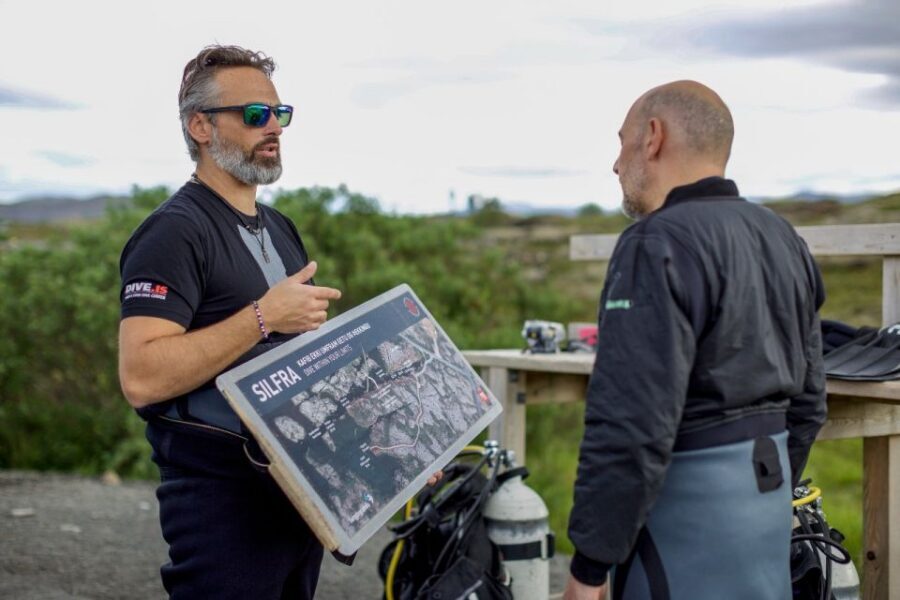
Once you reach Silfra, the group format kicks in. You’re divided into smaller groups, with one guide per group and small groups of about 6 participants. That matters because the guide can adjust your setup, watch your buoyancy, and keep everyone moving at the right pace.
The tour description breaks the route into key sections:
1) The entry and the Big Crack
You enter through a platform and spend about 45 minutes in the water. The route begins with the Big Crack, described as the narrowest point where the plates are so close you can almost touch. That “almost touch” feeling is why people keep calling the experience surreal. You’re not just seeing geology—you’re experiencing how close it is, physically.
2) Silfra Hall
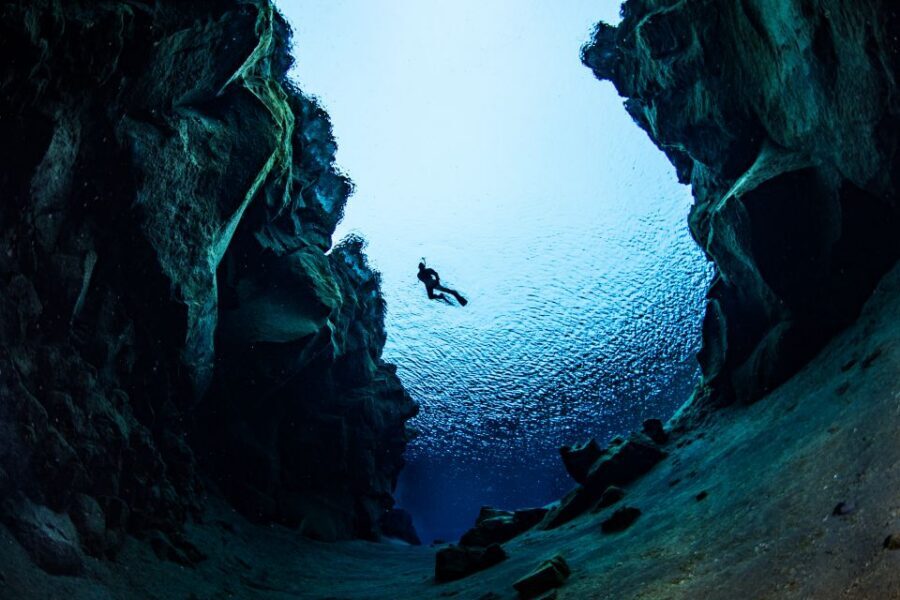
Then the fissure widens into Silfra Hall. If you look at the right angle, you can even see Lake Þingvallavatn from underwater—over 150 meters away. This is one of those moments where the visibility makes your brain work differently. Your eyes keep trying to interpret depth and distance like it’s air.
3) Silfra Cathedral (about 23 meters)
Next comes the Silfra Cathedral at a depth of about 23 meters. The description says you’ll feel like you’re flying over boulders and glacial silt. Even if you don’t fully grasp the geology, you can feel the structure—how the fissure “opens up” and how the silt and rock create motion even when you’re mostly floating.
4) Silfra Lagoon and the exit
You end at Silfra Lagoon, then you get hot drinks and cookies. That finish matters because your body is already working to stay comfortable. The warm-up turns the day from an ordeal into a memory.
What you’ll actually see (and what “no marine life” means)
Here’s the honest vibe: Silfra is not about fish and coral. It’s about the Earth’s bones—cracks, silt, boulders, and rock edges. Several reviews point out there isn’t much marine wildlife, and that’s fine. The visual reward is the physical representation of the tectonic boundary.
What surprises people is how much detail you can pick up with your eyes, since the water is so clear. You may also notice that in some angles, visibility can make shapes appear distant or distorted by the way you float high in the water. One reviewer described it like snorkeling with a life jacket on—an accurate mental model. You’re supported, but you still have to look and follow the guide’s directions for the best angles.
Also, some people recommend bringing a camera because the visuals are often best captured underwater. Even if you buy photos taken by the guides, having your own camera can help you get your favorite angle.
The guides: safety-first, but also human
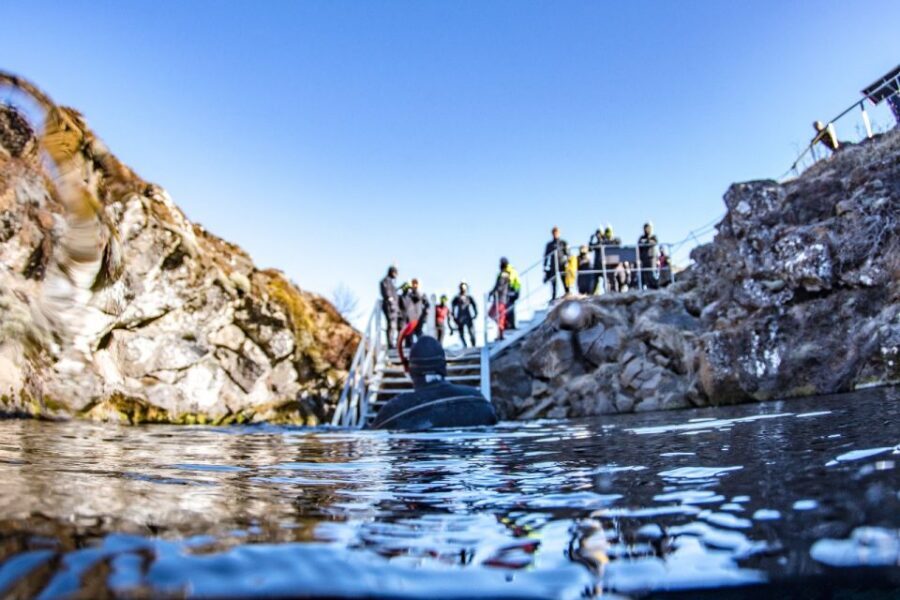
In a cold-water environment with tight gear, the guide’s personality matters. The tour details say you’ll have a live English-speaking guide, and reviews back that up: people mention guides walking them through the suit and making sure they felt confident before entering.
Names that came up include Elsa, Nicolas, Quim, Filip, Henry, Hanna, Armand, Veli, and Teresa. What I take from that is not that any one guide is magic—it’s that the guides use the same process: fit the suit properly, explain what you’ll do, then check in during the swim.
That hands-on approach shows up in small things:
- They help adjust gear so you can move safely.
- They guide your pace through narrow sections.
- They provide reassurance for first-timers who feel uneasy about cold or gear.
If you’re nervous, this tour isn’t just “for experts.” The activity description says you don’t need to be a certified diver, and it’s suitable for anyone over 12 who feels comfortable in water and knows how to swim. Still, you should be honest with yourself about cold and tight gear.
Cold-water comfort: socks, face warmth, and midges
Let’s talk practical discomfort, because it shows up no matter what.
Even in a drysuit, many people say the cold concentrates around the face. That’s normal. You’ll usually get used to it, but you’ll feel it. The other common weak spot is your extremities once you’re out. Reviews strongly emphasize warm socks. One tip from a reviewer: bring multiple pairs, since your feet can chill during the suit-up and after the swim.
Another Iceland reality: midges. One reviewer suggested bringing a mosquito head net because there are tons of midges flying around in the park. They also mentioned nets may be provided, but don’t rely on that—if you’re bug-sensitive, bring one if you can.
If you’re claustrophobic: read the room carefully. Several people describe suit-up on land as potentially claustrophobic. Once in the water, many say they forgot about it, but if the idea of tight gear stresses you out, you should take that seriously.
Price and value: what $140 buys you, and what might cost extra
The listed price is $140 per person. At first glance, it feels steep—until you see what’s included.
You’re not just paying for the snorkel. Your tour includes:
- A PADI instructor (listed as certified)
- Snorkeling gear
- A drysuit and warm undersuit
- A heated van for changing
- Hot chocolate and cookies
- Silfra entrance fee (ISK 1,500)
That’s real value because the gear is the hard part. Buying a drysuit, plus figuring out where to store and change in a cold environment, isn’t something you’d want to DIY on a winter trip.
What might cost extra:
- Photos underwater (optional to buy). One review mentioned a $20 option for only two photos, so think of it as a flex item.
- Transportation only if your option doesn’t include pickup. The tour notes that hotel pickup/drop-off isn’t included, though pickup can be optional via designated locations.
In my view, this price is fair if you want a guided, small-group, fully outfitted experience in a place that’s not easy to do on your own. If you’re hoping for a cheap, casual activity with minimal gear, you’ll likely feel mismatch.
Who should book, and who should skip
This tour has clear limits, and they matter because water comfort and safety come first.
It’s suitable for:
- People over age 12
- Anyone who feels comfortable in the water and knows how to swim
It may be a poor fit if you fall into these categories:
- Children under 12
- Pregnant women (not suitable)
- People over 120 kg (264 lbs)
- People under 150 cm (4 ft 9 in) and people over 200 cm (6 ft 6 in)
- People under 45 kg (99 lbs)
Also, you’ll be asked to complete a medical statement. And if you’re 60 or over, physician approval is required.
If you’re nervous about cold water or tight gear, talk it through mentally before you book. Many first-timers have a great time—one person said they started off rough and the guide helped a lot—but you should know the tour environment can be challenging at first.
Should you book Silfra snorkeling?
Book it if you want one of the most “real science” experiences in Iceland—floating between two continents in water so clear it changes how you see distance, rock, and depth. If you appreciate guided structure, small groups, and getting warm afterward with hot chocolate and cookies, this is built for you.
Skip it if cold water and gear stress you out, or if you’re right on the edge of meeting the height/weight needs. And if you’re expecting marine life, this won’t feel like that kind of adventure. Silfra is about geology, clarity, and the quiet, eerie beauty of being in the crack itself.
If your schedule allows, also consider going early. One review specifically praised an early start for avoiding crowds in the fissure. That usually makes the whole experience feel calmer.
FAQ
How long is the snorkeling portion?
You’ll spend about 45 minutes snorkeling with a guide in the Silfra Fissure.
What’s the total tour duration?
The tour duration is listed as 2.5 to 5 hours, depending on the starting time and day.
Do I need scuba certification to snorkel Silfra?
No. You don’t need to be a certified diver. The activity is suitable for anyone over 12 who feels comfortable in the water and knows how to swim.
What should I bring?
Bring warm clothing. If you wear glasses, the tour suggests bringing contact lenses.
What’s included in the price?
Snorkeling gear, a drysuit and warm undersuit, a heated van to change clothes, hot chocolate and cookies, an entrance fee to Silfra, and instruction from a certified PADI instructor.
Where do I meet for the tour?
Meet at Silfra Fissure in Thingvellir National Park. Turn into road 36, continue until you see the local partner’s company cars at the Silfra Meeting Point, then continue to parking lot P5.