REVIEW · KLAUSTURHOLAR
Kerið Volcanic Crater Admission Ticket
Book on GetYourGuide →Operated by Arctic Adventures · Bookable on GetYourGuide
A crater you can walk into. Kerið is one of those rare Iceland stops where the payoff is fast: you’re at a real volcanic caldera, close enough for photos, and still simple enough to fit into a Golden Circle day. What I like most is the turquoise crater lake view and the easy walking loop from the rim down toward the water.
Kerið is priced like a quick, smart add-on rather than a big tour commitment—$5 per person for self-guided access. The geology details also make it more than a pretty pit: you’re looking at a cone volcano that collapsed after it emptied its magma chamber, and the walls are made of red volcanic rock.
One consideration: entry can feel a bit informal. I’ve seen notes that ticket checking may be light, and some people report the front-desk interaction isn’t always warm. In other words, don’t rely on staff to guide you—use the posted directions once you arrive.
In This Review
- Key things to know before you go
- Why Kerið Crater is such a smart Golden Circle stop
- Getting there: parking and how the visit flows
- The rim trail: your quickest path to the best photos
- Hiking down the mossy walls without overthinking it
- The turquoise lake: mineral color, not rainfall magic
- The geology story you can understand in minutes
- Tickets and value: why $5 makes sense here
- How long to plan: fit it into your day like a pro
- Practical tips that make Kerið easier (and nicer)
- Who this crater ticket is best for
- Should you book Kerið Crater admission?
Key things to know before you go
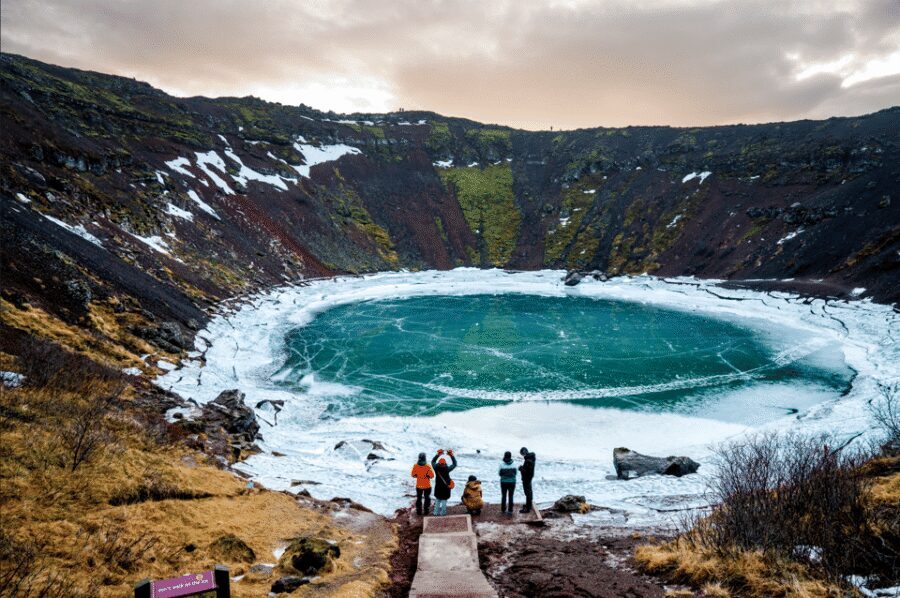
- Turquoise lake at the bottom: intense aquamarine color from minerals in the soil, not rainfall-fed water
- Walkable crater rim views: a trail around the edge gives panoramic angles without special gear
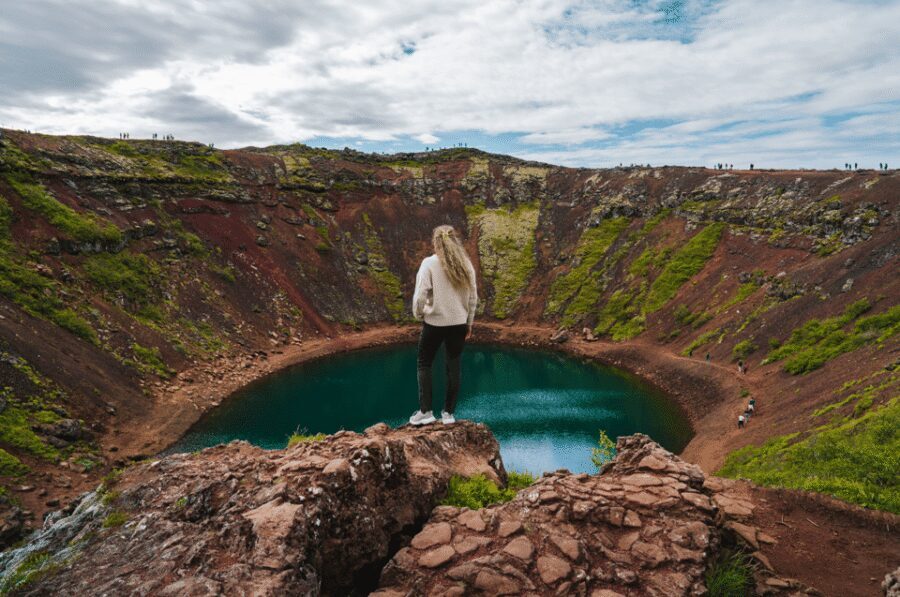
- Hike down mossy slopes: the crater walls are sloped and deep green moss covers part of the route
- Big numbers, small time: about 55 m deep, 170 m wide, with roughly 270 m across at the surface
- Self-guided admission: you explore at your pace, as long as it’s open in daylight
Why Kerið Crater is such a smart Golden Circle stop
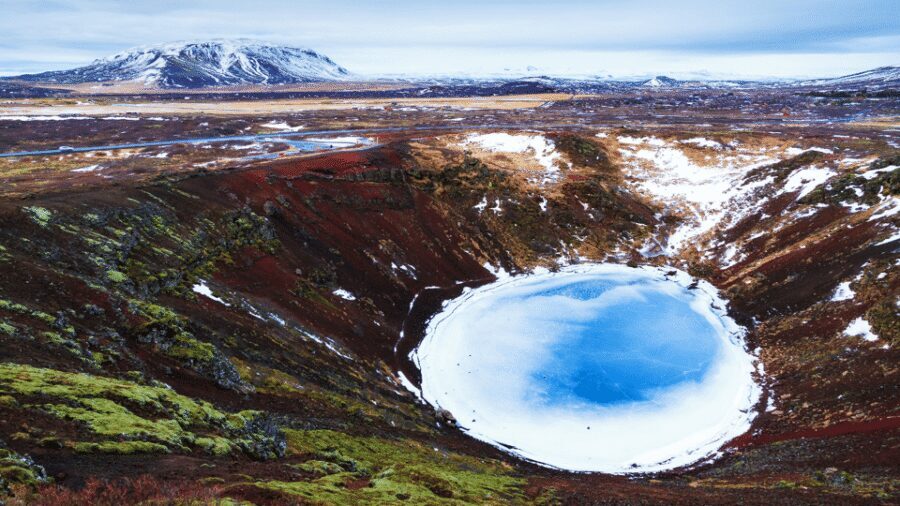
Kerið sits in the Southern Region of Iceland, right where many road trips naturally pass through: the Golden Circle. That matters because Kerið is not a “spend half your day traveling first” kind of stop. It’s a straight-to-the-point experience. You can park, walk, take photos, and still keep your bigger day intact.
The crater itself is visual right away. The lake is the star—an aquamarine/turquoise tone that makes your camera (and your eyes) do that involuntary head tilt. The rim trail also gives you angles you can’t get from just standing at one spot. You’re not just looking down; you’re circling a real volcanic structure.
And there’s another reason I think it’s a great value: the geology is unusually easy to understand on site. You’re not staring at a random hole in the ground. You’re looking at a volcanic caldera formed about 6,500 years ago at the northern end of a row of craters called Tjarnarhólar. If you enjoy learning while you travel, this is one of those places where the information sticks because the site is so direct.
Getting there: parking and how the visit flows
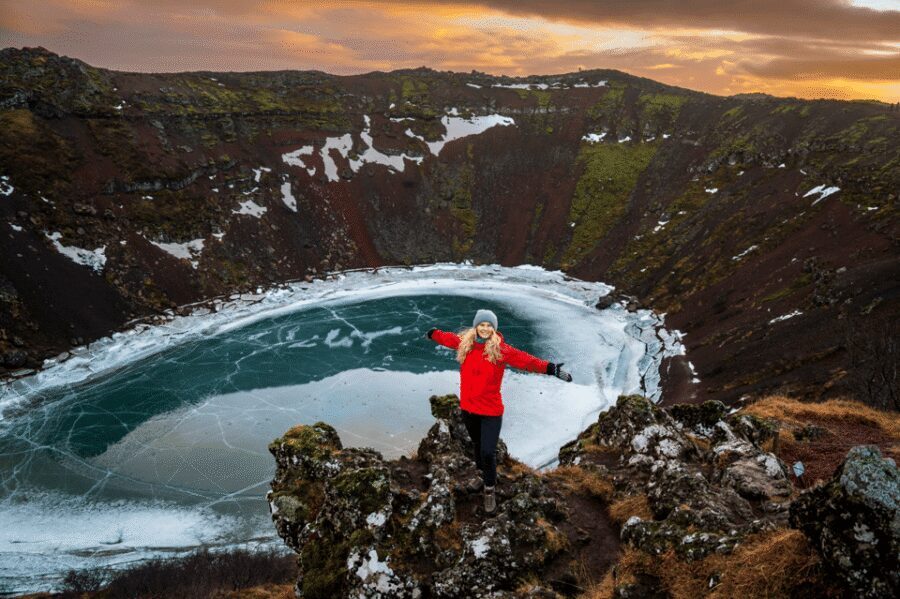
Kerið is an easy stop by car, with free parking. That’s huge for practical travel. In Iceland, where weather can swing fast and roads can be slow, free parking cuts stress. It also means you’re less tied to a specific tour schedule.
Once you arrive, it’s essentially a self-guided walk. The experience is built around daylight access, because Kerið is open during daylight hours. That means your biggest timing decision is simple: aim to be there when there’s light to see the rim, the mossy slope areas, and the lake color clearly.
Also, plan for a physical but manageable walk. You can explore the crater up close, including the sloping wall covered in deep green moss. It’s not described as a technical hike, but it is a descent and ascent, so wear shoes you trust on uneven, possibly damp footing.
The rim trail: your quickest path to the best photos
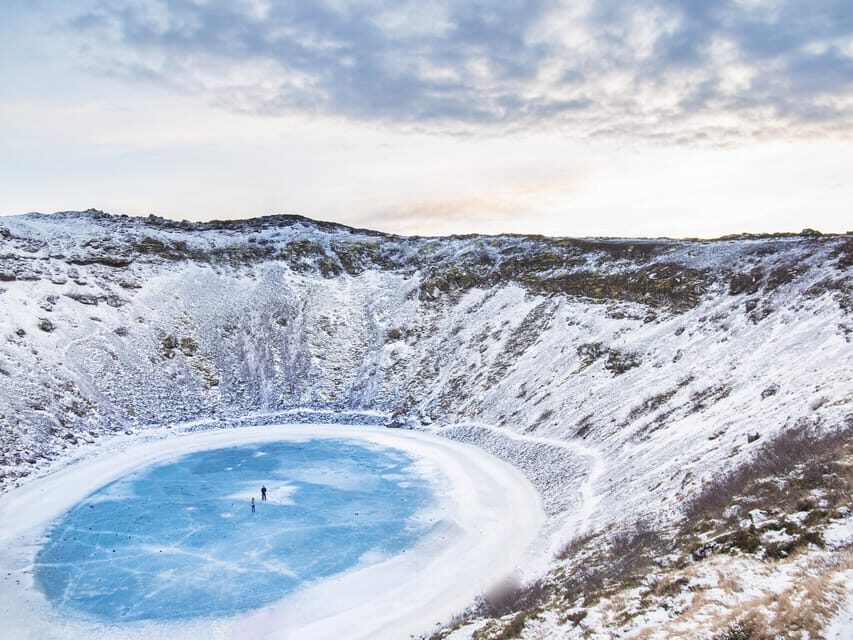
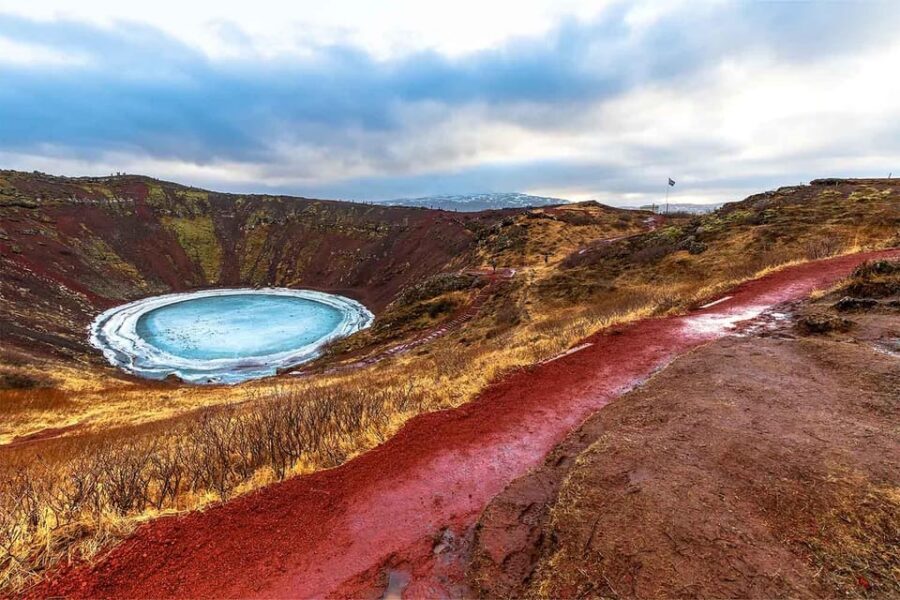
If you only do one thing inside Kerið, do the crater rim trail. The views from the edge are what turn this from a roadside stop into an actual “wow, okay, that’s Iceland” moment. The crater drops away sharply, and the lake at the bottom looks like it belongs in a different planet.
From the rim, you get a full sense of the crater’s scale. It’s about 55 meters deep, with roughly 170 meters across the caldera opening and about 270 meters across in total. Even if you don’t measure it mentally, the rim trail helps you feel that size.
Photo-wise, the rim gives you options:
- Wide shots showing the whole crater bowl and lake
- Close angles where the turquoise looks almost unreal
- Low-to-high compositions as you move along the edge
One practical tip: take a few minutes to pick your angle before you start moving quickly. The lake color shifts as the viewpoint changes, and that’s exactly what the rim trail is for.
Hiking down the mossy walls without overthinking it
Kerið doesn’t just sit there. You can hike down one of the sloping walls blanketed with deep green moss. That’s the kind of Iceland detail I love: volcanic geology plus living plants, right where you’re standing.
The moss slope also changes how you experience the crater. From the rim, you view the lake. On the slope, you feel part of the crater’s walls, and the red volcanic rock becomes more noticeable in the contrast between rock and moss.
A gentle reality check: moss-covered ground can be slick, especially if the air is cool or damp. The good news is that you can choose how far down you go. The site is set up so most people can enjoy the crater closely without needing to treat it like a strenuous trek.
If you’re traveling with someone who prefers limited walking, you can still enjoy a lot from the rim. The downside of the mossy descent is that you’ll likely spend a bit more time down there than you planned, because it’s simply interesting to look at every angle.
The turquoise lake: mineral color, not rainfall magic
At the bottom, you’ll see the aquamarine lake. It’s described as shallow, and its vivid color comes from minerals in the soil. That detail matters. A lot of people assume bright water means deep water or heavy rainfall. Here, it’s the chemistry doing the visual work.
Another useful point: the water level is at the same level as the water table and is not caused by rainfall. Translation for your brain: you’re looking at a stable, groundwater-related feature, not a puddle that changes day to day.
So what should you expect visually? Don’t expect the lake to look like a deep-blue fjord. Expect a shallow, intensely colored basin that seems to glow against the darker volcanic rock.
It also helps explain why Kerið is such a repeat-photography stop. Even in similar weather, your viewpoint changes what you notice about the lake’s tone and how it blends with the surrounding rock.
The geology story you can understand in minutes
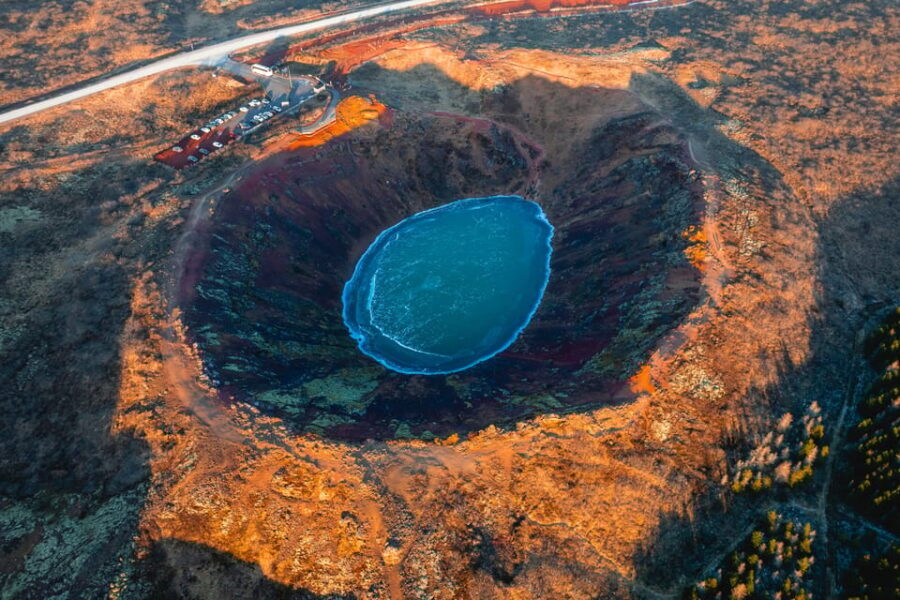
Kerið’s formation is one of the more accessible stories in Iceland’s volcano lineup. The crater is tied to a row of craters (Tjarnarhólar) and is part of the Western Volcanic Zone, the same broad volcanic region that connects features across Iceland—including the Reykjanes peninsula and Langjökull Glacier.
The caldera itself wasn’t formed by a volcanic explosion. It’s tied to a cone volcano that erupted and then emptied its magma reserve. After the magma was gone, the weight of the cone collapsed into the empty chamber, creating the current crater.
That’s a key idea because it changes how you interpret what you see. Instead of thinking of a blast crater, you can picture collapse. That’s why the crater feels like a bowl and why the surrounding walls look shaped by structural settling and erosion over thousands of years.
And yes—there’s a red rock layer. The crater is made up of a unique red volcanic rock, which is why the moss-and-rock contrast can look so dramatic.
Tickets and value: why $5 makes sense here
Kerið admission is $5 per person. That price is easy to justify because:
- You get self-guided entry (you can go at your pace)
- You can spend as little or as much time as your day allows
- The site delivers multiple viewpoints: rim trail and a closer look from down the slope
- It’s free to park, which cuts the total day cost
Also, it’s a one-day experience in practice. The ticket is valid for 1 day, and Kerið is open in daylight hours. That flexibility works if you’re building a road trip and want the ability to shift your schedule if the weather changes.
Bottom line: for $5, this is not a risky gamble. Even if you don’t have time for a long walk, the crater itself is the reward, and it’s visible quickly.
How long to plan: fit it into your day like a pro
Because this is self-guided and daylight-based, your timing should match your driving plan. Kerið is a stop, not a long event. If you want a relaxed visit—rim walk, photos, and time to go down the sloping wall—give it a decent block of time. If you’re tight on schedule, you can still get meaningful views from the rim.
I like the way it behaves on a road trip: it doesn’t force you into a rigid timing pattern. You arrive, you walk, you enjoy. That’s valuable in Iceland, where even small delays can cascade across a day.
Practical tips that make Kerið easier (and nicer)
Here are a few grounded tips that help your visit go smoothly:
- Wear grippy shoes. You’re walking on a sloped route with moss. Comfortable grip beats style.
- Bring a camera plan. Spend 2 minutes at your first good viewpoint, then move. The lake looks different from different angles.
- Aim for daylight brightness. Since it’s open during daylight hours, you’ll get more accurate color and better visibility on the rim trail.
- Don’t skip the rim. The rim trail is where you get the panoramic crater sense.
- Keep expectations realistic about the water. The lake is shallow and mineral-colored, so it’s not a deep-water blue spectacle.
Also, if you want smooth vibes at the entrance, be mentally prepared for human variability. Some people have reported inconsistent ticket checking or a not-so-friendly interaction at the entry area. That doesn’t change the crater, but it helps to keep your mood steady and focus on the walk.
Who this crater ticket is best for
Kerið is a good match if you:
- Want a quick, high-reward stop on the Golden Circle
- Like short hikes and viewpoint walking without committing to a full-day trek
- Enjoy geology and volcanic stories you can understand on site
- Want a mix of photography and nature without complicated planning
It’s also an accessible option in terms of general site access, since it’s listed as wheelchair accessible. That said, since there is a sloping wall and rim walking involved, your best experience will still depend on comfort with uneven ground and route options once you’re there.
Should you book Kerið Crater admission?
Yes, I think Kerið is worth booking. It’s low-cost, easy to fit into a road trip, and the experience is built around clear, repeatable highlights: the rim trail views, the close-up crater walls, and that intense turquoise lake.
Book it if you want a real volcanic structure in a short time. Skip it only if you already have a tight schedule and can’t spare time for a walk, or if you strongly prefer guided explanations for every step. For most people doing the Golden Circle, Kerið is the kind of stop that pays you back quickly.