REVIEW · HOLMAVIK
Hólmavík: Whale Watching Tour
Book on GetYourGuide →Operated by Láki Tours · Bookable on GetYourGuide
There’s something special about watching whales where the ocean feels quiet. On this Hólmavík whale watching trip in Iceland’s Westfjords, I love the chance to see humpback whales in a remote fjord—and I also like that you’re often in a smaller, calmer setting than the big-name whale towns.
The main thing to keep in mind is logistics: transport to Hólmavík isn’t included, and the Westfjords are remote, so you’ll want a solid plan to get there on time.
In This Review
- Key points before you go
- Why Hólmavík Whale Watching Feels More Like Real Wild Ocean
- Timing: Humpbacks, Autumn Numbers, and Puffins from June to Early August
- Meet at the Harbor: What Happens in the First Minutes
- The Sheltered Fjord That Keeps Cancellations Rare
- Seeing Humpbacks Up Close Without Feeling Crowded
- Guides and Research-Style Whale Spotting (With Names You Might Hear)
- Other Species: Minke Whales, White-Beaked Dolphins, and Rare Odds
- Warm Overalls and What You Still Need to Bring
- Price and Value: Is $101 Worth It?
- How to Plan Your Westfjords Day Around This Tour
- Should You Book the Hólmavík Whale Watching Tour?
- FAQ
- Where does the whale watching tour take place?
- How long is the tour?
- What species can I expect to see?
- Are puffins included in the experience?
- What’s included in the price?
- What language is the guide?
- Is sea-sickness likely?
- Do tours run in bad weather?
- What time should I arrive?
Key points before you go
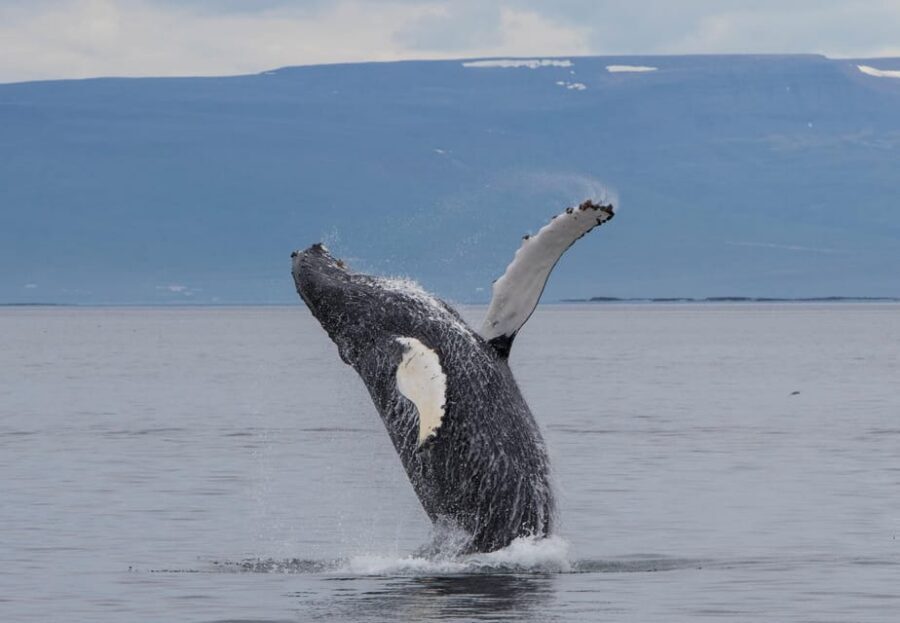
- Humpbacks are the star: the fjord outside Hólmavík is known for them in summer and especially autumn
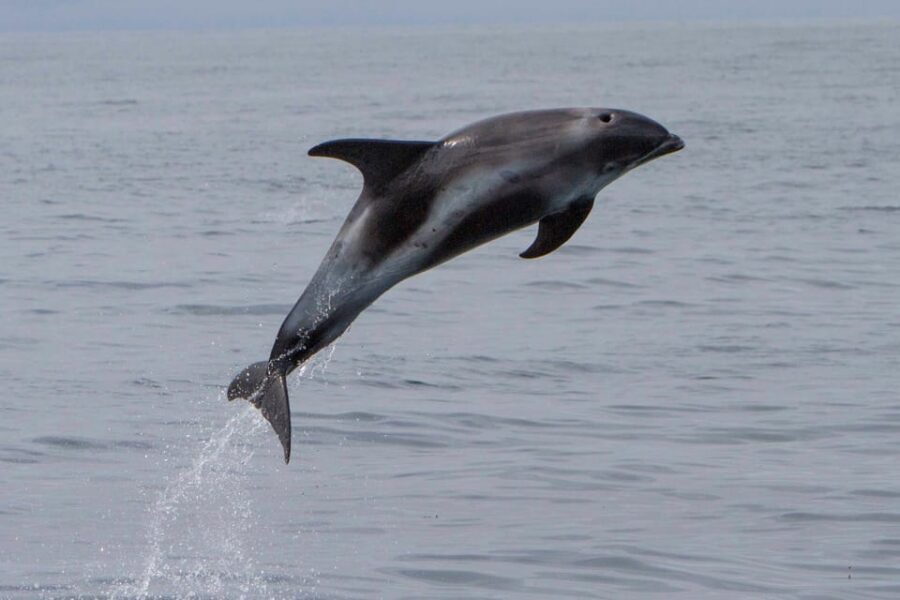
- More species than just whales: minke whales and white-beaked dolphins are common, with other surprises possible
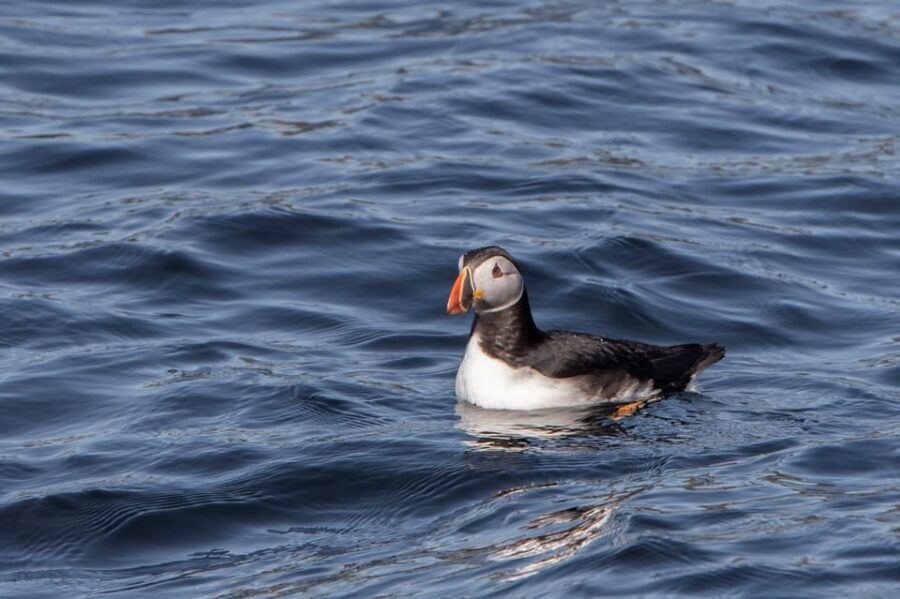
- Puffins are seasonal: June to early August brings a nearby colony and good odds for sightings
- Small-group feel: the vibe is more intimate, with guides and crew keeping a close eye on everything
- Cold is part of the deal: warm, waterproof overalls help a lot, but you still need layers
Why Hólmavík Whale Watching Feels More Like Real Wild Ocean
Hólmavík sits in Iceland’s remote Westfjords, away from the crowds you can run into around more famous whale-watching hubs. The payoff is a calmer ocean experience. When the whales show up, it can feel like the fjord belongs to them, not to tour boats.
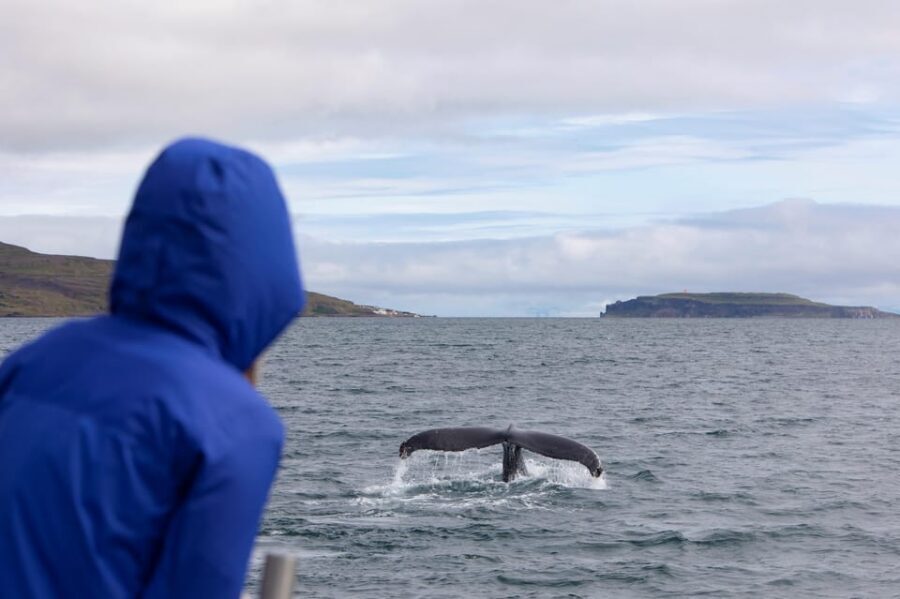
This matters because whale watching is about attention and timing. The more time you spend scanning calmly (and the less time you spend in a crowd), the better your odds of spotting behavior—tail slaps, quick dives, surface breathing, or that curious approach that humpbacks are known for.
On this tour, you’re set up to be the only boat with humpback whales when sightings happen. That one detail can change the whole feel of the day. It’s the difference between chasing a moving rumor and actually settling in with the animal in view.
Timing: Humpbacks, Autumn Numbers, and Puffins from June to Early August
If you’re picking dates, you’re really choosing a “type” of wildlife day.
In early summer, you can see humpbacks along with minke whales and white-beaked dolphins regularly. That’s a great window if you want variety and a good chance of dolphin sightings alongside the bigger animals.
As summer shifts into autumn, the fjord can sometimes fill with larger numbers of humpbacks. Reports include up to 30 individuals seen in the fjord at one time in autumn. That same season also brings golden morning light, which makes the whole experience feel cinematic—especially if the fjord stays still enough to reflect the sky.
Then there’s the bonus bird factor. From June to early August, this tour is also a strong option for spotting puffins, thanks to a large colony nesting nearby. If you’re doing a broader Westfjords trip, this is a tidy way to stack wildlife on one outing instead of trying to chase birds and whales on separate days.
Meet at the Harbor: What Happens in the First Minutes
You’ll meet about 15 minutes before the tour starts, so plan to arrive early and take a moment to get your layers sorted before you step on board. The boat ride starts with a guide-led setup: where to stand, how to dress for spray and wind, and what to watch for.
This part can sound routine, but it pays off. Whale watching gets better when you know what you’re looking at. Guides on this tour also use their research knowledge to help connect what you’re seeing to the bigger story of the bay—what shows up when, and why humpbacks use this area in certain seasons.
I’d treat this early window as your “game plan.” If you show up layered and ready, you spend the whole tour watching instead of fussing with gloves, hat straps, or wet sleeves.
The Sheltered Fjord That Keeps Cancellations Rare
One reason people love whale watching here is simple: the fjord outside Hólmavík is incredibly sheltered from most wind directions. That doesn’t mean the day is guaranteed perfect. Iceland weather is Iceland weather. But it does mean the experience is more stable than you might expect.
Just as important, sea-sickness is described as almost unheard of in this sheltered fjord. If you’ve struggled on rougher coasts before, this is the kind of setting where you can relax more—because the boat motion tends to stay manageable.
You’ll still want to be sensible. If you’re prone to motion sickness, consider precautions anyway. But the structure of this route makes it one of the more comfortable whale-watching options on the island.
Seeing Humpbacks Up Close Without Feeling Crowded
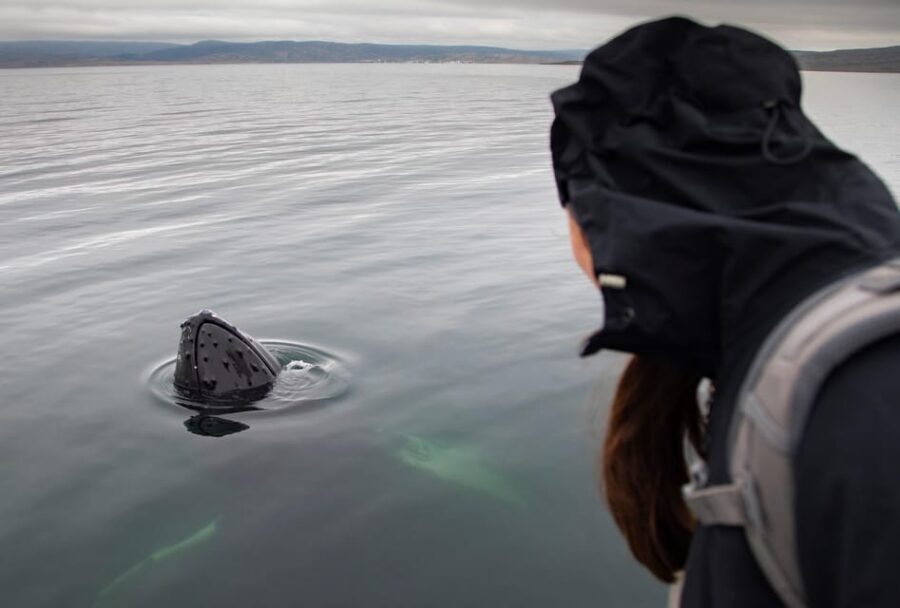
The emotional high point on this tour is humpback watching. These are the whales most people imagine when they picture whale behavior that feels playful and curious, and this fjord is one of the places where they’re reliably present in the warmer months.
A good day can bring close surface moments. For example, there are sightings where humpbacks surfaced around 15 meters from the boat. That’s close enough for details—like the way they rise, breathe, and then slip back under.
The “how” matters too. Captains here are focused on whale-friendly behavior. One detail that comes through in reports is that the captain knows when to switch off a loud motor, which helps keep the environment less disruptive for the animals. That small change can make the whales feel less like an event and more like neighbors in their own home.
And because humpbacks move with purpose—short swims, bursts of activity, then longer pauses—you’ll want a guide who can explain what you’re seeing while you’re seeing it. That’s where this tour leans strong.
Guides and Research-Style Whale Spotting (With Names You Might Hear)
The tour uses a live English-speaking guide. In practice, you might meet people like Judith, described as a lead researcher for the bay, who brings a research approach to whale spotting. There’s also mention of Teresa as part of the ship crew and onboard support.
Even when you don’t catch the names, you can still feel the research mindset. The guide tends to explain what species you’re most likely to see, what behavior means, and how the whales you spot connect to knowledge of the local bay.
One of the best-feeling parts of this kind of tour is when your guide can point out whales you’ve already seen again—by referencing what they look like and what they might be doing in the broader context. It turns your photos from random dots in the sea into evidence of specific animals and moments.
If you love factual, practical whale watching—less hype, more clarity—this style fits well.
Other Species: Minke Whales, White-Beaked Dolphins, and Rare Odds
Humpbacks may be the headline, but the payoff often comes from the variety.
You should have a realistic shot at:
- Minke whales, which can appear alongside humpbacks in early summer
- White-beaked dolphins, often showing up regularly in the same general season window
Then there’s the “what else could happen?” list. Occasional visitors reported include:
- Blue whales
- Orcas
- Pilot whales
- Northern bottlenose whales
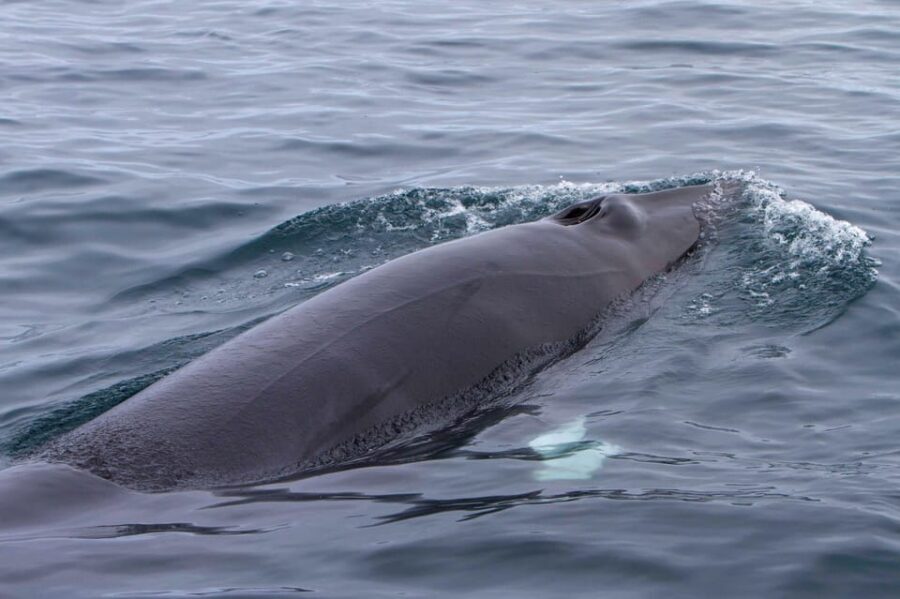
- And very rarely, sperm whales or fin whales
Here’s the honest way to think about this: you’re not buying a guarantee of rare species. You’re buying access to a place where those animals are known to come through sometimes. If the day only delivers humpbacks and a few dolphins, it’s still likely to feel like a big wildlife win. If you get one of the rarer visitors, it becomes a story you’ll remember for years.
Also, watch for patterns. In this fjord, the activity can change as the day goes and as the season shifts. You don’t just scan the water randomly—you’re scanning with guidance for the signs that the whales are present and moving.
Warm Overalls and What You Still Need to Bring
A big practical win: warm and waterproof overalls are included. These help you handle the wind and spray without turning the day into a constant struggle with cold hands and wet clothes.
But you still need a layering approach. Bring:
- Warm base layers (something that insulates even when damp)
- A hat that stays put
- Gloves you can work in for your camera phone or binoculars
- Sunglasses, because cold sea glare can still be intense
If you’re serious about photos or video, bring something you can hold steady. Whale watching is not a “point and shoot and wait” activity. You’ll want quick reactions when a blow pops up or a back breaks the surface.
Because the boat experience is described as comfortable in a sheltered fjord, you’ll likely spend more time watching than recovering from discomfort—especially if you use the included overalls properly.
Price and Value: Is $101 Worth It?
At $101 per person for a 2.5-hour tour, value depends on what kind of whale watcher you are.
If you’re the type who wants:
- a research-guided experience,
- a chance at multiple species,
- and a setting with fewer crowds,
then the price can make sense quickly. Whale watching in Iceland can get expensive, especially when you’re paying for a bigger operation and a busier scene. Here, the combination of sheltered conditions, inclusion of waterproof gear, and the emphasis on spotting and understanding whales adds up.
It also helps that the fjord is known for humpbacks in summer and autumn. When the species is local and present, you’re not just paying to gamble at sea. You’re paying to go to a place where the odds are built into the geography.
The only real “cost” isn’t money—it’s time and travel planning to reach Hólmavík, since transportation isn’t included. If you’re already traveling through the Westfjords, this is easier to absorb into your schedule. If Hólmavík is out of the way, factor in that extra effort.
How to Plan Your Westfjords Day Around This Tour
This is one of those activities that works best when you don’t cram too much before it. You want time to arrive calm, get dressed, and settle in.
A good strategy:
- Plan to be at the meeting point with buffer time.
- Keep your schedule light after the tour. Cold sea air can linger, and you’ll likely want a slow pace afterward.
- If you’re there during June to early August, consider the puffin angle as a bonus wildlife mission for the day.
If you’re comparing this to whale watching elsewhere in Iceland, I’d weigh two things: how often the area reliably hosts humpbacks, and how sheltered the route is for comfort. Hólmavík’s fjord is known for both, and those two factors dramatically affect how much you enjoy the tour once you’re out there.
Should You Book the Hólmavík Whale Watching Tour?
I’d book it if you want humpback whales in a remote Westfjords setting, with a guide approach that focuses on spotting and understanding what’s happening in the bay. The included warm waterproof overalls and the sheltered fjord make the day feel more comfortable than many other whale-watching locations.
Don’t book it blindly if your trip has tight timing for reaching Hólmavík, since transportation isn’t included and this region takes planning. Also remember: whales are wild animals. Weather and nature decide what you see.
If your goal is a genuine Westfjords wildlife outing—humpbacks first, dolphins and puffins as great add-ons—this tour has the right ingredients.
FAQ
Where does the whale watching tour take place?
The tour runs from Hólmavík in Iceland’s Westfjords.
How long is the tour?
It lasts about 2.5 hours.
What species can I expect to see?
Humpback whales are the main focus. The tour also aims for minke whales and white-beaked dolphins, with occasional visitors that may include blue whales, orcas, pilot whales, northern bottlenose whales, and very rarely sperm whales or fin whales.
Are puffins included in the experience?
Yes, puffin sightings are possible from June to early August, with a large colony nearby.
What’s included in the price?
Included items are the guided whale watching tour and warm, waterproof overalls.
What language is the guide?
The live tour guide is English.
Is sea-sickness likely?
Sea-sickness is described as almost unheard of in the sheltered fjord, though if you’re prone to motion sickness, you might want to take precautions.
Do tours run in bad weather?
Tours are subject to weather conditions and may be cancelled or rescheduled.
What time should I arrive?
Plan to be at the meeting point 15 minutes before the tour starts.